Impressive engineering behind our campus cooling
Originally published in "Ryerson Works" - May 4, 2017
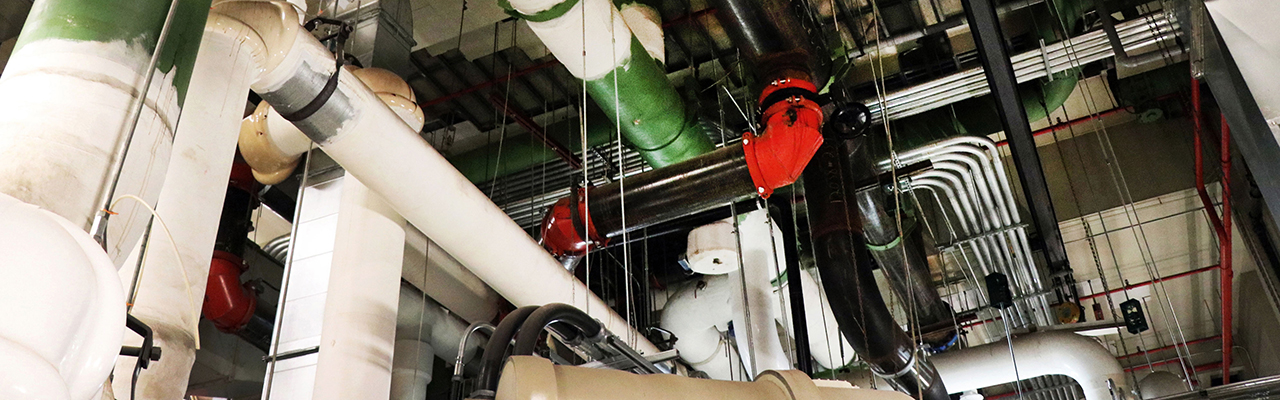
In the basement of the university's Library Building lies the heart of a complex and impressive network of pipes, coils, valves, filters, pumps and chillers. Together, this makes up the cooling system that regulates temperatures across many of our campus buildings.
We took a tour with Tom McDonald, supervisor, maintenance and operations and Shiv Tangri, supervisor, energy and automation from Facilities Management and Development ("Facilities") to get a behind-the-scenes look at how it all works.
One central plant cools most buildings on campus
The size of this central plant is directly related to the broad distance it covers. Servicing 10 buildings including the Student Learning Centre, Kerr Hall and as far east as the George Vari Engineering and Computing Centre, this central plant covers over 1.5 square kilometres. Powering it all are three chillers and a crew of 14 Facilities staff.
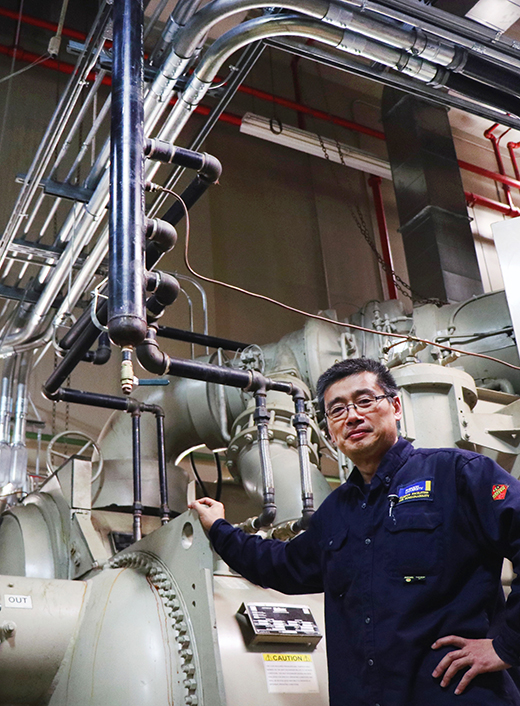
Tom explains that both the size and setup we have here are typical of campus cooling systems. “It takes a real team effort to get it going,” he shared. The team includes mechanics, plumbers, steamfitters and other tradespeople. Overseeing day-to-day operations of the central cooling plant is Tigger Gao, HVAC controls mechanic - our “main cooling guy” and long-term university employee.
So how does it all work?
There are two main systems that run simultaneously throughout the warmer seasons:
- The chilled loop, which pushes the cooled water to campus buildings.
Chilled water is pumped through the closed-loop system of pipes which branch out to different buildings across campus. From there, fans blow air across the water-filled coils to push cool air out, keeping you cool and comfortable during hot weather.
- The condenser loop, which keeps the equipment from overheating.
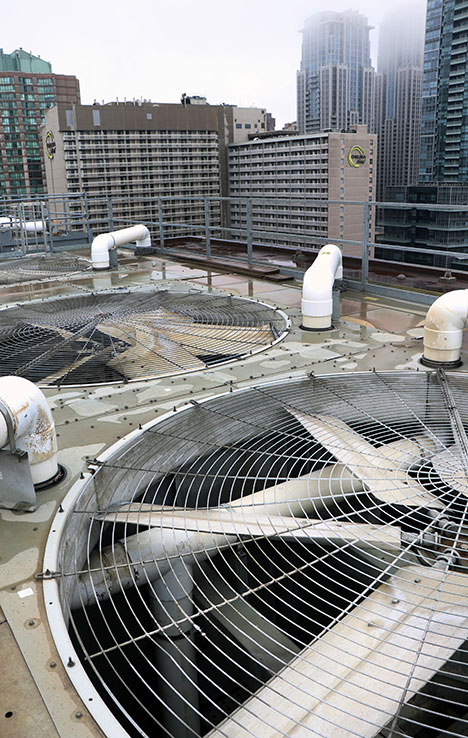
Water is pumped up to large cooling towers on top of the Library building, where it sprays over honeycomb fill that filters outdoor air as it’s sucked through by massive fans. As water trickles down over the chilled air, it cools and then returns to the basement, preventing equipment from overheating.
It all depends on the weather
Although buildings may experience different temperatures as seasons change, Tom explains this is not related to their proximity to the central cooling plant. Older buildings like Kerr Hall are less airtight and have many single-pane glass windows. As a result, they are naturally more susceptible to the fluctuations of the seasons.
Just as building occupants are somewhat at the mercy of the weather, so too are the Facilities crew. Deciding when to start filling the system is completely dependent on outdoor temperatures. Once overnight temperatures are consistently above 12 degrees, the process of filling the system with water and bleeding out all the air begins. This takes two weeks, and once complete it takes the better part of a workday for cool air to reach the buildings.
It’s crucial to get this timing right. If temperatures drop too low after the process has begun, water could freeze and burst the pipes. A few warm days are not enough to be certain that the cooling system can be safely activated.
Keeping things running smoothly
A lot of work goes into keeping the system running smoothly. All equipment requires careful maintenance and cleaning year-round, which helps keep things environmentally safe and also improves power and flow efficiency.
When cooler temperatures creep in, the system is completely drained to avoid burst pipes. Crews also take this time to clean the three chillers and valves, brush the tubes clean, empty strainers of any debris and check motor function as they prepare to start things back up again for the following spring.
Staying comfortable during seasonal changes
Knowing the feat of engineering and careful planning behind our campus temperature control may help you to appreciate why you’ll feel some fluctuations during seasonal changes. You can help improve your comfort during this time by:
- dressing in layers
- keeping an extra sweater handy
- closing blinds or curtains; and
- keeping interior doors open for better airflow.
For more information, please contact the Facilities Help Desk at fixit@torontomu.ca or 416-979-5091.