TMU experts share best practices for graduate supervision
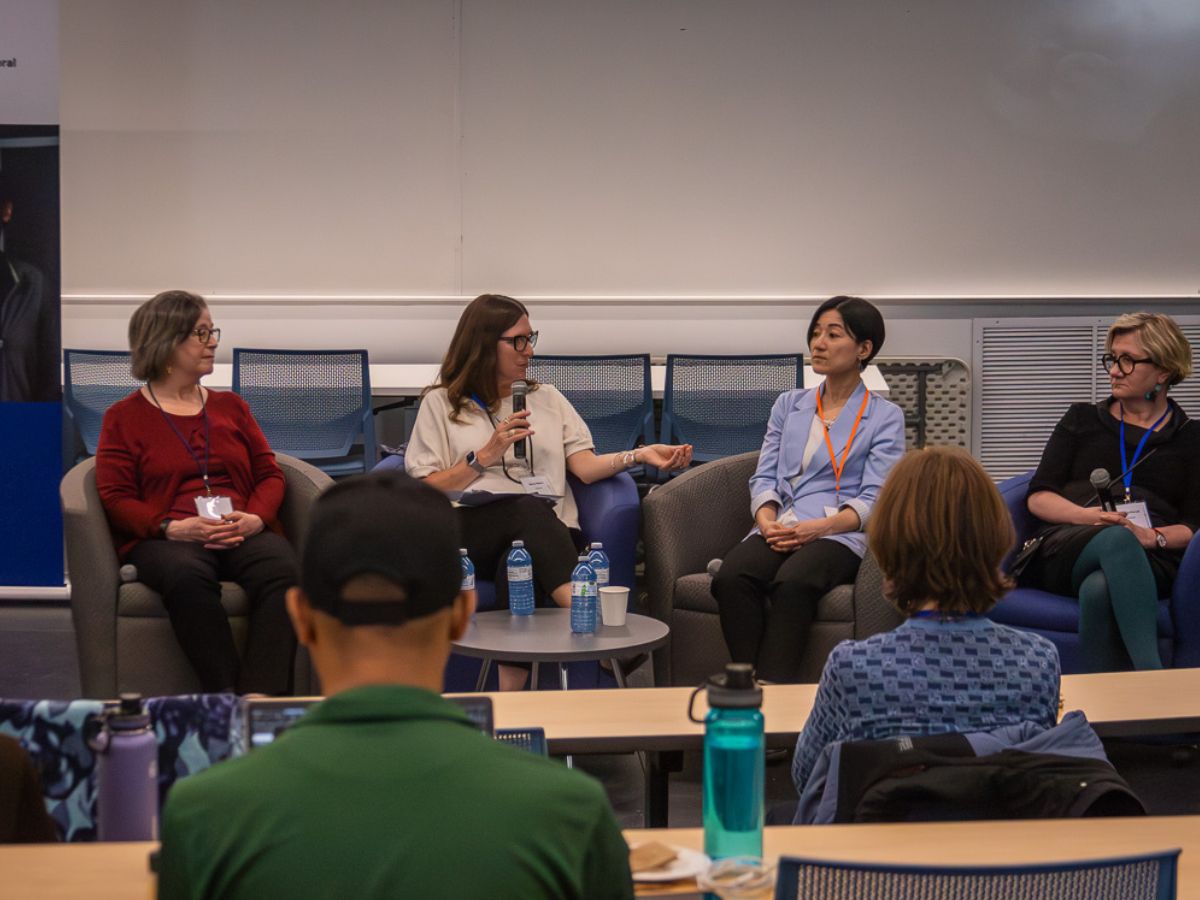
Exceptional graduate supervision is central to positive student experiences. While established (PDF file) provincial (external link) and institution-specific guidelines provide general knowledge on responsibilities and standards for supporting graduate student success, supervision is still often treated as an individual faculty member responsibility rather than a shared commitment with integrated support from faculty, programs and universities.
As part of the TMU Learning & Teaching Conference 2026, themed “Opening Doors, Closing Gaps Through Learning and Teaching,” the Yeates School of Graduate and Postdoctoral Studies (YSGPS) partnered with the Centre for Excellence in Learning and Teaching to present “From Oversight to Insight: A Growth-Oriented Approach to Graduate Supervision.”
Drawing on a diverse range of scholarly expertise, the afternoon invited graduate supervisors to reflect on how their beliefs and approaches can potentially shape the messages students receive. Panellists emphasized that effective supervision requires ongoing reflexivity and responsiveness to each student’s stage of development and reframed supervision as a shared commitment among supervisors, departments, programs and the university community to collectively support and advance student success.
Moving away from “one-size-fits-all” supervision
“There’s often an assumption that having a PhD means you automatically know how to supervise,” said clinical psychologist Dr. Diana Brecher. “That’s not true.”
The panel discussion “Graduate Supervision in Practice: Successes, Challenges and Encouraging Growth,” moderated by Dr. Nancy Walton, Associate Dean, Student Affairs, YSGPS, featured TMU Clinical Psychologist Dr. Diana Brecher, Professional Communication Graduate Program Director Dr. Yukari Seko and FEAS Associate Dean Dr. Miljana Horvat. Panellists framed supervision as an evolving and reflective practice rather than an instinctive one, while also stressing the importance of adapting to student needs in their varying stages of development.
Dr. Brecher described supervision as a developmental process that requires supervisors to adapt their approach to each student’s needs and stage of growth. According to Dr. Brecher, good supervision often begins with close guidance before gradually fostering greater independence and collegiality. At the same time, the cumulative pressures of supporting students while managing increasing workloads, she noted, can lead to compassion fatigue and burnout, leaving supervisors “running on empty.” Dr. Brecher concluded that recognizing supervision as a learned skill that requires its own system of support creates space not only for better student support but also for supervisor well-being.
Graduate students are also entering advanced studies with increasingly diverse goals, including careers beyond academia, while balancing caregiving responsibilities, financial pressures and other personal commitments. Dr. Seko noted these shifts challenge supervisors to rethink traditional definitions of academic success. Rather than treating rigour and flexibility as competing values, supervisors are encouraged to see them as complementary approaches that support greater responsiveness to grad students’ varied experiences, needs and ambitions. Applying these principles can help foster learning environments in which students feel supported and empowered to take intellectual risks
Creating space for failure and growth in academic research
Supervisors play an important role in shaping how graduate students understand failure and uncertainty in research, which requires intentionally resisting the pressures of publication-focused research cultures. Drawing on the work of psychologist Carol Dweck, Dr. Brecher encouraged supervisors to view mistakes as opportunities for learning and to embrace the concept of “not yet,” framing uncertainty and failure as natural and essential parts of research and growth.
“If we do something experimental and it doesn’t work, that’s still new knowledge,” said Dr. Horvat.
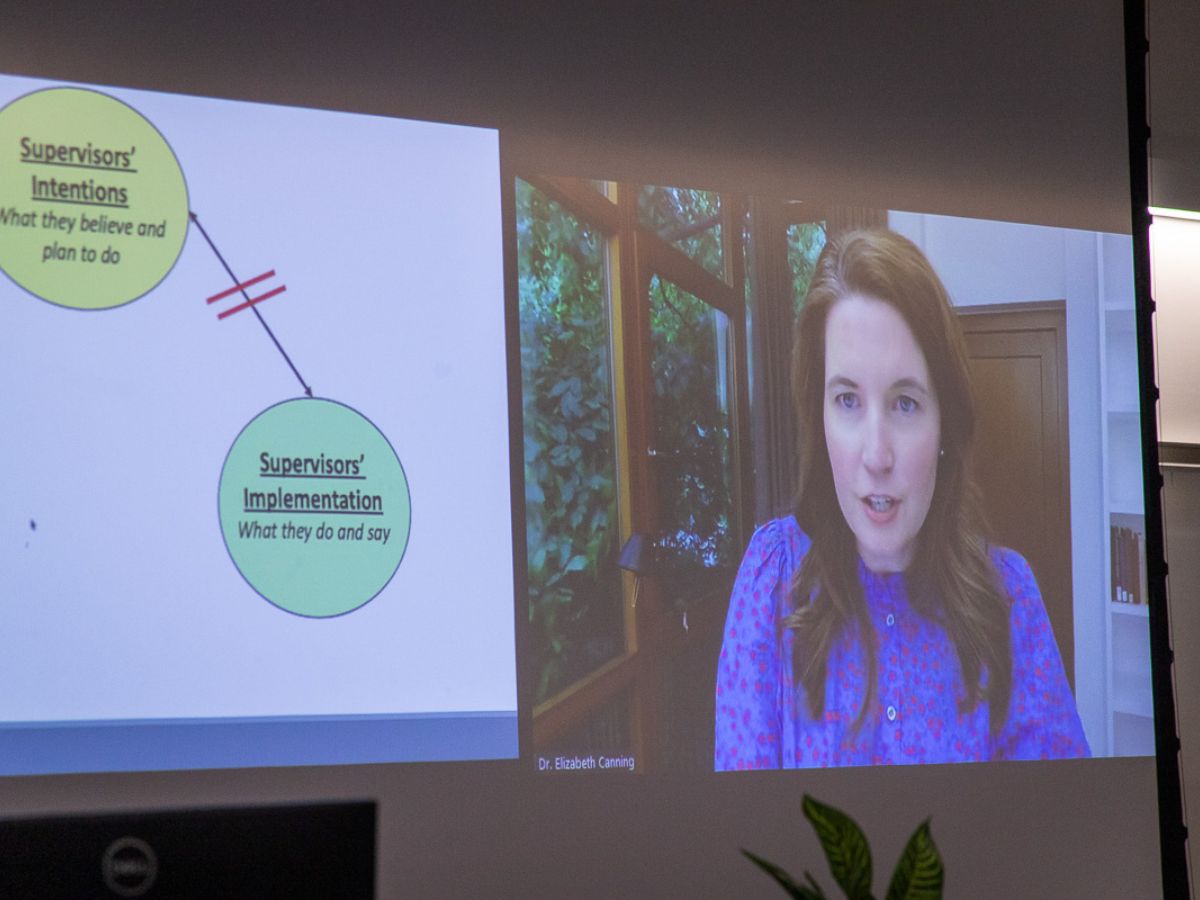
Dr. Elizabeth Canning presents the keynote on “Creating a Growth Mindset Culture.”
Building a growth mindset culture
The keynote session from Dr. Elizabeth Canning, psychology professor at Washington State University, highlighted the role of supervisors’ beliefs about learning and intelligence in how students experience challenge, feedback and failure.
“Mindset beliefs operate as a belief system,” said Dr. Canning, encouraging supervisors to reflect on how their language and practices either reinforce fixed expectations or create opportunities for growth.
The symposium highlighted that effective graduate supervision demands far more than academic expertise. Strong supervisors must be responsive, adaptable and attuned to the evolving needs of students, while fostering environments where learning and growth run in both directions.
Equally important was the recognition that supervision cannot remain an isolated responsibility. Meaningful support for graduate student success depends on sustained dialogue, shared accountability and collaborative leadership across departments, programs and the wider university community. In reframing supervision as a scholarly and relational practice, the discussions challenged long-held assumptions that effective supervision naturally follows disciplinary expertise alone.