TMU ‘a place of transformation’ for Afghan refugee
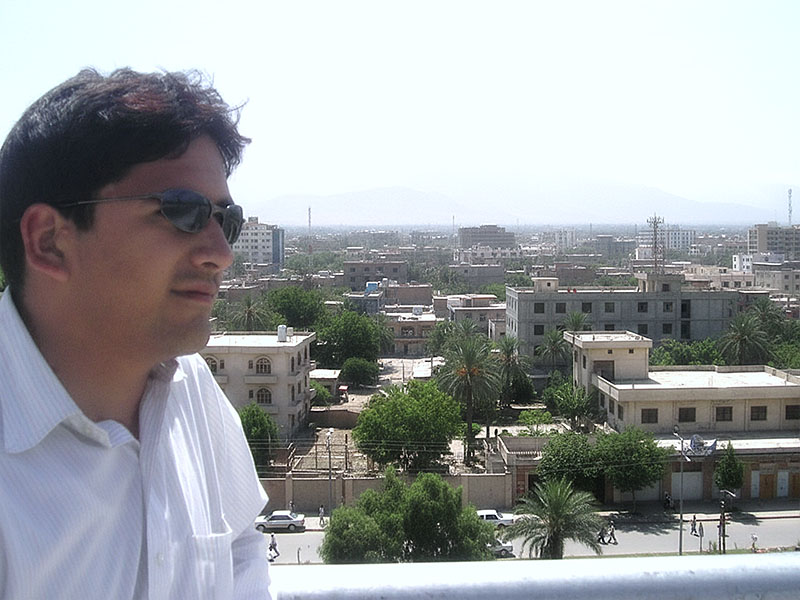
As an Afghan refugee, it’s not surprising that Dr. Obaid Mahmoodi’s research is driven by turning challenges into opportunities.
Growing up in Afghanistan during the aftermath of the Soviet invasion, he witnessed how critical infrastructure was for public safety—and yet how fragile it was. This instilled in him a strong sense of duty as an engineer to develop materials that not only perform well but also support communities.
Moving to Toronto as a refugee in 2014 to study Civil Engineering at TMU enabled Dr. Mahmoodi to channel that responsibility into research on global issues such as sustainability, climate change and affordable housing.
“Each experiment is a small step toward transforming waste into useful resources and building a more sustainable future,” he said.
Dr. Mahmoodi completed his MASc in 2019, specializing in materials and structural engineering, and went on to finish his PhD at TMU in 2025. His research focused on developing sustainable geopolymer composites made from construction and demolition waste, integrating experimental methods with machine learning to improve performance and reduce environmental impacts.
“Both my MASc and PhD at TMU prepared me to be career-ready,” said Dr. Mahmoodi. “These experiences provided me with not only technical expertise, but also the confidence to mentor students, engage with industry and pursue entrepreneurial opportunities.”
Despite the challenges of moving to a new country, Dr. Mahmoodi says the support of his supervisors, Dr. Mohamed Lachemi and Dr. Hocine Siad, and the TMU graduate community, made a tremendous difference.
“I was fortunate to have two mentors who supported me in distinct yet complementary ways,” he said. “Dr. Mohamed Lachemi encouraged me to think boldly and see my research as part of a larger global conversation on sustainability. He often urged me to ‘think big’ and explore entrepreneurship as a way to bring innovative ideas into practice. His vision helped me frame my research in terms of societal impact. On the other hand, Dr. Hocine Siad provided detailed, day-to-day guidance. His constructive feedback pushed me to refine my methods, enhance the rigour of my experiments and sharpen my critical thinking.”
“For me, TMU was a place of transformation. It helped me rebuild my career from scratch and empowered me to give back. My story is deeply connected to the values of resilience, sustainability and community that TMU champions.”
Dr. Mahmoodi has published his research in leading journals and presented at national and international conferences, contributing to sustainable construction solutions. Since 2017, he has volunteered with the Afghan Network for Social Services (ANSS) Foundation and Habitat for Humanity, helping newcomers and supporting affordable housing projects that align with his passion for sustainability and advocating for refugees’ rights.
According to Dr. Mahmoodi, his journey was significantly impacted by the TMU graduate community, both academically and personally. Writing support programs helped him enhance his academic communication skills, while events organized by YSGPS, the Toronto Metropolitan Graduate Students’ Union and the Faculty of Engineering and Architectural Science (FEAS) fostered opportunities to connect with peers facing similar challenges as newcomers or international students.
“I found the TMU graduate community to be inclusive and supportive, whether through research, networking opportunities or simply fostering a sense of belonging,” he said.
In addition, YSGPS and FEAS helped fund Dr. Mahmoodi’s travel to engineering conferences, which provided opportunities to meet industry leaders and fellow researchers from across Canada and around the world. These experiences broadened his professional network and led to meaningful research collaborations.
Now, as a postdoctoral researcher at TMU, Dr. Mahmoodi focuses on 3D concrete printing of sustainable geopolymeric materials, upcycling building materials for the construction industry. He also mentors undergraduate and graduate students, and aims to inspire other refugees to pursue higher education and contribute meaningfully to Canadian society.
Dr. Mahmoodi’s long-term goal is to launch a start-up providing 3D-printed recycled concrete solutions to help advance sustainable and inclusive building practices, addressing Canada’s housing challenges by supplying homes made from recycled materials.
“For me, TMU was more than just a place of study; it was a place of transformation,” said Dr. Mahmoodi. “It gave me the support I needed to rebuild my career from scratch and empowered me to give back through mentoring, publishing or volunteering. My story is deeply connected to the values of resilience, sustainability and community that TMU champions.”
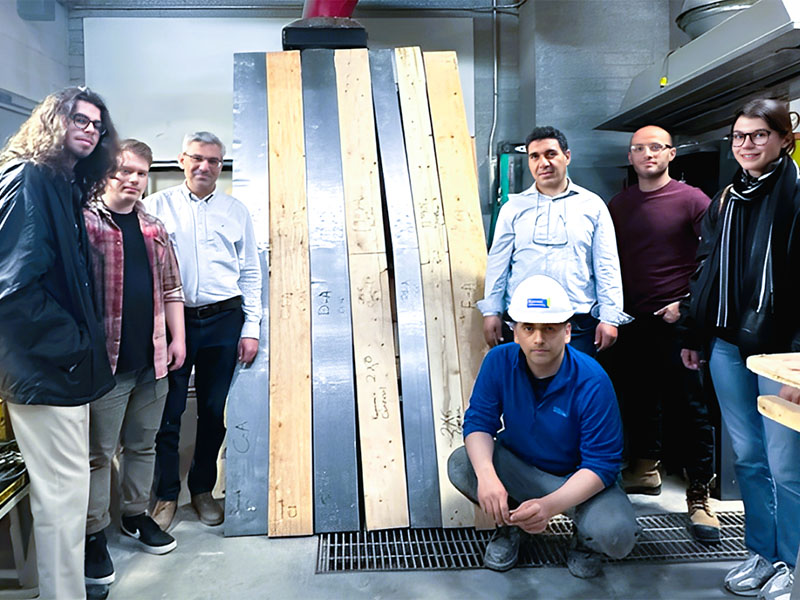
Dr. Mahmoodi (crouching) with PhD Supervisor Dr. Hocine Siad behind him in the TMU Civil Engineering Structures Lab, flanked by industry partners from WZMH Architects and Stephenson Engineering