TMU receives $1.28M through Canada Impact+ Research Training Awards

TMU has received a total of $1.28 million in federal government funding to support the recruitment of world-leading researchers through the new Canada Impact+ Research Training Awards (CIRTA) program.
Launched in December 2025 as part of the $1.7-billion Canada Global Impact+ Research Talent Initiative, the CIRTA program will invest $133.6 million over three years to attract the world’s top PhD and postdoctoral researchers to bolster the country’s research capacity and global competitiveness.
The doctoral awards provide $40,000 per year for three years, while the postdoctoral awards offer $70,000 per year for two years. TMU welcomes the following exceptional international researchers:
Doctoral recipients

Mohamed Dafalla’s research interests include waste management, renewable energy systems, sustainability, AI and life-cycle assessment. Dafalla’s research is expected to provide a practical sustainable biosolids management framework, supporting clean technology development, environmental protection and improvement in public health.

Asif Hossain Abir’s research focuses on low-carbon concrete, nano-modified concrete, concrete technology, sustainable construction technologies, structural analysis, seismic analysis, advanced retrofitting techniques and numerical modelling. Passionate about research and development, Hossain Abir is developing low-carbon concrete composites for sustainable infrastructure.
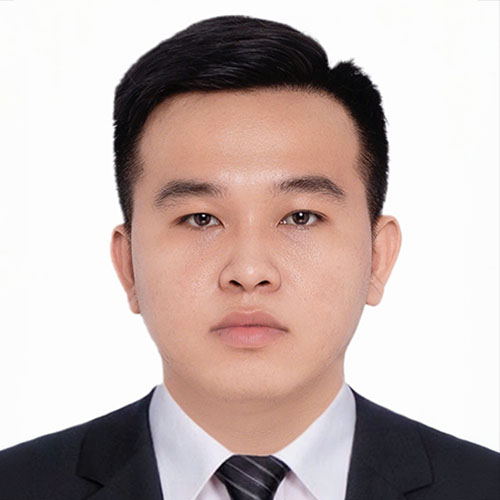
Tan-Huy Le's research centres on 3D printing, biomaterials, nanotechnology, biomedical applications, biocomposites, polymer processing and sustainable development. By developing sustainable composite materials that combine natural and carbon fibres, Le aims to extend the lifespan of orthopedic implants and enhance patients’ quality of life.
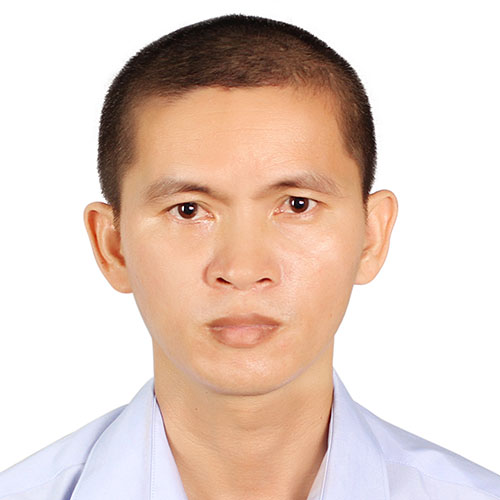
Than Le is developing next-generation intelligent multi-robot systems capable of autonomous collaboration in uncertain and safety-critical environments, including advanced manufacturing, health-care technologies, smart logistics, remote infrastructure inspection, and future defence and industrial automation systems.

Behnam Pournemati is using innovative, multifunctional biomaterials to support heart healing through both minimally invasive techniques and advanced manufacturing approaches such as 3D bioprinting. His research offers a promising pathway toward regenerating damaged heart tissue, improving patient outcomes and advancing regenerative medicine in Canada.

Quang Thong Phan is using AI to create smarter and more reliable hearing aids by enhancing resource efficiency, addressing hardware issues and implementing algorithms that enable devices to continuously learn from users’ environments, improving performance over time.
Postdoctoral recipients
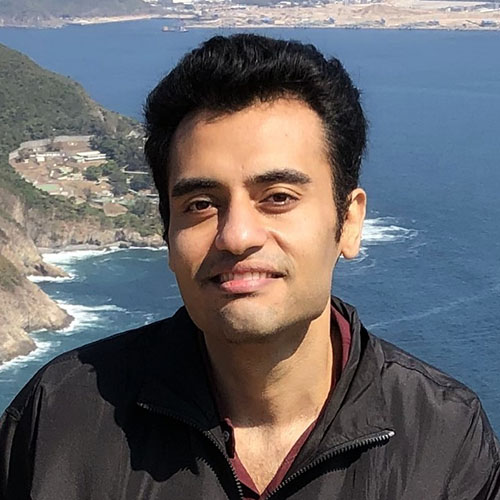
Dr. Farshad Golnary Ardekany is a mechanical engineering researcher with expertise in the sustainability and reliability of autonomous systems. His research focuses on nonlinear and data-driven control, system modelling and applied control theory, and he is extending this work to reinforcement, supervised and unsupervised machine learning.

Dr. Mohsen Khodadadi Yazdi is a polymer and bioelectronic materials scientist with over 12 years of experience in conjugated polymers, polymerization, hydrogels, nanomaterials, biointerfaces, laser-induced graphene and electrochemical biosensing. The author of more than 60 peer-reviewed publications in leading journals, Khodadadi Yazdi is recognized among Stanford University’s World’s Top 2% Scientists.

Dr. Minkyung Kwon’s research examines how global children and youth negotiate digital spaces not merely as risks but as vital arenas for identity exploration, peer support and civic engagement. Employing a participatory, rights-based and intergenerational methodology, this research advances interdisciplinary scholarship on responsible AI and child rights, while championing evidence-based, ethical research and policies for more resilient digital communities.
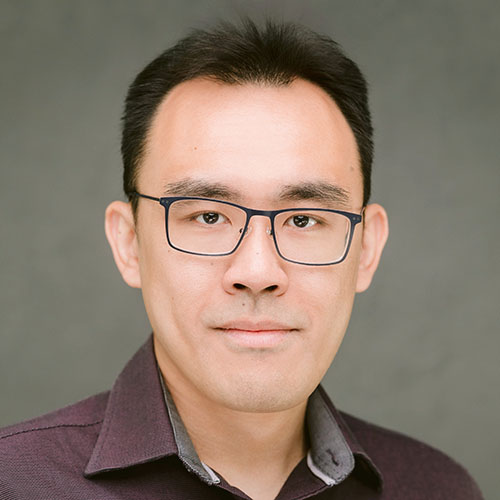
Dr. James Teng’s research aims to improve early detection of Alzheimer’s disease by examining sex differences and menopause effects on its development. The project will help determine if peri- and post-menopause are critical times in women’s brain health, placing some females at greater risk of memory dysfunctions and heightened risk of Alzheimer’s at midlife.