DI’s year in review: 2023

As we reach the end of 2023, we celebrate the progress (opens in new window) the Diversity Institute (DI) team, partners and supporters have made in advancing equity, diversity and inclusion across the country. We are grateful to everyone for their shared commitment to this essential work. We’ve collected our most read, watched and shared highlights from the past year that you don’t want to miss and snuck in some new stories, too!
Future Skills

On Dec. 5, 2023, academics and researchers from across North America and Europe gathered online to share research on artificial intelligence (AI). The Symposium on AI Opportunities and Challenges was hosted by two universities in Sweden and brought together more than 100 academics.
Wendy Cukier, founder and academic director of DI and research lead for the Future Skills Centre (external link, opens in new window) (FSC), presented on bridging the AI tool gap in small and medium-sized enterprises (SMEs). Cukier highlighted that there’s a huge gap between the creation of AI and its adoption. She also said while many human resource departments are using AI, attention is needed around its adoption processes to avoid creating further barriers for equity-deserving groups.

In May, DI published the Labour Market Implications for Racialized Youth Report, which shows more Canadian businesses found it challenging to recruit skilled labour in 2021 than in 2013. Canada ranks high among OECD countries on advanced education, yet racialized youth face unique barriers in the labour force and remain an untapped resource in the Canadian economy.

This fall, DI’s work was highlighted in the Globe and Mail. It outlines the important role women entrepreneurs are playing in Canada’s transition to net zero. Studies that look at the innovations driving decarbonization reveal that women-led enterprises—and especially small and medium-sized businesses—play an essential role.
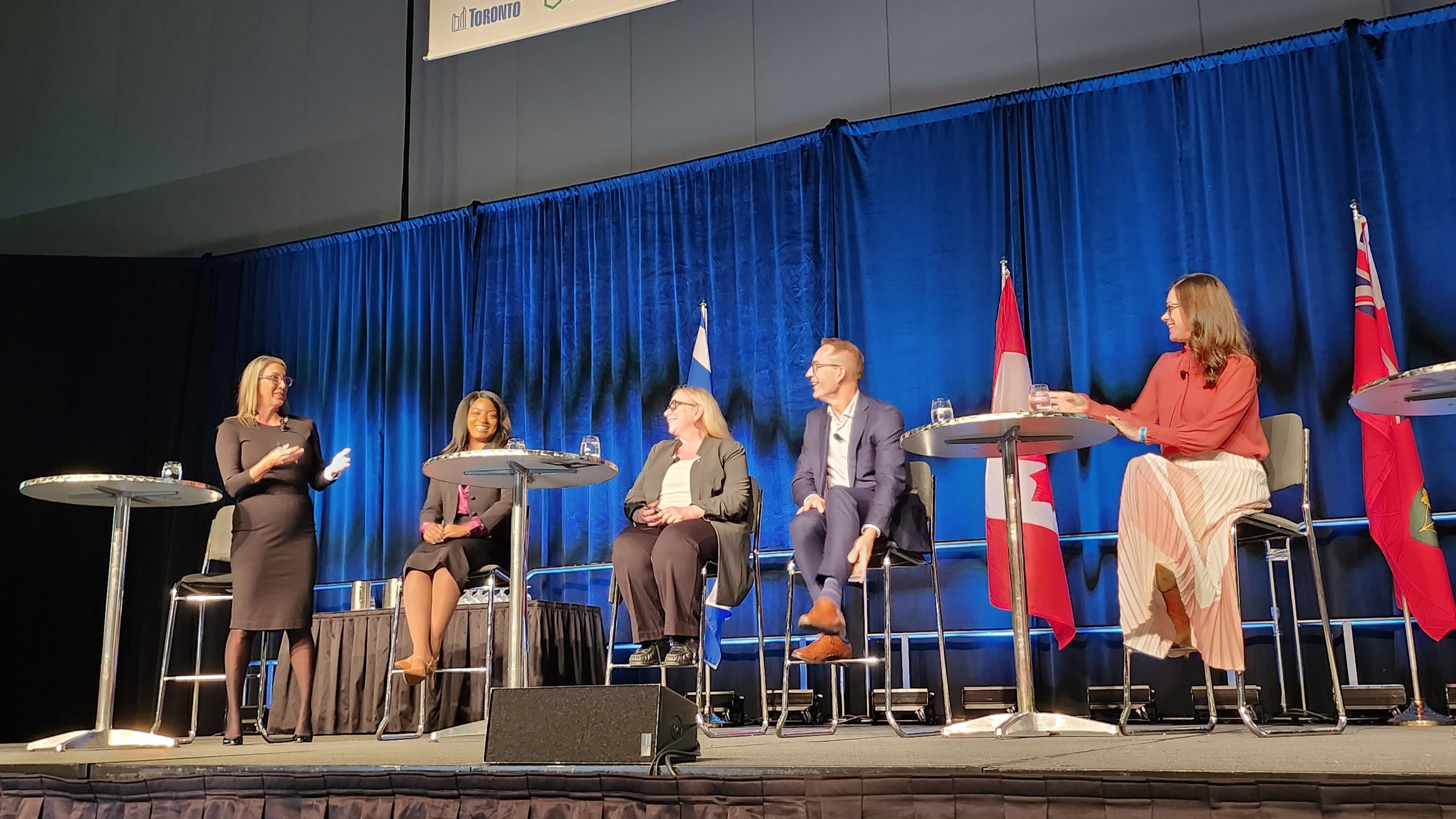
This fall, the City of Toronto brought together 7,000 business owners, entrepreneurs and leaders to celebrate Toronto’s thriving small business community. Mayor Olivia Chow kicked off the event, followed by Rechie Valdez, the minister of small business, to discuss the role of small businesses in Canada. Wendy Cukier presented on a panel about how equity, diversity and inclusion can drive business innovation.

Research published in the Labour Market Insights series (opens in new window) with the Future Skills Centre covers topics relevant to the study of labour markets and are based on analyses of collated data from online job postings across Canada, as well as other traditional and innovative data sources.
This July, DI researchers examined the recovery of Canada’s labour market after the COVID-19 pandemic. They found that by the end of 2022 job postings were up, exceeding pre-pandemic levels.
Inclusive innovation & entrepreneurship

The Women Entrepreneurship Knowledge Hub (WEKH), WEDO Canada and TMX Group celebrated Women’s Entrepreneurship Day in November with more than 125 diverse women entrepreneurs and ecosystem partners from across Canada at a TSX market open ceremony in Toronto. They were joined by Marci Ien, minister for women and gender equality and youth, and Rechie Valdez, minister of small business. Valdez announced funding of $3.8 million to help WEKH to continue its research to understand barriers and enablers to entrepreneurial success and innovation, expand partnerships and raise awareness.
WATCH: Rechie Valdez, Marci Ien join WEKH in opening TSX (external link, opens in new window)
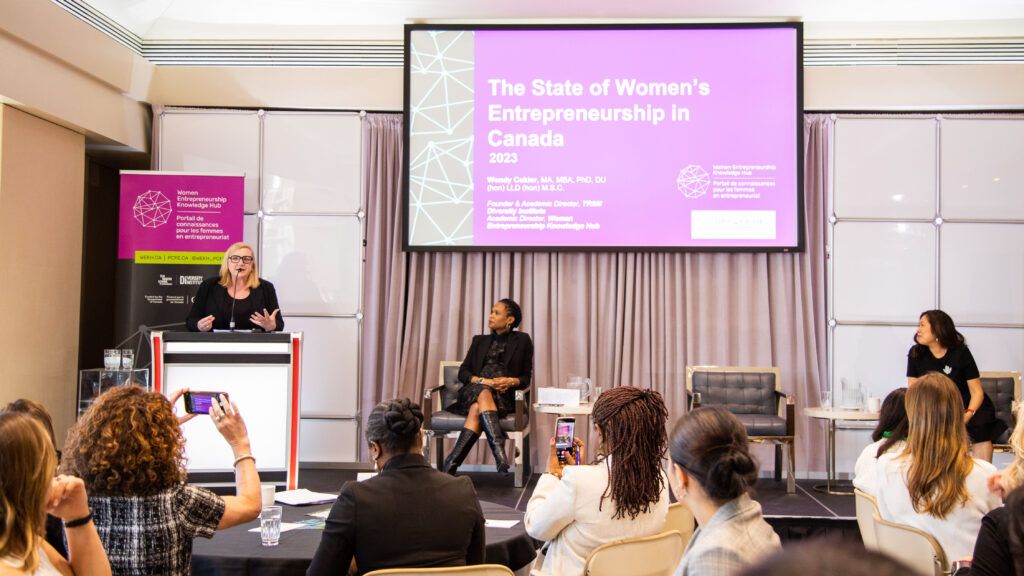
In March, WEKH, a program of DI, released the State of Women’s Entrepreneurship (SOWE) in Canada 2023 Research Preview (external link, opens in new window) in Toronto and online with then-Minister of Small Business Mary Ng. The research, subsequently published in the full SOWE report (external link, opens in new window) , shows that despite the impacts of the COVID-19 pandemic there is cause to be optimistic. Women-owned businesses are a growing proportion of businesses.
WATCH: Minister Mary Ng joins the Women Entrepreneurship Knowledge Hub (opens in new window)

This spring the WEKH Indigenous team hosted the Celebrating Indigenous Women Entrepreneurs event. It took place at Manitou a bi Bii Daziigae, at Red River Polytech, located on Treaty 1 Territory in Winnipeg and brought together more than 150 people. Businesses owned and operated by Indigenous women and gender-diverse people were the focus. Attendees enjoyed community, sharing culture and advancing their businesses.
WATCH: Supporting Indigenous women entrepreneurs (external link, opens in new window)
Impact through connection
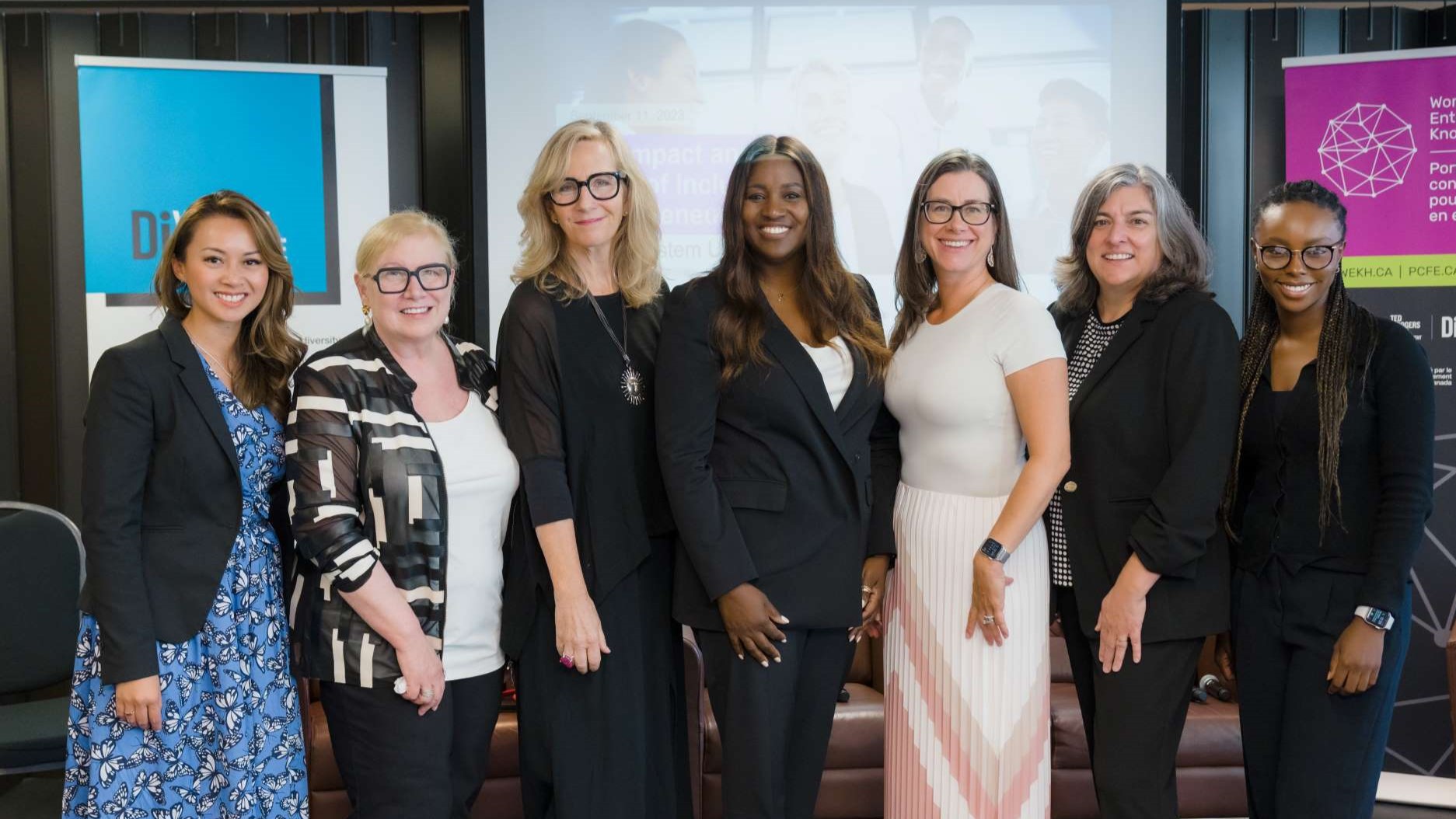
In September, DI brought together leaders in government and entrepreneurship to discuss the barriers, challenges and successes of advancing equity, diversity and inclusion in small business. Rechie Valdez, minister of small business, was the featured speaker among other women leaders. More than 100 people attended the in-person event, which was also live-streamed in English and French to more than 120 people.
WATCH: Rechie Valdez joins panel with small business leaders (external link, opens in new window)

This July, the Black Business and Professional Association and DI celebrated the leadership of Black women. Insights included that Black women leaders bring diverse perspectives and competencies to the table, making them exceptional in their industries, yet, as DI research has found, they face barriers to reaching leadership roles (opens in new window) and advancing their businesses as entrepreneurs (external link, opens in new window) . The event also explored solutions.
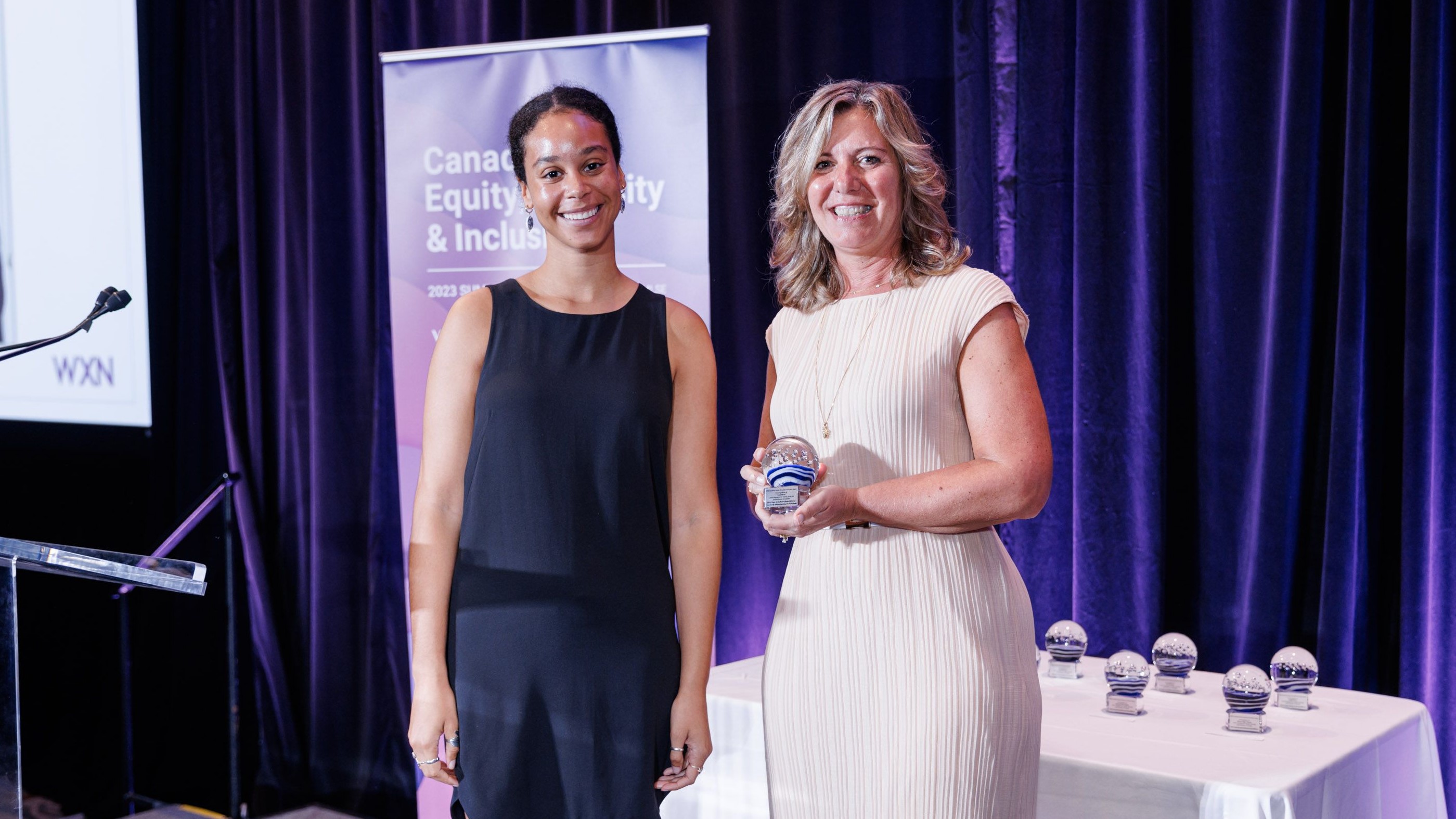
In June, hundreds of equity, diversity and inclusion professionals gathered to participate in the Canadian Equity, Diversity and Inclusion Summit and Awards, organized by the Women's Executive Network (WXN). Nancy Mitchell, director of research for special projects at DI, presented the Chair of the Board 50 – 30 Challenge award. The 50 – 30 Challenge, (external link, opens in new window) in which DI is an ecosystem partner, promotes the creation of diverse teams on boards and executive teams.

In June, DI brought together more than 24 experts at the virtual conference, Online Hate, Media (Mis)Representation and Systemic Racism (opens in new window) . More than 450 people attended the first day of a two-day event where experts discussed the rise of hate crimes and hate in online spaces targeting Indigenous Peoples, Muslims, Jews, women, Black and other racialized people, the 2SLGBTQ+ community and other equity-deserving groups. The second day tackled solutions (opens in new window) . The conference, funded by the Social Sciences and Humanities Research Council, resonated with a broad audience as seen in high engagement on DI’s social channels (external link, opens in new window) .
WATCH: Full conference on YouTube (external link, opens in new window)
Innovative programming

This fall, DI received $2.4 million from the Skills for Success (external link, opens in new window) program to continue building on its extensive research on small and medium-sized enterprises’ training needs, and its skills development and job placement expertise for equity-deserving groups with a new program called ADaPT4Success (opens in new window) .

In October, MyStartr (external link, opens in new window) , the employer-led program and digital platform connecting diverse young people with jobs, moved to DI from MaRS Discovery District. It joins DI’s suite of services aimed at supporting employers with access to diverse talent from across Canada, including Black and other youth; newcomers, including refugees; Indigenous Peoples; women living in poverty; persons with disabilities and others.
In March, DI shared research on ADaPT (external link, opens in new window) that shows it has trained more than 1,200 youth, 79% of whom identify as diverse. The program averaged placement rates of over 90% and satisfaction rates of 88%, even during the shift to online learning during the COVID-19 pandemic. ADaPT is a work-integrated learning program created by DI with support from the Future Skills Centre.

This summer, DI met participants of the Women’s Entrepreneur Hub, who were taking the next step in their entrepreneurial journey by becoming vendors at local markets. The program, now in its fifth year, is an initiative of DI and the Scadding Court Community Centre designed to guide women in creating flourishing businesses. More than 340 women have graduated from the program, with more than 140 of them starting their own businesses.
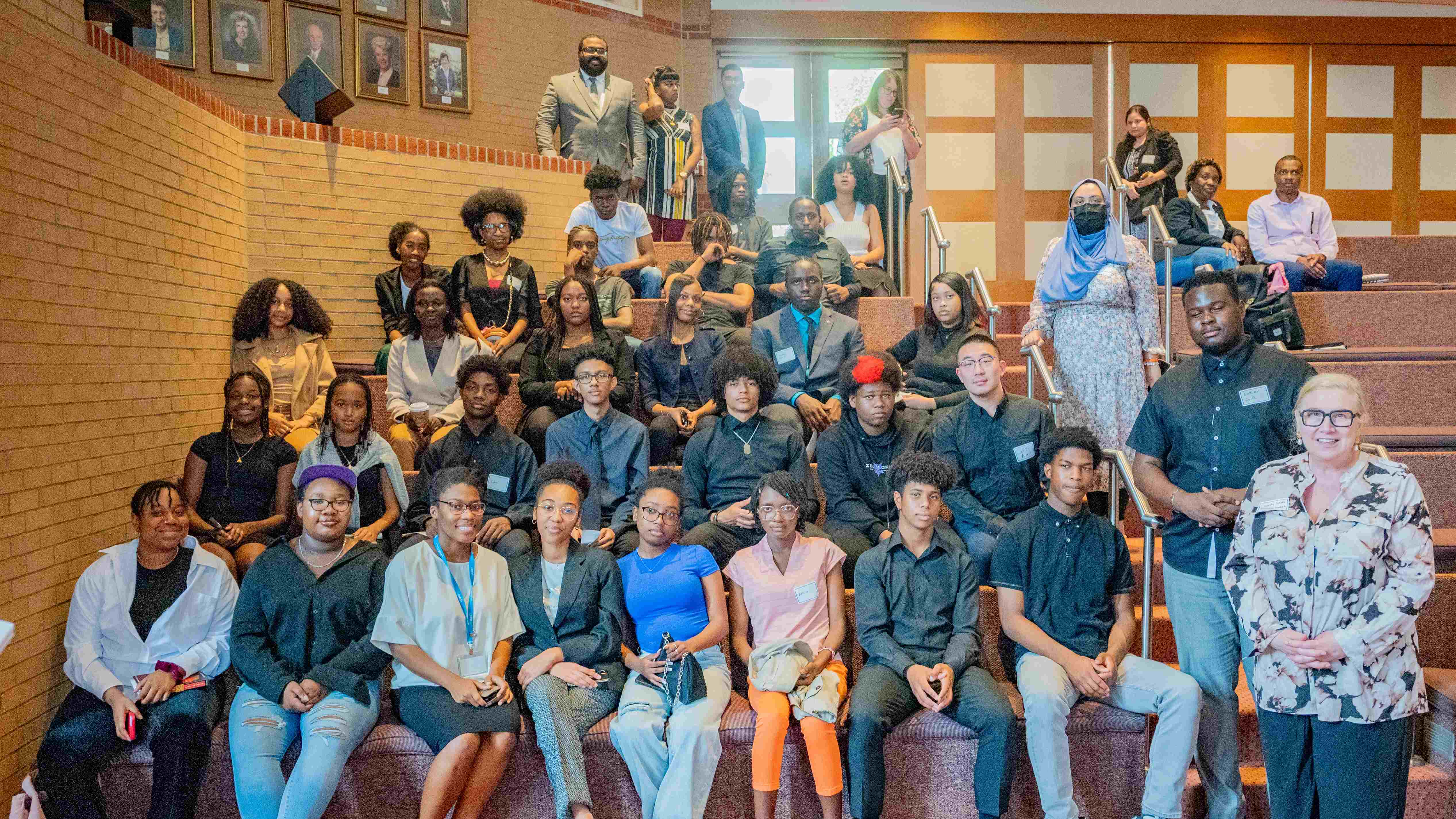
In July, students from the Peel District School Board pitched their business plans to judges from HSBC in an effort to earn micro-grants. The competition capped a five-week co-op program for more than 30 students. Supported by the Ontario government’s Black Youth Action Plan (external link, opens in new window) , HSBC and DI’s Advanced Digital and Professional Training (AdaPT) program, the students learned digital skills and applied those skills to build websites.