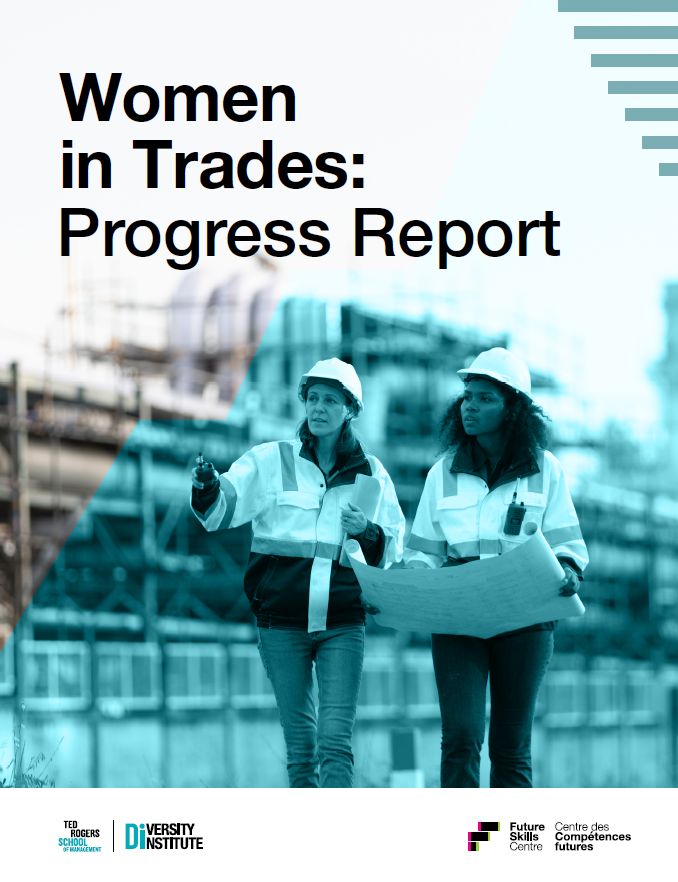
Women in Trades: Progress Report
Canada | 2026
The skilled trade sector is vital to Canada’s economy and nation-building projects, but it is facing a significant labour shortage. This shortage has worsened in recent years due to an aging labour market. In response to the mounting pressure created by labour gaps, the Government of Canada to invest in 2026 Team Canada Strong, a $8 billion initiative designed to recruit, train, and hire up to 100,000 additional Red Seal workers over the next five years.
At the same time, women remain vastly underrepresented in most skilled trades as a result of barriers that inhibit women’s entry, advancement, and retention in the skilled trades sector. While investments such as Team Canada Strong have been made to fill labour gaps, workforce expansion strategies will see limited impact if systemic barriers to women’s participation in the skill trades go unaddressed. As such, this report explores longstanding barriers to women’s participation in the skills trades and identifies strategies and initiatives intended to address these barriers. To do so, the report’s authors examine Canadian and international approaches to promoting gender equity in the skilled trades.
Findings
The report’s authors identified the following barriers to women’s participation in the skilled trades at the societal, organizational, and individual levels:
- Societal: Societal stereotypes portray skilled trades as non-traditional pathways for women, challenging their entry and participation in the sector.
- Organizational: Hostile environments in educational settings and workplaces lead to unequal opportunities for women in trades, especially apprentices.
- Individual: Individuals tasked with recommending trades careers to girls often lack accurate information needed to support career pathing.
Based on the examination of the barriers, the authors identified the following promising practices to advance gender equity in the skilled trades:
- Societal: Targeted funding initiatives under the Canadian Apprenticeship Strategy (CAS) and Community Benefits Agreements (CBAs) tie infrastructure investments to equity goals, leading employers and training providers to invest in supports for women.
- Organizational: Programs targeted towards women can improve completion rates for women during their training journeys. Examples of programs include union and college-led mentorship programs and pre-apprenticeship streams.
- Individual: Motivating women and girls to join the skilled trades workforce can be achieved through individual empowerment such as comprehensive career-mapping tools and school-based outreach.
Conclusions and Recommendations
Based on the findings, the following selected recommendations provide guidance for promising actions that should be taken to promote women’s participation in the skilled trades:
- Governments should set direction, establish standards, and fund infrastructure needed to scale what works.
- Organizations should translate policy into day-to-day practice by establishing strong leadership, inclusive practices, accountable measurement, and cross-sector partnerships.
- Women and girls should be provided with career pathing guidance including wraparound supports and mentors and role models. At the educational level, parents, teachers, and guidance counselors should have access to accurate information about trades careers and pathways to help guide girls who want to enter the skilled trades.
For the full findings and recommendations on promoting gender equity in the skilled trades, read the full report.
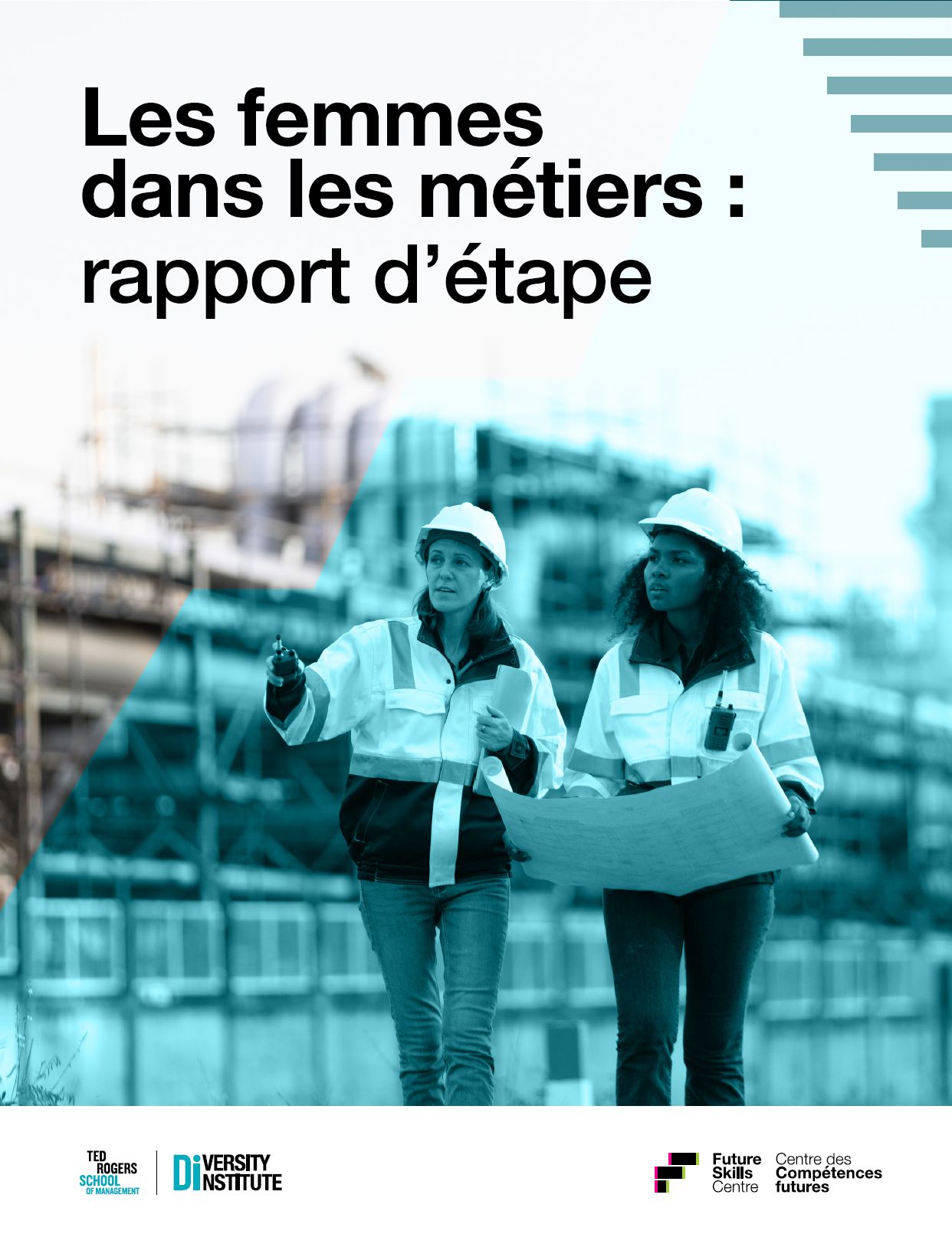
Les femmes dans les métiers : rapport d’étape
Le secteur des métiers spécialisés joue un rôle essentiel dans l’économie canadienne et dans les projets d’édification du pays, mais il fait face à une importante pénurie de main-d’œuvre. Cette pénurie s’est aggravée au cours des dernières années en raison du vieillissement de la population active. Pour répondre aux pressions croissantes engendrées par cette pénurie de main-d’œuvre, le gouvernement du Canada a annoncé en 2026 un investissement dans l’initiative Une Équipe Canada forte, dotée de 8 milliards de dollars et visant à recruter, à former et à embaucher jusqu’à 100 000 travailleuses et travailleurs supplémentaires dans les métiers désignés Sceau rouge au cours des cinq prochaines années.
Parallèlement, les femmes demeurent largement sous-représentées dans la plupart des métiers spécialisés en raison d’obstacles qui freinent leur accès au secteur, leur avancement professionnel et leur maintien en emploi. Bien que des investissements comme l’initiative Une Équipe Canada forte aient été réalisés afin de combler les pénuries de main-d’œuvre, les stratégies visant à accroître les effectifs auront une portée limitée si les obstacles systémiques à la participation des femmes aux métiers spécialisés ne sont pas éliminés. Ainsi, le présent rapport examine les obstacles de longue date à la participation des femmes aux métiers spécialisés et présente des stratégies et des initiatives visant à y remédier. Pour ce faire, les auteures et auteurs du rapport se penchent sur des approches canadiennes et internationales visant à promouvoir l’équité entre les genres dans les métiers spécialisés.
Constats
Les auteures et auteurs du rapport ont relevé les obstacles suivants à la participation des femmes aux métiers spécialisés, aux niveaux sociétal, organisationnel et individuel :
- Sociétal : Les stéréotypes sociaux présentent les métiers spécialisés comme des parcours non traditionnels pour les femmes, ce qui entrave leur accès au secteur et leur participation à celui-ci.
- Organisationnel : Les milieux hostiles dans les établissements d’enseignement et les lieux de travail entraînent des inégalités d’accès aux possibilités pour les femmes dans les métiers spécialisés, en particulier pour les apprenties.
- Individuel : Les personnes chargées de conseiller les filles sur les carrières dans les métiers spécialisés ne disposent souvent pas des renseignements exacts nécessaires pour les aider à choisir leur parcours professionnel.
À partir de l’analyse de ces obstacles, les auteures et auteurs ont relevé les pratiques prometteuses suivantes pour faire progresser l’équité entre les genres dans les métiers spécialisés :
- Sociétal : Des initiatives de financement ciblées dans le cadre de la Stratégie canadienne en matière d’apprentissage (SCA) et des ententes sur les avantages communautaires (EAC) permettent d’arrimer les investissements dans les infrastructures à des objectifs d’équité, ce qui incite les employeurs et les prestataires de formation à investir dans des mesures de soutien destinées aux femmes.
- Organisationnel : Les programmes destinés expressément aux femmes peuvent améliorer leurs taux d’achèvement tout au long de leur parcours de formation. Il peut notamment s’agir de programmes de mentorat dirigés par des syndicats ou des collèges, ainsi que de parcours de préapprentissage.
- Individuel : Il est possible d’encourager les femmes et les filles à intégrer la main-d’œuvre des métiers spécialisés au moyen de mesures favorisant leur autonomisation, notamment des outils complets de planification de carrière et des activités de sensibilisation menées dans les écoles.
Conclusions et recommandations
À la lumière de ces constats, les recommandations sélectionnées ci-dessous orientent les mesures prometteuses à mettre en œuvre afin de favoriser la participation des femmes aux métiers spécialisés :
- Les gouvernements devraient définir les orientations, établir des normes et financer les infrastructures nécessaires pour déployer à plus grande échelle les approches qui fonctionnent.
- Les organisations devraient traduire les politiques en pratiques quotidiennes en assurant un leadership solide, en adoptant des pratiques inclusives, en mettant en place des mécanismes de mesure et de reddition de comptes et en établissant des partenariats intersectoriels.
- Les femmes et les filles devraient bénéficier d’un accompagnement dans la planification de leur parcours professionnel, notamment de mesures de soutien globales ainsi que de l’appui de mentores et mentors et de modèles inspirants. Dans le milieu de l’éducation, les parents, le personnel enseignant et les conseillères et conseillers d’orientation devraient avoir accès à des renseignements exacts sur les carrières dans les métiers spécialisés et les parcours permettant d’y accéder afin de mieux orienter les filles qui souhaitent intégrer ce secteur.
Pour consulter l’ensemble des constats et des recommandations visant à promouvoir l’équité entre les genres dans les métiers spécialisés, lisez le rapport complet.