Turning AI Leadership into Adoption, Skills and Productivity
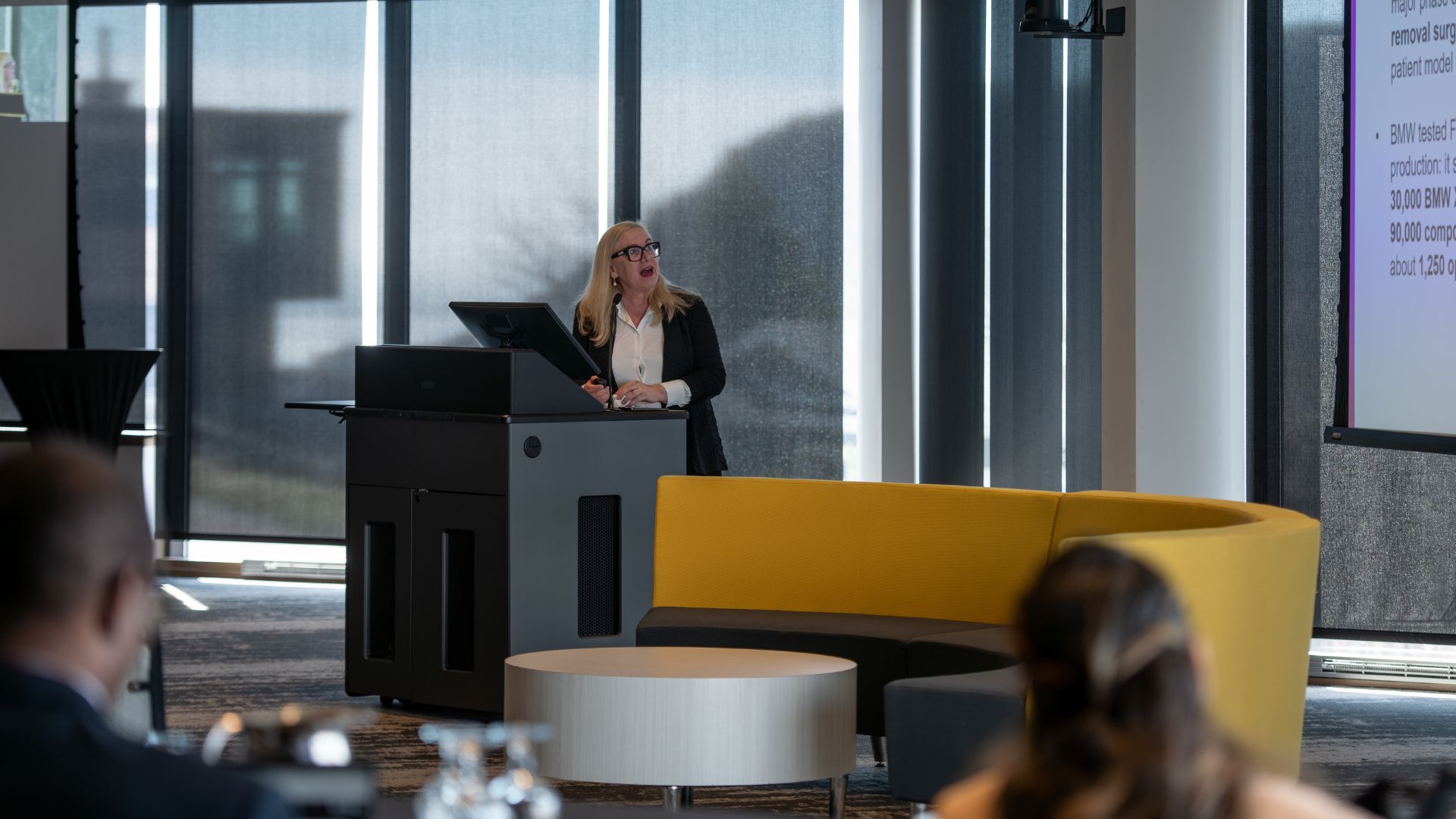
At the AI, Future Skills and Productivity hosted by the Memorial University of Newfoundland and the Diversity Institute, Wendy Cukier, Founder and Academic Director of DI delivered a presentation on turning AI leadership into adoption, skills and productivity.
Canada is recognized as a global leader in artificial intelligence (AI) research and development, home to 10% of the world’s top AI researchers and pioneers. While investment in Canadian AI continues to grow, challenges remain around adoption, skills development and workforce readiness, particularly among small and medium-sized enterprises (SMEs) that make up much of Canada’s economy. As AI rapidly reshapes workplaces and industries, conversations about productivity, skills and the future of work have become increasingly urgent.
Following a successful conference in 2025, the Memorial University of Newfoundland and Labrador (MUN) and the Diversity Institute (DI) co-organized the 2026 AI, Future Skills and Productivity Conference. The conference brought together researchers, industry leaders and policymakers to examine how AI and emerging technologies are transforming productivity, careers and organizational practices across sectors. The event featured a keynote presentation by Wendy Cukier, Founder and Academic Director of DI. The presentation built on DI’s ongoing research, supported by the Future Skills Centre (external link) (FSC), around AI adoption, future skills and inclusive workforce training.
The Canadian AI paradox
Cukier opened by highlighting the Canadian context: Canada is facing economic and technological shifts that many organizations are unprepared for. She framed equity, diversity and inclusion (EDI) as both a business and market reality, emphasizing that Canada’s diversity is one of its greatest competitive advantages. Women, immigrants, racialized communities and people with disabilities represent growing economic influence, both as consumers and as talent. For businesses, particularly SMEs, limiting recruitment and innovation to a narrow segment of the population means missing opportunities for growth.
She also highlighted the challenge of measuring AI adoption across Canada. While Statistics Canada reports that only 12% of SMEs have used AI in the production of goods or the delivery of services in the past year, Cukier noted that adoption rates increase significantly when businesses are asked about specific tools such as Microsoft Copilot. For example, a 2025 survey conducted by DI, FSC and Memorial University found that 30% of businesses were using AI in some capacity. Broader definitions that include a wider range of AI-enabled tools across functions yield higher figures, she said, pointing to a (PDF file) BDC survey (external link) , where 39% of participants initially said they used AI and after being given a definition and examples, such as automated translation and generative AI, the share rose to 66%. This effect suggests SME AI adoption is often underreported.
AI transformation
She pointed to the growing impact of physical AI, including robotics increasingly capable of performing manual and skilled labour tasks once considered resistant to automation. Advanced robotic systems are becoming more affordable and commercially available, she explained, challenging assumptions that trades and physical labour jobs will remain untouched by AI-driven disruption.
Cukier argued that artificial intelligence represents a technological shift unlike previous waves of digital transformation, cautioning against comparisons to earlier innovations such as the internet or automated banking systems. “My view is that this is categorically different,” she said. While AI presents opportunities across sectors, from healthcare (external link) to education (external link) to agriculture and construction, she stressed that its reach and pace of adoption could fundamentally reshape work and business operations across the economy. “I think no jobs are safe,” Cukier added, emphasizing that the central issue is not whether AI will have large impacts, but “the pace of adoption,” and the growing divide between “early adopters and laggards.”
AI impact for SMEs
A key focus of her remarks was the impact of AI on small and medium-sized enterprises, which employ a significant share of Canadians yet often lack access to the training, tools and resources needed to adopt emerging technologies effectively. While concerns about automation and job displacement remain, she noted the tension between increasing productivity and protecting economic stability. “We’re in a bit of a conundrum,” she said. “On the one hand, we want to improve productivity inputs, outputs. On the other hand, if we lose all the jobs, the economy will crash.”
At the same time, Cukier pointed to examples of SMEs using AI strategically to expand their reach and competitiveness rather than replace workers outright. “What we see is they are using AI to look bigger,” she said, explaining that smaller firms can leverage AI tools to increase productivity, serve more customers and strengthen their international presence. “It’s also good to have little companies with lots of customers, good productivity and international footprint,” she added, underscoring the potential for AI adoption to support growth and innovation across Canada’s SME sector when paired with equitable access to skills and training.
The path forward: Training and AI literacy
Cukier framed Canada’s AI challenge not simply as a question of innovation, but of adoption and preparedness. She argued that AI will not divide jobs neatly into “safe” and “at risk” categories, but instead reshape tasks, workflows and skill requirements across industries. The benefits of AI, she noted, are already being distributed unevenly. “When you think about that productivity paradox, some companies, but it's also some individuals within some companies, are gaining massive improvements in their productivity and their outputs relative to others,” she said. Understanding how these “super users” are integrating AI into their work, she argued, will be critical to ensuring broader economic gains rather than widening gaps between firms, sectors and workers.
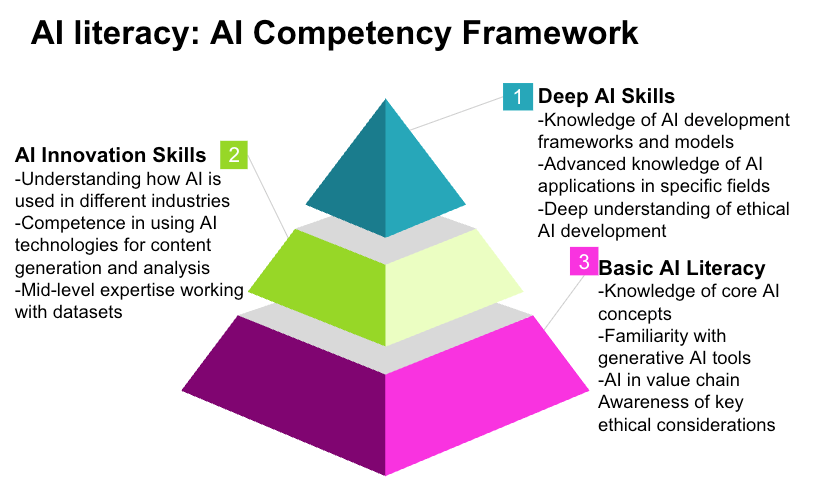
Central to that transition is training and literacy. Cukier stressed that the most in-demand AI skills are not necessarily highly specialized technical skills tied to building large language models or advanced systems. “Those skills are important, but those are not the skills that are in demand,” she said. The AI competency framework, created by DI and FSC, highlights the different levels of AI skills required. Cukier emphasized that organizations need workers with foundational AI literacy who understand both the risks and opportunities associated with the technology, alongside people who can connect AI tools to business and organizational processes. “Those kind of hybrids who can come from any discipline but are not scared of technology, in my view, are worth their weight in gold,” she said.
Throughout the discussion, Cukier underscored that responsible AI practices, including transparency, accountability and human oversight, will be essential to building trust and scaling adoption effectively. For SMEs in particular, AI has the potential to expand capacity, improve responsiveness and allow firms to compete beyond their size, but only if organizations have access to the skills, supports and governance frameworks needed to use the technology responsibly. The discussion concluded with a call for a human-centred approach to AI adoption, one that balances innovation and productivity with inclusion, workforce readiness and long-term economic resilience.