Global Women Leaders Convene to Discuss AI’s Impact on the Economy
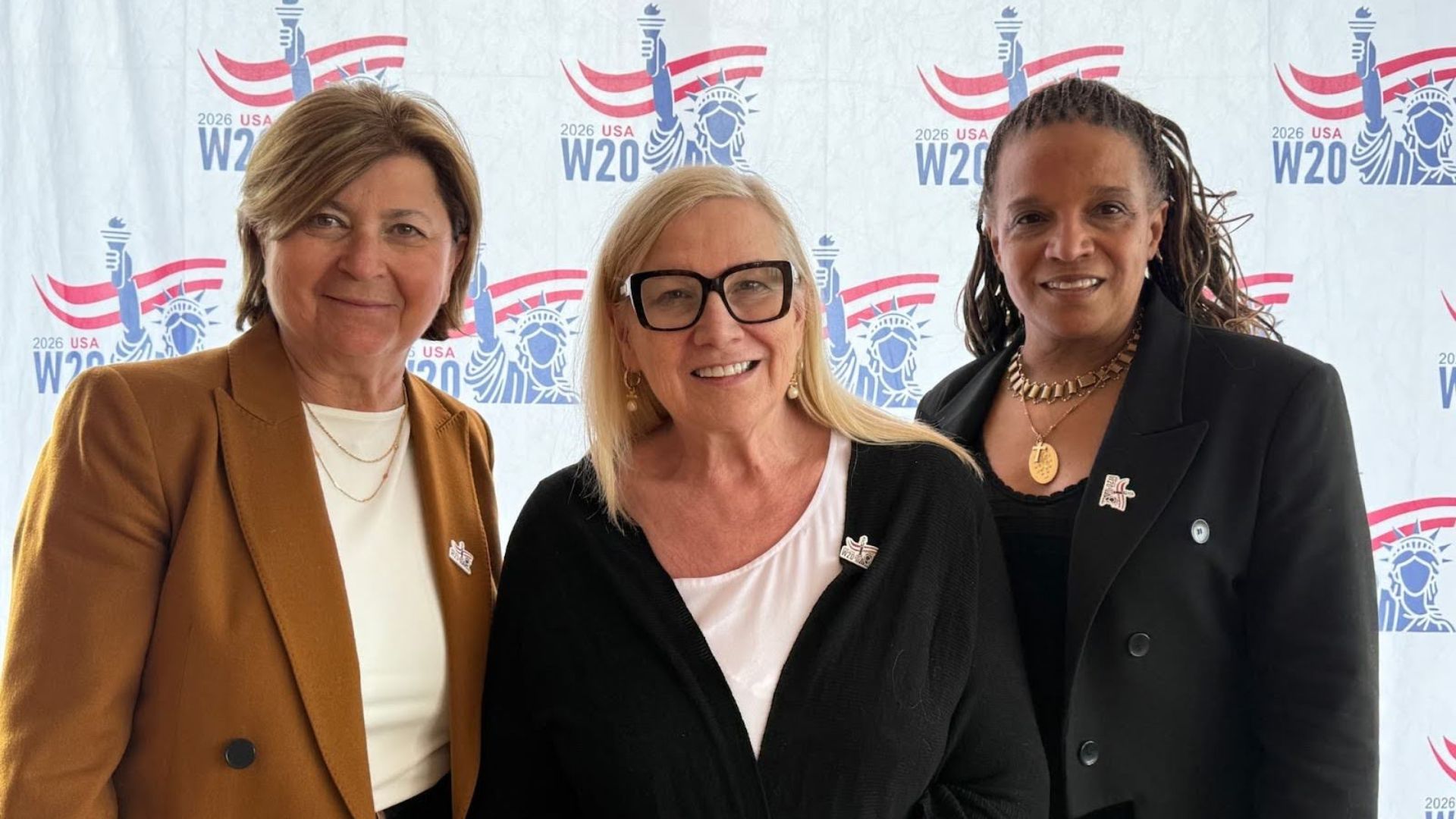
Tania Saba (from left to right), BMO Chair in Diversity and Governance at Université de Montréal; Wendy Cukier, Founder and Academic Director of the Diversity Institute (DI); and Tamara Thermitus, DI Special Advisor and Bouton Fellow at McGill University represented Canada and shared DI research at the Women20 Inception Meeting in New York which focused on AI in the global economy.
The Diversity Institute (DI) has been participating in the Women20 (W20) delegation for the last three years, including meetings in Rio de Janeiro and Johannesburg, to ensure a gender lens is brought to the priorities of the G20, a forum of countries created to build mutual understanding and foster collaboration. The team participated, most recently at the W20 Inception Meeting in New York. Tania Saba, BMO Chair in Diversity and Governance at Université de Montréal, was appointed co-chair of the Canadian W20 delegation and was joined by Wendy Cukier, DI Founder and Academic Director, and Tamara Thermitus, DI Special Advisor and Bouton Fellow at McGill University. Held as the United States assumed leadership of the G20 and W20, and with participation from delegates across more than 15 countries, the meeting was one of many recent global forums where issues of inclusion, equity and emerging technologies such as AI were discussed.
A recent study highlighted the importance of the W20 discussions in shaping the G20 agenda. Between 2015 and 2024, over one third of W20 recommendations have been reflected in G20 declarations. “It is clear, W20's voice matters and that Canada’s contributions are making an impact on the global economy,” Thermitus said. Now, it’s about addressing the uneven implementation.
The W20 agenda opened with a focus on “The AI Frontier: How AI is Transforming Work, Life and the Global Economy,” with Alice Chen of Accenture outlining global trends, impacts and their implications for women. Her remarks echoed findings from DI research, which has highlighted both the transformational potential of AI and persistent gaps in adoption that risk widening the digital divide. The DI team has been participating in a range of committees, including the Senate of Canada’s Standing Committee on Human Rights and House of Commons Standing Committee on Industry and Technology, all of which underscore the contributions of women to the economy and the critical need to bring a gender lens to the table whether in discussions of AI adoption, major projects or trade. As Cukier noted, “In Canada, women are the majority of university graduates, we influence the majority of purchasing decisions and we now own 20% of businesses and are partners in 17% of others. Businesses majority owned by women contribute more than $90 to the economy each year and employ nearly one million people. Any economic or digital transformation strategy which omits women is missing massive opportunities”.
Despite their critical role, SMEs face distinct barriers to AI adoption, including limited resources, lack of training, mistrust of “black box” systems, and uneven access to infrastructure and expertise. And women led businesses face compounded barriers including access to technology as well as skills, but the digital divide with AI is much narrower. The potential benefits are clear: nearly four in five workers using AI report increased productivity, while two-thirds say it enhances their creativity, evidence that adoption can improve both performance and job quality. The big challenge is responsible use which maximizes benefits and minimizes risks: With fewer than one in ten SMEs reporting access to formal AI training, and nearly half of employees using AI tools receiving no training at all, skills development has emerged as a decisive lever, particularly as demand for AI-related competencies rises rapidly, driving wage premiums of up to 56% and further widening gaps for SMEs.
With strategic investments, cross-sector collaboration and an unwavering focus on inclusive implementation, Canada can empower its SMEs to not only adopt AI, but to thrive in a rapidly transforming global economy. However, this transformation will only be as strong as its inclusion. Women are not a niche consideration, they are central to economic growth, innovation and resilience. As the W20 continues to shape global priorities, the message is clear: economies that fully leverage the talents, leadership and perspectives of women will be better positioned to harness the benefits of AI and navigate the future of work. Further insights, including real-world examples of how Canadian SMEs are already using AI, can be found in DI and FSC’s Artificial Intelligence in Action for Small and Medium-Sized Enterprises report.