Advancing Gender Equality on a Global Stage: Diversity Institute at the United Nations Commission on the Status of Women (CSW70)
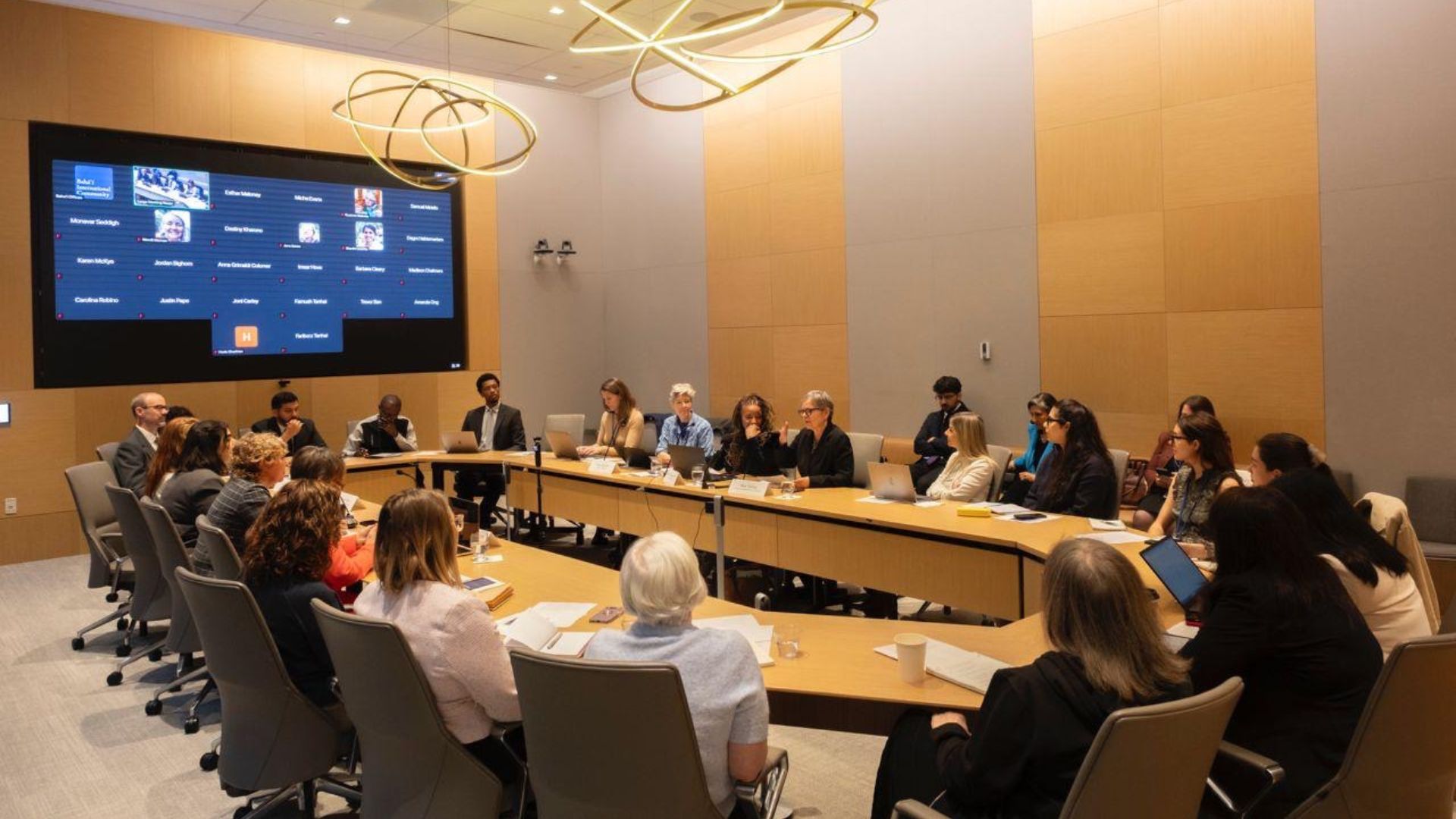
Women leaders discuss advancing gender equality, access to justice, and inclusive economic participation at the United Nations Commission on the Status of Women (CSW70) in New York, March 2026.
The 70th session of the United Nations Commission on the Status of Women (CSW70) convenes global leaders, policymakers, researchers and advocates to advance gender equality and the empowerment of women and girls. CSW70 also highlights the persistent structural barriers that continue to limit women’s full participation in society, from discriminatory laws and institutional biases to deeply embedded cultural norms. Addressing these challenges requires not only policy reform but also a deeper transformation of the systems and ideas that sustain inequality.
Special Advisor Tamara Thermitus, Ad. E., Senior Boulton Fellow at McGill Law Faculty represented the Diversity Institute (DI) throughout the week. She was a panelist at the event, Reconceptualizing Justice at Work: Structural and Cultural Transformation, hosted by the Offices of Public Affairs of the Bahá’í Communities of Canada, the United Kingdom, the Bahá’í International Community and the Government of Canada. Moderated by Rebecca Vachon, Baha’i Office of Public Affairs, Canada, and featuring Sheida Tanhai, Baha’i Office of Public Affairs, UK, the discussion explored how applying the principle of justice to workplace structures, policies and culture can help address gender inequities and create more inclusive environments. It also covered systemic barriers women continue to face and highlighted practical strategies organizations are implementing to advance gender equality across workplace systems and culture.
In her remarks, Thermitus recalled Simone de Beauvoir’s assertion that “one is not born, but rather becomes, a woman” highlighting the socially constructed nature of gender and the systems that shape women’s lived experiences.
Thermitus emphasized that efforts to combat discrimination must go beyond legal frameworks.
“The lack of an [integrated] strategy is a serious limitation. Any attempt to eradicate the racist culture and mentality requires, mobilizing tools to dismantle its deep-rooted causes, mechanisms, processes, expressions and language. The law forbids, condemns, redresses and remedies but does not necessarily bring about a change of heart,” Thermitus said.
Applying an ecological model
She pointed to DI’s ecological model, which illustrates how inequality is reproduced across multiple, interconnected levels, from laws and policies to organizational structures, cultural norms, everyday interactions, and individual access to opportunities and agency. The model demonstrates that interventions targeting only one level are often insufficient, as systemic barriers reinforce one another across these layers. Achieving meaningful change therefore requires coordinated, multi-level action, grounded in sustained and evidence-based efforts to transform the structures that continue to reproduce gender inequality.
Thermitus also drew attention to epistemic injustice, particularly testimonial injustice, where certain voices are undervalued or excluded altogether. Addressing this requires intentional inclusion of marginalized perspectives and the use of counter-storytelling to challenge dominant narratives and reshape understanding.
The path forward
The discussions at CSW70 reinforce a critical message: achieving gender equality requires more than incremental change. It demands a comprehensive, intersectional approach that addresses the structural, cultural, and institutional roots of inequality.
For policymakers, organizations and advocates, this means adopting intersectional, systems-based frameworks, to guide policy and program design, while strengthening data collection and accountability through the use of disaggregated data to better understand disparities. It also requires transforming workplace structures and cultures, not just policies, to enable equitable participation and leadership, centering marginalized voices through inclusive dialogue and counter-narratives, and investing in evidence-based solutions that recognize equity as essential to economic growth and social cohesion.