Why Building AI Literacy Could Unlock Growth for Canada’s SMEs
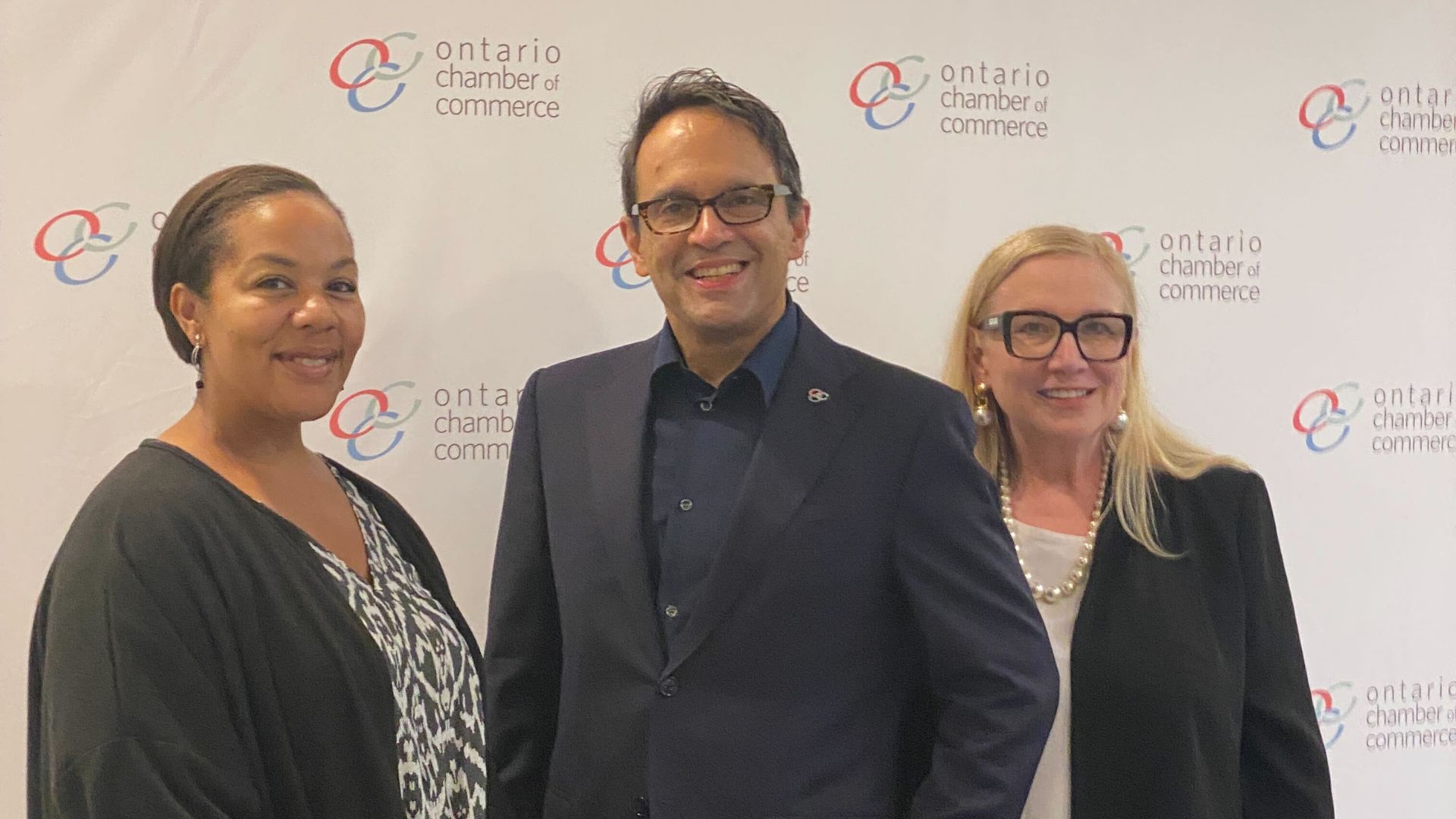
On September 23, 2025 at the Skills Bridge Summit, (left to right) Hon. Charmaine Williams, Ontario’s Associate Minister of Women’s Social and Economic Opportunity; Daniel Tisch, President and Chief Executive Officer of the Ontario Chamber of Commerce; and Dr. Wendy Cukier, Founder of the Diversity Institute and Academic Research Director, Future Skills Centre, participated in discussions on pressing issues for Canada’s entrepreneurs.
Recently, the Skills Bridge Summit was attended by almost 200 policymakers, entrepreneurs, researchers and business support organizations to explore the implications of recent developments for Small and Medium Enterprises. In today’s rapidly evolving economy, small and medium-sized enterprises (SMEs), which account for the majority of private sector employment in Canada, are faced with responding to global trade wars and rising costs, as well as digital transformation. Artificial intelligence (AI) is creating disruption on a scale perhaps never seen before. To compete, they need the right skills to adapt, grow and lead.
Recent research by the Diversity Institute (DI), Bridging the AI Gap in SMEs in Canada and Artificial Intelligence in Action for Small and Medium-Sized Enterprises, has helped illuminate the AI paradox - Canada leads in the development of AI technologies, but adoption has been slow, particularly among SMEs. The reports examine the current state of play and document both the benefits, illustrated with use cases from across sectors, but also the risks. Employees are getting ahead of their employers in using AI technologies, often without the formal training or guardrails needed to avoid risks. The research also affirmed that while there is an urgent need to harness the potential of AI, many lack the resources, skills and expertise needed to drive responsible adoption.
Funded by the Future Skills Centre (FSC), the Skills Bridge (external link) program is a collaboration among the Ontario Chamber of Commerce, DI and Magnet to provide SMEs with access to free and curated online training that strengthens adaptability, digital capacity, leadership, human resources (HR) practices and equity, diversity and inclusion. The platform connects business leaders with practical tools and learning opportunities to build the technical and soft skills essential for long-term growth.
Wendy Cukier, Founder of the Diversity Institute and Academic Research Director, FSC, also underscored the opportunities AI presents to either bridge or exacerbate the digital divide. “Generative AI is a game changer and “the English Major’s revenge,” she said. She referenced recent DI’s research with Environics and supported by the Future Skills Centre showing that while there is a gender gap in AI adoption, it's much smaller than with other technologies. “Ensuring women entrepreneurs have the skills to harness AI’s potential is key.”
Urgency of AI literacy and skills development
These issues were explored in a panel on AI adoption. Mark Patterson, Executive Director of Magnet, emphasized the urgency of preparing Canada’s workforce for rapid technological change. Other countries are advancing at a faster pace, he noted, cautioning against Canadian complacency. Generative AI alone is projected to add up to $187 billion in annual value by 2030, including up to $100 billion per year to SMEs. AI is no longer just for big tech firms; SMEs, the backbone of the Canadian economy, can also utilize the technology to innovate and cut costs. Yet, Daniel Tisch, President and Chief Executive Officer of the OCC, said in his opening remarks, that while 61% of SMEs express confidence in their ability to adapt, many remain unsure how to begin adopting AI.
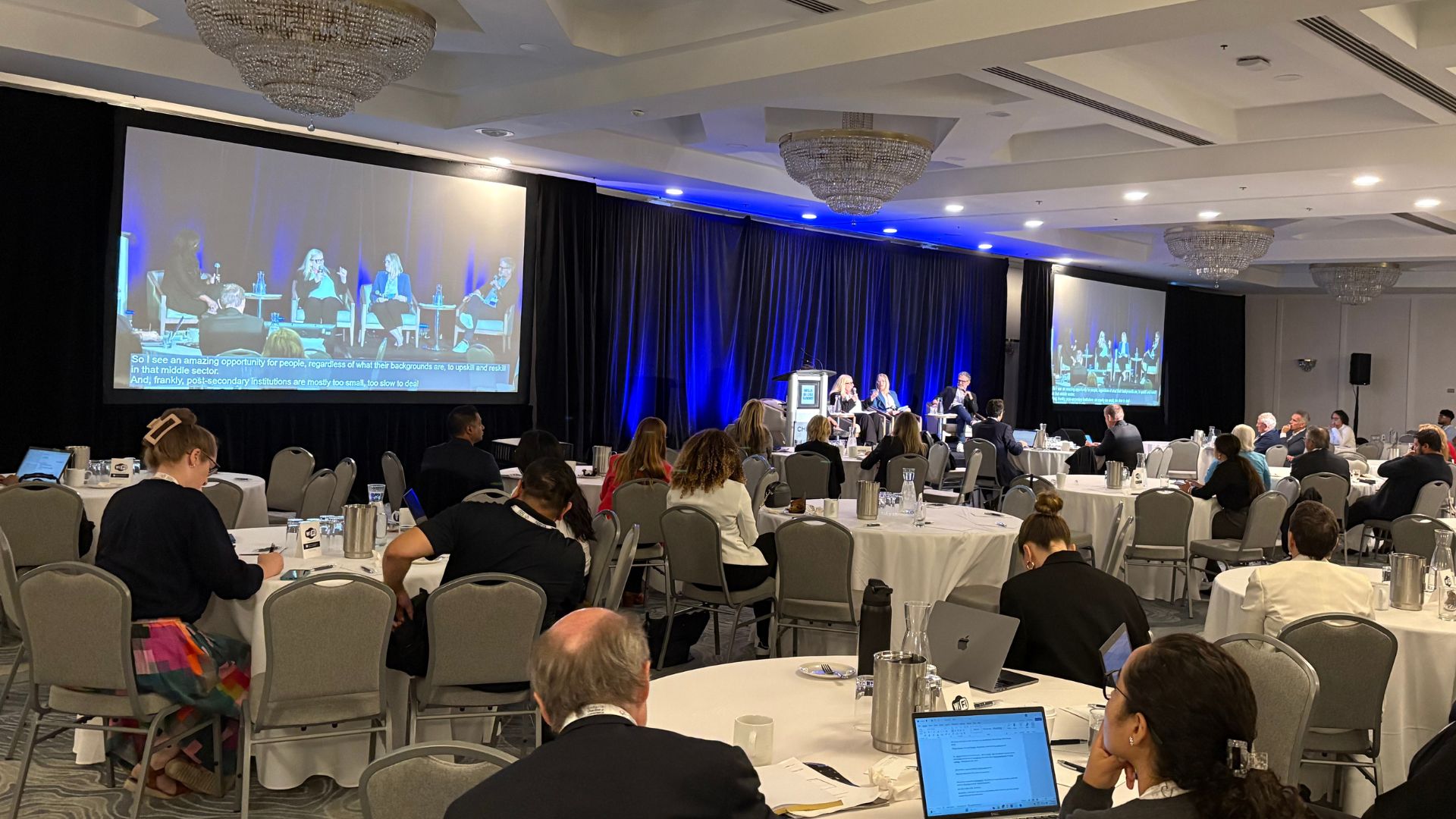
Nearly 200 people attended the Skills Bridge Summit’s panel discussion on AI disruption and resilience.
Cukier highlighted the importance of addressing the widening AI literacy and skills gap, noting that leaders often underestimate the speed of technological change, while employees are left without the training needed to use AI effectively. While Canada is recognized as a global leader in AI research, that does not automatically translate into economic competitiveness. As Lisa Everett, AI Skills Director at Microsoft Elevate, noted, “We have been leaders in research, but the skills gap is growing tremendously every day.”
Cukier suggested that many are underestimating the disruptive impact of AI. She noted, “ I have been tracking technology trends for more than 30 years. We are good at predicting the direction but not the pace of change. In 2013, Osbourne and Frey, for example, suggested 47% of jobs could be disrupted in the next 10 to 20 years but their prediction predated Generative AI. Cukier challenged suggestions that any jobs are “safe.” Even physical jobs may be threatened by the advent of physical AI and robotics. She stressed that AI literacy is now required for every job and there is a continued need for deep skills to develop AI tools. But in her view, the real opportunity comes with AI innovation skills rather than deep technology skills. “Hybrids who understand organizational strategies, processes, human behaviour, regulation and ethics and can match technology to real needs are where the demand lies,” she suggested. She referenced the AI competency framework developed by the Diversity Institute. She pointed to the AI skills report by DI and Magnet, to help guide the development of skills needed to drive AI adoption.
The role of women entrepreneurs in Canada’s economy
The summit also provided an opportunity to highlight the importance of women entrepreneurs as drivers of economic development, innovation and sustainability. Women now own 20% of businesses in Canada (external link) and women-led SMEs generate more than $90 billion in annual revenues, accounting for almost 1 million jobs. At this time of trade uncertainty and expansion, she noted recent research showing that women-owned firms are exporting at rates comparable to men-owned SMEs, and women are outpacing men in exports to non-U.S. markets, such as the U.K., India, Brazil and China. DI has many projects focused on advancing inclusive entrepreneurship and innovation, including the Women Entrepreneurship Knowledge Hub (WEKH). Wendy Cukier had the opportunity to lead a fireside chat with the Honourable Charmaine Williams, Ontario’s Associate Minister of Women’s Social and Economic Opportunity. Minister Williams underscored the need for inclusive approaches to economic transformation. “When women succeed, Ontario succeeds,” she said, pointing to government investments, including the Women’s Economic Security Fund and skills development programs, as critical supports to expand opportunities in entrepreneurship and the skilled trades.
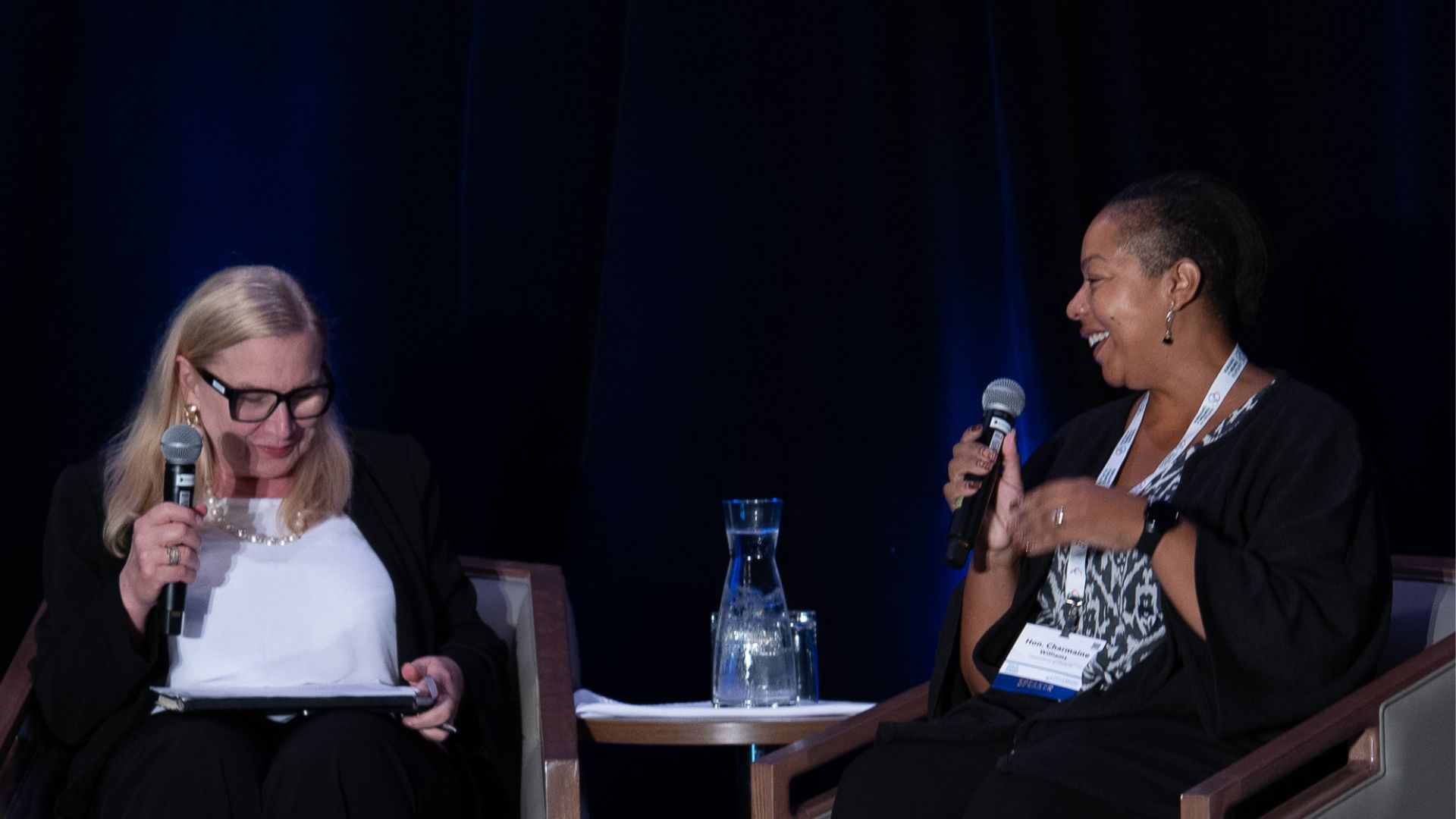
At the Skills Bridge Summit, Honourable Charmaine Williams, Ontario’s Associate Minister of Women’s Social and Economic Opportunity, discussed the important role of women entrepreneurs in Canada's economy. (Photo: Roland Isberto, OCC)
The way forward: inclusive, strategic and supported AI adoption
Looking ahead, both the summit discussions and new DI research pointed to the same conclusion: Canada’s SMEs need practical, tailored and inclusive strategies to harness the potential of AI. Speakers stressed the importance of lifelong learning, adopting growth mindsets, and entrepreneurial skills. Cukier added that the role of the Advanced Digital and Professional Training (ADaPT) suite of programs is to show how training can be adapted for different groups. “ADaPT is not a thing, it’s an approach,” she said, pointing to ADaPT for Black Youth or ADaPT for Newcomers as examples of tailored training programs. “We really have to remember that learning is a social process,” she said. “There are an equal number of people who learn in different ways, and we need to be really conscious of meeting them where they are at.”
The Diversity Institute's latest AI report outlines four key priorities for the way forward: diagnosing barriers, delivering tailored and practical tools, piloting and testing solutions and building collaborative networks that link SMEs with training providers and policymakers. Together, these efforts point to a clear path: inclusive, strategic and supported adoption of AI. With the right investments and partnerships, Canada can empower SMEs not only to embrace AI but to thrive in a rapidly transforming global economy.