Celebrating the Diversity Institute team at a summer staff appreciation event
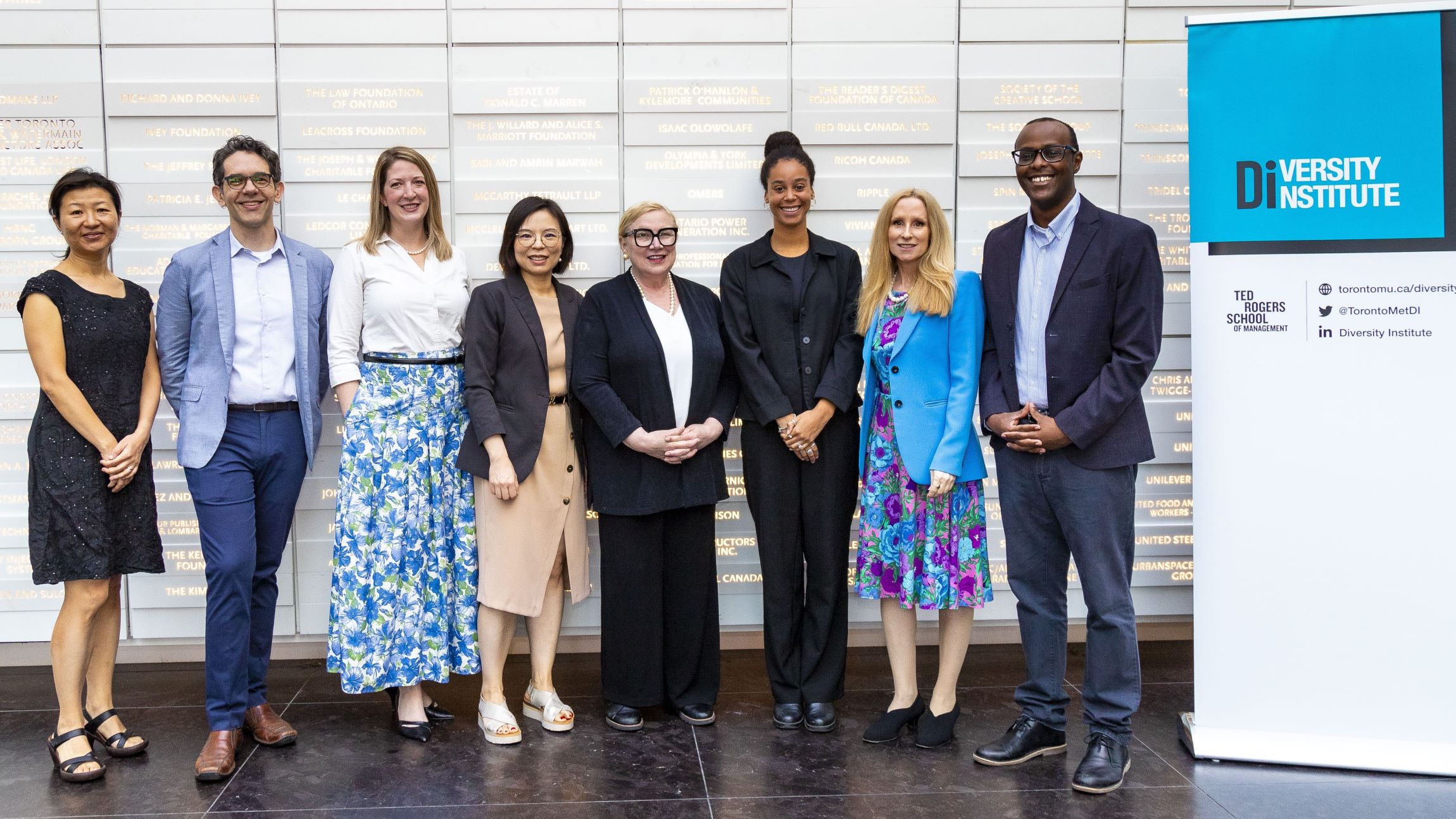
At the Diversity Institute (DI) staff celebration event, DI’s founder and academic director, Wendy Cukier, was joined with several of the organization's directors (from left to right) Guang Ying Mo, Juan Marsiaj, Meagan Trush, Lynn Xu, Wendy Cukier, Nancy Mitchell, Stephanie Roberts and Mohamed Elmi.
On August 15, 2024, the Diversity Institute (DI) held a staff appreciation event to celebrate the accomplishments and impact of the 100-strong team, provide insights into ongoing projects and foster staff camaraderie during a day of learning, networking and fun.
Wendy Cukier, DI’s founder and academic director, kicked off the event by applauding staff, past and present, for their contributions to the organization's success. “The work that DI does changes people’s minds, organizational practices, policy and what the media reports,” Cukier said, adding that the impact of the institute, founded in 1999 and located at the Ted Rogers School of Management at Toronto Metropolitan University, has been material. She highlighted several accomplishments, including partnerships with more than 350 organizations, influential research like that published in partnership with the Future Skills Centre, including several new reports, Capacity-Building for Canadian Small & Medium-Sized Enterprises, Indigenous Entrepreneurship and Social Innovation in Indigenous Tourism Development in Northern Canada and Bridging the Gender Gap: Skills for the Advancement of Women; along with the State of Women’s Entrepreneurship in Canada 2024 (external link) report, published by DI’s Women’s Entrpreneurship Knowledge Hub (WEKH).
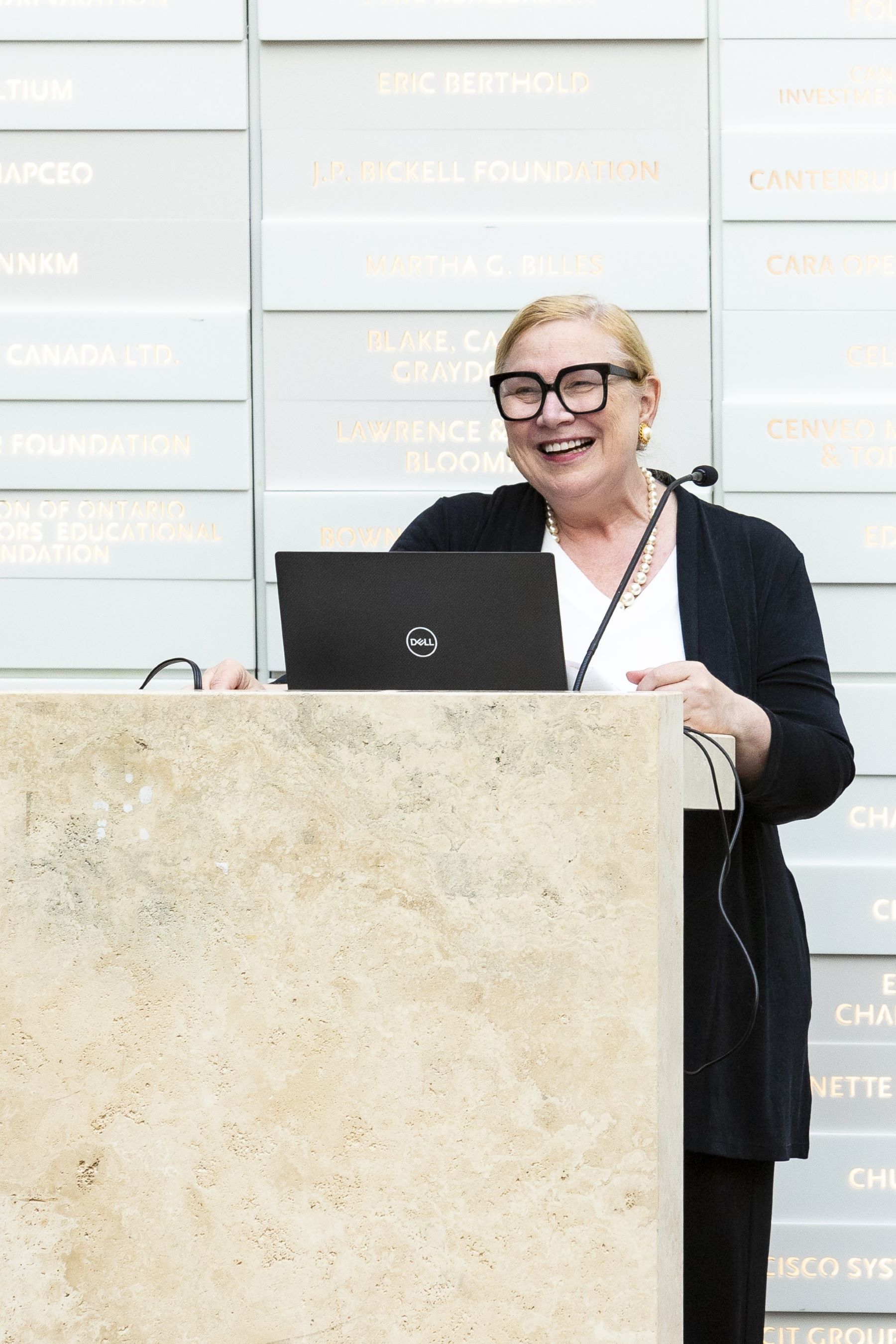
Wendy Cukier, founder and academic director of the Diversity Institute, thanks and celebrates the staff.
As Cukier reflected on impact, she offered select highlights. These included how DiversityLeads research helped shaped Bill C-25, an act to amend the Canada Business Corporations Act; creating national standards for the 50 – 30 Challenge (external link) ; expanding and redefining the definitions of innovation, technology and entrepreneurship; the inclusion of WEKH’s research in the Report of the Standing Committee on the Status of Women on the impact of the COVID-19 pandemic on women; and being a co-investigator on one of the largest grants ever received by the university, a $98-million grant from the Canada First Research Excellence Fund for Bridging Divides.
She also talked about the impact of DI’s Advanced Digital and Professional Skills Training (ADaPT) program, which has a 90% job placement rate. “For me, getting people jobs remains one of the most useful things that we do,” she said. Based on its success, the original ADaPT program has led to spinoff programs, including ADaPT for Newcomers, ADaPT4Success and ADaPT for Black Youth. She concluded by thanking the staff for everything they do and noting that the institute’s success is truly a collective effort.
Mohamed Elmi, DI’s executive director and longest-serving member, praised the team’s high-quality work. Reflecting on DI’s growth, Elmi noted that when he joined in 2014, the staff count was ten. By 2017, it had grown to 60 and now exceeds 100. “The trajectory has been unbelievable,” Elmi said. He commended the Women’s Entrepreneurship Knowledge Hub (external link) (WEKH) team, led by Sabine Soumare, for its efforts in advancing women’s entrepreneurship across Canada, including the innovative See it. Be It. (external link) database, which helps redefine what an entrepreneur is by challenging stereotypes. “This has been one of the instrumental outcomes of this year,” he said.
As Elmi noted, the day coincided with the announcement of renewed funding for the Women Entrepreneurship Hub, or WE-Hub, a partnership with Scadding Court Community Centre for which DI is the delivery partner. Ontario committed an additional $15 million over three years to the Women’s Economic Security Program and up to $11.7 million through a bilateral agreement with the federal government on the National Action Plan to End Gender-based Violence.
Elmi highlighted that WE-Hub’s research shows that while not all participants—low-income, self-identifying women—become entrepreneurs, they acquire valuable skills for the workforce. “The ability to introduce people to their full potential is so critically important,” he said.

The Diversity Institute’s Mohamed Elmi, executive director, and Lynn Xu, executive director of finance, strategy and operations, celebrated the Diversity Institute’s progress.
Guang Ying Mo, director of research, then discussed the impact of her team’s work, some of which includes program evaluations that aid government decision-making and the ongoing DiversityLeads report on senior leadership in Canada. She talked about the Inclusive Innovation and Entrepreneurship Network, IIE-Net, a Social Sciences and Humanities Research Council grant worth close to $2.5 million over six years. Among other publications, IIE-Net has so far led to 87 journal articles, 18 book chapters, 258 presentations, and 52 reports and briefs. She emphasized the importance of cross-team collaboration: “We’re not only working on specific topics, but also ensuring we have solid data that can be shared as a resource for all team members.”
Tools to advance equity, diversity and inclusion
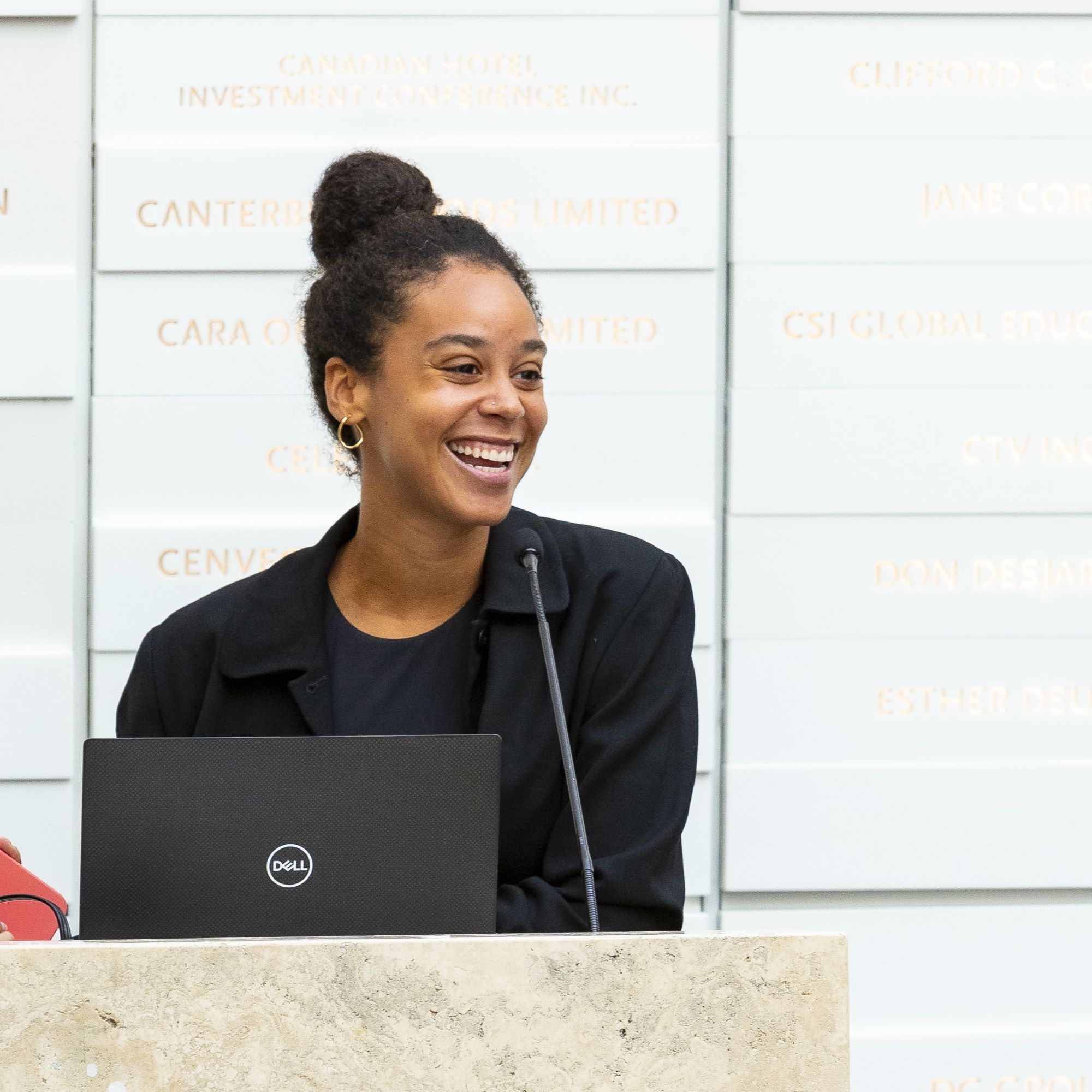
Nancy Mitchell, director of research for special projects, outlined her team’s roles and thanked each member for their contributions.
Nancy Mitchell, director of research for special projects, whose portfolio includes working with clients in the private, public and non-profit sectors, encouraged the team to reflect on their work’s impact, from shaping employment policies to transforming municipal services. Among the many projects highlighted were anti-racism and equity strategies, action plans, audits and training for governments across Canada, health care organizations, police departments and arts and culture organizations. She noted that many projects lead to repeat collaborations, underscoring the relationships that are the foundation of the work. “It’s a testament to the trust that you build with our clients,” she said.
Elmi then highlighted the contributions of Katlynn Sverko’s team, which, apart from further developing ADaPT programs, has created the Diversity Assessment Tool (external link) (DAT) application. So far, it has been tested with 370 small and medium-sized enterprises (SMEs) and six larger organizations. Sverko’s team is building additions to the tool, like that for an accessibility-specific DAT. Also notable last year, Elmi said, was DI’s acquisition of MyStartr, which aligns with the institute’s focus on training and job placements and expands its network of partners.
In-between and after the directors’ presentations, team members took the time to connect. They played collaborative games, including human bingo, how to survive a moon landing and Kahoot!, an online trivia game. Tables worked together to find solutions, with a lucky few receiving prizes at the end of the day for their efforts.
Stephanie Roberts, director of marketing and communications, reviewed the communications team’s role in promoting DI’s research and impact across channels. She presented year-in-review data showing a 157% increase in engagement, 680% increase in clicks and 42% growth in followers on LinkedIn, along with growth on other channels. On the website, for example, the number of users has increased by 60%, while page views have increased by 71%. As she noted, this growth matters for one main reason: “The amazing work you’re doing is finding its audience,” Roberts said.
Meagan Trush, director of partnerships, outlined the growth of DI’s network, which now includes more than 350 formal partners and thousands of additional connections across various sectors. “These relationships are not only with government, research, and industry partners but also with community organizations and equity-deserving groups,” Trush said, highlighting the importance of DI’s broader ecosystem. She also gave an overview of her work leading the skills development ecosystem mapping project, which aims to provide a comprehensive scan and mapping of the skills development ecosystem in Canada with a focus on organizations that offer skills training, funding and related support to Canadian workers, job seekers and entrepreneurs.
Future Skills and refugee settlement
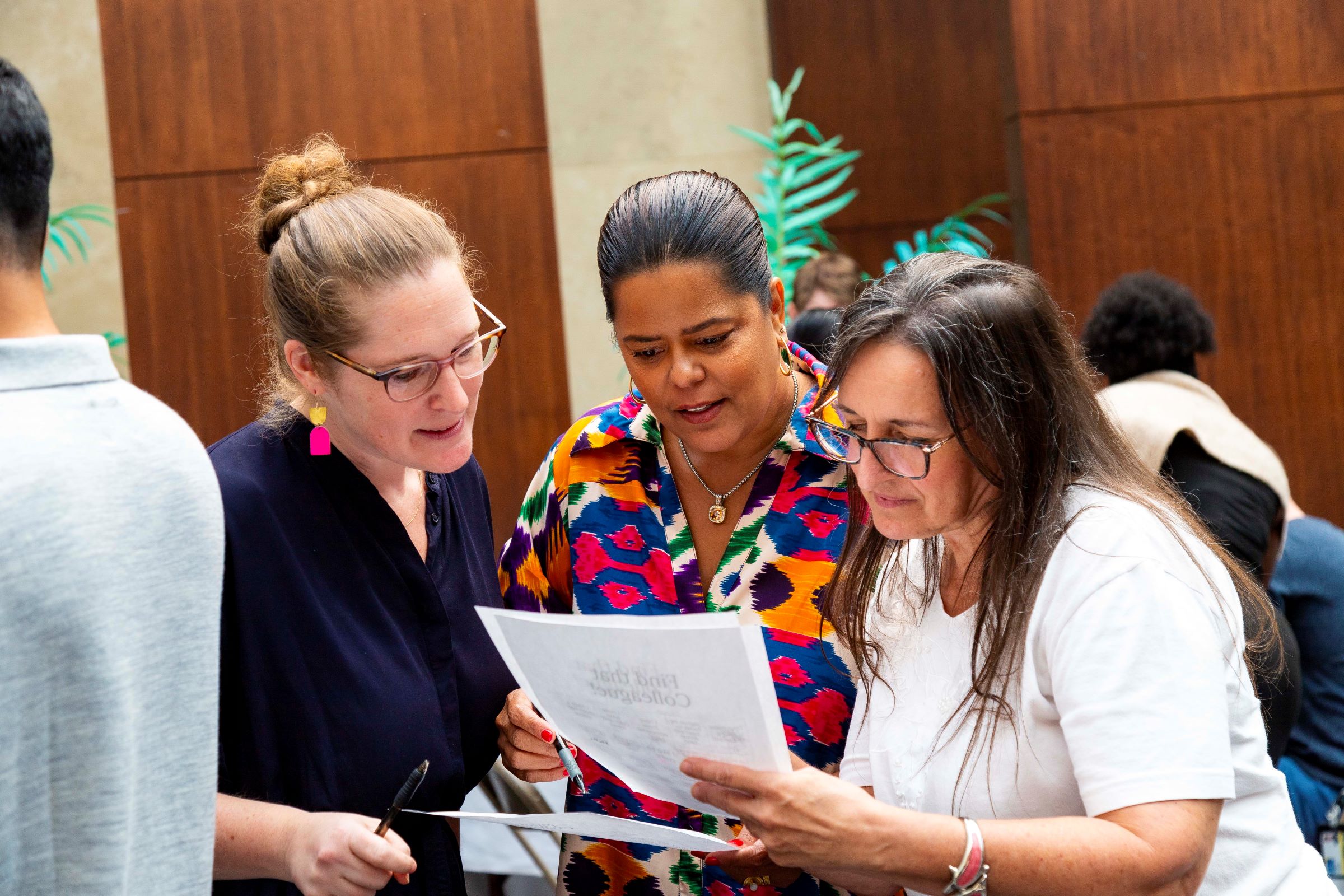
Sarah Shteir, Alyah Mann and Walentina Sitnik participate in DI's game of bingo filled with staff trivia, which allowed players to learn about one another.
Juan Marsiaj, director of research for special projects, described the FSC team’s work on projects related to building future skills, and supporting employees and employers in responding to emerging and in-demand markets. Among the many projects he noted are a recent evaluation of the ongoing Black African and Caribbean Entrepreneurship Leadership Training Program in collaboration with the Black Business and Professional Association, which provides free skills building, networking and mentorship training to more than 400 Black entrepreneurs; MindFrame Connect with Dalhousie University, which is developing a nationally accessible online platform with resources and training programs for mentors and mentees that is focused on building resilience;
He also highlighted the Lifeline Challenge (external link) , which supports refugees in Canada. “It has such a direct impact,” Marsiaj said, acknowledging the emotional challenges of the work while emphasizing its hopeful outcomes. He concluded by urging everyone to celebrate their accomplishments. “Sometimes we’re stuck looking at that tree and we forget the forest. But then we turn around and see how we’ve built a beautiful cabin,” he said.
Lynn Xu, executive director of finance, strategy and operations, spoke about the year’s financial achievements and improvements in budget management. “Together, we can not only sustain but also expand our research and impact,” she said. Xu expressed confidence in achieving continued success through collective efforts. “Thank you very much for your dedication, work, and unwavering commitment to the Diversity Institute.”
Interspersed with learning about teams’ work and impact, the event featured trivia and team-building games, good food and opportunities for staff members to reconnect, or connect for the first time.