MBA graduate works to make menstrual products more sustainable
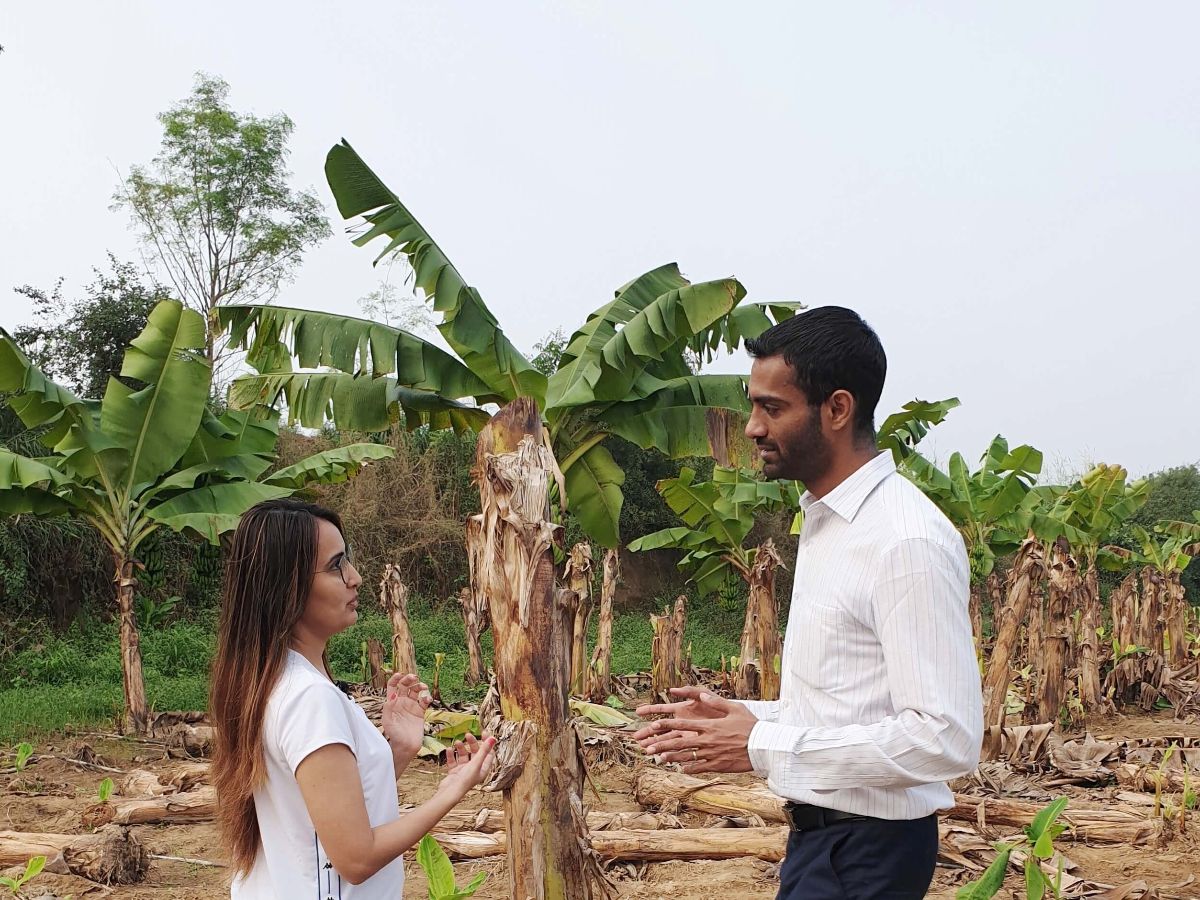
Chirag Virani took the entrepreneurial acumen he developed in his Ted Rogers MBA and applied it to a global problem -- access to sanitary pads that were more environmentally sustainable.
Learning about the lack of access to sanitary pads in many countries and that most products contained harsh chemicals and a lot of plastic, Virani (Ted Rogers MBA, 2012) wanted to change that. This led him and his business partner to create the company Sparkle (external link, opens in new window) , which makes plastic-free, chemical-free and sustainable sanitary pads from plant-based ingredients, and donates a pad to a girl in need for every one sold.
Coming from a technical background, Virani gained the critical business skills needed to start his own business through the Ted Rogers MBA program. Here’s what he had to say about his company, how his MBA helped him on his entrepreneurial journey and the importance of being a socially responsible entrepreneur:
Tell us about your organization/work.
Conventional menstrual pads contain up to 90% plastic and other harsh chemicals and petro-chemical by-products, and thousands of tons of sanitary pad waste remain unchanged in the landfill for over 600-800 years after disposal. My company, Sparkle, aims to reduce plastic pollution, support circular economy, promote gender equality and improve menstrual health with sustainable products made from plant-based ingredients. I started the company in February 2018 with Hetal Virani.
Sparkle spent over two years developing patent pending technology to efficiently and economically extract banana fibre from banana stem agro-waste to make the world’s first plastic-free, chemical-free and sustainable sanitary pads. These pads are made from a combination of banana fibre, bamboo fibre and corn starch, and can biodegrade after about six months of disposal. Watch a video of how the pads are made (external link, opens in new window) .
My company uses locally sourced banana fibre, which provides extra income to farmers each harvest. In India, around 800,000 hectors of banana plantations generate around 64 million tonnes of agro-waste. Worldwide, around 9.5 million hectares of banana plantations generate around 750 million tonnes of banana stem agro-waste.
What inspired you to start your company?
When I was growing up in India, I personally witnessed many instances where periods were stigmatized. Many of my close friends were not allowed to interact with anyone while they were on their periods. My grandmother grew up in a small village in Gujarat where girls and women did not have access to sanitary pads.
Even a simple task of buying pads from a store still consists of awkwardly whispering the name of a sanitary napkin brand and then quickly putting it in a bag to hide it from the world. How can we expect young girls to freely discuss their problems about menstruation when they hesitantly lower their voices while mentioning the word ‘Periods’ or ‘Pads’?
As I worked with different NGOs and participated in outreach programs — which included medical camps, HIV counselling, teaching and feeding programs in Kenya, Tanzania, Vietnam, South Africa and India — I learned about the health as well as socio-economic problems millions of women faced during their periods due to a lack of access to sanitary pads. In many developing countries, menstruating girls and women are still considered impure or dirty.
After meeting Hetal, co-founder of Sparkle, I realized that commercial sanitary napkins available in the market contained roughly 90% plastic and harsh chemicals that may be harmful for personal health and the environment. She was looking for natural, plastic-free and affordable alternatives that do not cause skin irritation and allergies.
The fact that I come from a family of farmers became the missing piece of the puzzle. My family has banana plantations near one of the biggest banana growing belts of India. Banana plants grow rapidly in just 9-12 months. Once bananas are harvested, these plants become agro-waste. We realized that banana fibres are naturally super absorbent and highly effective at locking away menstrual fluid.
We started Sparkle with an aim to fight social stigma surrounding periods and provide sanitary pads to underprivileged girls and women to reduce school drop-out rates, increase the number of workdays and prevent diseases.
Why did you pursue your MBA and why did you choose the Ted Rogers MBA program?
Before pursuing my MBA, I had completed mechanical engineering from McMaster University. I wanted to apply my engineering skills and knowledge to solve real world problems. I decided to do an MBA because I wanted to learn more about business development, marketing, sales, project management, etc. before starting a social enterprise.
My sister pursued her MBA at Ryerson two years before I joined the program. She spoke very highly of the Ted Rogers MBA program, the faculty and professors. After visiting the Ryerson campus, I personally loved the location and the fact that the campus is located right in the heart of Toronto. I met a few faculty members and talked to a number of students who were enrolled in the program and I was fully convinced that I wanted to pursue a Ted Rogers MBA.
How did the Ted Rogers MBA program assist you on your entrepreneurial journey?
My Ted Rogers MBA has been a very important part of my career as it provided a perfect transition from my academic career to my professional career. Well-designed academic courses, real-life case studies, business competitions and group projects certainly helped me with getting familiar with how the business world operates outside the classroom.
Coming from a technical background, with a bachelor's degree in mechanical engineering, my Ted Rogers MBA equipped me with required tools in business development, sales, marketing and entrepreneurship that have helped me with my start-up, Sparkle.
Any final thoughts you would like to share with us?
I strongly believe if every company takes at least one positive action or initiates one socially responsible campaign, we can make this world a better place. As responsible individuals and entrepreneurs, we should aim to find innovative solutions to today’s key challenges.
Without access to sanitary pads, millions of girls and women in low and middle income countries use less hygienic alternatives, such as old rags, cow patties, leaves or ash during their periods, risking infection. Millions of girls and women across the globe miss around 50-60 days of school or work every year due to lack of access to sanitary pads.
Through our “Buy One, Give One” initiative, every time a customer purchases a Sparkle banana fibre sanitary pad online, we donate a pad to a girl in need. With access to pads, girls can participate in school, engage socially and carry out daily activities with dignity.