TMU Alum Julia Belluz publishes Food Intelligence, a book about the modern food environment.
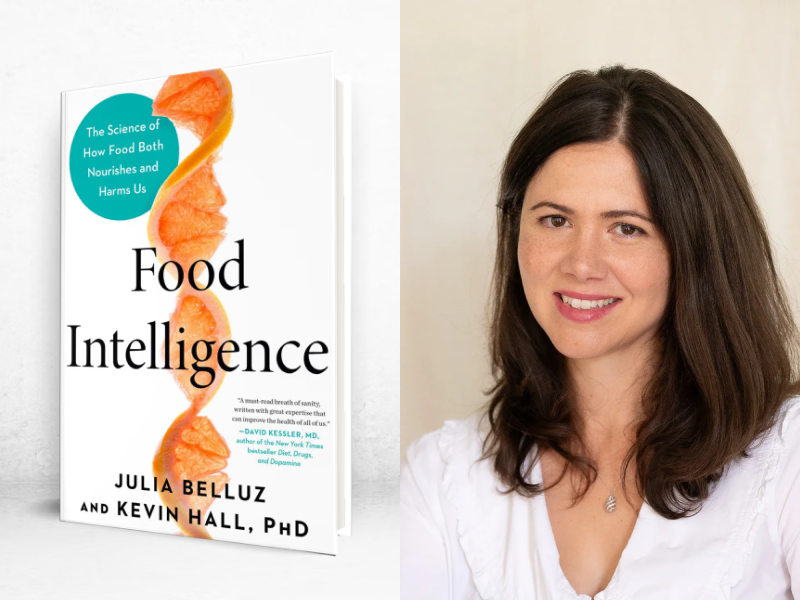
Julia Belluz (external link) ‘07, Toronto Metropolitan University (TMU) Journalism graduate, offers a new perspective on how to think about food, nutrition, and eating habits in her book, Food Intelligence (external link) .
Belluz was inspired to co-write the book with nutrition scientist Kevin Hall (external link) while covering health issues in the United States. She has written for many publications, including Vox and The New York Times.
“When I started reporting on public health from the U.S., the rates of chronic diet-related diseases like obesity and diabetes were rising fast,” she said. “I had struggled with my weight, and I started wondering why so many others seemed to be too. That led me to lots of reporting on obesity, chronic disease, and my book.”
The book examines why so many people struggle with food and the misconceptions that can come with nutrition advice.
One of the biggest misconceptions Belluz wanted to address was the perceived lack of willpower when it comes to consuming food.
“Our food environments exert way more control over our food choices than many of us realize,” she said. “Many people are stuck in a cycle of self-loathing and blame when it comes to their body weight and their diet-related diseases. They feel like they can't get a grip, and they blame themselves for that.”
According to her research, science shows that increases in obesity rates dating back to the 1970s occurred due to changes in the food environment, particularly the introduction of ultra-processed foods.
A food environment refers to the physical, economic, social, and cultural factors affecting the food available to people.
Belluz says that ultra-processed foods take up most of the calories Americans and Canadians consume. This means that when people are exposed to these foods, they overeat and gain weight. However, if people are exposed to healthy food environments, they lose weight.
“People are shaped by their environments, and their environments often determine their ability to adhere to a diet over the long term,” Belluz said.
Unfortunately, the modern food environment allows the least healthy foods to also be the cheapest and most accessible, whereas healthier foods tend to be more time-consuming, expensive, and harder to access.
“Unless you have the resources and wherewithal to protect yourself from the broader food environment -- you have the time to cook, shop in a fresh market, carefully plan your meals, etc. -- you're going to find it very difficult to keep the weight off,” she explained. “I'd argue most people don't have the resources and ability to do all those things. The deck is stacked against them.”
Belluz advises that universities should also play an important role in protecting the food environment of their students and faculty by minimizing access to processed foods.
“Universities have a very important role to play in protecting a vulnerable population. Students and faculty should demand from their institutions that healthy foods are made accessible, affordable and prominent, and that junk foods are minimized,” she said.
For students learning to manage their eating habits, she said that going back to the basics is key.
She explained, “Don't get lost in the details. The basics your parents probably told you since you were little still apply. Eat as many vegetables and fruits as you can. Cut your intake of foods rich in the ‘traditional’ ‘nutrients of concern’ -- salt, sugar, saturated fat. This means you'll be eating more fibre and other healthful nutrients, and often, less ultra-processed foods!”