2016 Alumni, 10 years later
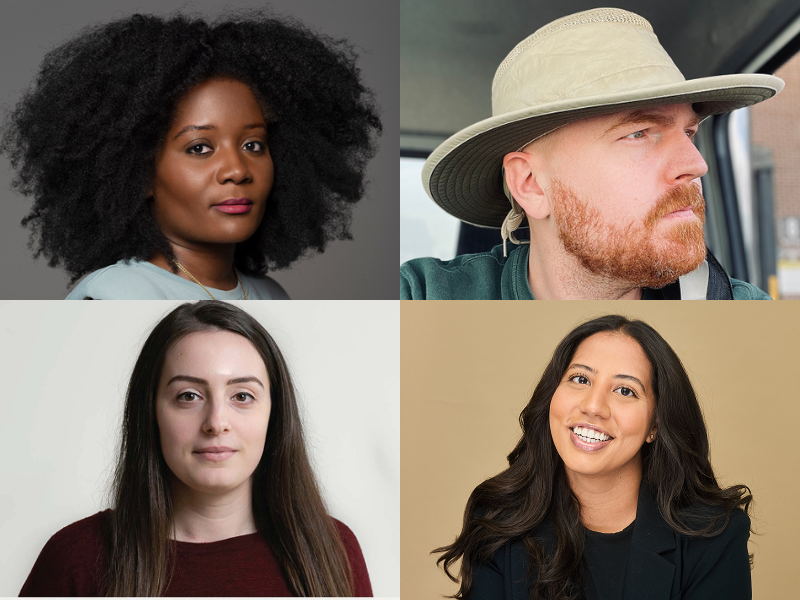
A social media trend calling 2026 the new 2016, with throwback posts, appeared across platforms. So Journalism NOW asked 2016 alumni what they’ve been up to for the past 10 years.
Here’s what Vjosa Isai, The New York Times reporter, Steven Goetz, who is working in production management at CLRBOX, Yasmine Mathurin, an award-winning filmmaker and Maham Shakeel, a marketing director at SJC Media, had to update us on.
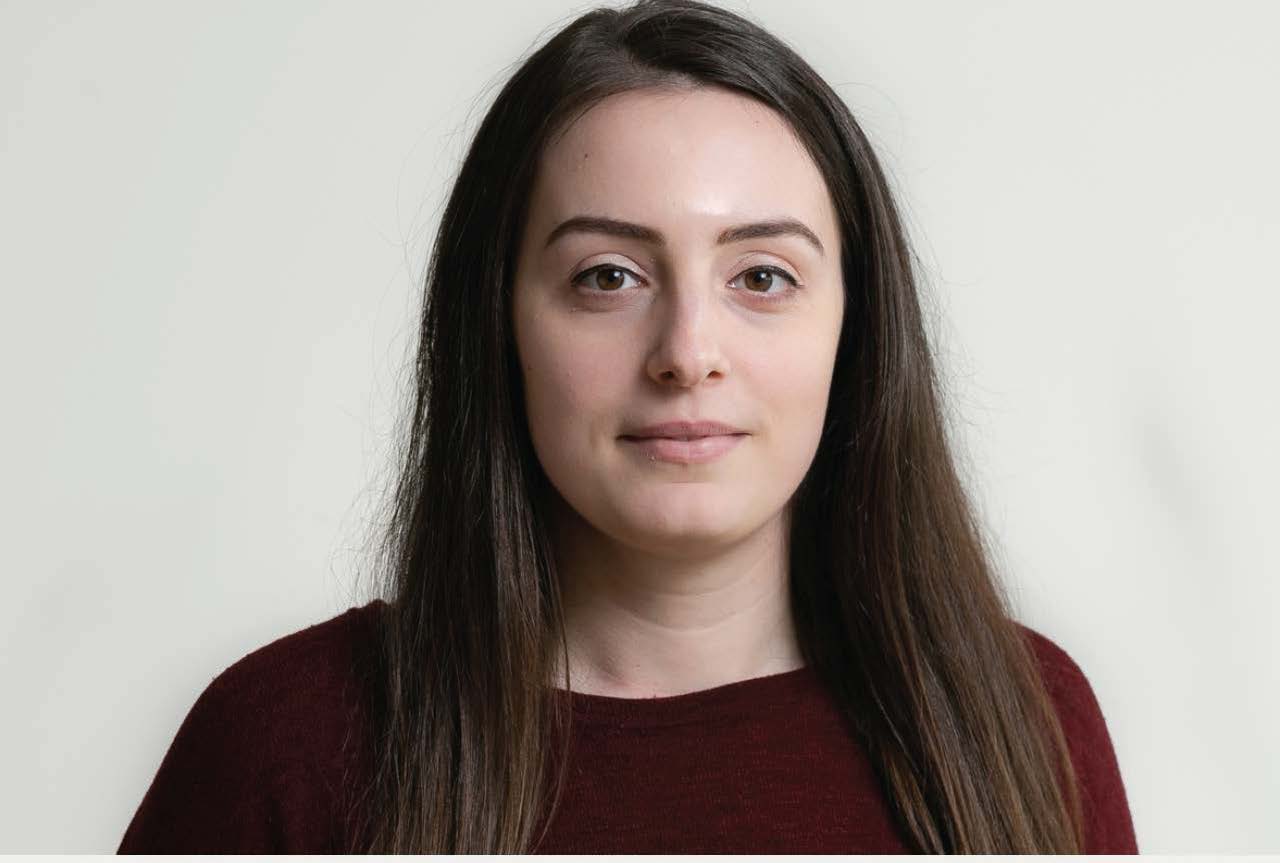
Vjosa Isai is currently a reporter for The New York Times, based in Toronto. She covers news and offbeat cultural dispatches across Canada for the International desk, and is especially interested in stories about the country’s criminal justice and health care systems.
Before she joined The New York Times in 2021, Isai covered breaking news and crime at the Toronto Star and worked on the investigations team at The Globe and Mail.
--
What were you doing during your final year before graduation?
I was a Radio Room reporter at the Toronto Star, which primarily involved covering breaking news and crime.
It was really exciting. It was my first newsroom job, and I was hired at the beginning of my final year of undergrad. As part of my course credits in the first semester, I also worked as a news intern at the National Post and then as the print editor for the masthead portion of the term, which was actually a lot of fun.
The Radio Room is a fully remote job, so you have to be savvy about reporting strategies because you are restricted by the fact that you can’t leave the newsroom.
We were often reaching out to people at really distressing times in their lives, and were limited because we could only conduct the interviews over the phone. From identifying sources for interviews to working in collaboration with reporters in the field or the excellent team at The Star’s library, that role was an important training ground for me, and I stuck with it after graduation.
Throughout my studies at TMU, I also tutored grade-school students in French and worked part-time shifts in retail and in government communications. I was hired through the Federal Student Work Experience Program, which still exists. It was an instructive behind-the-scenes look at how the public service works. I tried a lot of jobs back then, but loved being in the newsroom the most.
What does a week or a day in your life look like?
My days are driven by the news. If something's happening, I drop everything else that I'm doing. Otherwise, I’m always working on enterprise stories and longer-term reporting projects from Toronto, my home base, or wherever a story takes me in Canada.
I also try to be proactive about setting up coffee meetings with people who have knowledge or expertise in different areas relevant to my reporting targets.
Part of every journalist’s job these days is also to think about translating our stories into formats that can reach different kinds of audiences. One popular format across many news organizations is the “explainer.” It provides readers with an overview of a topic connected to the news of the day – for example, explaining tariffs – and offers reporting and analysis to answer some of the most-asked questions about it. Crucially, we want to tell readers why the topic matters.
I also read a lot of news during the week. I found it to be kind of tedious in school, especially with all the other reading we had for our courses, but that’s one of my biggest pieces of advice to students: read the news!
Looking back 10 years ago, how has journalism changed?
I encourage students to read articles from the 90s and the 2000s. Journalists took a lot bigger creative liberties back then in their stories, and so it’s interesting to see how we have refined our writing today to still be evocative, but in fewer words.
We probably have to be more punchy with our writing today than we did a decade ago to help break through the social media noise. Readers have a lot less time and a lot more information sources thanks to social media. There has to be a very compelling reason to click into a news link, and some of those can be for the authoritative voice of the reporter, exclusive coverage or amazing visuals.
But I think the biggest change facing journalism, and many other industries, right now is artificial intelligence. News organizations are all adapting to how A.I. is shaping the reach of our work. For example, where readers searching for information on Google would previously be directed to a news article, they are now shown an A.I.-generated explainer instead.
What stories have stood out to you from your career?
One of the stories I'm most proud of at The Times is my story about the drinking water crisis on Indigenous reserves.
Around the time of my reporting, Canada had reached a settlement in a class-action lawsuit that linked health, economic and social harms to the lack of potable water in First Nations communities. There had been a ton of excellent journalism about this topic already, so I challenged myself to bring something new to the story.
By 2022, the federal government was a lot more transparent about publicly tracking the issue on their websites, but after downloading some data sets, I noticed that the information posted online did not reflect the cumulative time that a community was under an advisory. The data told a story that, while technically accurate, made the government appear further ahead of its goals to clear boil water advisories than was the reality on the ground. For example, if a community was under a boil water advisory for 10 years and the advisory was lifted, the clock would reset, even if the advisory was only cleared for a short period of time before the water became undrinkable again.
By scrutinizing that data, I was able to identify a community called North Spirit Lake that had been under a boil water advisory for almost as long as Neskantaga First Nation. I think readers who are familiar with the topic have heard the name Neskantaga, which has Canada’s longest running boil water advisory. Why was nobody talking about North Spirit Lake?
To answer that, my colleague, Amber Bracken, a photographer, and I went up to North Spirit Lake, a fly-in community in northwestern Ontario, and it was just a wonderful experience. The community was really welcoming and we were able to follow different slices of life to show how residents suffered by the lack of clean, drinkable water. It's a really small but vibrant place.
It was also a memorable experience for me because there was no cell service. I'd have to ask people on the road if they'd seen the girl with the big camera around because Amber and I couldn't call each other when we split up for parts of our work.
I think our story said something new to Canadians and, I hope, put a spotlight on the resilience of Indigenous communities who have endured decades of this hardship.
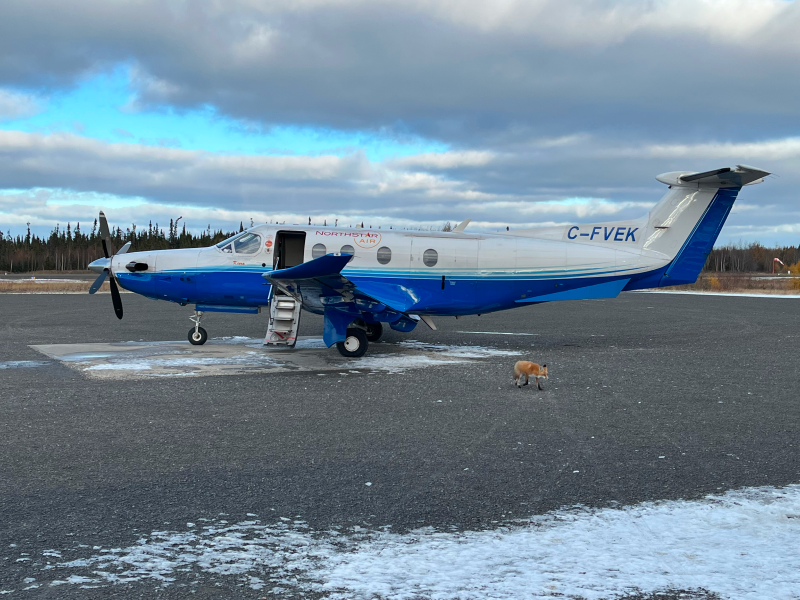
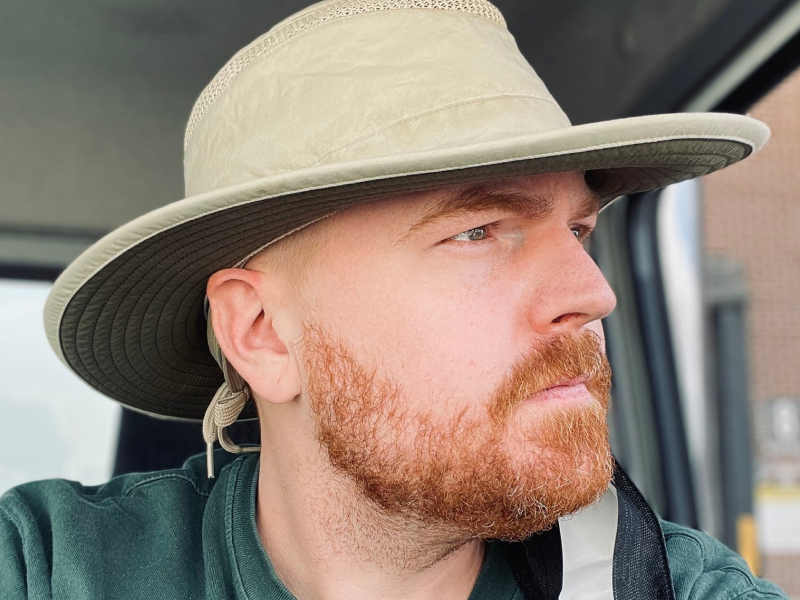
Steven Goetz works in production management for commercial photo and video shoots for CLRBOX and is a partner, producer and director of photography of DVRSQR Studio.
Before returning to production work, Goetz was a freelance writer and photographer, working for publications like VICE, Sun Media and Metro Toronto.
--
What were you thinking your career would be like in 2016? Did you know you’d go down a different career path?
I love journalism, most people who stick with it, it's a vocation, it's a calling, it's something that you feel in your bones that you have to do.
When they're younger, they're called to it. That's what happened to me for sure. When I was a young man, I knew I wanted to be a photojournalist. I knew I wanted to go and gather the news, and Toronto Metropolitan University was very much a part of following that dream. I'd already been working in journalism when I went to the School of Journalism.
Through my experience there, I had all these opportunities to work in real newsrooms and connect with other working journalists to expand my craft, which was very much just focused on photos when I came to TMU and then expanded to writing news as well. When I graduated, I was committed and ready to chase down a career in journalism.
During those 10 years, what were you up to?
I think I've had a well-rounded experience as a reporter. I reported for Sun Media, a weekly newspaper in my hometown.
I got to go home to cover town council, go to all the different potlucks, various sports and graduations and be the small town beat reporter, documenting the community…I would do that for the rest of my life, if I could.
I also had the opportunity to work at the old Metro newspaper, a commuter daily handed out in the subways. I did my internship at Metro, and then they kept hiring me after that.
I got to replace the city beat reporters whenever they'd go on vacation, I would come in and cover the city beat for them. Through that opportunity, I also got to go and cover Donald Trump's inauguration in Washington for Torstar.
I got to do some international reporting as well. I got to do a lot of great things.
Most of my work, you can't read anymore, and the reason is that those news organizations have either closed or they got sold to someone, or they changed their website, which is a very depressing thing to think about, especially when you're a small town newspaper reporter.
How was the switch from journalism to production?
I was working part-time. I was doing freelance work selling newspapers, but I was also doing part-time work at the School of Journalism.
During the pandemic, we stopped printing the newspaper. So I stopped coming in, that was the end of that.
It was time to pivot. I was looking for other opportunities. The job landscape wasn't great. So I returned to film, which was my original love as a very, very young 10-year-old.
Actually, when I was at J-school, the first time I took a few years off to work and then came back to finish my degree, I paid my way through school working as a production assistant for television commercials.
During the pandemic, I decided to call back some friends I'd been working with for years and years before and came back to the television commercial business. Now I'm shooting the biggest television commercials in the world. I've done Super Bowl commercials. I've done music videos for Drake, Shawn Mendes and Shania Twain, basically the biggest brands, biggest commercials in the world.
How do you use what you learned from Journalism in your current role?
Toronto is a very, very busy place for film production, both commercial and long format.
It's using many of the skills I learned or I got to practice while I was at TMU.
For example, we work on a deadline. The way it works is that the commercial or the ad agency is committed to making a commercial, and they decide when they want to shoot it.
Then that's briefed to me, my production team and the production companies here in Toronto.
We hit the ground running and we'll go from being briefed on the project to delivering the footage in a three-week span. It could be as tight as that, from building the sets, doing all the wardrobe, doing all the casting, storyboarding and pulling it all together, getting all the gear, getting a studio to shoot in or a location and we are flying all the talent in.
It's very, very deadline-driven. Just like when we used to hit publish at the end of the day and then go home and wake up in the middle of the night, wondering if you've got a fact wrong and checking your work and be like, “Oh, it was fine. I'm going back to sleep.” It's a lot like that.
Another aspect of it is that we work everywhere. We're constantly arriving unannounced in people's neighbourhoods and having to immediately build rapport or a conversation with the locals. So in that aspect, I am very much using the skills that I developed when I was at TMU and that still served me well.
What advice do you have for students?
The most exciting journalism is coming from platforms like YouTube, where individuals have been able to build audience trust that no longer has a gatekeeper between them and the audience. There are downsides, there are positives to that. That lane is completely open for you.
The audience doesn't care what is on your resume; they want to hear your story.
Your voice isn't going to develop by waiting for an opportunity to use it; it's going to develop by using it. So just start.
Just start today. Don't wait any longer. Get out there and tell a story that matters to you, something that you know. Write what you know.
Commit acts of journalism every day, whenever you can.
Practice journalism and keep that alive.
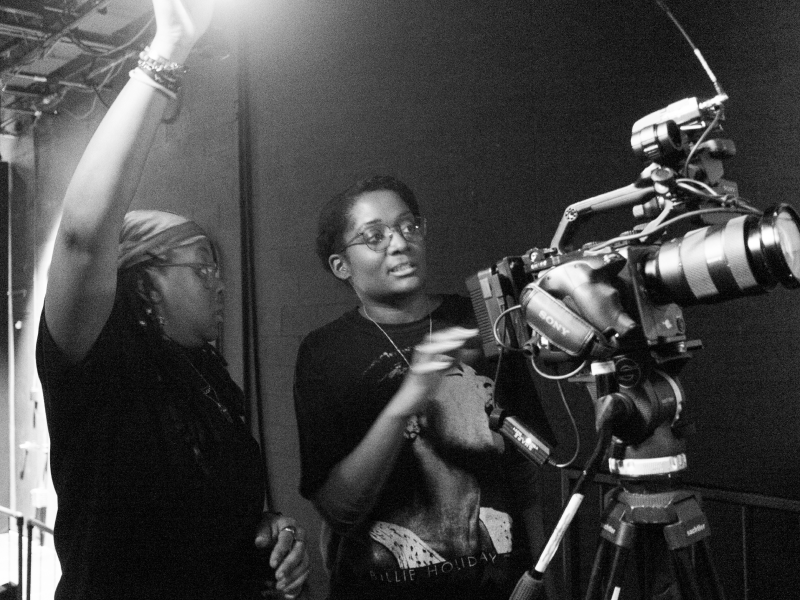
Yasmine Mathurin is an award-winning filmmaker.
Her journalism career spans a multitude of formats, including written, radio, podcasting and digital video.
Mathurin’s first documentary, “One of Ours,” won the Special Jury Prize at Hot Docs and earned three Canadian Screen Award nominations.
--
I saw a quote saying you chose Journalism school because you were afraid to go to film school. Could you explain why you ended up in Journalism?
I think I've always had an interest in social justice, society and how the world works.
I feel a lot of it was informed by the fact that my dad worked for World Vision in Haiti. It made me aware of poverty at a young age.
It spilled into this an interest in wanting to leave an impact, do something, make a difference.
That's probably why, in a lot of ways, even if my master's in journalism wasn't really my first choice, it also, in the same breath, kind of felt natural.
What does your 10-year career timeline look like from 2016 to now?
In the middle of those two years (of the program), you're supposed to do an internship somewhere, then you come back, and you finish the program.
I did my internship at the CBC. I did it at this news desk called Trending News. You're finding stories that are trending worldwide, and you report on them. The ones that the trending desk used to report on had to have a Canadian angle. So I did that.
I always had this interest of wanting to work within a medium under journalism that allowed for more time with people, more time for their stories and getting more context.
I was getting drawn to podcasts, NPR and Radiotopia. These kinds of audio docs were things that I was into around that time.
So, I wanted to find a way to get into podcasting. For my thesis project, I ended up making it a radio doc.
Then I pitched it to the CBC because I was like, “okay, maybe that could be something that could then open the doors.”
I pitched it to this thing called the doc project, and at first, they rejected me. They asked me, “sorry, you didn't get into the program, but if you want feedback on your application, happy to jump on a call.” I took the call.
I'm so glad I did because in the call, I understood that it wasn't that the topic I was pitching wasn't landing. It's the way that I pitched it, and it's like learning how to pitch for a specific medium.
The other thing that I learned in Journalism school was always having a pitch in your back pocket. So in that phone call, I said I got other ideas, and I pitched it on the phone.
I convinced them, they liked one of the projects that I had, and the person on the phone ended up finding something in their budget and said they’ll commission me to make this project.
That became my first paid piece of journalism.
I ended up working as an associate producer at CBC podcasts, they had just started that department. I worked there for three years on a number of different shows from CBC, the first season of tie asks why the first season is personal best. And then there was also the Caitlin press show, the shadows, CBC, the shadows.
Then I had random gigs within the building, I worked on CBC books, editing videos for them.
As I'm doing all this stuff, at CBC podcast [and back in my master’s], I was also teaching myself film and going to different workshops across the city to learn how to make films.
It was my friend, Jess Shane, who also worked at CBC. She was like, “Hey, there's this program called the Breakthrough Program.” It was a pitch program for emerging doc filmmakers.
I really didn't think I was gonna get it. So I applied, and I got in.
I think Journalism school teaches you how to pitch a story, but…when you're pitching in a different medium, it's asking something else of you, it's asking something else of the story you're trying to tell. I felt that the program was really good at helping me understand the industry a little bit more, and how to pitch and package the material that you have.
I met an executive from the CBC documentary channel, and she had come in to give feedback on people's projects.
Then later on, she approached me to ask for a meeting, and I pitched it again. They came on board in development. Then once I ended up getting the doc channel on board, and a little bit of funding to go out to Calgary to film, I took the leap to try to go and make the film.
I've been following the momentum of that ever since, and so I'm trying to keep going somehow.
How have you used your knowledge from Journalism over the past 10 years?
One thing that I'm really grateful for in terms of a skillset that I got from the program it's being persistent when you're chasing a story.
Yasmine, as a person, I'm quite reserved, but I think there's something about the job of the job of journalism that kind of pushes you outside of your own comfort zone, that you are there for the story. It's not about you.
You have to ask the hard questions, find answers and file by a certain time.
When I pivoted into making films, I was doing my own research or convincing my participants to allow me to make a film about their lives.
The persistence of, “Hey, checking in,” that's something I would say directly is a skillset that I got from having to study journalism.
Do you have a defining moment when you decide to stay in film and continue this journey?
It's funny, because when I decided to go and bet on myself to pursue film, I gave myself permission to quit.
I genuinely was like, “I'm gonna try this. If I don't like it, I'm not gonna do it. It's okay.”
I fully went in, giving myself the permission to walk away from it. I knew enough about the industry to know that it was going to be really hard. Sure enough, making my film, I would say almost took me out.
The moment that felt maybe the most validating was when I was able to show my first feature film to the participants and I was full of nerves.
I wanted to make sure I did justice to their story, but also that I stayed true to my own artistic vision for what I wanted the film to be. It had been such a journey, and I finished that film in the middle of the pandemic.
So, being able to show it to them privately. My participants and his entire family are having conversations about what they learned about each other, watching the film, because I think the most meaningful part of the process of making a documentary film for me is that connection, it's the relationship that I make with the people whose stories I'm trying to tell.
For that particular project, they were able to learn so much about each other.
We all cried on the Zoom call.
To be honest, I didn't even think about awards. I promised myself to do it and to make it to the end and to me, that was enough of a marker of success.
When I ended up just winning the special jury prize at Hot Docs, I was in shock.
Mind you, I have never made a film before. I had never had a film at a festival. There were so many things that were so wild about that journey.
Where do you picture yourself in ten years or even a year from now?
I'm really curious about fiction filmmaking. So I'd like to try it.
There's still something in me that's interested in documentary films, and I don't think I'm abandoning that form, but I'm trying to find different ways to tell a story that makes an impact.
I want to challenge myself creatively and professionally.
Do you have any advice for our students?
The only way out is through.
Before I wrote my first screenplay, I was asking for all this advice. While downloading podcasts about screenwriting, I was buying books. I was doing all these things.
It dawned on me that the only way I do this is by actually doing it. If someone were to be curious about this industry or wants to get into it, the only way is to do it.
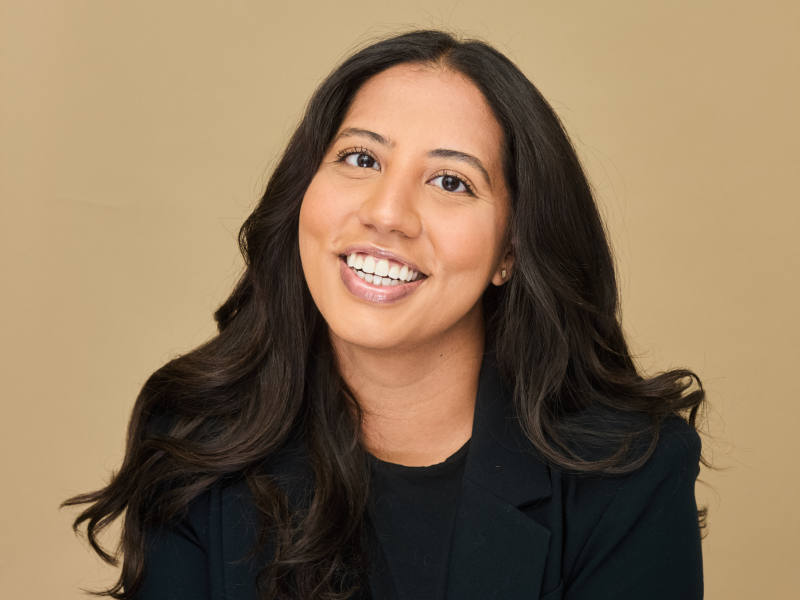
Maham Shakeel (external link) is a marketing director for SJC Media.
She works with a portfolio of brands, such as Toronto Life, Maclean’s, Chatelaine, FASHION, HELLO!.
--
Where did you see your career headed in 2016 to where you are now?
I'm in marketing now, but still within the media and publishing space, which feels a bit full circle and still very much close to home for when I was in J-school where I was hoping to be.
Throughout my career and personal life, my love for storytelling has been constant. At TMU, I had the privilege of learning from so many talented journalists about how stories can change the world.
10 years ago, I was looking at that with really big eyes and as a big responsibility. I had some work nearing graduation published with the Toronto Star. That was an investigation through Rob Cribb's class, actually, and I also landed an internship with the CBC.
At CBC, I was on the social media and trending desk. This was a new team to be placed with at the time.
Social media was really taking off, publications and brands alike. It was a really early experience that became the foundation for how I was able to move into marketing.
That journey never felt rocky or random because the common thread has always been storytelling.
In marketing, the stories aim to build a connection between audiences and brands, and the most impactful ones that drive business results do that really well. Because I had CBC social media experience under my belt, that allowed me to take on another internship with Loblaw. That was building their social media at the time.
From there, I got into marketing roles at LG, then LinkedIn, Bell Media, where I led marketing for Crave, and now SJC Media, where I lead the subscription business for their publication portfolio.
What does your role entail?
The work I do is a lot around revenue and its numbers.
It's a balance of the storytelling and work that I mentioned, but using data to tell that story and analytics to ensure the decisions we make for the business are profitable. The best part about marketing is that you can quantify the impact that it has.
The marketing that I'm working on is really for revenue generation and growth. Working with the teams, I work with the editorial teams, our creative teams or art directors to build compelling creative through social media, email, direct mail, marketing to get an action and the action here is to get new subscribers.
Then we can see the impact of the different marketing tactics we go with, how many subscribers that brings in. If we're noticing that it's not driving volume or results, then we pull different marketing tactics. Different targeting, budgets, channels, to be able to attract the right audiences and convert readers into long-term subscribers.
It's a lot of that and orchestrating with the different teams.
Do you have any advice for students who may want to follow a similar career path?
The biggest thing I learned from a journalism background is that it trains you in something really rare. I would say that's how to think. You learn how to ask good questions, find one guiding signal in all the noise, and then tell stories that move people.
I've always stayed anchored to that storytelling, curiosity and integrity. I've built my career around that in media, tech, marketing, and wherever stories shape decisions.
Communication and storytelling will go far in any career path. What the world needs are people who can translate these complex ideas clearly, and that's what journalists do. There are a lot of transferable skills.
It doesn't have to translate into marketing, and the path that I've taken. It's just so relevant across the board. Specifically for where I am and moving from journalism into a business partner within the journalism industry, I think understanding audiences and their behaviour really matters.
Ultimately, understanding your viewer, listener, and reader, and not being scared to evolve your story to that medium. Understanding this is how content will be consumed, and finding a way to build content for that person in a compelling, interesting way.
Is there anything else you’d like to add?
Journalism is important, and stories are important.
There is something important about smart, hardworking people continuing to care about making journalism in Canada possible and sticking to their guns there. That's why I feel so fortunate to be able to take the skills I got from different organizations, to bring it back to this industry, to find ways for it to monetize and grow.
Continuing to thrive, journalism doing well in Canada is important to everyone, not just J-schoolers, but in general.
I want everyone who graduates from here to do well in their respective careers, whichever industry it takes them into.