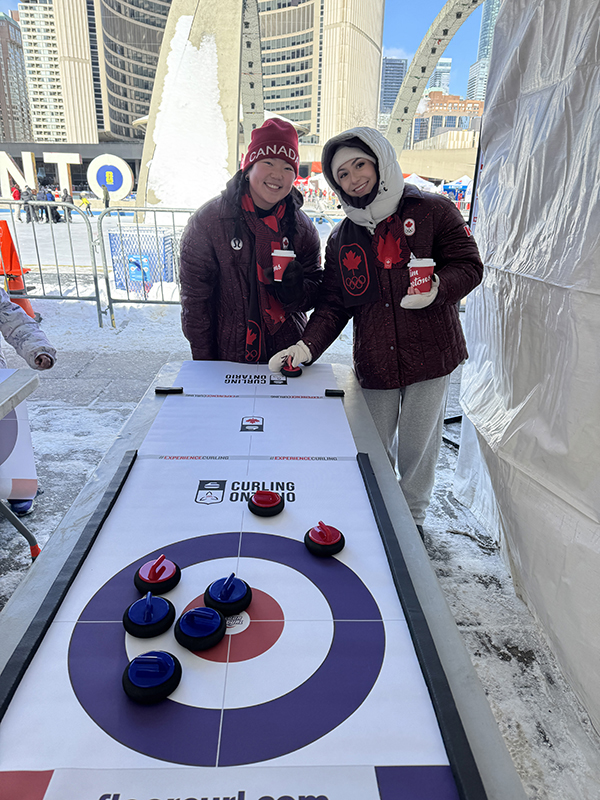
Biggest Olympics Takeaways from Journalism Students and Alumni
After the Olympics and Paralympic Games wrapped up, Journalism NOW spoke with J-school students and alumni who covered the events, working in front of the camera and behind-the-scenes.
Here’s what they had to say about their experiences, advice for students and what it meant to cover one of the largest sporting events in the world.
These interviews have been edited for length and clarity.
Tara De Boer
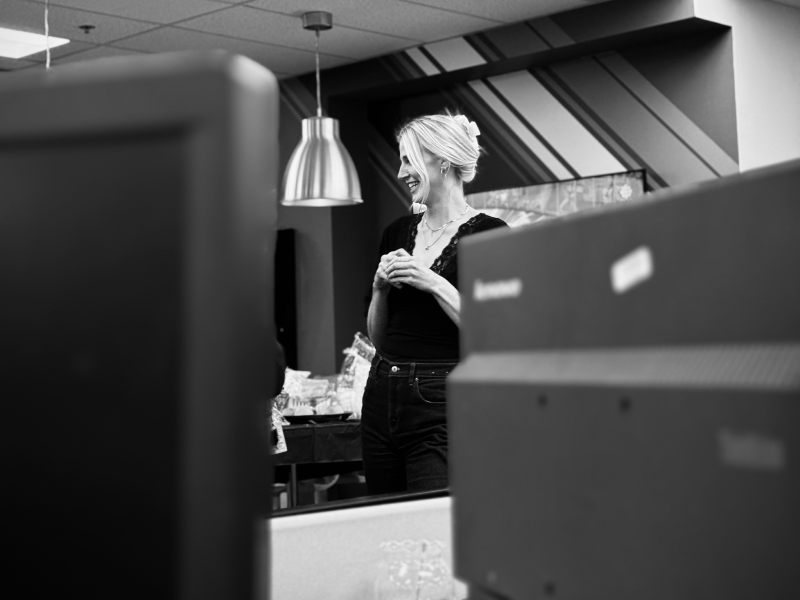
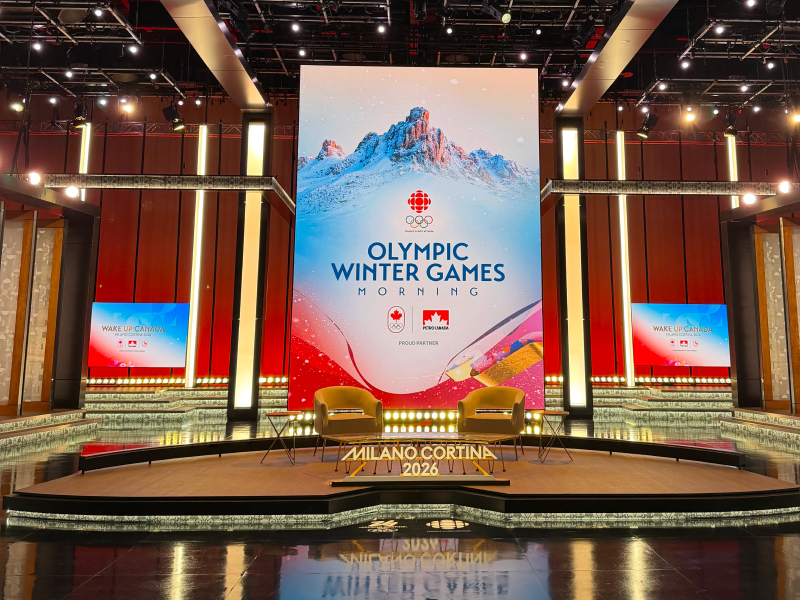
Tara De Boer MJ ‘23, sports reporter and producer at CBC Sports, worked on CBC’s Olympics Today show with host Ariel Helwani.
She was part of a group of producers and editors responsible for putting together the show with their host reporting from Livigno, Italy. The Toronto team produced a 30-minute episode that aired each evening of the Olympics across multiple platforms.
“We were up against the clock every day, making each day fast-paced and super busy,” she said.
Looking back on her time as a Master of Journalism student, she said that producing major creative projects taught her how to exercise creative judgment and collaborate with team members to publish her best work.
She added, “These assignments prepared me well for the scope and level of work required for major projects.”
“I would not be where I am today without the professors I worked closely with at TMU…who shared their knowledge with me and supported me in chasing my dreams.”
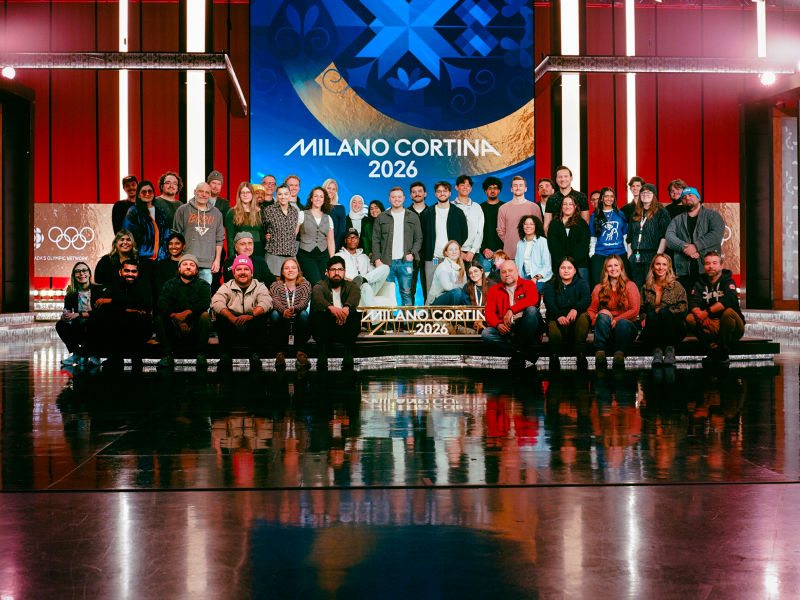
What was the most memorable part of working the Games?
The long days that turned into late nights working with my team, laughing around shared meals and bonding through a stressful but incredibly fun project!
What does it mean to you, personally and professionally, to be covering the Olympic Games?
Growing up, I watched every Olympic Games with my family and have always loved sports, so getting to call this my career now feels like a dream come true. The Olympics represent so much beyond the results of a race or outcome of a game, especially in this contemporary moment. I am grateful to be part of an event that people around the world tune into and feel a sense of pride when watching their country compete.
Mariam Kourabi
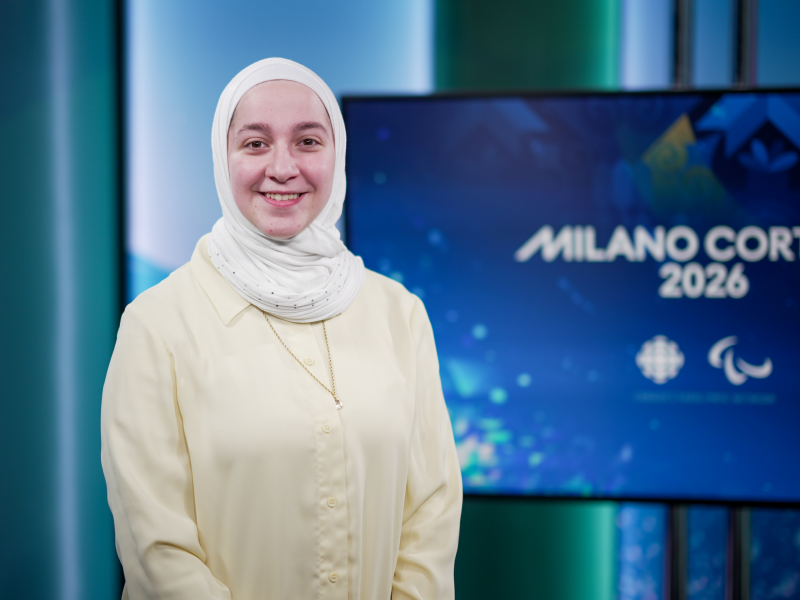
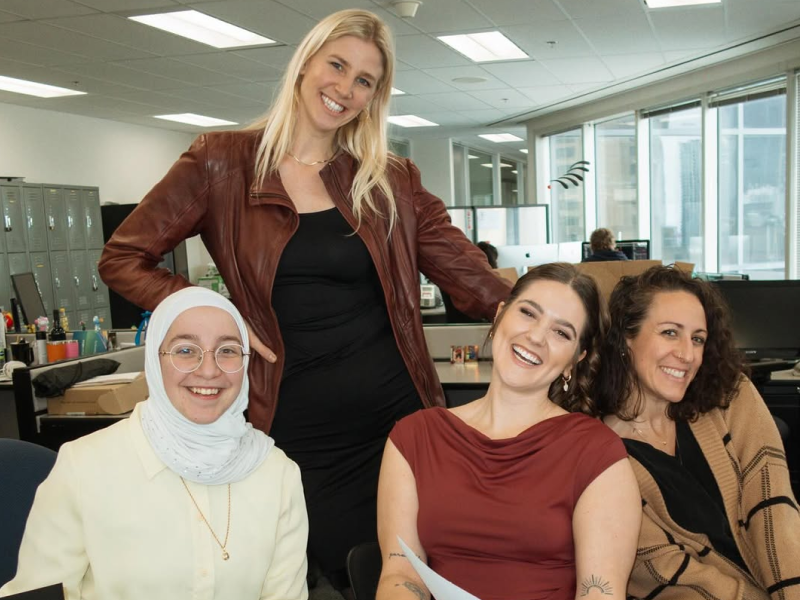
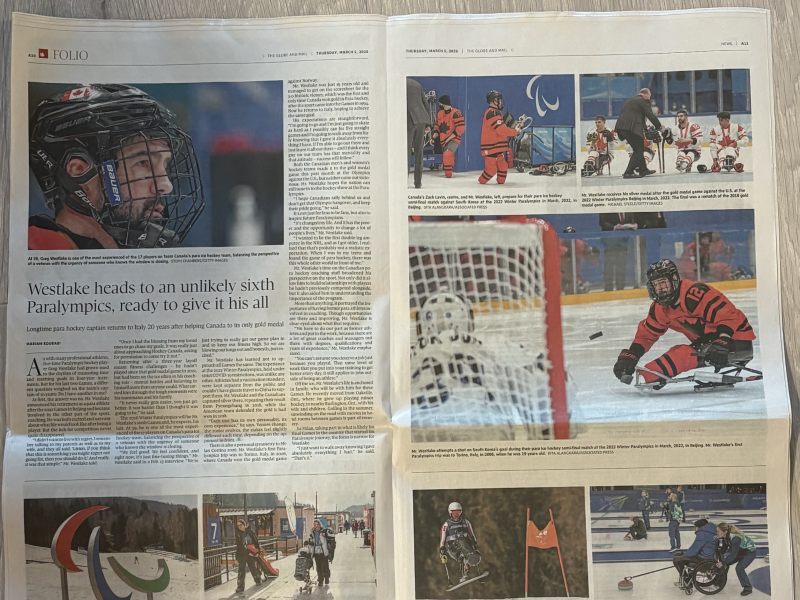
Mariam Kourabi (external link) , a final-year MJ student, worked the Olympic and Paralympic Milano Cortina Winter Games as an associate producer at CBC.
She also contributed stories about the Paralympic Games for The Globe and Mail. Her work touched on i (google doc) nspiring athletes (external link) , highlighting barriers (external link) and amplifying the goals of the (google doc) Paralympic movement (external link) .
Kourabi’s day at CBC would start at eight a.m. with an editorial meeting to review the agenda and athletes to look out for, then she and her team would vet the final script for the first video being filmed that day.
While the host would film the first video, Kourabi would start researching the second video and begin pitching ideas based on headlines and international stories coming out.
“[It’s] a lot of research, put the script in a way where it's engaging, doesn't feel like a heavy dump of information, and that process can take a while if it's a very tricky story,” she explained.
By the time the second video script of the day has been vetted, the first filmed video would have been approved, and Kourabi would start making thumbnails, uploading to the website and across socials.
The second chunk of her shift would usually be finalizing the second video and starting the script for the next morning.
Then it would all repeat.
Kourabi was able to put the skills she learned in On The Record (OTR) to use while producing Olympic coverage.
One of the main skills she gained was working under pressure, which she learned when completing back-to-back web and broadcast stories.
“You have to work under pressure and meet those deadlines, even when you’re completely exhausted, there’s a package you need to edit or a source you need to interview,” she said. “I was so glad I [went] through On The Record in the fall semester.”
Her time in OTR also taught her how to work with new people, different work styles and figure out how to produce the best work possible with anyone.
“You get to meet so many different and new people at CBC. The [group] I was in, I had never worked with either of the girls who were with me. It teaches you how to navigate working with different personalities and different characters.”
Many of the CBC Olympic crew were TMU grads. Kourabi said how nice it was to see everyone around the newsroom and know they all had a TMU connection.
“It's like such a sense of belonging, and you're so happy for each other, that you've all found yourself here in a newsroom working on the Olympics.”
Do you have a favourite story you worked on?
One that I was really, really happy to produce and pitch — It was about Venezuela, they only had a single athlete at the Winter Olympics, but he's actually Quebec-raised. He grew up in the Quebec sport system, and is Canadian. He goes to university here but was able to represent Venezuela because he was born there and lived there for a few weeks of his life.
That story did so well because it was such a historical moment for Venezuela to even be competing in the Winter Olympics.
The Piper and Paul moments were super fun, and such a joy to get to experience with everybody.
We did a piece about that, and people were like, “wow, we didn't know Piper had gone through ovarian cancer…and made it to the big stage.” The intricacies of her story were really special.
Those two moments probably stick out the most.
What advice would you give to other TMU students or alumni looking to work at the next Olympics?
Apply. Apply. Talk to anybody you have some sort of connection with, you never know how these conversations can go.
I didn't think I would be here writing for The Globe, but I'm so, so happy that somehow it turned out to be that way.
Try to enter these spaces, even though it's competitive, and there are probably 100 other TMU alums there. Try to make noise for yourself, obviously, in a professional manner.
If you do, enjoy it, because it really is so much fun. If you're working for the likes of CBC, you're having the entire nation look at your work. So it's such a privilege, and it's such an honour.
Don't take that for granted.
Zoha Naghar
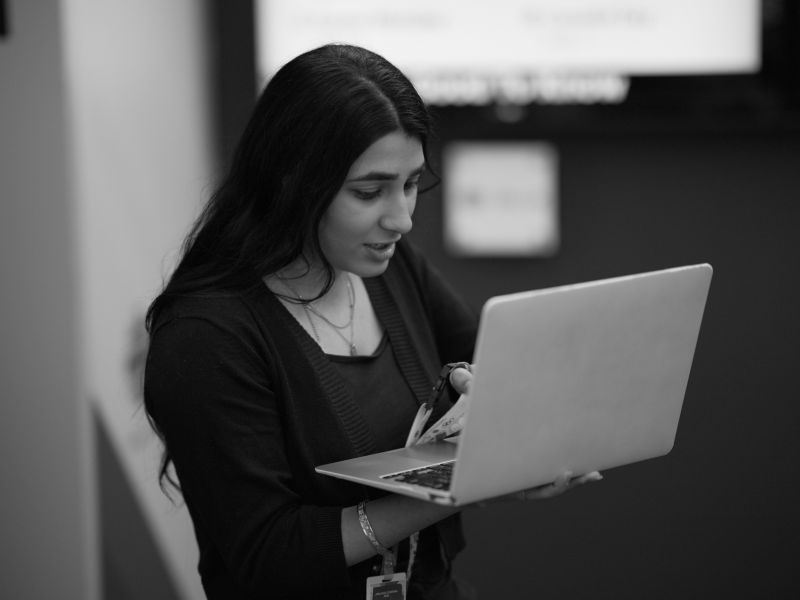
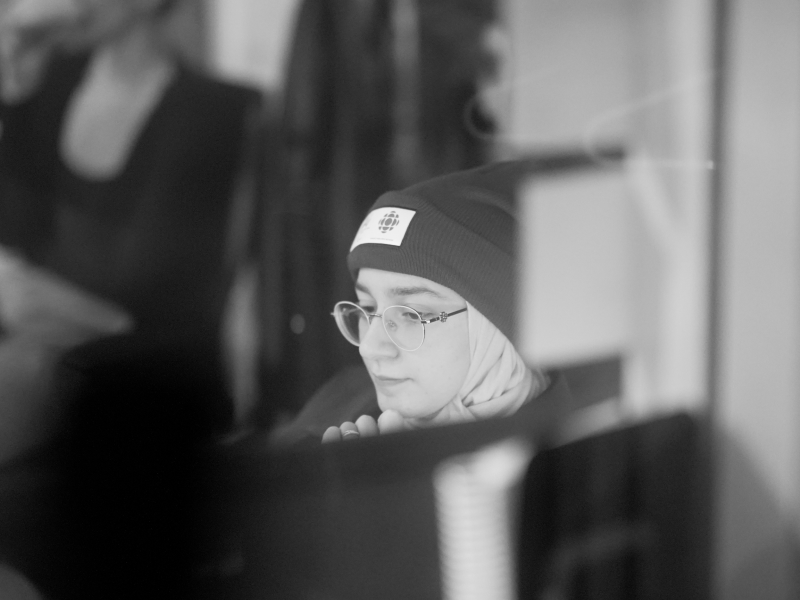
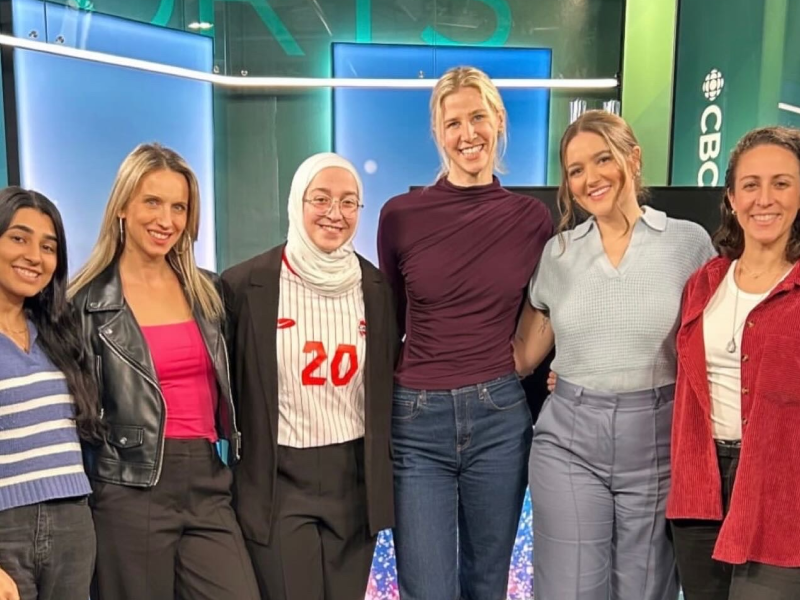
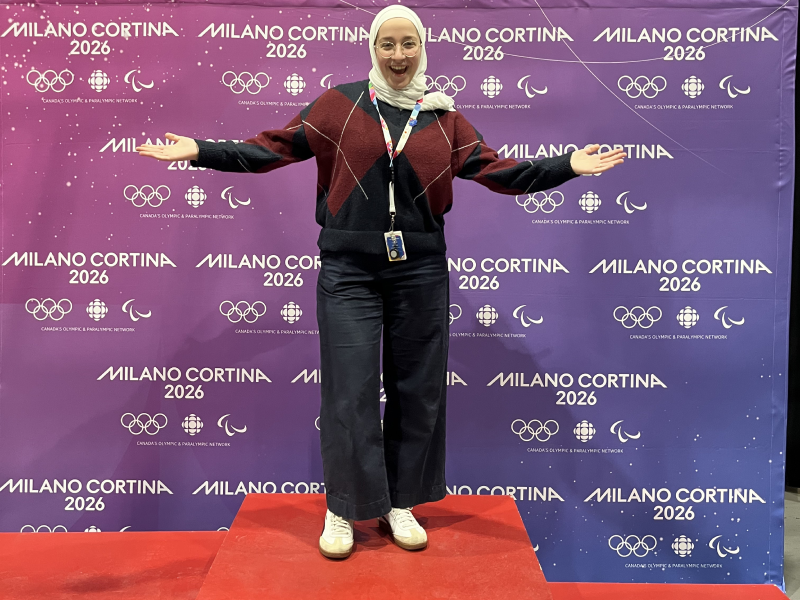
Zoha Naghar (external link) ‘25 worked the Olympics beat as a social producer with CBC Sports. She supported social media coverage and digital storytelling for the Games.
A typical day for Naghar during the Games would start around one p.m., connecting with the morning social producer for a handover on what had happened earlier in the day and what was expected to come next.
From there, she helped monitor competitions and identify big moments, “especially medal opportunities for Canadian athletes.”
“When those moments happened, my role was to make sure our medal graphics were posted as quickly as possible and to coordinate with our video editors to publish ‘medal moment’ highlight clips across our platforms,” she explained.
Naghar’s evenings were busy with social coverage, promotion for CBC’s Olympic shows and searching for engaging athlete content to share with fans, despite most events having already taken place earlier in the day with the time difference.
“I’d usually work until around midnight, helping ensure our platforms were consistently delivering timely, engaging coverage for audiences following the Games.”
She also worked the Paralympics this year.
Her role expanded more towards the editorial side, while still supporting with social production. She worked closely with the digital studio host, Allison Lang, producing explainer videos about the Paralympics for CBC’s digital platforms.
During the Paralympics, her day started around noon with a morning editorial meeting to plan the day’s coverage. After, she would write scripts, monitor competitions, post incoming content from the team, film segments with Lang and help produce additional content with athletes and talent throughout the day.
“It’s been an incredible opportunity to contribute across both social and digital production during such a major global event,” she said.
Looking back on her time at TMU, Naghar said the program built a solid foundation of skills through hands-on learning in studios, control rooms and going out in the field producing content.
“Those broadcast courses forced us to learn industry tools like Adobe and get comfortable working under tight deadlines, which made a huge difference once I entered the workforce,” she said. “I felt confident in my skill set and prepared for the pace of a real newsroom environment.”
The foundation made the transition from the classroom to working in a professional sports media environment feel much more natural.
What was the most memorable part of working the Games?
The team experience has been the most memorable part. There’s such a special energy in the office during the Olympics. Whenever a Canadian athlete was close to winning a medal, the whole room would start watching together, and when the moment finally happened, everyone would cheer.
The hockey games were especially fun...people would gather on one side of the office to watch the final minutes together, creating an amazing atmosphere. You’re working long days and seeing the same people every day for more than three weeks, so by the end, the team really feels like a family.
Being able to bring such a huge project to life with such a passionate and talented group of people is something I’ll always remember.
Not to mention, reminding myself that I'm the person informing Canada about medal moments and breaking news is such a wild thought. It hasn't fully settled in yet that I'm working for the official Canadian broadcaster with millions of eyes on our social pages.
What does it mean to you, personally and professionally, to be covering the Olympic Games?
Personally, covering the Olympics still feels surreal. There are moments when you step back and realize that the content you’re producing is reaching audiences across the country. Being part of the team that helps share these incredible athlete stories with Canadians is truly an honour.
Professionally, it’s something I’ve dreamed about for a long time. Being a producer with Canada’s national broadcaster less than a year after graduating is something I never imagined would happen this quickly. If I could tell my 2022 self what I’m doing now, she would absolutely freak out.
I’m also incredibly grateful for the support I’ve received from the team and for the trust they’ve placed in me to take on these roles. Working on events like the Olympics and Paralympics pushes you to think creatively, stay organized under pressure, and collaborate closely with such a talented group of people.
Seeing the videos and social content I've produced especially for the Paralympics reach audiences across Canada, and sometimes even globally, is such a fulfilling feeling. It really reinforces why I wanted to work in sports media in the first place.
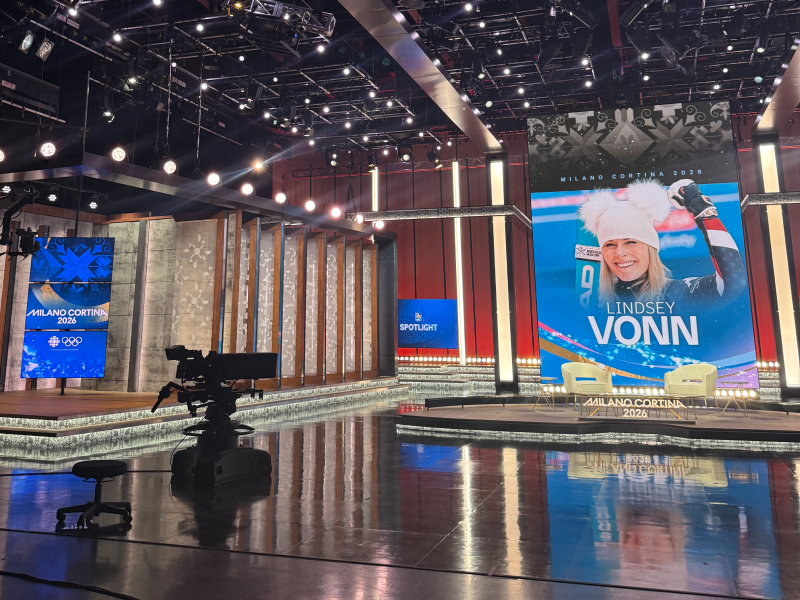
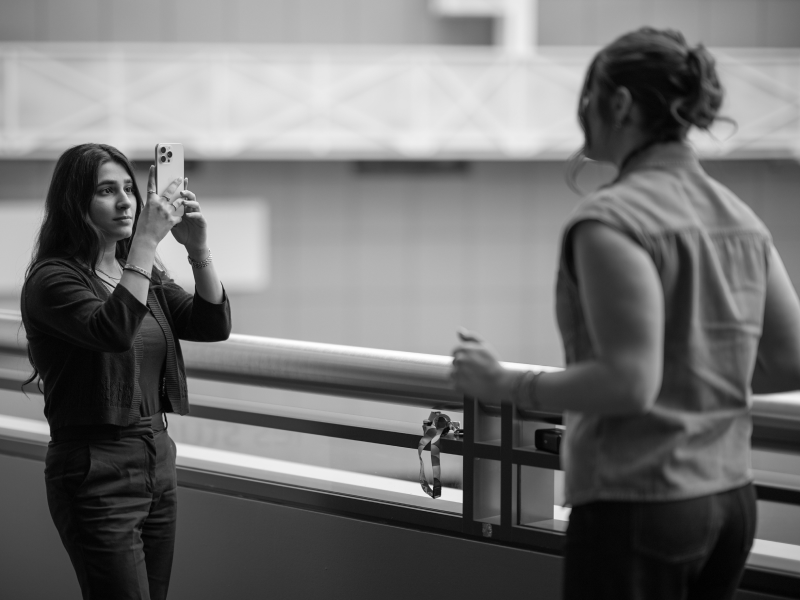
Mercedes Gaztambide
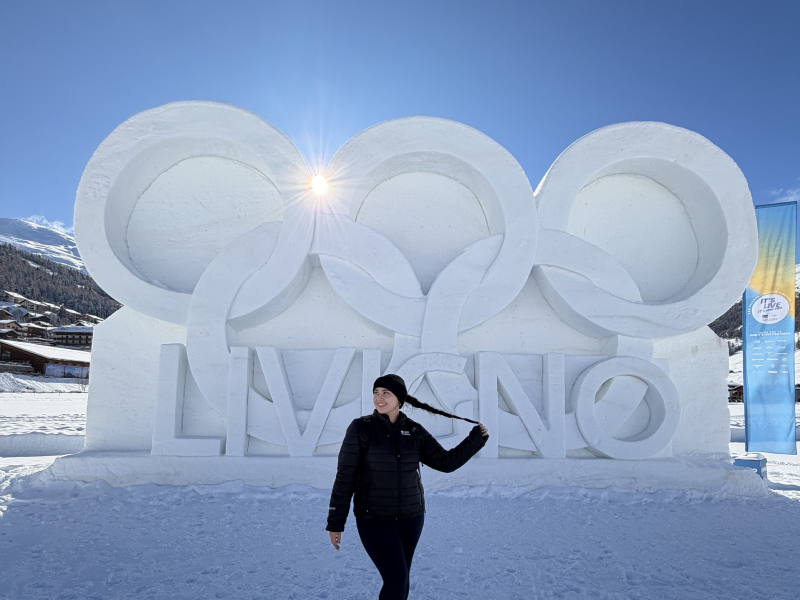
Mercedes Gaztambide (external link) ‘23, reporter at CBC News Toronto, worked as a producer for CBC’s content production unit and was based in Livigno, Italy, for the Games.
Every day, she would execute in-game content featuring a dedicated host, athlete or both for social, digital and broadcast.
She spent a lot of time prepping content concepts, writing scripts and making game plans for production before the games started. Once she was in Italy, she was able to put all her hard work into action.
“Every day, I produced a daily trivia show airing nightly in Toronto…every few days, I organized ‘behind-the-scenes’ videos in-games, showing the audience elements like race timing/photo finishing technology, POV style walkthroughs of venues like the halfpipe and big air apparatuses, and the experience of visiting alpine venues as a ticket-holder,” she explained.
Towards the end of the Games, she would execute interviews with up to three or four athletes a day and then send them back to headquarters for editing and sharing.
“I spent a lot of time on ski lifts getting to and from an interview spot on top of a mountain! Truthfully, each day was different, and that's what I love about the Olympics. It's never boring.”
Gaztambide said that story day in J-school was the best preparation the program could’ve given her for working the Olympics.
“Every day at the Olympics feels something like getting shot out of a cannon, unsure where you'll land. Having resolve, patience, and the willingness to pivot and say ‘yes’ to every shift in the plan is a skill that was definitely seeded in my first year of J-school.”
She added, “The push to approach all different topics and niches within journalism was an important skill, given that I'm not a year-round sports reporter or producer, the encouragement to dig into each genre with openness, curiosity and confidence was an important lesson.”
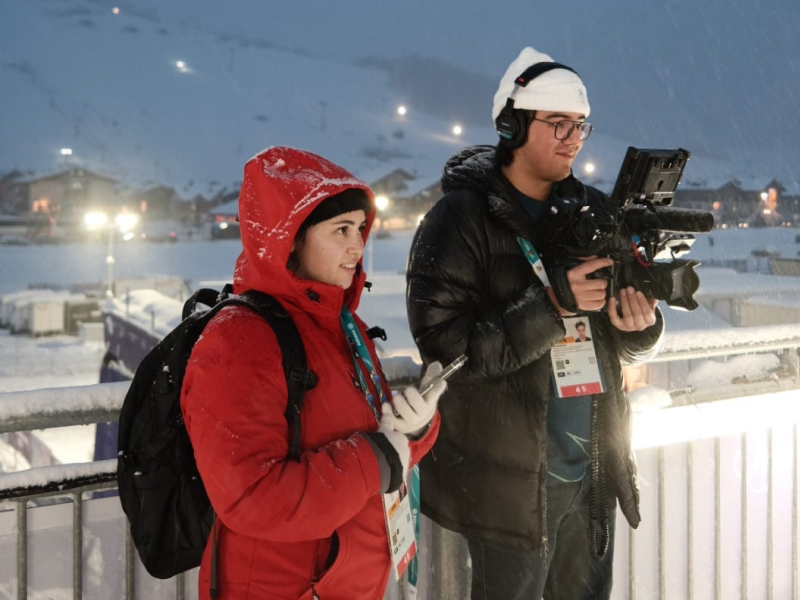
What was the most memorable part of working the Games?
The most memorable part for me was attending the women's big air free ski event and watching Canadian Megan Oldham take home gold. It was amazing to watch her win, stand in the crowd singing the national anthem, jump up and down with my teammates with excitement, and see her compete and win against legends like Eileen Gu.
The next day, we got to interview Meghan at an alpine venue nearly 3000m above sea level, only accessible by ski lift. Chatting with her on the way up the mountain, executing content with her and watching her interact with some young fans at the top of the lift was amazing. She's a star, and I'm grateful we had a full circle moment.
What does it mean to you, personally and professionally, to be covering the Olympic Games?
Professionally, it's one of the most prestigious honours I've ever received. To be trusted with contributing to one of the network's biggest properties and given the opportunity to travel abroad to do so is very humbling. I learned so much at both of my Olympic experiences and can only hope to have the opportunity again. As a journalist, working on a global scale with the best of the world's athletes is such a special feeling.
Personally... I wish you could have seen me explode with excitement both times I was offered a job with the team. I've always dreamed of seeing the world, and in this capacity, it is even more special.
Like many Canadians, I grew up watching the Olympics and marvelling at what I saw on TV, and to see it in person is a completely different level of wonder and excitement.
I'm just really grateful that my path led me here.
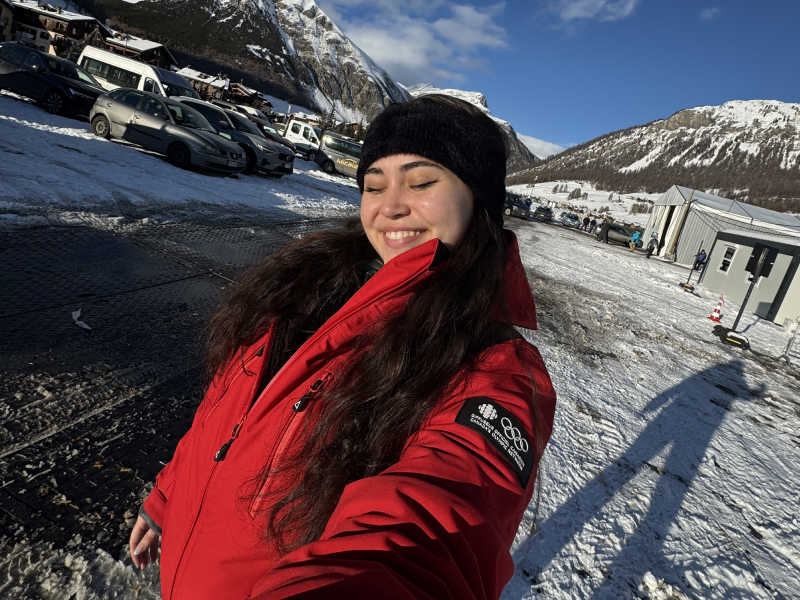
Amanda McGee
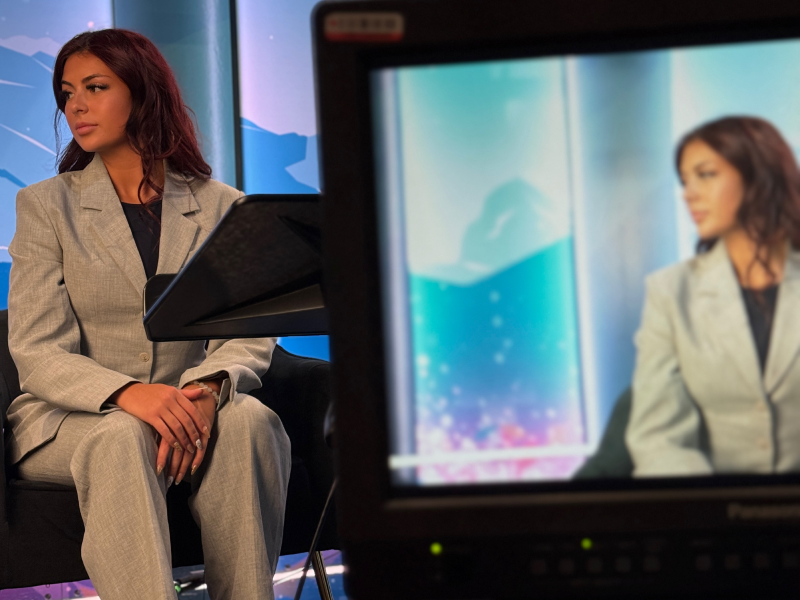
Amanda McGee (external link) ‘24, associate producer for Hanomansing Tonight, worked as an associate producer under CBC’s Olympic presentation team.
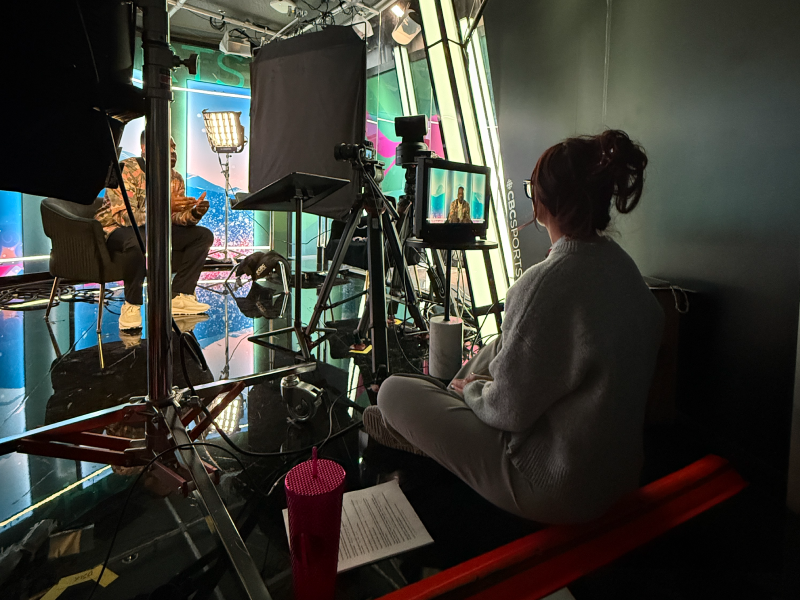
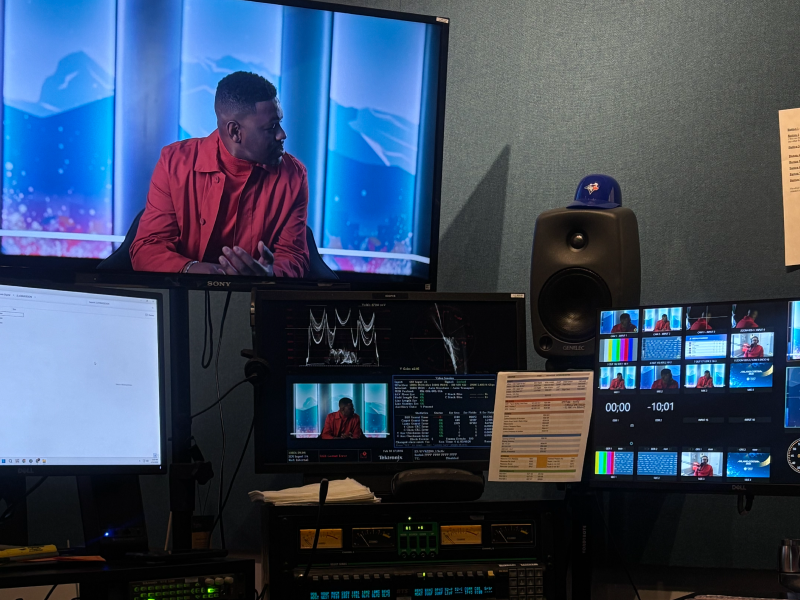
“I worked closely with Donnovan Bennett and helped produce his daily feature segments that would air on CBC’s primetime broadcast and partner broadcasts like TSN and Sportsnet, the following day,” she said.
McGee helped identify unique and timely storytelling angles within Olympic coverage and pulled archival real-time clips from the Olympic Winter Games for the segments.
She was involved in, “everything from the technical setup of the studio where we’d record the script and on-camera pieces daily to supply our team’s editor with visuals to piece everything together.”
Additionally, she supported a separate Olympic presentation team with the production of opens and teases for CBC’s primetime broadcast.
Her time at TMU played a key role in preparing McGee to support coverage of a large-scale event, like the Olympics.
“The Journalism program helped me develop an editorial mindset to think critically about storytelling and recognize how visual elements work together to build a narrative,” she said. “Those skills were particularly valuable when pulling footage and helping shape the visual flow of the features for broadcast.”
The program also helped prepare her for the fast-paced newsroom environment, and taught her how to collaborate with producers, editors and reporters while working under tight deadlines.
“We prioritized having the most timely information while also ensuring our features could stay relevant and live on past the Games,” she said.
“There was one day we had to scrap an idea entirely to pivot our focus on the breaking news of Ukrainian skeleton athlete Vladyslav Heraskevych being banned from competition for wearing a helmet featuring images of Ukrainian athletes killed during the war.”
What was the most memorable part of working the Games?
The most memorable part of working the Games was being able to contribute to a form of storytelling that captured the emotion of the Olympics for Canadian audiences. Working on the Donovan Bennett's features were especially meaningful because every moment was carefully planned out, from the music we selected to the shots we used, to help drive home powerful stories and moments from the Games.
This role allowed me to lean into my creative side and have fun with storytelling within a journalistic realm. One of my favourite features was the closing montage where we recapped key moments from the Games, with the overall message of the piece highlighting what it means to be Canadian.
What does it mean to you, personally and professionally, to be covering the Olympic Games?
Covering the Winter Olympic Games was both a personal and professional milestone for me.
This was a defining moment for me in my career. When I first stepped through the doors at CBC in February of 2025, I set a personal goal to work the Winter Olympics, so being part of the team covering the 2026 Winter Olympics felt incredibly meaningful.
Professionally, it was an honour to contribute to storytelling on such a large scale. With more than 30 million Canadians tuning in to watch the Games, playing even a small role in bringing those stories to life for audiences across the country felt like a dream come true. Personally, it was also a full-circle moment for me as I grew up watching the Winter Olympics with my family.
Given the political turmoil in the world, these Games were as important as ever to Canadians. It was impactful to be part of this coverage, and it was even more rewarding to see Canadians come together and cheer on our nation.
Christina Flores-Chan
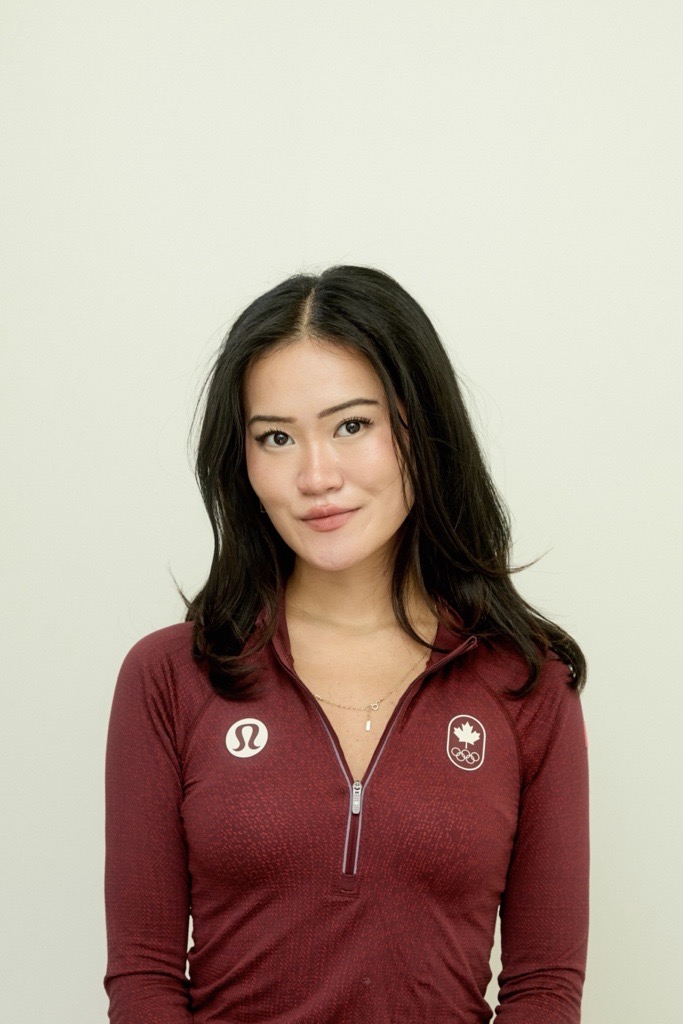
Christina Flores-Chan (external link) ‘23 supported the Olympic Games through her role as a communications and events coordinator for the Canadian Olympic Foundation (COF), the philanthropic arm of the Canadian Olympic Committee (COC).
She began her career with the COC as a communications intern in 2023 before progressing into her current position.
During the Games, her days often started early to align with competition times in Italy, where she drafted medal announcements whenever a COF-supported Team Canada athlete won.
Aside from the Games, Flores-Chan’s role involves drafting communications and supporting events for Team Canada donors, while also assisting the broader organization as needed.
What was the most memorable part of working the Games?
The part that will stick with me most from the Games was watching and cheering for Team Canada at the office with my colleagues at the COC. It’s an honour to celebrate the incredible achievements of Team Canada athletes alongside people who share a passion for sport and its power to unite the nation.
What does it mean to you, personally and professionally, to be working at the Canadian Olympic Committee?
Having jumped at the chance to cover TMU exhibition hockey games in my first week of first year [in Journalism], working for Team Canada means the world to me. It’s a privilege to be part of the team behind the team and to see the organization’s years of work come to fruition at the Olympic Games.
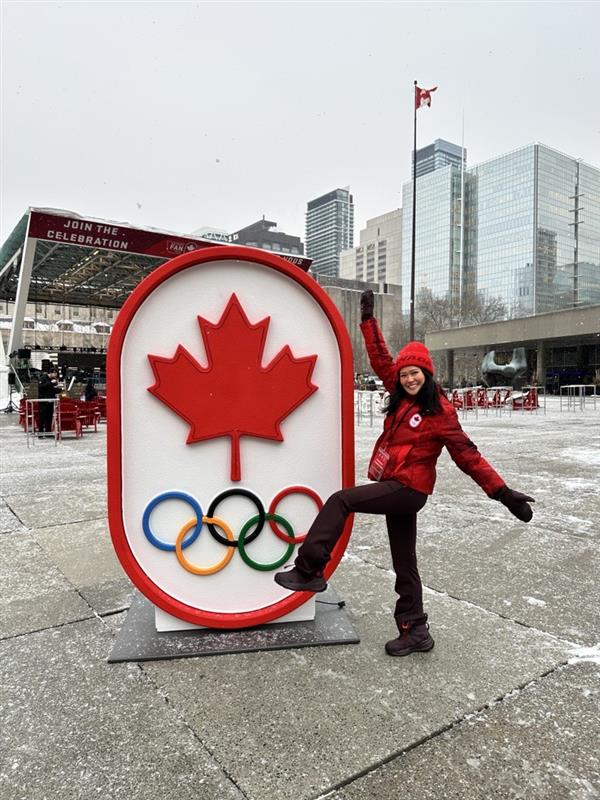
Lauren Croth
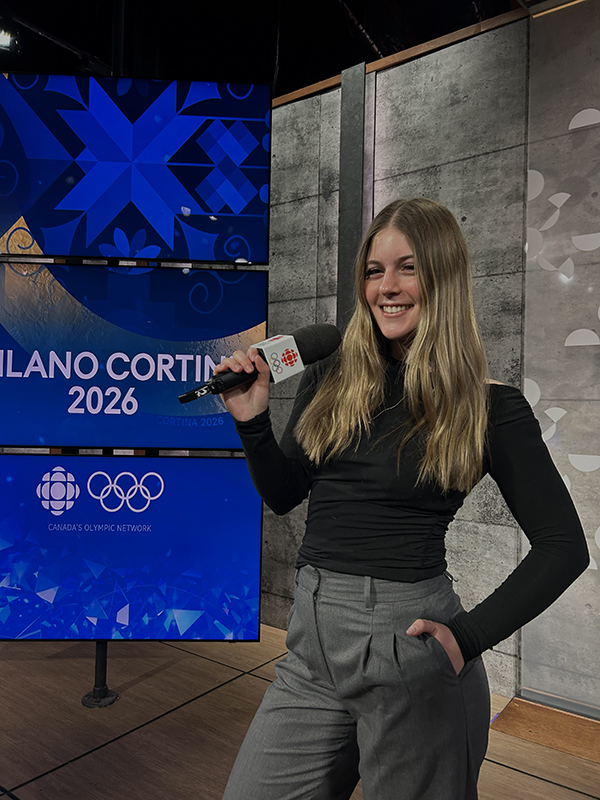
Lauren Croth (external link) , a third-year Journalism student, supported coverage of the Olympic and Paralympic Games as an associate producer for social media with CBC Sports.
“I helped manage and create content for the CBC Sports and CBC Olympics accounts,” she said. “My work included graphic design, vertical video editing, and pitching creative ideas that I was able to bring to life.”
Her work day began as early as 6 a.m., aligning with major events unfolding in Italy.
“I would begin by checking in with my producer, Sophie Baron, and then move into tracking live events. If an athlete was in medal contention, I would prepare graphics in advance so we could publish updates instantly when results were confirmed,” Croth explained.
Croth said her experience at TMU’s Journalism program, along with her role as a digital content assistant with TMU Bold Athletics, helped her prepare for the fast-paced environment.
“Both experiences helped me develop the ability to work under tight deadlines, refine my creative thinking, and grow as a storyteller, she said. “I’ve always been drawn to multimedia storytelling, and the program allowed me to develop those skills.”
What was the most memorable part of working the Games?
The most memorable part of the experience was both the connections I built and seeing my work resonate with audiences. The team at CBC Sports made the experience truly special. I learned so much from them, and they created an environment where I felt supported and encouraged to grow.
From a content perspective, a major highlight was creating my “Name Pronunciation Guide” series for Team Canada’s hockey teams. The women’s video reached 7.1 million views, and the men’s video reached 1.8 million views on TikTok, which was incredibly rewarding to see.
What does it mean to you, personally and professionally, to be covering the Olympic Games?
It means everything to me. Working the Olympic and Paralympic Games has always been a dream of mine, so having the opportunity to do it before even graduating feels incredibly surreal.
What stood out most was the responsibility and privilege of sharing athletes’ stories with audiences across Canada. This experience reinforced just how powerful social media can be as a storytelling tool, and it’s something that will continue to shape how I approach my work moving forward.
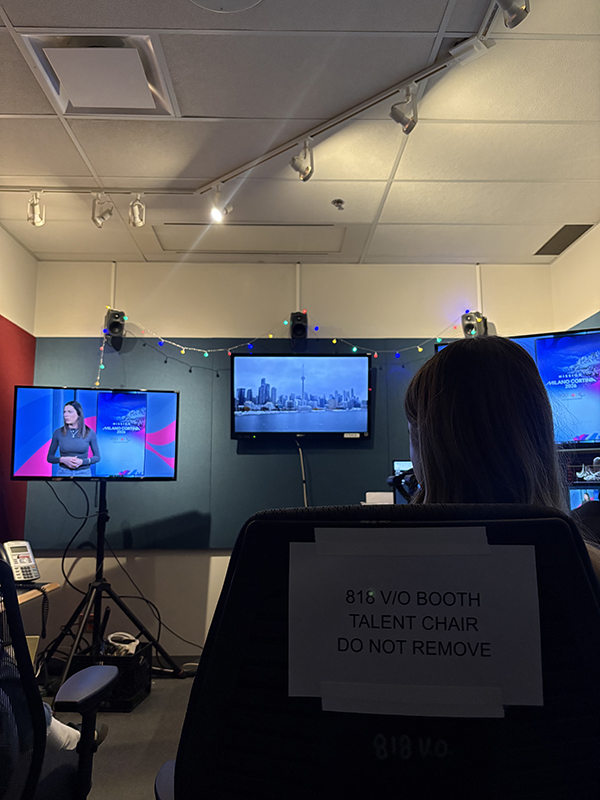
Paul Murphy
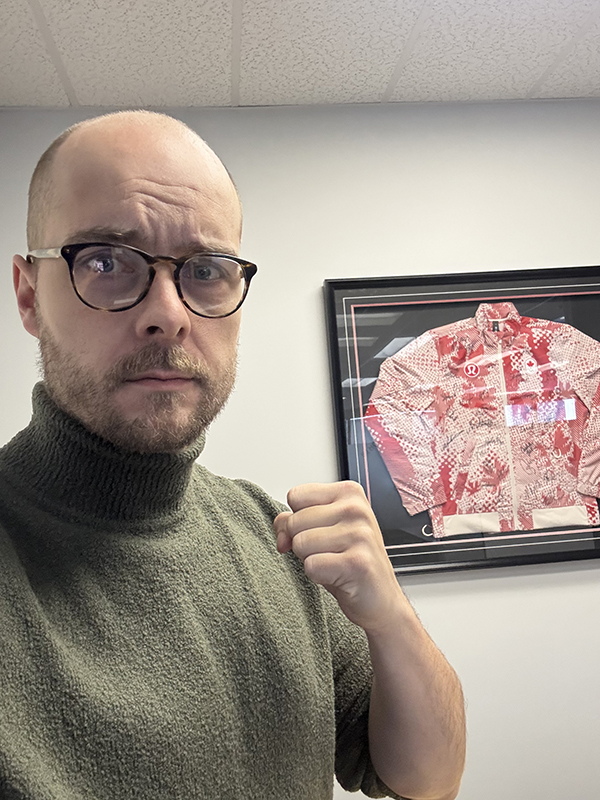
Paul Murphy ‘10, supported the Olympic Games coverage as a producer of sponsored partnerships with CBC Sports, assigned specifically to Olympic coverage.
Murphy’s involvement in the Milano Cortina 2026 Olympics didn’t start this year. It began in the fall of 2024 following the conclusion of the Paris 2024 Olympics and Paralympics.
“We began to plan what high-impact social and digital content we would capture with Canada's Olympic and Paralympic athletes and partner with major brands to share on CBC channels throughout the Games — from longform docu-series to the shortest YouTube...Short on @CBCSports' channel,” he said.
During the Games, Murphy’s days were split between monitoring thousands of pieces of content across CBC’s digital channels, analyzing performance data to ensure they met audience targets and live-interfacing with the CBC Sports content capture team in Italy to ensure content capture strategies were being updated based on performance data.
“Milano Cortina 2026 was only 17 days, but it took an incredible effort from my team of producers, editors, journalists, content creators, and project managers for months before it began to make it possible to tell the stories of these incredible athletes through 2,000+ social posts and digital features,” he explained.
Looking back, Murphy credits TMU’s Journalism program for helping him prepare for “an ever-evolving career” in sport broadcasting, live event production, and storytelling.
“I'll always be thankful for my time at TMU that instilled in me a sense of urgency, poise, and preparation in telling the best story possible, no matter the medium,” he said.
What was the most memorable part of working the Games?
When you work with a core team of roughly a dozen people for years to execute such a massive project, it's very hard to hone in on one "memorable" part. CBC's headquarters turn into a buzzing hive of excitement, intensity, and community as countless people work fundamentally bizarre hours in service to a one-of-a-kind world event.
That being said, I think the most memorable moment this time around was a packed CBC Sports newsroom, reacting to Piper and Paul's "Starry Night" skate that won them bronze. For small moments inside the eye of a constant "breaking news" storm, where hundreds of us broke away from our headsets, G-chats, phones, and spreadsheets to become one cohesive fan, reacting to one of Canada's most emotionally resonant parts of the Games. They also deserved gold for that skate, but that's another story entirely.
What does it mean to you, personally and professionally, to be covering the Olympic Games?
Covering the Olympics is a rare opportunity to work on something that virtually everyone on Earth is likely to know about. Have you ever tried to explain "what you do" to a friend, family member, or especially a new acquaintance? Has it always led to pedantic follow-up questions like "what is THAT?" or "What does that mean?" or "Where can I see that?"
"I work on the Olympics" — no matter what your specialized role is — is a magical phrase I've discovered that somehow makes me impervious to those pesky follow-up questions. It packs a punch for whoever is asking — whether they're from Toronto or Thailand. They know the event, the special way it makes them personally feel, and how fun, unique, and rewarding it must be to work on in any sense. I can confirm all three.
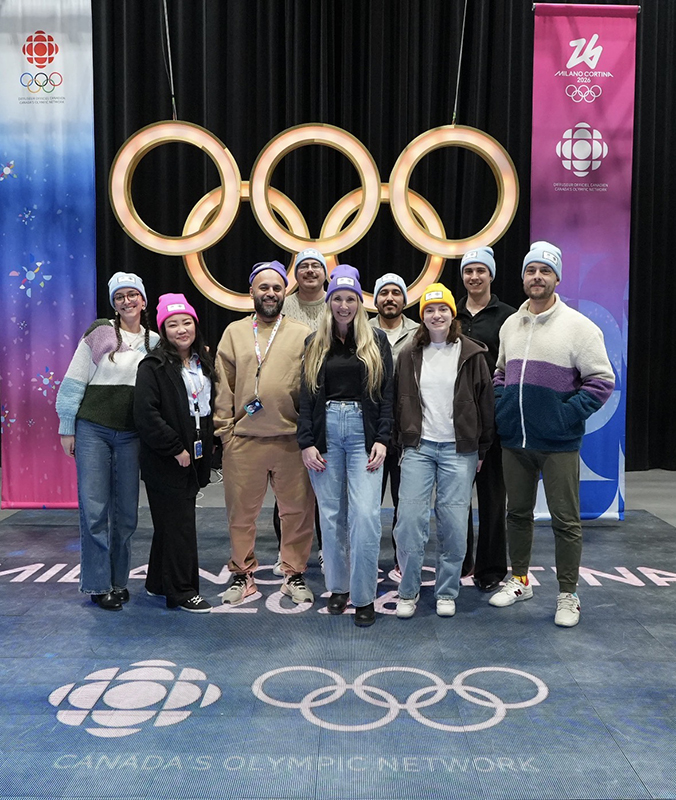
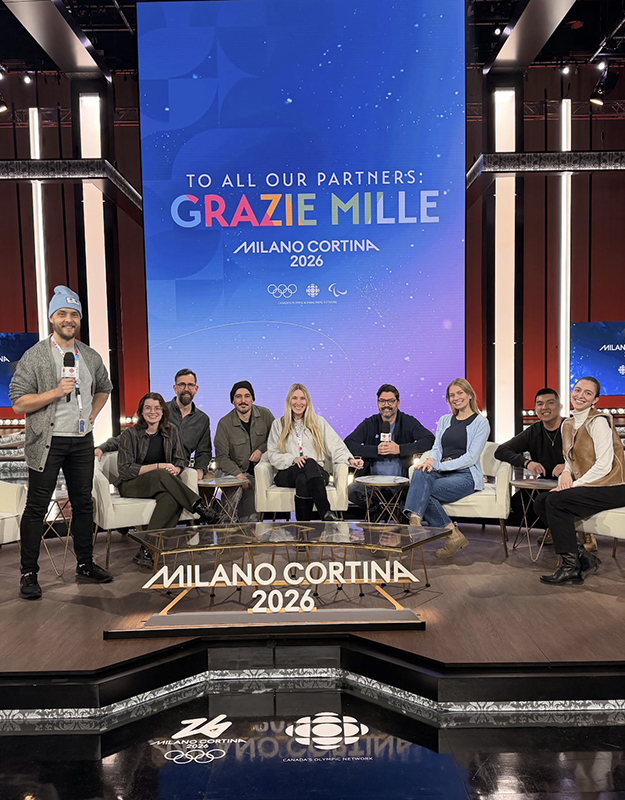
Julia Pen
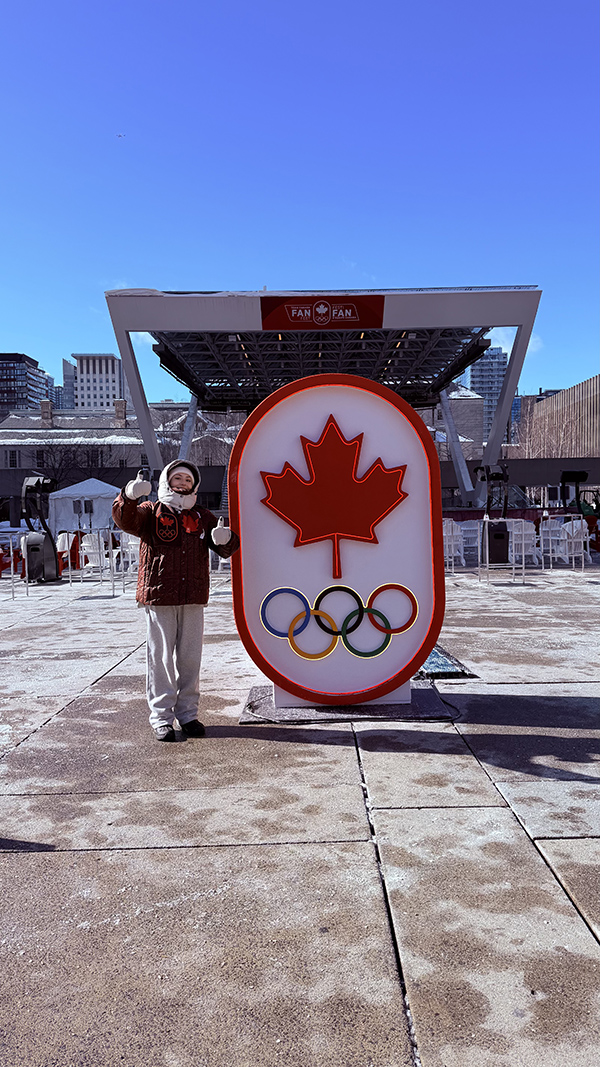
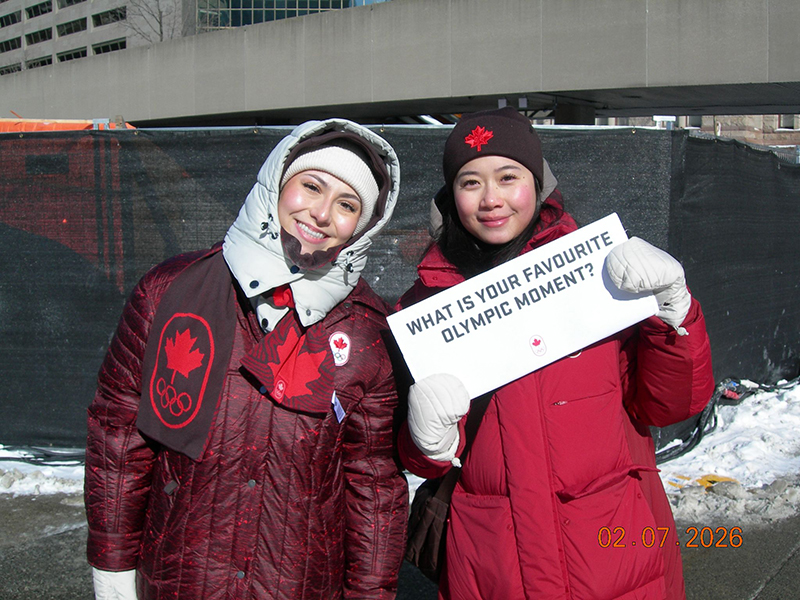
Julia Pen, a third-year Journalism student, interned at the COC during the Milano Cortina 2026 Winter Games as a communications intern.
“I pretty much hit the ground running in my first week. We were exactly a month away from the Games, and I had to learn all the processes before my team left,” she said.
In this role, she supported media relations, press operations, and various communications initiatives such as partnership press releases, media monitoring and flash quotes.
“My favourite tasks during the Games were to edit flash quotes for on-site media as well as help draft and push out press releases,” Pen said.
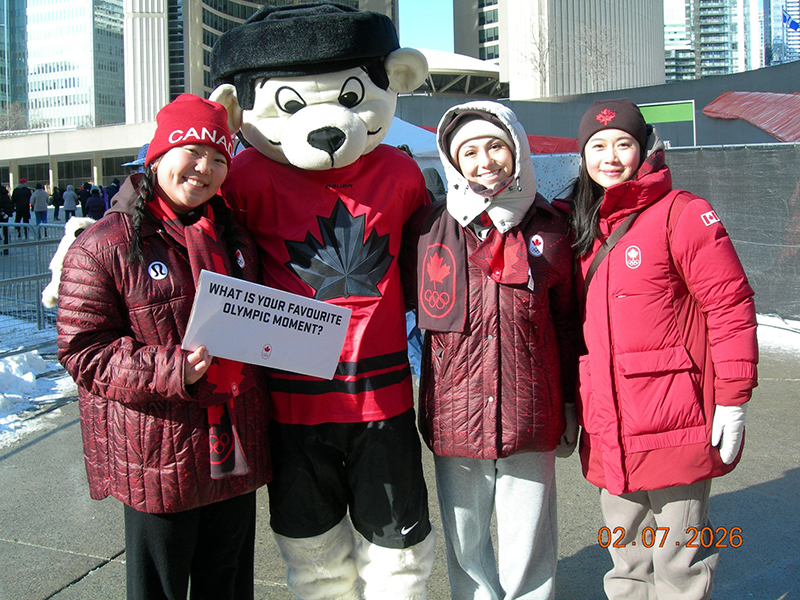
In addition, she supported on-site at FanFest, helping the digital team create content and build fan momentum for the Games.
“Seeing the turnout from fans who came out to celebrate, even in the cold, was honestly incredible. There was so much energy and pride in the space. Being part of that in any capacity was really exciting,” she said.
According to Pen, her time at TMU helped build confidence to navigate the fast-paced environment of the Games.
“The program really helped me hone my writing skills and become adaptable in my writing, whether that was an article or a press release. It also trained me to work under tight deadlines, which helped me meet my deliverables in this role,” she said.
What was the most memorable part of working the Games?
I would say one of the most memorable moments for me was partaking in an Eataly tasting tour with the Toronto home base team and then later on watching the Canadian men’s hockey quarterfinal against Czechia. It was so nice to be able to connect with my coworkers in a relaxing environment while we learned about Italian culture and food. Later on, we all sat in an open space to watch the Game. The energy in the room when Nick Suzuki scored and advanced the team into overtime was inexplicable. All of our eyes were glued to the big screen, and when Mitch Marner scored, the entire room filled with cheers and pride. It’s a moment I’ll never forget.
What does it mean to you, personally and professionally, to be working the Olympic Games?
It means so much to me to have been selected as the first communications intern during a Games season. Being able to apply what I’ve learned academically in a real-world setting has been incredibly rewarding. Having the COC as my first internship makes the experience even more special. The organization truly values personal development, and I’ve felt supported by my team throughout the entire journey. I’m very grateful for this opportunity and everything it has taught me. The experiences I’ve gained over the past four months are something I will carry with me throughout my career.