How one Journalism student got their World Series photos on CBC
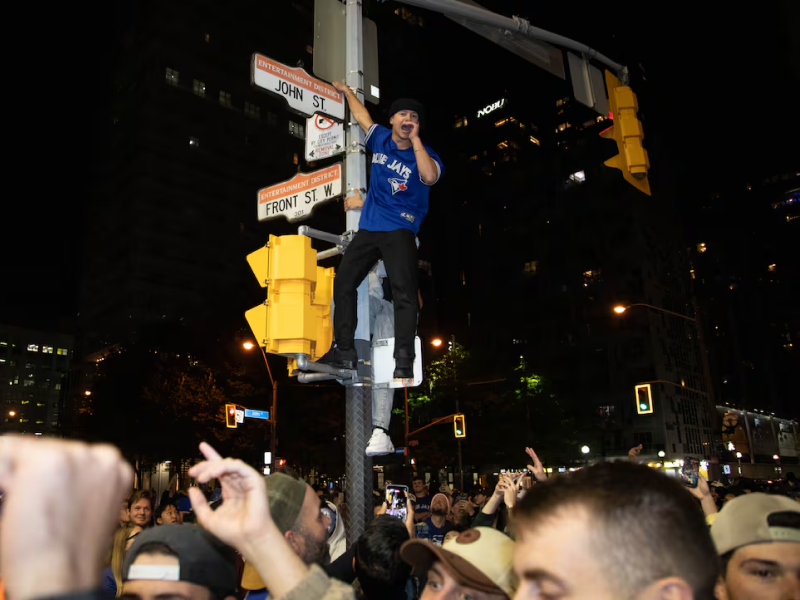
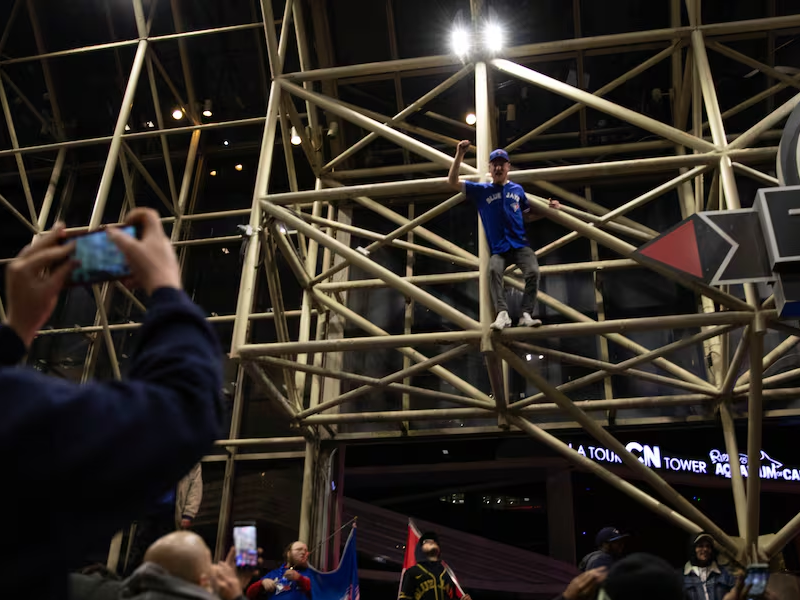
Blue Jays fans flooded Front Street W. outside Rogers Centre in downtown Toronto after the team beat the Seattle Mariners 4-3 Monday night to win the American League pennant. (Jes Mason/CBC)
Jes Mason (external link) , a fourth-year Journalism student, had come off an internship at Toronto Life and started a second one with CBC Toronto in September.
Their first few weeks started off on the socials team cutting radio and TV and then later writing for the web.
Then came Monday night (external link) of the American League Championship when Mason was at the Imperial Pub watching the game, with their camera alongside. “I knew if they won that night, it was going to be exciting,” they said.
The Blue Jays beat the Seattle Mariners 4-3.
Mason went down to Front and John to shoot the excitement. They took a photo of a person who had climbed a signpost.
“It was a classic fan celebration photo,” Mason said. “I sent it in an email with a couple photos and was like, ‘Hey, if anyone wants these.’”
And CBC used their photo in multiple articles (external link) .
Mason then reached out to CBC photo editor, Showwei Chu ‘94, to ask if they could shoot as part of the internship.
Chu set Mason up with gear and CBC arranged their internship schedule to allow for shooting time during the World Series.
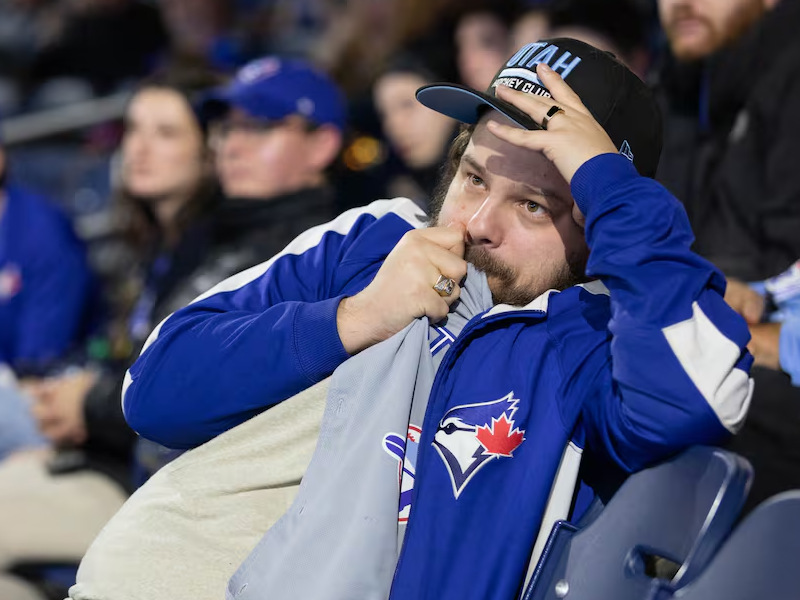
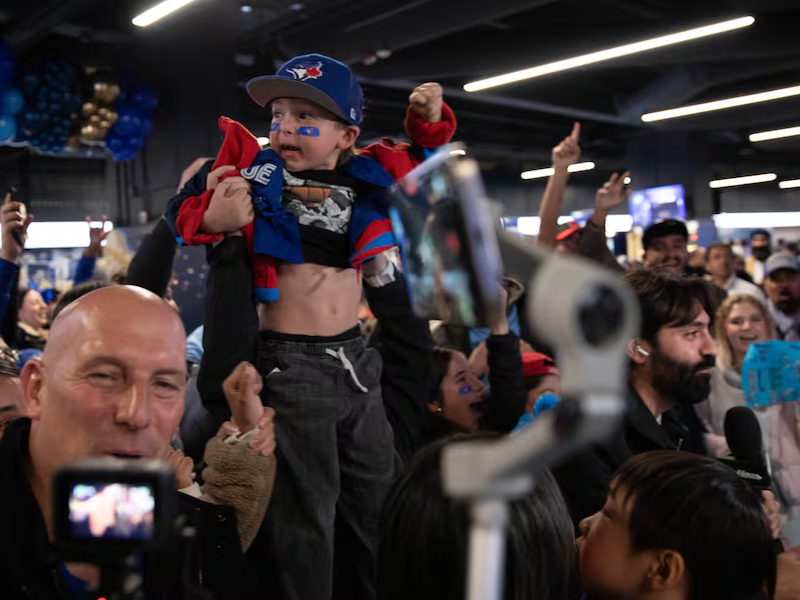
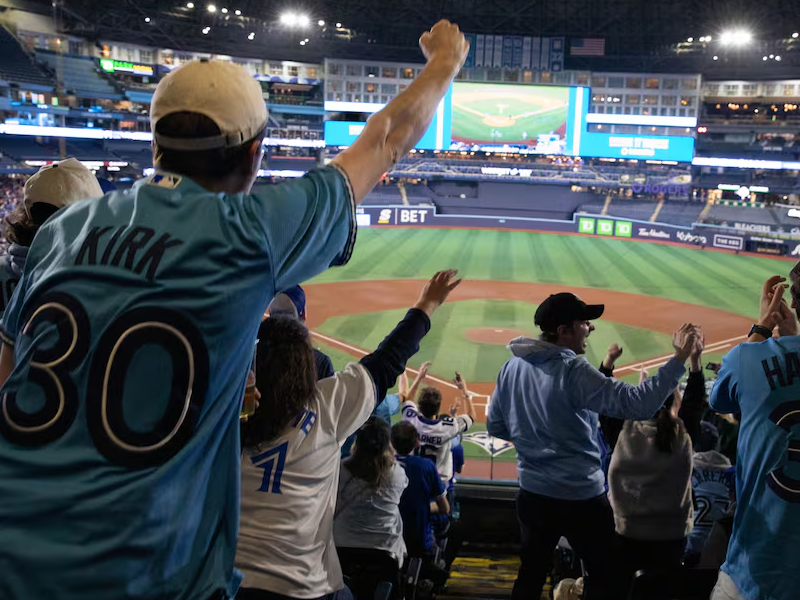
They shot watch parties in the Rogers Centre when away games happened and at Nathan Phillips Square during home games.
Mason focused their work on fan reactions (external link) , interviewing fans and setting the scene in about a hundred words of copy.
“I was filing immediately, so I was busting out my laptop, writing, filing photos and then getting back to shooting again,” they said. “It was a culmination of super multimedia, super live, responsive coverage.”
Before their internship, it had been a long time since they did photojournalism.
Previously, they were the photo editor at The Eyeopener, Toronto Metropolitan University’s student newspaper, for almost three years.
Mason said they felt rusty getting back into it, but, “as soon as I started shooting again, it brought me back to the 2019 NBA finals because that was my inauguration into photojournalism in Toronto.”
Although sports photography isn’t Mason’s beat, they described that all photography at its core is emotion. “Sports fans are very predictable in terms of when a bad thing happens and a good thing happens; you can tell when the moment is going to be intense.”
“It’s fun to shoot, sports fans are so emotive and intense.”
They described their internship as “trial by fire,” in terms of the pacing and speed.
Coming from a magazine journalism internship, where they had time to make something as good as possible, they said they benefited from the different pace at CBC.
“It was useful to have done both and now I can be intentional and selective about, ‘is this going to be something fast or is this going to be something slow?’ And understanding the trade-offs.”
It helped seeing other photographers in action for Mason to understand just how quickly tasks can be done in the field.
They used to take hours to select their best photos, but now Mason can choose and upload photos within five minutes between innings.
“One part is having blind faith in your gut instinct. The second part is developing your gut instinct by doing things slower when you can, so that when you need to, you can rely on it.”