Pursuing alternate paths: communications and PR
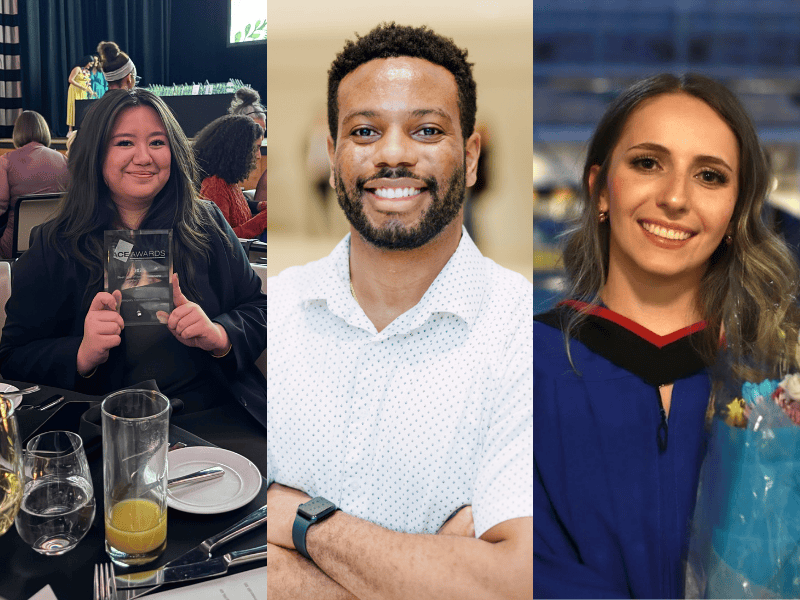
From left to right: Charlize Alcaraz, Kalem Mc Sween, Isabella Monaco
Journalism at The Creative School alumni have always built unique career paths for themselves.
These three took their skills with them into the public relations (PR) and communications world. They manage and assist with brand identity and campaigns through PR agencies, lead media strategies and advise on ministry announcements.
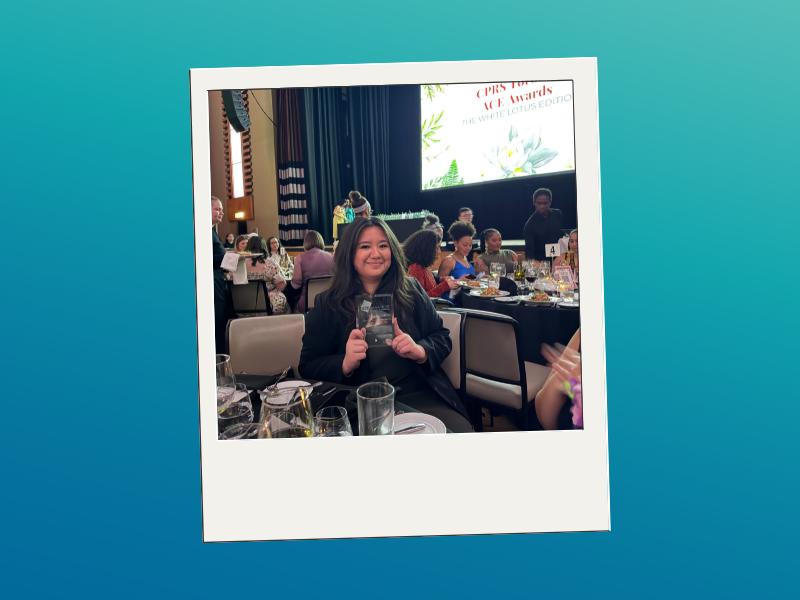
Charlize Alcaraz (external link) ‘23 recently led an award-winning campaign as a senior account executive for Category Communications. She started as a tech staff writer and switched to PR to help brands curate their stories rather than report on them.
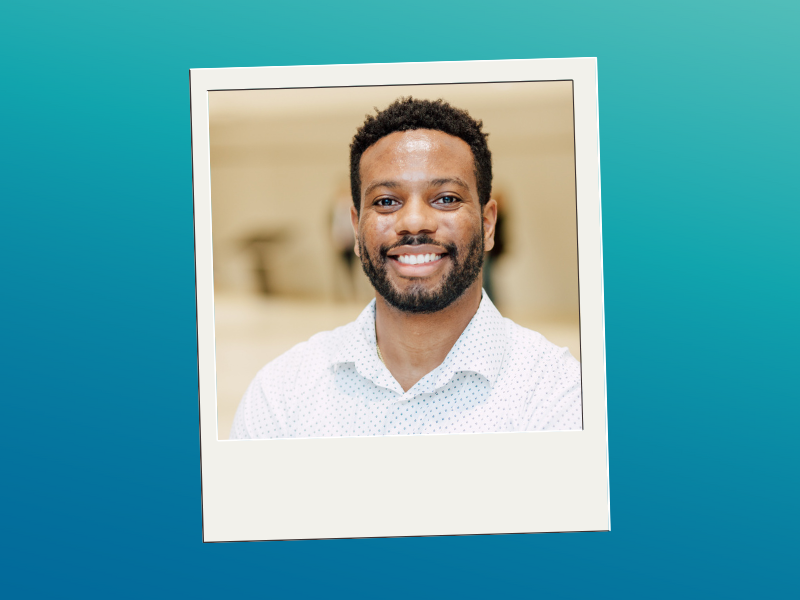
Kalem Mc Sween (external link) ‘16 is currently the acting senior strategic communications advisor for the Ontario Ministry of Transportation. Before, he worked with the Ministry of Labour, Immigration, Training and Skills Development in various roles of media relations and advising on related issues, such as the COVID-19 pandemic.
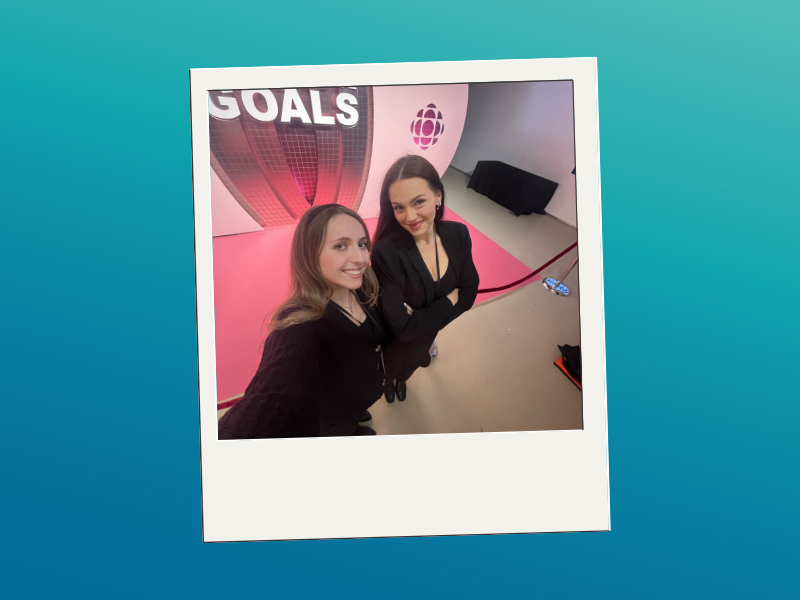
Isabella Monaco (external link) ‘24 started her career journey when she chose to do her fourth-year internship at Rocket Promotions (now Touchwood PR) and continued with the company as a PR coordinator. She works with food and lifestyle clients while dabbling in entertainment PR.
Bringing journalism into PR and communication roles
Alcaraz: I think the whole reason why I joined journalism was that I loved learning about things and being able to tell other people. It's something that I carried with me as I transitioned into PR. I feel the most rewarded when I get to learn more about different industries and top players, and not just reporting about them when I was a journalist, but now helping them craft the messages for consumers and reporters.
Mc Sween: It's important to note that you never once stop using [journalistic skills]. How I use it every day is, you want to be clear, concise, and you need to make sense of things for people. Getting in there and working with the key messages and saying, “Okay, these are too long, this adds too much of nothing. How do we break that down and get something a lot clearer?” That's one of the ways that I'm able to use the degree.
Monaco: My work as an intern was a lot of what I was doing in J-school already. Drafting pitches, a lot of communications. The transition itself wasn't too bad. I felt familiar with it, and then by the time I switched over to coordinator, I had a lot more experience and confidence in my work.
Memorable career moments
Mc Sween: During COVID, we saw a lot more of the PR stuff come into play. I got promoted to be the media spokesperson at the Ministry of Labour, Immigration, Training and Skills Development. In-house, we were taking in requests and getting the reporters what they needed. Late 2020, it was me and the reporters; at that time, the subject matter I was working with was very intensely [focused on] labour. People at work who still had to be there during the pandemic, and reporters are like, “What's going on with these people. What is the government doing to keep them safe?” We were doing our best to talk about all the protocols we have in place and the work that was being done. Being called up to the plate during that time was cool.
I will never forget, it was a request from the CBC; they requested a phone interview. At that point, I had been so removed from speaking because I was doing email most of the time. I go to my manager, and I'm like, “They want me to talk to them on the phone. Can I do that?” And she goes, “Well, yeah.” And I was like, “Oh, wow. Cool, so this is happening.” Then they (CBC) recorded it, and I remember people sending it to me. That was a neat experience.
Alcaraz: It felt like a full circle moment for me in terms of my career, because my client Willful, the CEO, is Erin Bury. I was working with a client who knew the journalism industry well and had run her own PR agency, so the challenge for me was to truly impress her and see how I could elevate what she's already done for the brand. They came to us in November to generate and maximize media buzz around The Great Delay report (external link) . It's essentially a survey with Angus Reid that looks at how the tough economy impacted Canadians' financial plans. We were between Trump's re-election and Taylor Swift just taking over Toronto. It was hard to break through mainstream media.
I decided to do a two-week embargo to give reporters more time and opportunity to slot it into their programming and editorial calendars. It's truly just working with the reporters and knowing the limited capacity and resources they have. We were also reaching out to hyperlocal newsrooms across Canada, tailoring the data for reporters across different communities. So, in addition to the Toronto Star and Yahoo Finance, we also got coverage in Global News Calgary, radio stations in the West and BC. I think what helped us win that award (external link) was the circumstances we were in and breaking through despite those competing headlines.
It was so rewarding. I felt the pressure when executing the campaign, and finally having the award in my hands felt like I could hold the efforts and the passion that I put into that campaign.
Monaco: One of the clients I represent is Krispy Kreme Canada. As part of my job, I coordinate media and influencers to check out the space before the grand opening. So I did that with their grand opening in Calgary. I had the opportunity to travel to Calgary and host their media preview and grand opening. We had a total of 82 media and influencers come to our media preview, which is good considering there's only one other Krispy Kreme in all of Alberta, which is in Edmonton. It was a lot of fun and such a great learning opportunity to learn about the media landscape in Calgary and Alberta specifically.
Advice for students and alumni looking to make the switch
Alcaraz: Don't be afraid to carve your own path. If [there’s] something that you are personally interested in, shout it from the rooftops, build your brand. I think that's what helped me before I made the transition into PR. I was known as this emerging reporter within the Canadian tech space. It was a beat that I owned and I wore proudly across my social media channels. I think of myself as an introvert, and while I can't network effectively in person, that's how I built my network, through shaping that personal brand, letting people know what I'm interested in, and that opens doors. If you don't have a robust portfolio, that can be supplemented by doing a bit of LinkedIn or creating a blog.
Mc Sween: I would say not to discount the education and all of the learning that you would have gone through, and think that it can only be applied to journalism. If the PR and comms world is one that you want, you could either go into it after you've done journalism, or you could go in at the start and form tenure in the comms and PR world. It's a fun world.
Monaco: Put yourself out there. Talk to anyone that you can, whether it be someone who is in a junior position like me, or someone who's more senior who works for a brand. Even the people I work with, let's say at Krispy Kreme, the Co-CEOs, they're so outgoing and willing to talk to anyone, whether it's a student or it's someone else working in PR, they're always open to chatting. Make the first move to go and talk to people.
These interviews have been edited for length and clarity.