Reimagining News: Q&A with students about their final projects
The Innovation Workshop course* offers students an opportunity to systematically explore and practice new and experimental approaches to journalism. Last fall, associate professor Nicole Blanchett encouraged students to use their innovation to create projects that fell within the realm of storytelling and yet went beyond the conventional bounds of traditional journalism.
“I love the multiplatform nature of this class, and that it challenges my own perceptions of what journalism is and could or should be,” Blanchett says. “The most challenging part of teaching this class is also what makes it so interesting to teach – there were 20+ completely different projects, with different deadlines for different components, delivered on all types of media platforms.”
Below are some examples of work produced by students in the course:
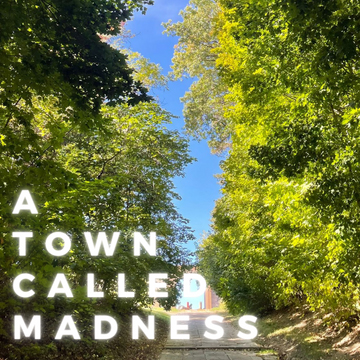
A Town Called Madness
Sama Nemat Allah created a project to subvert journalistic composition by archiving the stories and crip creative practices of Mad-identifying artists.
What was the most challenging part and most rewarding part of doing this project?
The most challenging part of this project was learning to let it come together on its own. I made a point in the preliminary stages to not have a concrete vision for the piece to give the Mad, disabled artists I was interviewing the agency to shape it themselves … I was beholden to my community members to determine what stories they wanted to tell and how they wanted to tell them, what footage they wanted to share with me, what parts of themselves they were willing to give me access to.
My favourite part about doing this project was forging a community with my Mad kin. Together, we bred dialogue about what it means to love, support, and care for one another under systems that see our non-normative minds as problems. There’s a colonial and extractive idea in traditional journalism that asks us to see our sources as subjects, as commodities to be mined for narratives and bylines. But something really powerful happens when we disrupt this framework and engage with our community members as collaborators and storytellers … To be able to give life to a project that documented our words, art and experiences and saw them as more than worthy of being seen and heard was such a privilege.
For people who consume your work, what would you want them to ponder?
Embedded in this project is an invitation to return. It is not enough to watch or listen to the piece once, because the text on the screen is different from the voice that overlays. There is so much happening all at once, that it pushes you as an observer to come back to it when you can take it all in wholly. I write this in my journalistic-artist statement: “I hope we translate this to the way we make community with Mad people; always willing to return to them, to give space and pleasure and reverence to their nuance and their pain and to their non-normative modes of existence.”
What was your overall experience like, taking a class that is a bit different in comparison to more traditional journalism courses?
It was transformative. For a long time, I saw journalism–an industry we know is founded on systems of oppression that hurt, patrol and stifle our voices—as stagnant and immovable. But then there Nicole was, giving me unconditional permission to turn journalism on its head; to dream of and materialize the type of journalism I want for myself and my communities.
This class has un-made and unsettled my journalistic practice. I have denominated it as Crip Journalism, which pulls from crip and disabled theory … To crip is to disrupt and this project disrupts what we know to be journalism. it is non-cohesive and unintelligible. It is grounded in collectivity instead of individualism. It was completed by someone with chronic fatigue and depression, with no expediency. Sources are as much the journalists as I am. And yet, it tells our stories and does it powerfully … I’m grateful for the ways this class has allowed me to entangle myself with a kinder journalism.
Learn more about Nemat Allah’s project here (external link) and watch her project here (external link) .
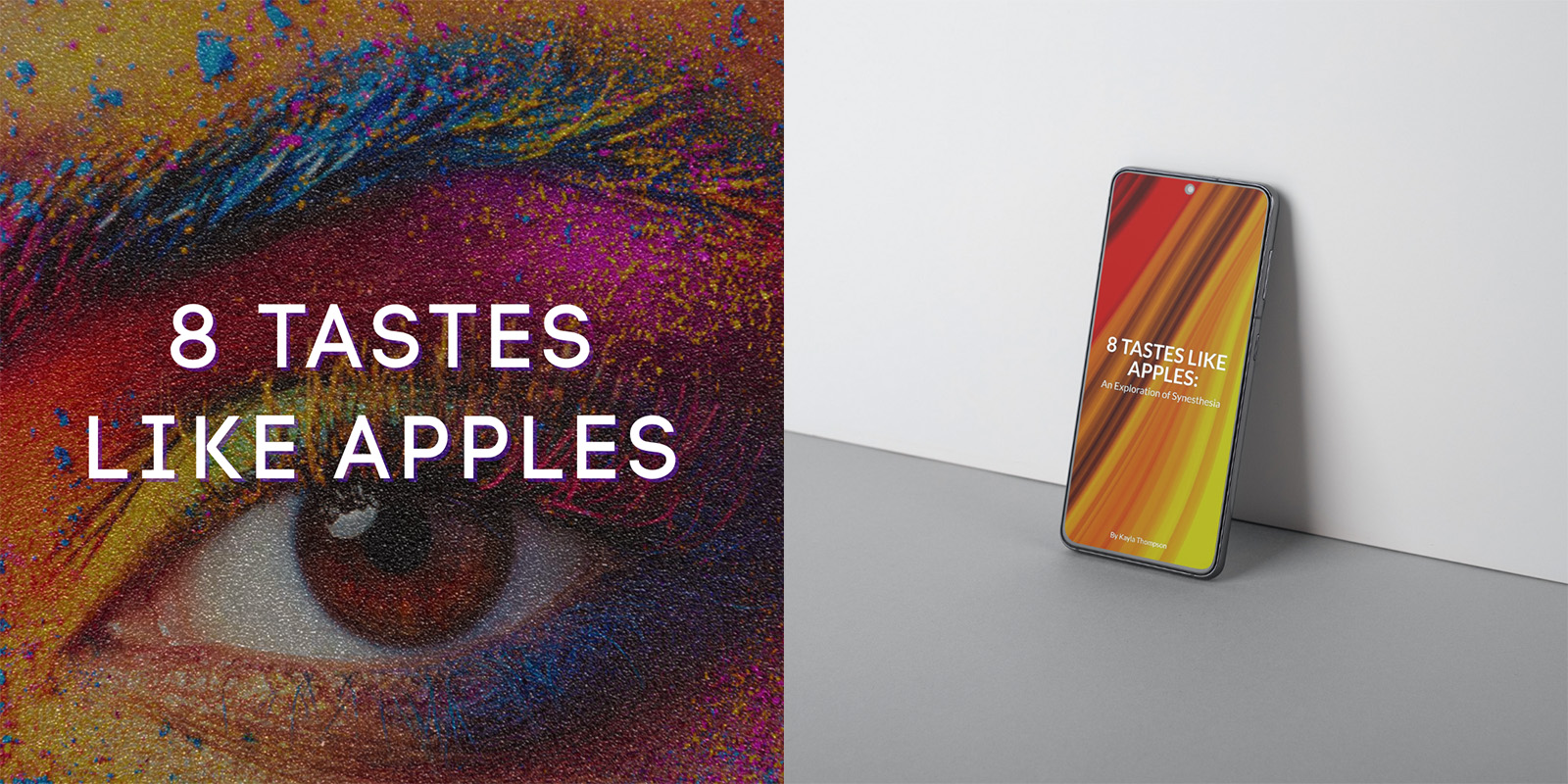
8 Tastes Like Apples: An Exploration of Synesthesia
Kayla Thompson produced a feature, an immersive adventure through the mind's eye of a synesthete.
“The realization that my lived reality - one that was inherently normal to me - was, in fact, a named neurological condition simultaneously brought me comfort and stirred up the beginning of an existential crisis,” she writes.
What was the most challenging part and most rewarding part of doing this project?
One of the most challenging parts of creating this project was conveying the lived realities of my sources without misrepresentation. It is extremely difficult to express in words the sensations involved with experiencing different forms of synesthesia, but it was my goal to convey these 6D experiences with as much accuracy as possible. I think I was able to translate these lived experiences cleverly through graphic illustrations like the one I made to visualize my grapheme-colour experience of coloured alphabets, numbers and weekly schedules.
My favorite part of producing this project was getting the opportunity to interview many unique and fascinating sources with lived experiences of synesthesia. Although I have a form of the condition myself, my sources helped me realize I only experience a fraction of the "unseen." These individuals opened my eyes to the many lived and unseen realities of synesthetes with different variations of the phenomenon … This story has also given me the opportunity to connect with the community of synesthetes and research experts who have a shared goal of informing non-synesthetes that our lived experiences are in fact a legitimate and true phenomenon.
For people who consume your work, what would you want them to ponder?
I want viewers of my project to walk away with a strong grasp on the concept of synesthesia and with an understanding of the many lived realities of those with the phenomenon. Ultimately my intention is to widen the perspective of any viewer, whether familiar with the condition or not, and to support the many synesthetes and research experts who continuously work to legitimize the condition to those who have remained doubtful of its existence.
What was your overall experience like, taking a class that is a bit different in comparison to more traditional journalism courses?
The freedom and creativity of this course was a refreshing break from my content-heavy course load, and I was happy to have had the opportunity to create and innovate a journalism piece of my own … Ultimately, I am very thankful for the chance to create a project for a community so close to my heart, and am so excited to share this story with fellow synesthetes and non-synesthetes who are curious about the perceptual phenomenon.
Learn more about Thompson’s project here (external link) and explore her feature here (external link) .
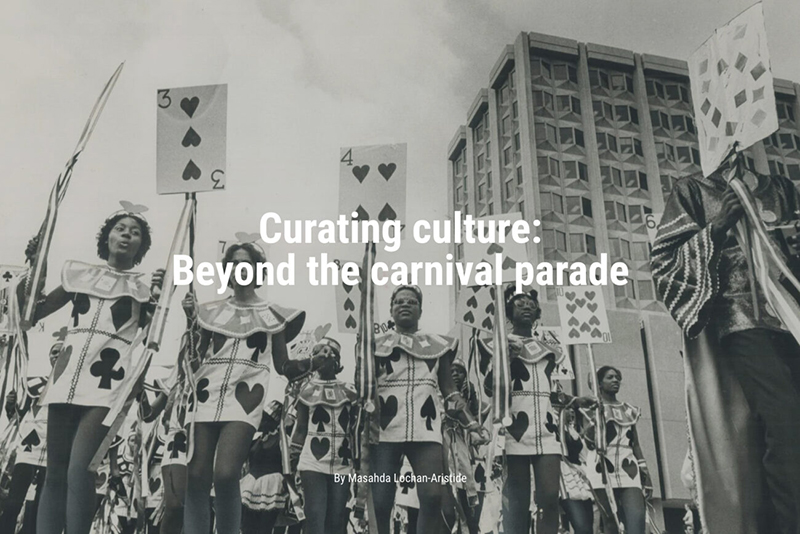
Curating Culture: Beyond the Carnival Parade
Masada Lochan-Aristide explored how Caribbean creatives are preserving carnival culture in their everyday lives.
“Despite the cultural significance of this celebration to those of Caribbean heritage, at first glance the parade might look like an extravagant street party where women flaunt their figures, and the revelry seems to never end. But the origins of the parade are rooted in so much more,” she writes.
What was the most challenging part and most rewarding part of doing this project?
When I decided to do this project I really wanted it to showcase the art of carnival as best as I could … When I reached the stage where I was beginning to go through my content and decide what would be best to use, it was really difficult sifting through the content I had collected … So much of the content I thought deserved to be featured, because a lot of it spoke to a different aspect of the overall story. Another challenge was making sure I was capturing the culture as best I could, as someone of Caribbean descent, I really wanted to make sure I was doing a good job reporting on this.
The people I spoke to for this project shared so much love and passion for the culture behind the carnival. It was awesome to witness how they manipulate and reimagine carnival while still honouring its roots in such creative and versatile ways. Usually after carnival weekend in Toronto, talk about carnival really dies down and we do not hear much about it until next year. This project was so great because I got to take a look into how people who love and respect the culture are interacting with it in their everyday lives.
For people who consume your work, what would you want them to ponder?
My biggest hope that people will take away from this project is the importance of preserving culture. Especially in such a diverse city like Toronto it is important to educate ourselves on the history and significance of the cultural celebrations outside of our own that we participate in within the city.
What was your overall experience like, taking a class that is a bit different in comparison to more traditional journalism courses?
Taking this class forced me to get organized. We were required to keep a source list and submit weekly progress measures. This was so very helpful in my reporting process because it allowed me to see the outline of this story before I began the work. Working with Nicole was just as great, she asked questions that really required me to analyze my decisions and make sure my approach was focused.
Learn more about Lochan-Aristide’s project here (external link) and explore her feature here (external link) .
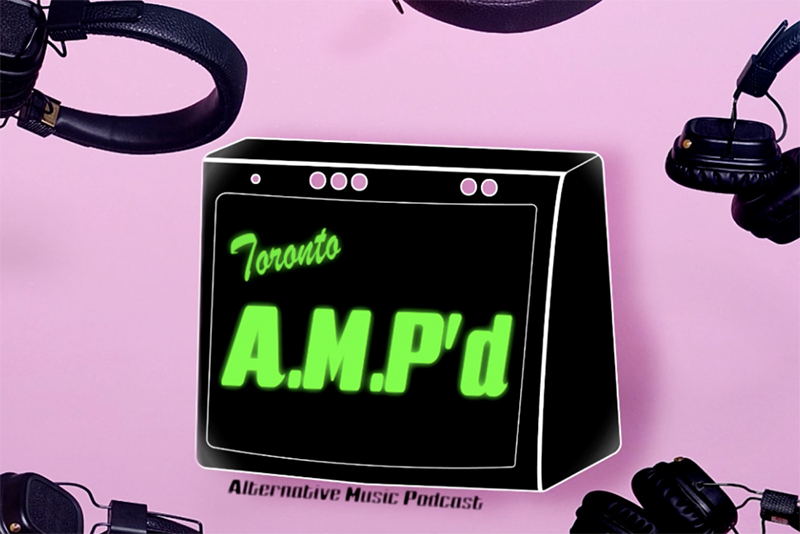
A.M.P'D TV (Alternative Music Podcast)
Jess Bertan produced this Toronto-based video/music television program geared towards a student audience, with the intention of providing local Toronto artists with a credible space for their talent to be publicly recognized.
What was the most challenging part and most rewarding part of doing this project?
My favourite part of this project, as per usual when I have approached music journalism, was getting to interview the band in the TMU TV studio. Above all … I am a storyteller who loves getting the chance to hear artists openly recount their lived experiences. Being permitted access to the school’s resources in order to professionally showcase this candid exchange of stories truly made the effort personally memorable, and entirely gratifying beyond words.
The most challenging aspect of the project I took on was also what made it the most rewarding, which was producing the pilot entirely on my own. Having committed the majority of my journalism work towards the local music scene in Toronto, I've had the privilege of becoming intimately familiar with the uniquely systemic issues that are currently plaguing the industry. Despite the fact there were certain skills required to pull it off that I had to teach myself, like video-editing and script-writing for TV, I always had a very clear understanding of my vision and how greatly it could help independent artists if successful, which is ultimately why I undertook this project alone.
For people who consume your work, what would you want them to ponder?
I really wanted to elicit a sense of nostalgia for the live music experience that has become so scarce since the pandemic took it away. Since then, music has become more of a commercialized product than a unifying display of talent. I want my audience to feel a personal connection to both the artists and their art, remember how much fun concerts are, and hopefully entice them to go out on the weekend to catch a live show with their friends. Live music is entertaining, inexpensive, and very distinctly human.
What was your overall experience like, taking a class that is a bit different in comparison to more traditional journalism courses?
I was extremely fortunate to have taken the innovation workshop class, and I'm incredibly grateful to have gotten an opportunity to creatively expand on my ideas in a space where creativity is encouraged. With Nicole overseeing the project, especially considering her extensive background in broadcast, I couldn’t have asked for a more inspiring professor to take lead from. Although having eccentric ambition can be daunting, and innovative ideas are habitually met with outside doubt, this class provided me with advocative support to see how far I can push the boundaries of journalism and incite real change.
Learn more about Bertan’s project here (external link) and explore her program here (external link) .
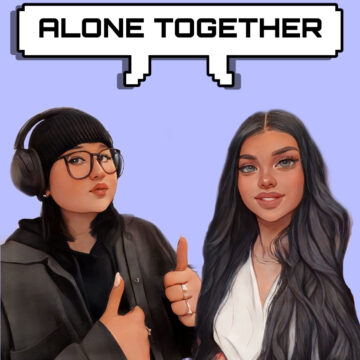
Alone Together
Students Amanda McGee and Farkhounda Azizullah co-produced this podcast series focusing on and encouraging conversations about adolescent mental health. They aim to create a comfortable environment to let youth know they are not alone in their mental health journeys.
What was the most challenging part and most rewarding part of doing this project?
For McGee, the most challenging part of doing this assignment was management. “Initially, there were more things my partner and I wanted to do, like driving the podcast on social media. However, we decided to focus on producing the podcast in the most professional way we could so we broke down our time in that way,” she says. “It was very challenging to edit all of the podcast material as it was my first time doing a project like this and of this importance. We also had to be cautious in how we approached our sources as mental health can be a very difficult conversation,” says Azizullah.
They both found that getting the opportunity to interview people who have had different lived experiences was rewarding. Azizullah says, “I learned that this is a topic that needs more attention, as youth are still battling mental health issues with not many resources that benefit them.” McGee says, “It was also nice to establish a safe space for our guests to feel comfortable enough to share their stories.”
For people who consume your work, what would you want them to walk away pondering on?
“I want our listeners to be able to walk away from our podcast feeling inspired to talk more about mental health,” says McGee. “I want people, especially youth and institutions, to walk away wanting to change the environment of this topic. Adolescents still do not feel heard and these mental health problems can carry on into their adulthood, which affects a big part of their everyday lives. I also want teenagers to feel more open to talking about these problems because it should not be taboo - everyone goes through them,” says Azizullah.
What was your overall experience like, taking a class that is a bit different in comparison to more traditional journalism courses?
Both students enjoyed having the freedom to produce journalism in a more creative way, and had the chance to expand on their technical skills. Nicole’s feedback on their work allowed them the space to really explore what direction they wanted for the podcast.
“Podcasts are growing in popularity, so I am happy to have had the freedom and opportunity to create an impactful one,” McGee says.
Learn more about McGee and Azizullah’s 3 episode podcast series and listen to it here (external link) .
“I am so proud of all of the students for doing their best to challenge the status quo and themselves … it is more important to learn from your experience, develop the ability to pivot when you should, and always look for new ways to understand and engage your audience,” says professor Blanchett.
All other projects produced in this course can be found at reimaginingnews.ca (external link)
*This course will run as JRN 843: Reimagining News in fall of 2024.