Award-winning reporter Josh O’Kane on his national bestselling book, The City Google Couldn’t Buy
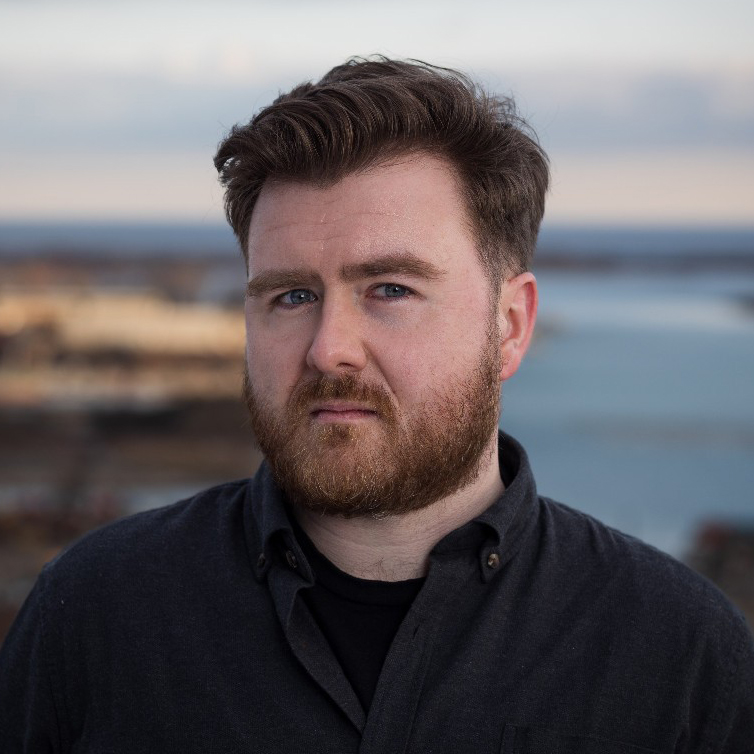
For more than two years, reporter Josh O’Kane, MJ’12, had a “front-row seat” to the often-gripping story about the attempt by Google's sister company Sidewalk Labs to build a neighbourhood in Toronto. When the project collapsed, he decided to write the full narrative arc of one of Big Tech's biggest incursions into Canada. His new, national bestseller, Sideways: The City Google Couldn’t Buy (external link) , dives into former New York deputy mayor Dan Doctoroff and Google’s co-founder Larry Page, who initially pitched Sidewalk Labs to an underdeveloped parcel of land in Toronto’s lakeshore. This parcel of land reveals the divide and power between tech companies and Torontonians who witnessed Big Tech extending its power from the digital world into the physical world.
J-School Now spoke with O’Kane about the process and significance of his new book.
Why did you want to write Sideways: The City Google Couldn't Buy?
I am a living, breathing example of the sunk-cost fallacy. I had dozens of contacts on all sides of the saga, piles of documents and a strong sense of how things had unfolded behind the scenes. I was also in the middle of an investigation into the company's origins when it walked away from Toronto – which I realized I could repurpose for a good set of early chapters. The full story of Sidewalk Labs hadn't really been told in one place, and I realized I was well-equipped to write it. It also helped that I had a lot of spare time during the pandemic.
What is your favourite chapter?
There's a chapter and a half set in Berlin, whose post-reunification cultural scenes and growth story have made it one of the most interesting cities in the world. Selfishly, that section was a treat to research. But there are a couple of other chapters I really enjoy. I got my hands on a copy of Sidewalk's early vision for cities, which was framed as entirely utopian. In the chapter on this massive document, I removed the company's spin and reframed the ideas in a more realistic context, showing just how dystopian they could become when interrupted by a handful of very likely problems. A few chapters later, I write about the federal government's extremely strange relationship with Sidewalk Labs – which I got clarity on only after a three-year access-to-information battle about Justin Trudeau's relationship with the company. I love that chapter because it's a victory for government transparency, even if I had to fight for years for it.
What perspective did you take in reporting on Sidewalk Toronto?
I saw this story as a parable about how power works in the 21st century. Real estate was a factor, but it was really a story about a bunch of businesspeople and politicians making progressive-sounding promises in ways that would boost their personal legacies and about how tech companies exert enormous influence over society. Seen through the lens of power, it's a natural human drama.
What responsibility do you think journalists have in bringing out investigative stories like that about Sidewalk Toronto?
It's a vital responsibility. Companies like Alphabet (Google and Sidewalk's parent company) have massive budgets for public-relations campaigns to make their efforts look entirely positive for society. But their responsibility is to their shareholders, which is different from society as a whole. Shareholders want companies to make even more money, which is not always aligned with the broader public good. It's critical for journalists to dig into what's happening behind the scenes at these influential businesses so the public can understand their motivations and goals.
Was Sidewalk always willing to talk to you? How did you find sources and gather information for a book of this kind?
I had spoken with numerous Sidewalk staff, including its CEO Dan Doctoroff, on the record many times for my Globe and Mail stories. When I began working on the book, the company's participation was relatively limited. They let me fact-check technical details of their plans with some staff, gave me some documents, and, very late in the process, gave me a one-hour interview with Doctoroff. But my time covering the story for the paper gave me many sources to turn to for the book who could share and corroborate many details. If you cover a story thoroughly and always work to get the details right, I've found people will be responsive when you reach out to talk. Not always, but if you work hard to honour people's experiences, it helps. In the end, I spoke with more than 150 people for the book and amassed thousands of pages of documents.
What do you hope people will take away from this book?
Cities move slowly. Tech companies do not. One of them is beholden to democratic processes; the other is beholden to shareholders. There's an inherent culture clash when they meet. I hope the book makes readers ask themselves a question about society as the world continues urbanizing: Who should get a say when it comes to the future of cities?
What is the future of big tech in Toronto?
The constraints that governments would have placed on the Sidewalk Toronto project would have made it less earth-shattering than Sidewalk's marketing might have suggested. Sidewalk leaving Toronto did not mean the end of Big Tech's presence here; in fact, there was a rash of hiring in the months that followed, and it's become home to one of the fastest-growing tech scenes in North America. Tech companies around the world are actually going through a downturn right now, so it's not exactly a positive time; there have been a lot of layoffs the last few months, here and elsewhere. But the Facebooks, Googles and Amazons of the world are still generally interested in being present in Toronto and across Canada.
What was a big challenge in all of the investigative work you had to do for this book?
Writing a book during the pandemic meant that I couldn't travel to meet sources as much as I'd have liked. But having covered the story for years beforehand, I'd developed trust with some sources that helped further sources come forward, here and abroad. They made the book better with each revelation they shared. Also, I may never stop dwelling on the fact that I actually won my three-year-long access to information battle with the federal government over Justin Trudeau's relationship with Sidewalk Labs – and proved how Alphabet's chairman had privately wooed him before the project (external link) was ever made public. Many other journalists have fought governments for information for much longer and won much less.
What has been the general response to this book?
People seem to like it! I've had some great reader feedback, some fun interviews and reviews, and I've been lucky to be invited to speak about Sideways around the world, so it's been a wild ride.
What advice would you give journalists who want to get into writing?
Get the sentences on the page now and make them pretty later. Don't get nervous about asking the hard questions. Read your favourite writers over and over and over again, take the time to unpack why you like them, and emulate the things you like. (For goodness's sake, of course, do this without plagiarizing.)
Where is your work headed in the future?
My first book was about music (Nowhere With You (external link) ), and I keep threatening, to friends, that I want to write a book about nu-metal, but I think I'd like to take a break from book-writing and be a human for a while. So my work, for now, is focused back at the Globe, where I'm still studying the ways technology companies interact with each other, with regular people, and particularly with governments, with a recent focus on taxes. (external link)