Sumiko Wilson
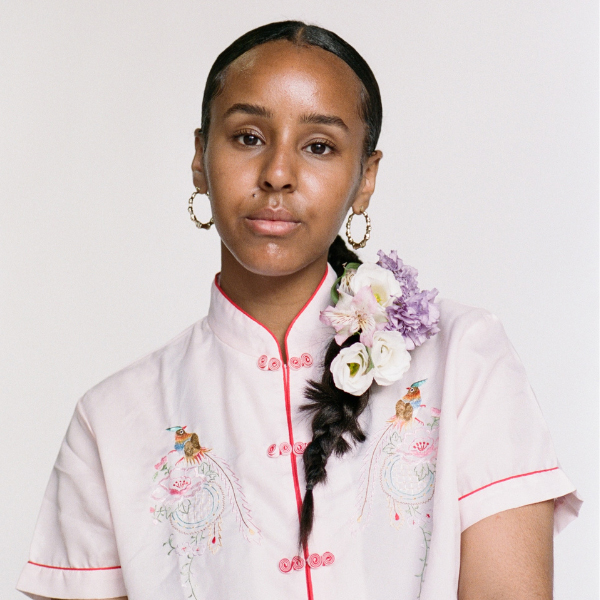
Sumiko Wilson (external link) ‘22 is a writer at Jordan Brand and a freelance contributor for ELLE Canada. This Q&A was conducted when she was a copy specialist at Chanel.
This interview has been edited for length and clarity.
Why did you choose to study journalism?
Growing up, I loved the idea of interviewing people. That was a great way to connect with people as a kid. If there was ever an opportunity to host something at my church or be an emcee at any family event, I always jumped at that opportunity because I loved the idea of live interviewing or hosting. In conjunction with that, one of the only things adults affirmed me being good at was writing. Journalism combined both hosting and writing.
Also, I always watched daytime TV with my mom and grandma growing up, and the hosts were women I grew up looking up to. I wanted to be like Joy Behar or Barbara Walters or Wendy Williams — it was so inspirational to me, it was a way of women’s stories being validated. The combination of all of that, journalism was the only career path for me.
Did you have any experience with journalism in the past?
It was really important to me to get as much journalism experience as possible before I even applied to the program. There was a Canadian-style magazine that allowed me to do a monthly column called Musings From A Young Mind where I would just [write] about what it's like for a teen at the time.
I also did two semesters of co-op in my last year of high school — one at my local newspaper, the Mississauga News, [and] one at a radio station called CHOQ FM and I did another one at this now defunct beauty and style magazine called Glow Magazine the summer after I graduated high school.
What did you originally see yourself doing after graduating from j-school and how did that vision change as the years went by?
I always said as a little kid that I would be a talk show host, so I thought that I would be Tracy Moore from CityLine. But during my time at TMU I didn’t take any broadcast classes other than the required ones. I should have — I saw myself doing TV [or] radio but I didn’t see myself writing — but I’m glad that I followed the writing path. It felt a lot more accessible to start writing and build a writing portfolio than building a broadcasting portfolio. It felt a lot easier to email an editor and ask to write an article than to ask an anchor to host their segment. Also, the portfolio I had from high school was mostly written work, so I just followed that.
What has your career been like since graduating?
Most of my career happened while I was still in school. I took two years off after high school because I wanted to build my portfolio, work and intern. I didn’t start at TMU until I was 20, and I felt like I came in with a strong idea of what I wanted to do and where I wanted to go and then I took a long time to graduate — I was in school for about five years. Because I was freelancing so much while I was in school there were some semesters that I didn’t take a full course load. I got a job at SSENSE and I took my first semester off and then I got another job at KOTN. Both of those were copywriting roles.
I was at a fellowship for The Coveteur, writing for their beauty desk. I wrote product reviews and profiles of people in the beauty industry. That took me to the fall after my last year of school and while I was finishing up at that role they reached out to me at Chanel. It was a three-month long interview process, it was very long and arduous but it ended up working out and after I graduated I moved to New York [for the role].
How is the journalism industry in New York different from Toronto?
It's refreshing how diverse the fashion and beauty journalism scene is in New York. You see Black editors-in-chief, that's not something that you see in Canada. The ceiling is a lot higher there, there are way more places to write, way more relationships to build, they have a fashion week, which is a great networking opportunity.
What does a typical day as a copy specialist look like?
No two days are the same, but my days typically include writing anything from product descriptions, press releases and campaign emails to paid social posts, engagement kits and print collateral. It’s a fun challenge because I’m not only writing, but also adapting existing copy for the US market. Once I’m home, I take my dog on a long walk to decompress, then I read, listen to podcasts or catch up on reality TV. I’m also usually working on a story on the side. My day job revolves around all things beauty and fragrance, so I always love when the things I write outside of work can explore other realms I’m interested in, like style, music, TV and culture.
What would you say helped you succeed in your career?
I think that the scrappiness of being able to craft a pitch and know what a compelling story would look like. Freelancing was really my bread and butter not only financially but also just in terms of how I found my voice as a journalist. Just being really scrappy and pitching while I was still in school.
What I would do back in the day — I still do this now — but on X, formerly Twitter, I would look up “pitch me editor” or “editor pitch” and then you would find a list of pitches from editors and that's how I found a lot of editors that I would eventually reach out to.
For Elle in particular, in 2018 it was a cold pitch. They weren’t doing anything in particular for Black History Month and I was like, can I write a roundup of Black designers and either the editor had her email in her X bio or I found the formula for their email addresses for editors from that publication.
Looking back to your first-year self, how do you think they would react to where you are now?
I think that she'd be really excited. All I wanted while I was in school was to end up in New York. That was my big big big dream and it felt so incredibly inaccessible to me as a teenager. So I think that she'd be very excited to learn that the things that she thought were so out of reach are obtainable.
How did what you learned in J-School prepare you for your career?
It gave me a great network of senior journalists to ask for advice. There were multiple occasions where I would run into a problem with a story I was working on or an editor I was working with and I would reach out to former professors of mine and they were extremely responsive, extremely helpful. I think that that was probably the takeaway I'm most grateful for, that these tenured iconic Canadian journalists were available to me and I had relationships with them.
Can you talk about one of the biggest accomplishments as a journalist?
Writing my first cover story for sure. It came about really randomly but, I had a relationship already with Elle Canada, and I'd been writing with them for a few years and they asked me to write a cover story on Winnie Harlow, who's a model from Canada. It's crazy because I knew her in passing growing up and I've kept an eye on her career because it's been so incredibly impressive. So it felt very full circle to be able to interview her in New York where I have my new life and where she has her new life and to meet up again at a new juncture of life and I'm so proud of how that interview ended up. At the time, I think I had toiled over it for so long that when I finally submitted it I never read it because I was just too anxious and mortified. Then, when I was working on my second cover story, I looked back and revisited my first one, and I was so proud of it. I'm really grateful that I had that opportunity and that I've had the opportunity to do it again, but I'd say that the first one was a moment of such pride.
What advice would you give to current journalism students?
School is not the be-all end-all. Your experience at TMU, in particular, is not the be-all end-all of journalism. What you see alumni doing, you can create your own path. I think that it felt very constricting to see the idea that was being pushed subconsciously that you had to be an editor at the Eyeopener or write at the Ryersonian [On The Record] and take that course and just be a student journalist in order to thrive after school and I never did any of that and I feel I was able to still have a very fulfilling career after graduating and while I was still in school.
It's okay to look beyond campus for writing opportunities and to take advantage of the fact that you're in a huge city with access to working writers and editors. If you aren't really finding your place at the school paper, then pitch to Toronto Life or the Toronto Star. Those aren't things that you have to do after you thrive at your school newspaper — you can just go directly to those editors if you have a strong portfolio of work behind you even if that's not from your school newspaper. I just wish that someone would have told me that.