Joanna Lavoie
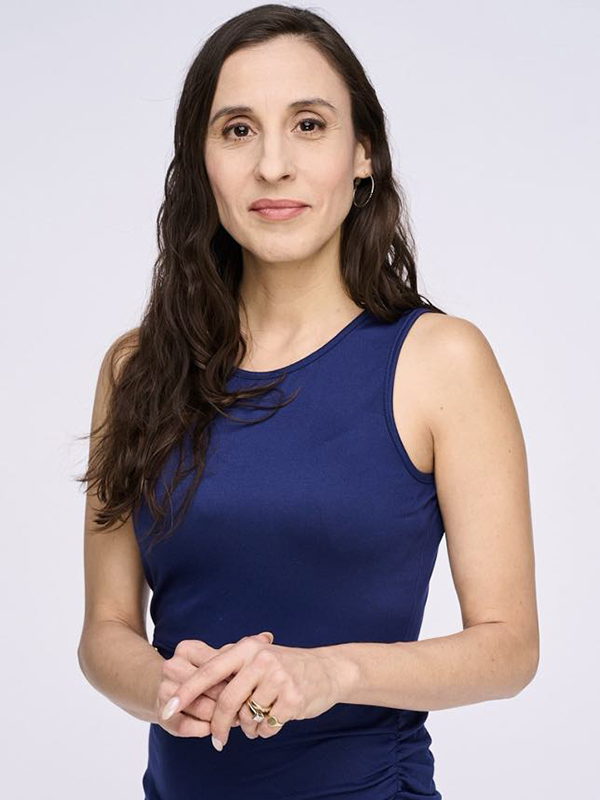
Joanna Lavoie, ‘02, is a Digital Journalist at Bell Media and CP24.
Why were you interested in journalism as a profession?
I think when I was around 12-years-old, I just started developing a curiosity about the world. I found so many things interesting to learn about, and I started reading the news and consuming things that are going on in the world. I thought [journalism is] a career where you're asking questions and learning new things every day.
I became interested in writing and talking to people of all different walks of life. And I thought this is something I could pursue. As I went into high school, I was involved in the school newspaper and whatever else. I started doing my freelancing and getting my portfolio ready, and I knew that that was my future. I knew I wanted to be a reporter.
Why did you choose Journalism at TMU?
I was applying to a few different schools [for it]. I was interested in moving to Toronto because the school was downtown. It's so diverse. You're going to get those experiences of life in Toronto. You're going to see a different slice of life right there every day. And I was like, ‘that's where I want to be.’ [Toronto is] a global city.
It is also known that the [TMU] J-School is one of the best in Canada. The year I applied, I think there were thousands of applicants and maybe 150 [people] got in or something like that. It was really prestigious to be able to go to this school, so I was very interested in going.
What did your journey look like after graduation?
When I graduated, some of my classmates were moving away to smaller markets and they were prepared to do that. I [wanted] to stay in Toronto. I was like, ‘can I make this happen? What am I going to do?’
When I finished school, I did some freelancing for a couple of years and worked small jobs. I did all kinds of freelancing — even advertorial, I worked for a construction magazine publication, a food magazine. It was great. I also worked at a restaurant. I was like, ‘I want to follow my dreams.’ And I was willing to do what it took to do that. So the first couple years I was basically freelance, and little by little, I started getting more hired.
Ultimately, I think it was one or two years after I graduated, I got hired at Metroland, which is owned by Torstar. So that's the chain. That's where my career began. The way I was able to get so much experience to move forward was that the year that I got hired, I was hired by the Etobicoke Guardian. That was 2005, and that summer was the ‘year of the gun’ in Toronto, where we had massive numbers of murders compared to what we're typically used to. I was able to cover a lot of that and get a lot of that experience, going to the scenes.
From there, you grow. Within Metroland, I worked all across the city. I worked in Toronto, Scarborough, the East End, downtown and North York.
You’ve been so immersed in the community of Toronto. Why is local journalism important to you?
I think my job is to tell people’s stories. Even in a big city, people's lives are impacted, even by the crime that goes on; that’s someone's life. I have a great responsibility to share people's stories, to share people's voices. I do a lot of stories on social justice issues. The drug crisis, homelessness, poverty, inequities, those are people's lives. You can write about it in a high-level way, but why wouldn't you connect with people? As a community news reporter, I've taken a lot of that experience and brought it to CP24 as well. And often they say, ‘you have that community news voice.’
That's a beautiful thing. Because people are remembering that you connected with them, oftentimes during the worst moments of their lives. You're sharing their stories, their voices, their struggles. And that's what I do.
What is your advice to current J-School students?
You're young, you're learning, you're asking questions, but you want to try really hard to be accurate, be willing to learn. Those are all qualities that we look for. When I think of the younger people that have come through the offices that I work at, the ones that stand out are the ones who are absorbing things, learning, asking questions, trying to do better. That's what it's all about. There's no room for ego.
One thing that I also talk about [is] if you speak different languages or are from a different culture or whatever community you're from, embrace that and allow that to be part of your career.
Also, you have to be prepared that your industry is going to evolve. There's a lot of ups and downs that you're going to face, but it can be the most rewarding, career-fulfilling job: talking to interesting people, learning new things, being a witness to history.
This interview has been edited for length and clarity.
Grads at Work is a series of profiles of alums. If you know of a notable grad you’d like to see featured, send us an email at office.journalism@torontomu.ca.