Astoria Luzzi
.png)
Astoria Luzzi (external link) ‘14, is a Senior Media Librarian, Current Affairs and Long Term Projects at CBC/Radio Canada. She has been with CBC since 2016.
This Q&A was conducted when Astoria was the Senior Media Librarian, Current Affairs and Long Term Projects at CBC/Radio Canada and is now a PR Lead, News, Digital and Industry.
This interview has been edited for length and clarity.
Q: Why did you choose to study journalism?
A: It all started when I was in Grade 11 at my high school. I took an elective class, creative writing, and we had an assignment where we had to write an article. Before that, I hadn’t even considered the idea of journalism or what writing articles would even be like. But, I did this assignment, I wrote about my first indie concert experience downtown and [though] I actually didn’t do well on the article, I enjoyed writing it so much. I started thinking about university and what I wanted to go into, and this was the first thing I could see myself chasing after to see where it would take me. I did some writing for my high school newspaper, and wrote articles for my university applications, and went full throttle. I only applied to journalism schools and once I got that acceptance [to TMU], I was very excited and accepted it right away.
Q: What did you originally see yourself doing after graduating from J-School?
A: Throughout the program, I was really focused on print journalism. I really enjoyed that, at least when I was in the program, they forced you to try out every medium — it was neat to have to do radio and broadcast and put yourself in front of the camera as well as behind and get a feel for what you like best. I was definitely leaning towards print, I was at The Eyeopener, and what was The Ryersonian (now On The Record). I think that's where it fell apart for me because [though] I really liked writing and telling stories, it was hard for me to picture myself out [doing] the journalistic hustle. The students I was in classes with, in their spare time they were pitching to different publications and trying to get as much experience as they could. I was doing that as well with the student papers, but I never really found that line of passion where I was going out of my way to pitch stories to external publications. That's when I started to look for things adjacent to journalism.
Q: When did you become interested in Archives & Records Management?
A: In my second or third year of undergrad when I applied for the Ontario Public Service Summer Student Program. I ended up getting an interview at the Archives of Ontario [and] it sounded really interesting, I had never heard of the Archives of Ontario before, but going there and seeing the wealth of resources and what they provided to that community was very cool to me. I accepted the job and I ended up spending three summers consecutively at the Archives of Ontario doing different roles throughout the organization and it gave me a full-rounded view of what they offered and what the work meant. There’s such a connection between what I did there and my love for journalism. It’s all about storytelling — you’re digging up stories and communicating them to people. I found that connection there, and everyone I worked with there had done their master's at the University of Toronto. So that’s what I did.
Q: What has your career been like since graduating?
A: After graduating, I wanted to find a full-time job and not a summer contract position. I had seen a job posting come up for the CBC, and it was an entry-level contract position for a CD digitization project. They had a huge library of CDs in the basement, and they needed to put them all into a database. So lucky enough for me, they were actually hiring a whole bunch of information graduates out of my program.
Three months in, I wanted more.
We did a tour of CBC for new employees. I remember walking through the newsroom, and they introduced us to the media librarians who worked specifically for the news, and that to me was the coolest thing. I didn’t know it existed. It was the perfect blend between archives and journalism. You’re right in the heat of the newsroom, which is what I’ve always loved, and it has the archival records management side to it too.
So, at that three-month mark, a job came up for a full-time permanent position as a media librarian, but at 4 a.m. I was lucky enough to get it, and I paid my dues for I think two and a half years providing media archival content to the morning news, the national, anyone who needed it at that time in the morning. That's how I put my foot in the door.
After those two and a half years, I was able to move through the department. So I ended up doing things with the acquisitions team, which meant helping catalogue and collect content from CBC across Canada. After that, I did some work with CBC Kids News. I ended up moving to the CBC PR team. With a background in journalism, it kind of always bridges to PR and communication sometimes so it was kind of like a natural fit.
I was there for about two years, which was unexpected, but honestly, I think it really helped me build my career because it allowed me to meet so many people within the organization that I wouldn't have met otherwise. I was introduced to all kinds of different producers and different programs and helped launch different TV shows. Getting to meet the CBC talent behind some of the shows was really cool.
Then, about two years ago, I saw my current role became available, which was senior media librarian specifically for current affairs and long-term projects. So at this point I manage all the incoming media and archive and make decisions on what acquisitions we take for the national, most of the big current affairs programming so that includes Fifth Estate, Marketplace, all those titles.
Q: Have you used some of the skills you learned in j-school in your current position?
A: 100 per cent. The communication skills you learn from the journalism program, I'm so thankful for, because it really prepared me to be better at communication and all the kinds of jobs I've held since. Everything from how to talk to somebody on the phone or how to present yourself in a professional setting and how to write an effective email. Having the experiences that the school provides you with to work as part of a masthead, instead of just preparing you with the skills, in a classroom setting, they just throw you into it. I think that it is incredibly valuable to know how to operate in the fast pace of a new cycle. You can't learn that in a book. You need to be put in the situation.
Q: What does a typical day as a Senior Media Librarian look like?
A: One thing I really like about it is that every day is slightly different. My day starts with checking our media capacities and making sure that we have enough room for more media to be put on our server for producers and editors to use. That means doing my daily check of what has gone to air and what projects are no longer needed. Also, making sure what stories and source material need to be archived and which no longer need to be kept. General communications with different shows, various producers and editors on what projects they are starting, which ones have been completed. Also, just the movement of media, so if there's operators out in the field, they'll be sending in content. Part of my job actually now includes bringing that material into the system. So I'm managing all this media from the point of creation to the point of deletion or retention.
Q: What is your favourite part about your current position?
A: My favourite part would have to be getting to do both the things I love at the same time. I'm getting to take care of archives and records management, which has always been my biggest passion, but I'm doing it adjacent to my other biggest interest, which is current affairs and news. You get a bit of both.
I have always enjoyed the adrenaline rush from the news cycle, and that, paired with archives and records management, which usually isn't such a demanding industry in terms of having to be so rushed and down to the minute. But combining those two things, it's just the perfect storm. So I really enjoy doing my work in that day-to-day news cycle, how it's always changing.
You're already learning something new, depending on what project you're being pulled into. It's not as editorial as journalism because I'm not making any editorial decisions. But, it's neat to kind of take that back seat in how stories are built, what's being filmed, what's being used. So I'm getting that passenger seat in, seeing these stories being put together and these decisions being made. But I'm assisting in the sense of making sure all their media is safe, that it's where they need it to be at the right time, it's in the right formats, and it's being saved for however long that they need it to be. So, knowing that I'm an important part of the creation of news and getting these stories out to our audiences, but not in a journalistic way.
Q: What’s one of your biggest accomplishments?
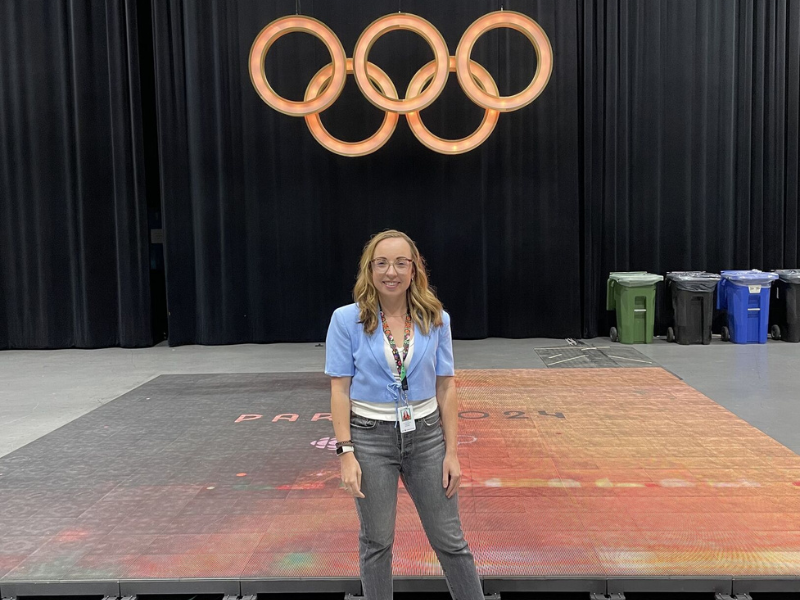
A: One of my most memorable accomplishments at CBC is having worked four Olympics so far. For the Paris 2024 Olympics, I was part of the media management team here in Toronto that handled all incoming records and feeds from Paris, making them available for teams across CBC. It's a tough but rewarding experience — working 25 or so days straight for extended hours. For those few weeks, there's a sense of camaraderie and Canadian pride in the work being done — we're all working off adrenaline. And it's all worth it when you hear the building erupt in cheers when Team Canada wins a medal.
Q: What’s one of your favourite memories from J-School?
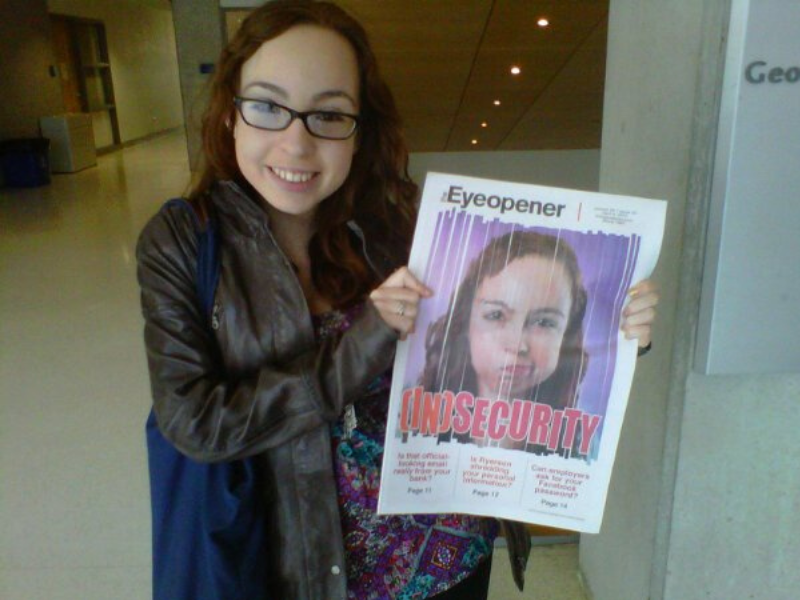
A: Late nights spent at The Eyeopener, on the floor surrounded by notes, typing up a story to get it out in the paper. I was the business and technology editor for a few semesters, so a lot of memories come from just spending a lot of time in that office, a lot of long hours, and making a lot of good friendships.
Another thing would be, while I was working at The Ryersonian (now On The Record) as part of our final year, having to rush in first thing in the morning, because there was breaking news about a shooting near campus. Having to run in and research stuff on my phone as I got there and then sit down and do a video interview with a student about what they had seen. It was some of the first experiences I had with breaking news and getting the story out as accurately and as fast as possible.
Q: What advice would you give to current journalism students?
A: There are so many niche jobs that you don't know about. You could do so much research and I never even knew about some of the possibilities that are out there. So I would say to current students: scour LinkedIn, look up alumni, ask them questions if you feel comfortable. Just do deep dives, keep an eye on job boards, see what comes up. Not only on media job boards, but look at communications job boards, because a lot of the time there's cross-industry roles that you might not even consider, but you could be a perfect fit.
I'd also say, be aware of the resources available to you. Whether you're going into journalism or not, as a journalist, you need to use as much as you can and find information in so many places. All the libraries and different archives around the city and online databases are so incredibly valuable. Knowing how to use those resources is such a great skill to have so if you're entry level and someone asks you, ‘hey, go do this,’ you'll know exactly how to do it. Also, sometimes that's where you find the best stories — digging through information. So knowing how to do it, I think, is great preparation.
Grads at Work is a series of profiles of alums. If you know of a notable grad you’d like to see featured, send us an email at office.journalism@torontomu.ca.