International course takes journalism students to Mexico City
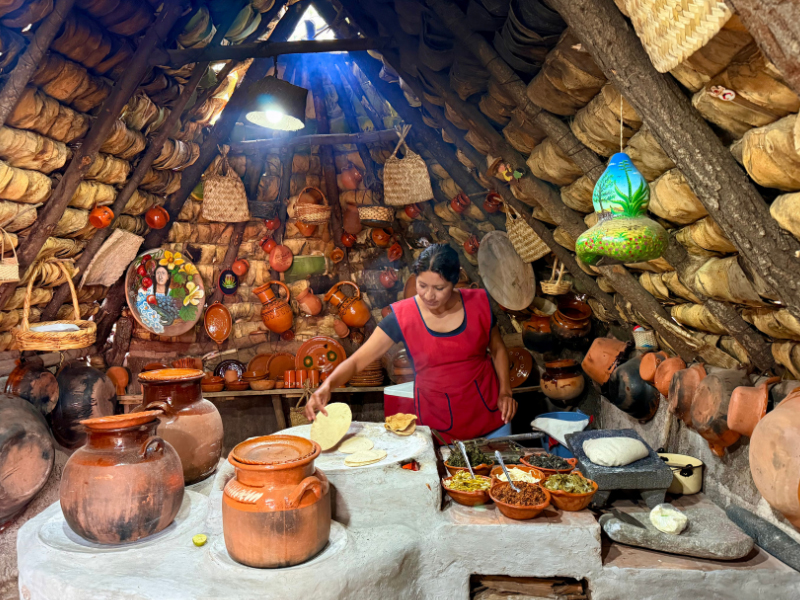
Photo courtesy of Rukhshana Ahmadi.
In early June, students from Toronto Metropolitan University immersed themselves in Mexico City’s vibrant food scene by visiting restaurants, meeting chefs, and exploring the deep cultural roots of corn.
Their trip was part of the international journalism course led by associate professor Sonya Fatah, which examines the history and practice of the journalism of global affairs.
“This course is about shifting the lens on reporting on food in an international context and looking at ancient cultural practices,” Fatah said.
Mexico was chosen as the destination for this course after Fatah had studied the Indigenous corn belt, which stretches from Canada to the United States (U.S) to Mexico.
“In Mexico, there’s a much richer understanding of ‘what is the meaning of corn?’ and how we use it and why we care about it, than there is in the U.S or Canada,” she explained.
Before travelling, students had a week of classes in Toronto where they watched documentaries, read articles and discussed ideas like identifying the Indigenous corn belt. Then, they had to come up with a pitch for the project they wanted to pursue in Mexico City.
Upon arriving, students were put in contact with local Mexican food journalist Raquel Del Castillo, who helped them find storytellers for their projects.
Food was the entry point for students to examine bigger issues like gentrification, identity, climate change, and globalization.
Greg Burkell, a first-year journalism student, explored how a restaurant, led by chef Santiago Munoz Moctezuma (external link) , is protecting Mexican culture from cultural homogenization, gentrification and the influx of expats.
Second-year journalism student Melika Shafiee’s project investigated the fight for Indigenous corn in Mexico, inspired by the campaign, “Sin Maíz No Hay País” which translates to “without corn there is no country.”
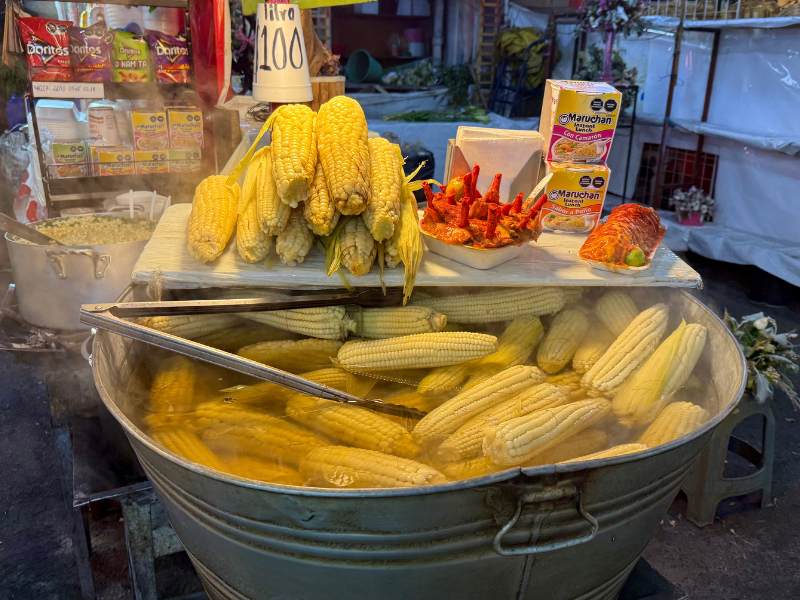
Photo courtesy of Rukhshana Ahmadi
Speaking to activists and farmers, she learned how corn is vital to Mexican culture as the most consumed food in the country, all while the livelihood of Indigenous farmers was being threatened by American corporations planting genetically modified corn.
Rukhshana Ahmadi, a third-year journalism student, was interested in relationships between food, land and people and how it brings people together, and talked to local residents, business owners, chefs, and Indigenous knowledge keepers.
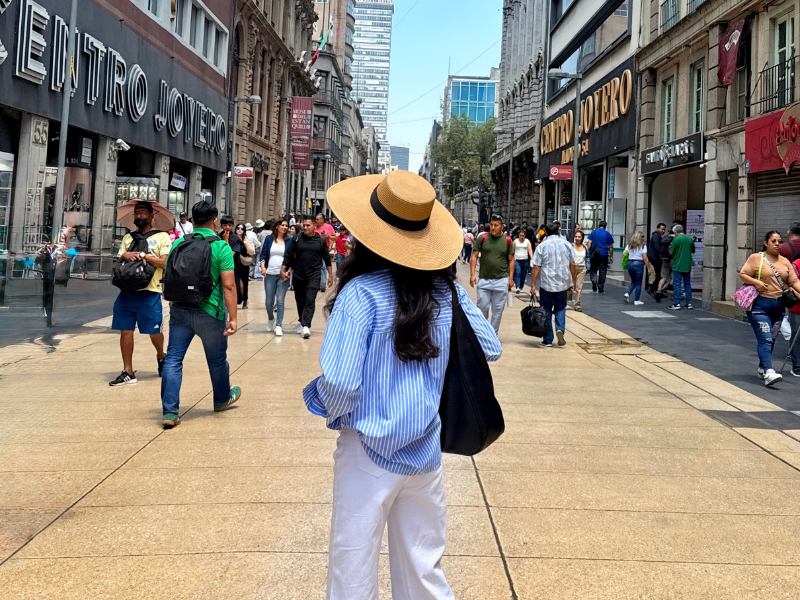
Rukhshana Ahmadi in the historic centre of Mexico City. (Photo courtesy of Rukhshana Ahmadi.)
Fatah says she wanted to remove the distance between students and their topics, allowing them to engage more deeply with the communities they were reporting on. With Del Castillo’s support, she arranged a variety of workshops for students, including traditional chocolate making, preparing salsa and corn nixtamalization (a process where corn is boiled with limestone to release its nutrient properties).
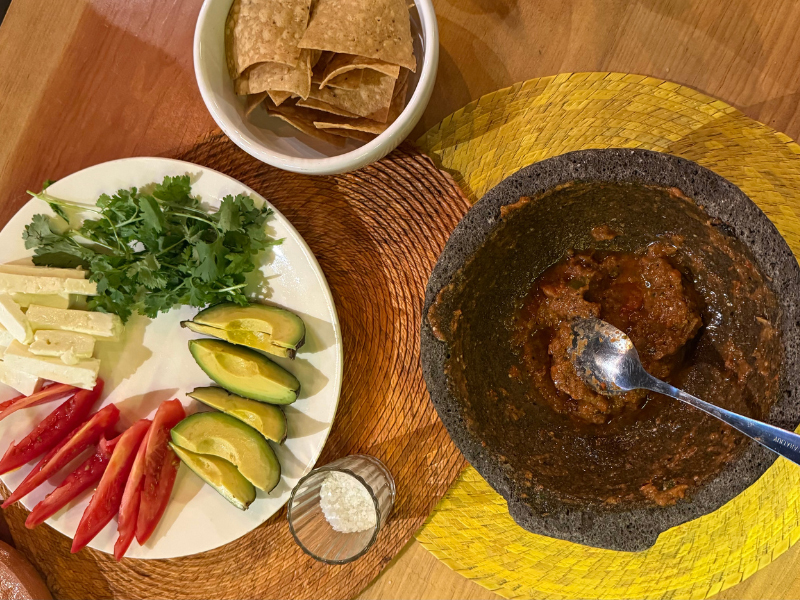
Salsa workshop (Photo courtesy of Rukhshana Ahmadi)
“If you’re going to report about something, you should understand it,” said Fatah.
One day, the students travelled to a farm in Hidalgo where an elder from the Indigenous Hñähñu group cooked them a meal using ingredients from her farm.
Burkell recalled how Claudia offered students crickets and worms, patiently waiting for them to try her cultural food.
“I felt like I was in my grandmother's [home] in Iran, where they have their own chickens and vegetables, and they grow their own rice and everything. But it was just like I had a Mexican grandmother, who just really wanted to see me eat well,” said Shafiee.
Claudia cultivates her own rice, corn and vegetables and raises chickens and turkeys herself.
Her approach reflects a belief Burkell learned about in Mexico, where touching and grinding plants by hand makes the food healthier, happier and even taste better because the food knows its been held.
“In Mexico, there’s a finer understanding of these ideas of ancient practice or cultural wisdom passed down generation to generation,” said Fatah.
Going to Claudia’s space “really, really changed the way I think about [the] history and culture of food, because we don't really think about it a lot,” said Shafiee.
She described how in Canada, you can eat multiple foods from different countries in one day, without thinking about the history and the importance of each ingredient, and how they come together to make a meal.
“You can actually shift how you report on something with this kind of exposure,” Fatah added, referring to the workshops and immersion in the communities.
For Burkell, this meant recognizing that when you’re coming from a place of privilege, your words and actions mean different things.
“A big process of learning journalism, for me, is being constantly reminded what position you occupy as a journalist, and every journalist has to consider that.”
Ahmadi says she learned the importance of forging connections with sources and avoiding parachute journalism by doing a lot of research and getting to know the culture.
“That way, [people are] more open to share their knowledge, and their experience with you,” she said.
Fatah explains that that is exactly the goal of the course. “You’re going to learn to report in a different environment, but the most important thing is that you’re shifting your point of departure to think about what is a story and what I should be telling in this movement.”
Shafiee said she “cannot recommend this course enough.”
“Getting to do it while you're still in school and with all the resources and someone guiding you through the whole thing is just really cool.”
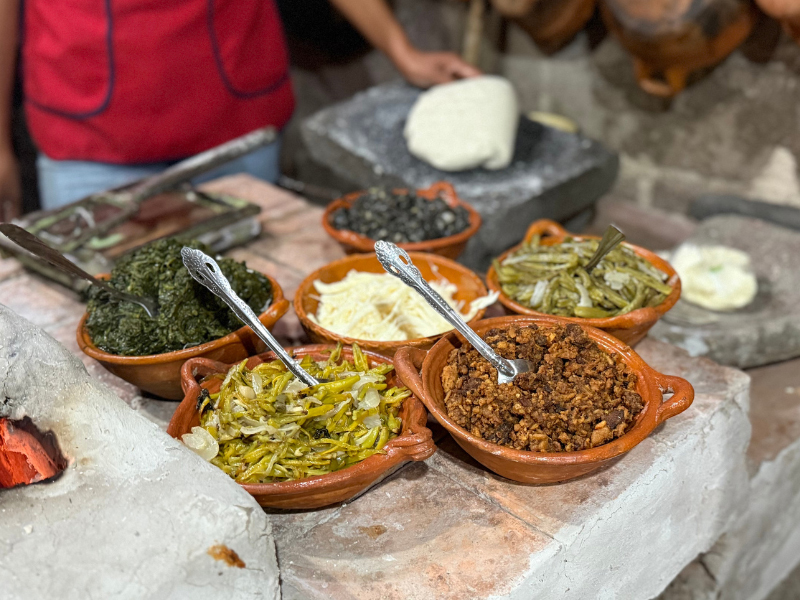
Photo courtesy of Rukhshana Ahmadi.