Jay Ashdown wins inaugural RTDNF scholarship
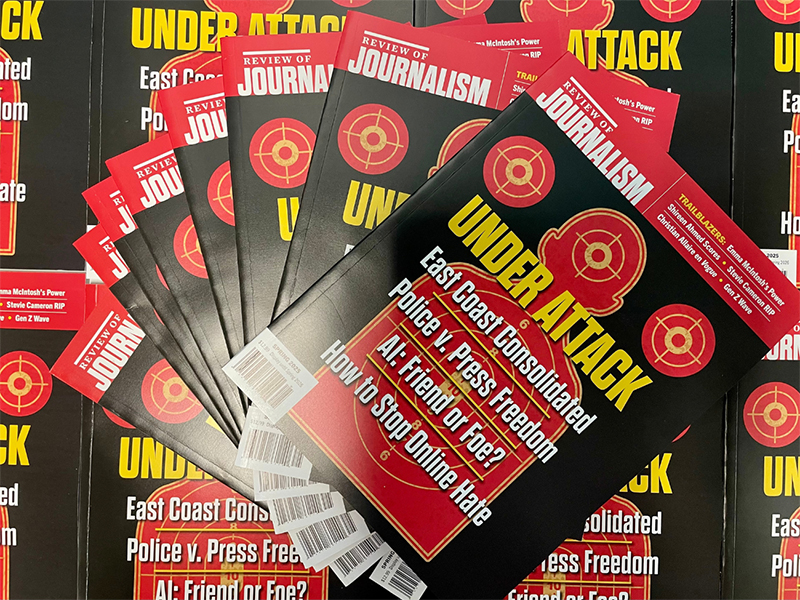
Jay Ashdown ‘25 won the inaugural RTDNF Friends of Canadian Media scholarship (external link) for his feature piece “Don’t Read the Comments (external link) ,” published in the Spring 2025 issue of The Review of Journalism.
The scholarship is presented to a student who demonstrates a strong enthusiasm for politics and a solid comprehension of journalism’s role in a thriving democracy.
“This feature was about online hate against marginalized journalists, especially women of colour, who experienced the worst treatment in the industry,” said Ashdown.
“It's something that I think is [overlooked] as an issue that genuinely affects people's way of living, how they approach their job, it can really diminish their career, especially for freelance journalists.”
The winning story starts with a scene from Rachel Gilmore, an award-winning journalist, reporting a violent email with grotesque language, death threats and racialized slurs against women journalists to police. A day later, she was informed that it doesn’t constitute a threat.
“It really showed that this is something that people don't really have protections against. Workplaces don't really know how to manage online hate as a safety issue, and the police don't really care about it as a safety issue either. So people often don't really have a place to go for these kinds of things, except for each other,” said Ashdown.
Ashdown says The Review also faced criticism for two stories published in the Spring 2025 issue as well. “That’s kind of part of the job when you publish media that is progressive but also tries to challenge points of view in the industry that are kind of the dominant force. You’re going to get hate.”
“I think there needs to be more of an institutional system for protecting journalists from this kind of harassment because it's a real freedom of speech issue,” he said.
He said he hopes that his piece encourages marginalized journalists to speak out when facing hate and harassment, as it can severely impact their mental health.
Ashdown says he believes writing this piece helped him grow and learn to become better at interviewing.
“We've taken classes on trauma-informed reporting, but getting to apply those skills to actual interviewing was a real challenge. And I'm really grateful that the people who talked to me were willing to talk to me about that stuff,” he said.
He says receiving this scholarship provides not just financial support but moral support too, making him feel more confident in his work. “You're also getting that encouragement that, ‘yeah, my work is worth reading.’”
“It's a really nice form of recognition that I think I'm excited to see. I'll definitely be watching it to see who gets it next in the years to come,” said Ashdown.