Students’ winter 2025 final projects explore religion, gorillas, ADHD and more
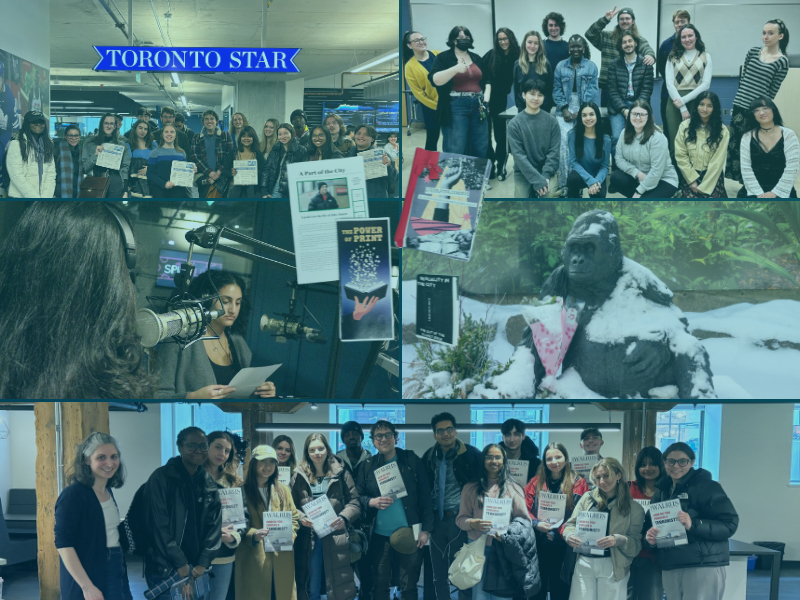
JRN 840: Journalism Capstone Project
In JRN 840: Journalism Capstone Project, students produce a self-directed work in any medium of journalism.
The projects seek to broaden journalism's scope and deepen understanding of its importance in society.
Fourth-year Journalism student Julia Gianfelice chose to create a guide for elementary students (external link) and teachers on how to create a newspaper in their schools.
“Ultimately, I hope teachers and students can work collaboratively to create a physical newspaper that they are proud of.”
With a self-declared passion for teaching, Gianfelice is working towards becoming a teacher post-graduation and says she hopes that she will be able to implement this project in the future.
The guide helps students learn about the basics of journalism and then create a physical newspaper and she said it’s a great way for students to learn about the world around them while gaining reporting skills.
JRN 272: Feature Writing and Current Affairs
One of the assignments in JRN 272: Feature Writing and Current Affairs this semester was a write-around profile, where you interview people around your subject but not the person themself.
Second-year Journalism student, Christian Malong, realized he didn’t need a subject that could speak or even have to be a human, so, he started researching animals he could write about.
On pitch day, he started to talk about a gorilla (external link) who had passed away last fall, a classmate in the lab perked up and asked, “Oh, do you mean Charles?”
Malong knew he had stumbled into an interesting subject.
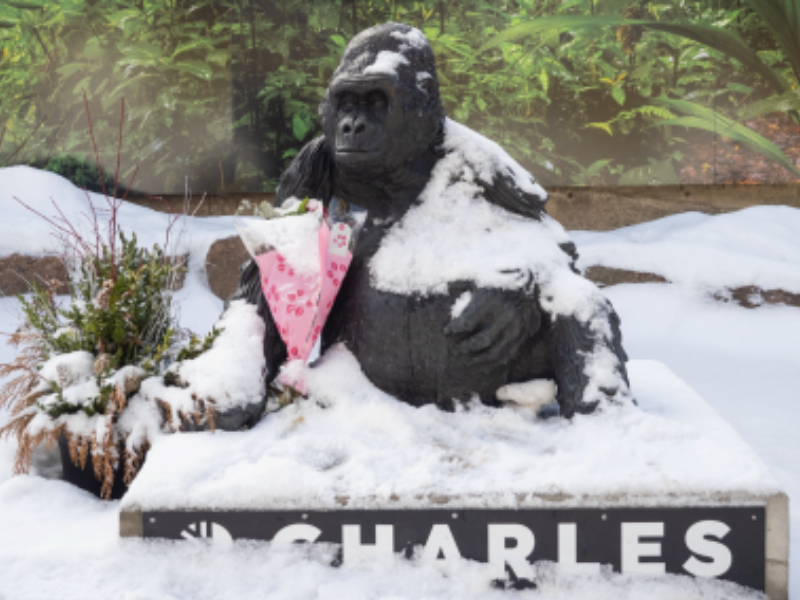
Writing this profile (external link) as an outsider who had never seen Charles at the zoo, he was struck by how much people loved him and how many memories people had created.
He said one of the challenges was asking questions about the sensitive topic of losing Charles.
“I made one of his keepers cry, and I wasn’t sure how to deal with that,” he said. “I felt pretty guilty afterwards.”
For Malong, one of the most memorable parts of the project was sending his finished work to a volunteer he interviewed.
“She thanked me for ‘giving Charles back to her again,’ it made me so happy to hear that she liked it.”
JRN 843: Reimagining the News
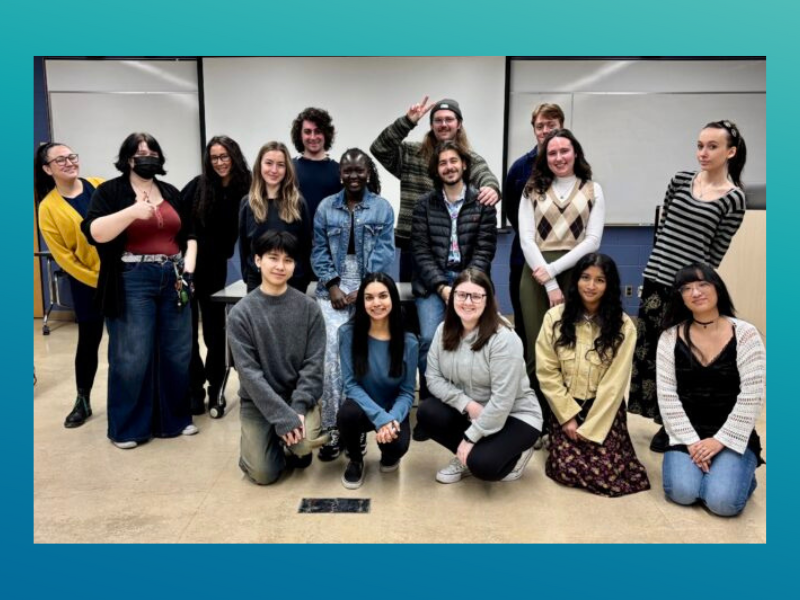
Students from JRN 843: (back row left to right) Natalie Goyarzu, Diane-Clayton Hatheway, Madeline Kwan-Chiarelli, Ryan Plax, Zachariah Allister, Jackson Duffy; (middle row) Rowan Flood-Dick, Martha Gai, Zaid Kaddoura, Azalea Young, Sonia Goloubev; (front row) John Vo, Natasha Pinto, Madison Cameron, Aria Ipe, Elisha Hugh
Students in JRN 843: Reimagining the News are encouraged to explore the boundaries of what news might be and analyze how story design might help capture audience interest, challenge journalistic norms and develop well-sourced and evidence-based content.
Associate professor Nicole Blanchett said one of her favourite things about this year’s projects is how they connected deep academic learning with innovative delivery methods.
Projects ranged from a video essay (external link) on women in e-sports that used emojis and gaming references to explore feminist theory to a critical examination of popular protest music (external link) in a podcast.
But, according to Blanchett, what was most interesting from this group of students was the number of print-based projects.
“From zines to newsletters -- students were really interested in exploring a tangible form of journalism that people could hold in their hands,” Blanchett said.
“For their generation, a turn back to print is innovative.”
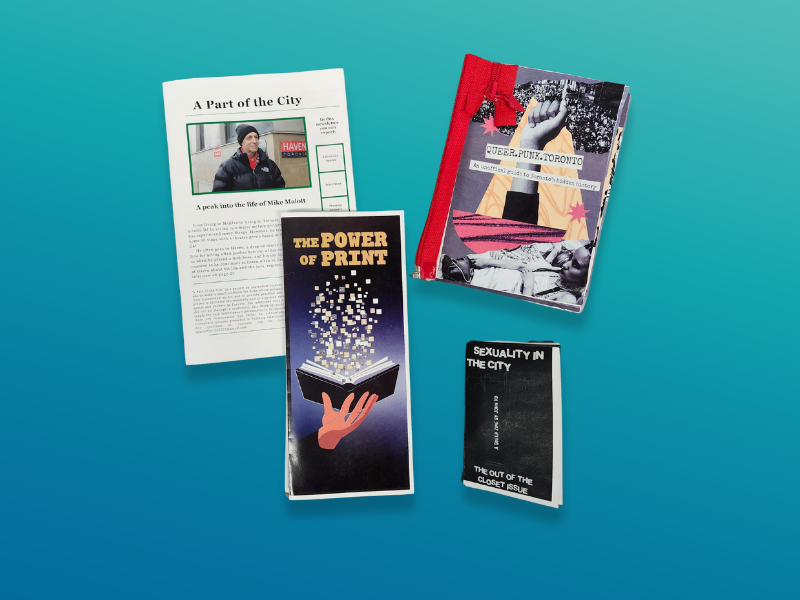
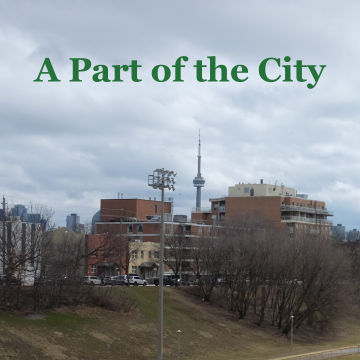
A Part of the City (external link) by Rowan Flood-Dick
Flood-Dick wanted to make this project because she felt there were voices and perspectives within the city that were being discussed in the media without the first-person voices being incorporated.
“I felt traditional media wasn’t benefiting or informing certain communities in meaningful ways.”
She hopes to maintain the relationships made through her work and continue to inform her reporting through the places she visited.
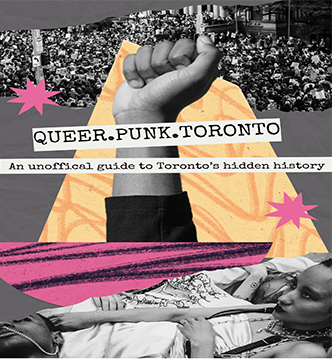
Queer Punk Zine! (external link) By Ryan Plax
After staring at the wall of zines covering Plax’s punk-obsessed uncle’s bathroom, he knew he wanted to use the zine format for a project about Toronto’s music scene.
He said, “It also just made sense to make this love letter to a bygone era feel somewhat authentic in its design.”
The process took a while, “Tracking down people who were prolific in the 80s [and] willing to talk is hard.”
“But the people I was able to get hold of made this project what it is.”

The Overlooked Minds (external link) by Aria Ipe
Ipe was inspired after reflecting on her journey of realizing late in life that she might have ADHD.
Which led her to explore why women are often missed in diagnoses and what the emotional impacts of a late diagnosis could be.
She said talking to others with similar experiences and hearing from experts was eye-opening.
“It helped me understand the topic more deeply and also felt personally validating.”

Canadian News is Boring (external link) by Natalie Goyarzu
Goyarzu always wondered, “Where were we?” in a seeming lack of Canadian late-night hosts on TV.
She used this class as a way to act on that question.
“I felt it was beginning to feel especially important now that our political climate here in Canada, and the world itself, is needing shows to inform people of the daily/weekly news, but make it a bit more conversational.”
Get Out There and Explore!
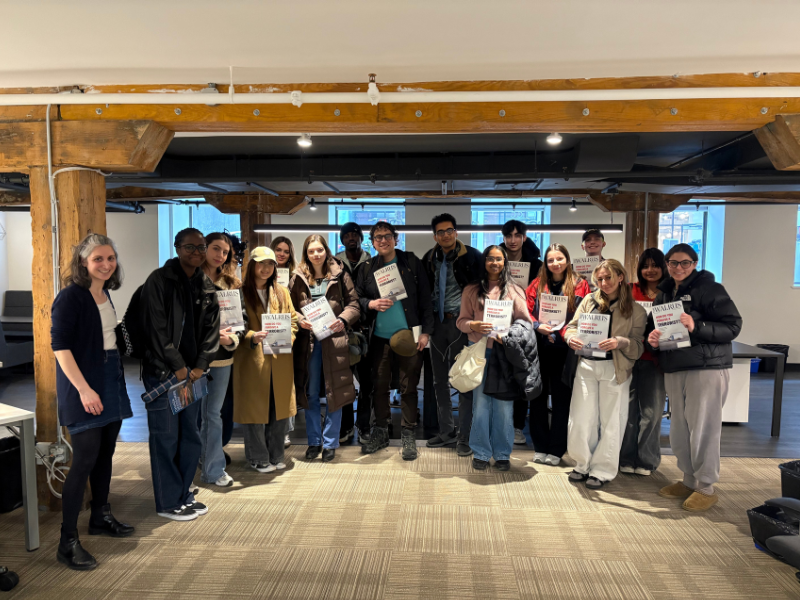
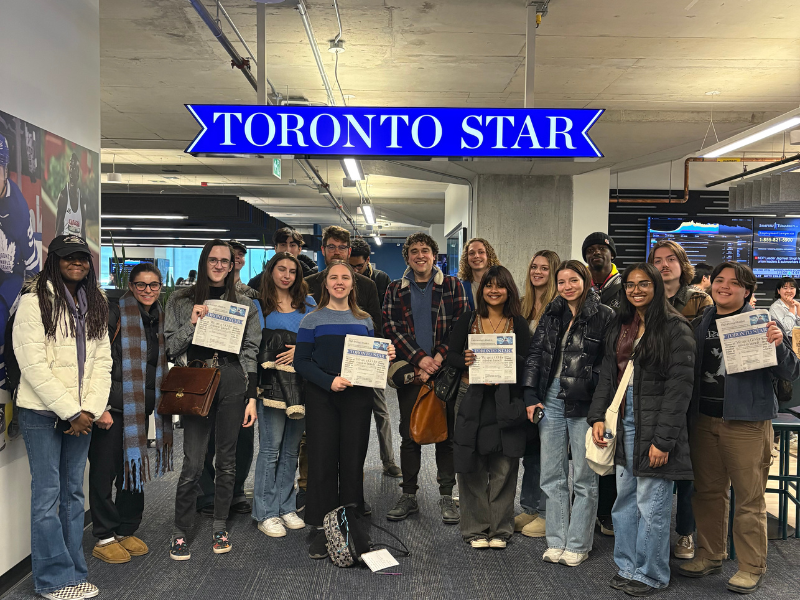
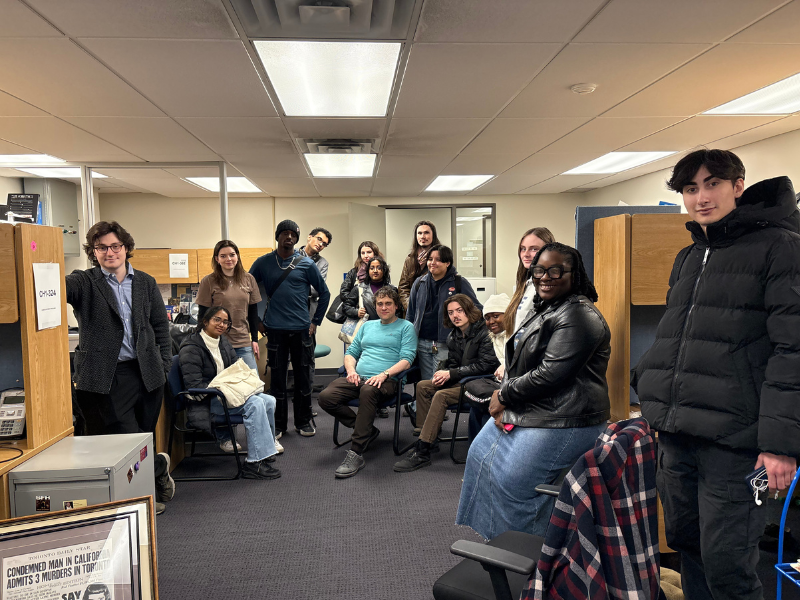
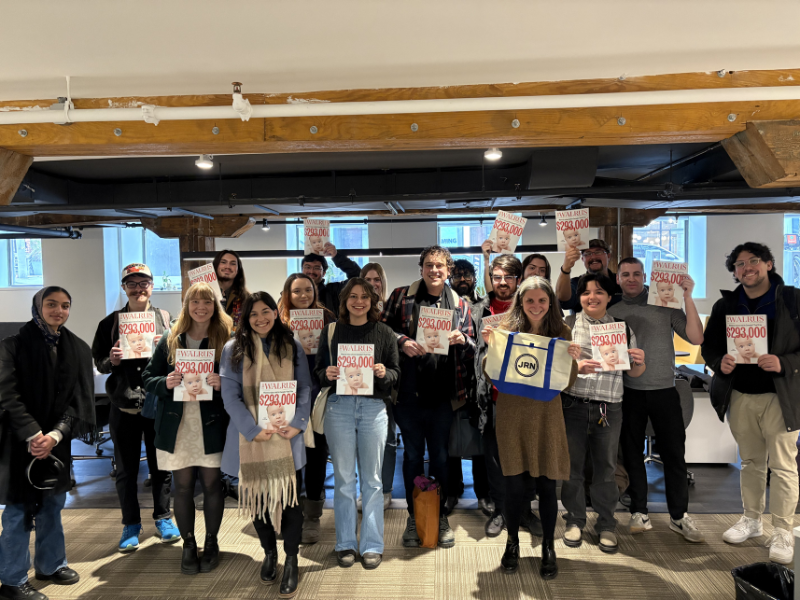
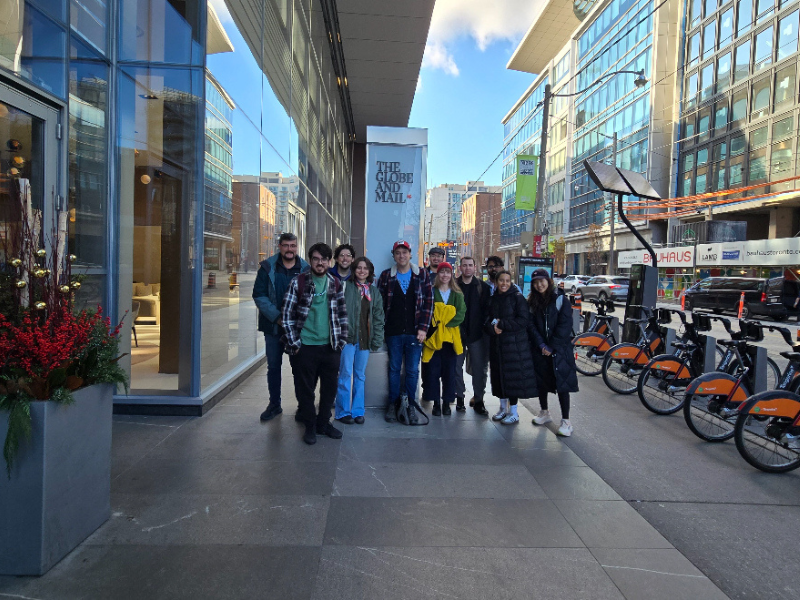
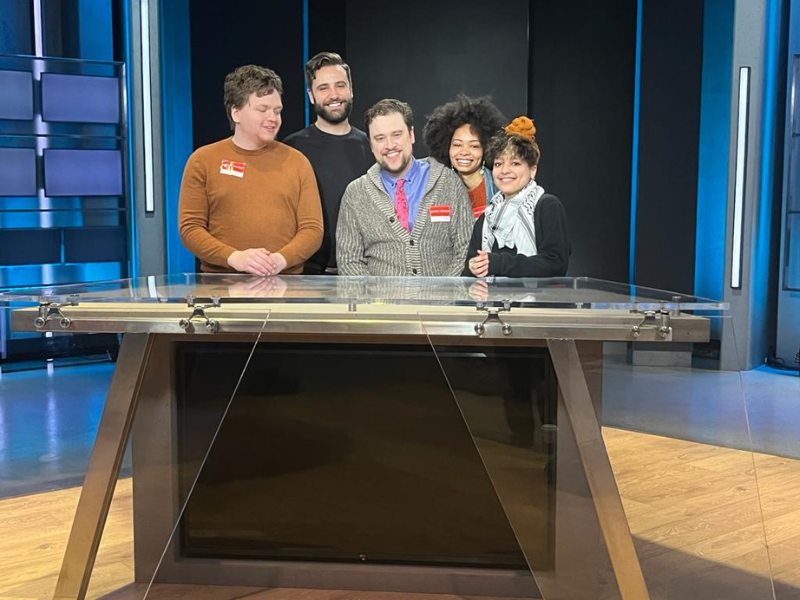
In Winter 2025, JRN 272 instructor Trevor Green and his class left campus a few times to visit the Toronto Star, The Walrus and the City Hall Press Gallery.
This isn’t the first time Green has invited his students to see the hustle and bustle of a real newsroom.
Other adventures have brought students to The Walrus, The Globe and Mail, The National and City Hall Press Gallery with a visit from Ben Cohen ‘20.
As an Indigenous person, Green says he incorporates land-based learning into his teaching philosophy.
Going outside helps, “decolonize the classroom by going into another [off-campus]” and he noted that the students enjoyed the industry exposure and tactile learning.
“Students talk about journalism and they’re doing journalism, but they don’t see people who are getting paid to do journalism,” Green said. “It’s important to show students that there are people out there being paid, and they want to talk to you [students]. They want to show this can be done as a career.”
For Kristian Tofilovski, a second-year journalism student, the trips revived his passion for journalism and left him feeling inspired.
“The offices themselves were gorgeous, and I could see myself working there, and I enjoyed watching real journalists do their work and getting to see what I hope to do one day.”
Being in the offices and seeing people working on stories reminded Tofilovski that journalism isn’t just school-related.
“It made me want to go out and start working on more articles.”
Green also invited students outside of his lab to join him, including first-year Tristan Forde, who said it was an honour to come on the field trips.
“It felt nice to connect with new people and classmates in a setting that’s not as tense as a classroom.”
Forde met and interacted with journalists in the field and gained industry insights.
“Not only in terms of their experiences in the industry but also how to further improve our future assignments during our time in j-school.”
JRN 106: Visualizing Facts
In JRN 106: Visualizing Facts, the students are introduced to Adobe Premiere Pro for the first time through a video assignment.
Instructor Sally Goldberg Powell said it’s a big challenge, but when she asked students in a reflection activity which work they were most proud of, many said their video assignment.
“Sometimes the most difficult assignments are the most rewarding.”
For the assignment, students had a list of topics to choose from, all related to critical thinking and the art of persuasion.
Below, these students chose explainer videos about logical fallacies.
Life by Sorousheh: hmm...let's talk logical fallacies (external link) by Sorousheh Salman
Learning how to use Adobe Premiere Pro was a challenge for Salman, “I spent around six hours [editing] to make a 50-second video.”
But it helped her realize she does like editing videos.
“I was very appreciative of all the content creators out there [who] choose this type of format to express their opinions or information.”
What is Ad Hominem? (external link) by Maryam Parkar
Parkar wanted to make sure the content was both informative and entertaining, “I didn’t want to bore my audience.”
In addition to developing solid foundational video-editing skills, Parkar knows how to turn a dry or overly academic concept into a fun watch.
“I had to think about how to structure the video so that it flowed well and made sense to someone who might be hearing about ad hominem for the first time.”
The No True Scotsman (external link) by Erika Sealey
Through this project, Sealey learned that putting in the effort even for minor details can pay off.
“Scrolling through about 50 record scratch sound effects felt silly, but it felt good knowing that I was sticking to my vision and deadline without cutting any corners.”
Sealey tries to keep projects light, knowing herself as a creator and consumer of content like explainer videos.
JRN 318: Podcasting and Radio Basics
JRN 318: Podcasting and Radio Basics instructor Katie Jensen said it was important for her to try and create an atmosphere that would encourage creative boldness, especially in a course where people are still building their audio skills.
This was Jensen’s first semester as a j-school instructor.
She was amazed at the students’ work, “I have not stopped bragging about my students' pitches for the last four months.”
Jensen described her students’ longform audio pieces as heartfelt, funny, sad and “all the good things we look for in real-world show development.”
New to the classroom, Jensen recreated the real-world audio production process as much as possible, giving students numerous chances to reverse, reset and change course.
“I would rather give someone immediate feedback and accept resubmissions than create a high-stakes ‘one-shot' environment.”
Third-year journalism student, Saif Khan, said his experience in the course was a perfect balance of teaching the technical side of podcasting and radio with the storytelling and structure.
His project (external link) focused on how he grew up listening to Reflections on Islam (external link) on the radio and the Muslims in Canada Archive (external link) (MiCA). He wanted to explore his thoughts on the idea of collective memory, legacy and archives.
Khan said, “At a time [when] the freedoms of academics, journalists, and artists are under threat locally and abroad, the practice of archiving is an extremely important tool.”
MiCA is working to archive pieces of media like the radio show Reflections on Islam, which Khan said held a lot of significance to Muslims like him in the GTA.
Khan’s conversation with archivist and curator Mitra Fakrashrafi from MiCA’s team built the bulk of the podcast episode.
While talking about the radio show, Khan had a feel-good moment when Fakrashrafi shared that other folks had talked to them about the show and its significance.
“It felt very full circle.”
Fourth-year journalism student Olga Bergmans wanted to look behind-the-scenes of the 2025 TARA Awards (external link) - RTA School of Media's annual end-of-year awards show (external link) . She followed the show avidly during her time at The Creative School, “Being able to spotlight their passion and drive was super rewarding.”
Her favourite moment from the process was being at the auditions, watching talented people come together.
“I put in a lot of prep for the sources I wanted to get as well as certain scenes I needed to capture,” she said. “That set me up for success.”
JRN 318 was one of Bergmans’ favourite classes that she took as a j-school student.
She said that Jensen, “Made the experience. She’s extremely knowledgeable on her craft, so learning from her was super inspiring.”
Third-year journalism student, Jin Yu, also said that Jensen’s presence in the classroom provided a grounding that Yu says she needed from the stress of the semester.
Yu’s idea to do her project (external link) on queer youth leaving organized religion came from her own experience of making the disorienting choice to leave her church at 15.
Her sense of belonging was with her church, doing service multiple times a week, camps on holidays and breaks and volunteering her time with bible studies.
“Disaffiliating felt like betrayal of sorts. Not of doctrine, but of the people who raised me until then,” she said. “It also became one of the most freeing decisions of my life.”
Yu found herself having conversations with queer and trans friends who were actively in faith spaces or had recently left them.
“Their stories were complex, often painful, and always deeply honest—experiences I never encountered in my own religious upbringing.”
Yu knew she wanted to explore the topic further.
While she had some trouble finding sources in the beginning, after a conversation with a trans classmate, who became one of her interviewees, the project began to take shape.
Though Yu said she doesn’t identify as queer, each conversation that was filled with trust and vulnerability felt like a mirror to her younger self.
“Someone trying to reconcile love, fear, and belief,” she said, describing the interviews, “that week was healing for me in ways I didn’t expect. I hope the same is true for them.”