New Instructors Join School of Journalism this Winter
Journalism at The Creative School is pleased to welcome four new instructors joining us for the winter 2025 term.
Hamutal Dotan
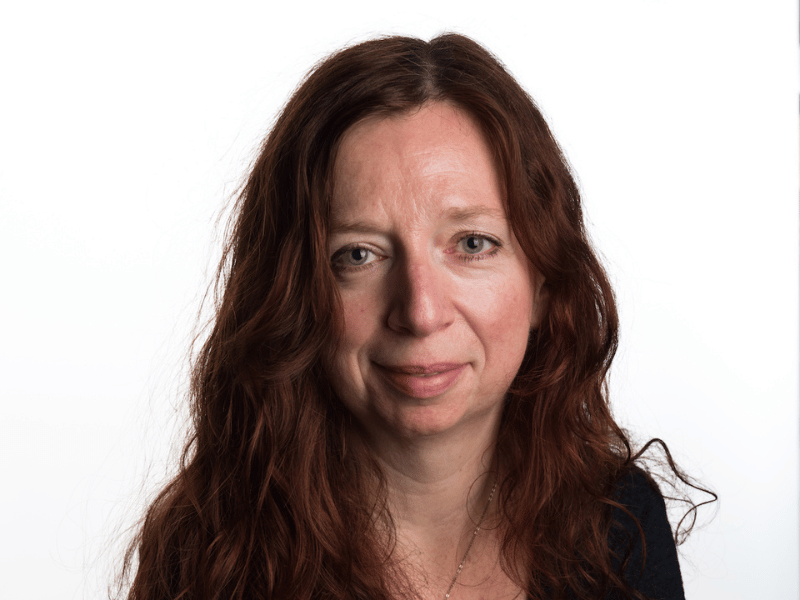
Hamutal Dotan (external link) is an editor with over 15 years of experience in magazine, digital, and newspaper journalism, her particular loves are features editing, editorial strategy, and building more equitable newsrooms.
She has spent time at many different kinds of publications, including as senior editor of The Walrus and Focus editor at the Globe and Mail and a rambunctious start-up, Torontoist, where Dotan was editor-in-chief for four years.
How did you get your start in journalism?
Journalism was never my plan. Then, in my late twenties, I found myself halfway through a PhD in philosophy and enormously frustrated: I was studying ethics, which I was interested in because I wanted to think about how people navigated their lives and made decisions about it — but of course, the academic study of ethics is quite removed from lived experience. Eventually, I realized that the things I loved most about academic work — research, open-ended curiosity, not being beholden to particular viewpoints or authorities — were also foundational principles in journalism, which does engage very directly with ordinary human experience, and I worked my way into newsrooms.
What is a moment in your career that you are proud of?
The first year of COVID. While it was obviously awful, I felt more useful than at any other point in my professional life. I was senior editor of The Walrus at the time, and I commissioned and edited about five back-to-back features and cover stories about various aspects of the pandemic — big explainers exploring vaccine science, the psychology of collective trauma, and other related concepts — which I genuinely think helped readers better understand the scary and rapidly-changing world around them. The way that I put it is that we published the stories that helped readers understand all the other stories, the onslaught of daily news hits, that they were reading.
Is there anything that you learned over the course of your career that you're hoping to impart to the young journalists you'll be meeting this year?
Stick to your guns. The industry, as we all know, is under enormous duress — not just financially but in terms of trust and respect. Our culture doesn't hold journalism in particularly high esteem at the moment. I know it may sound cheesy, but doing journalism rigorously and ethically and with the public interest in mind really can make a difference to individual lives and to communities. Don't let the haters and the sceptics, including the ones you may sometimes find in your own newsrooms, make you doubt that.
What’s an interesting fact about yourself?
I have never met anyone else with my name! I know there are some other Hamutals out there, but I have never encountered one. (I will definitely be very weirded out if I do.)
Anu Singh
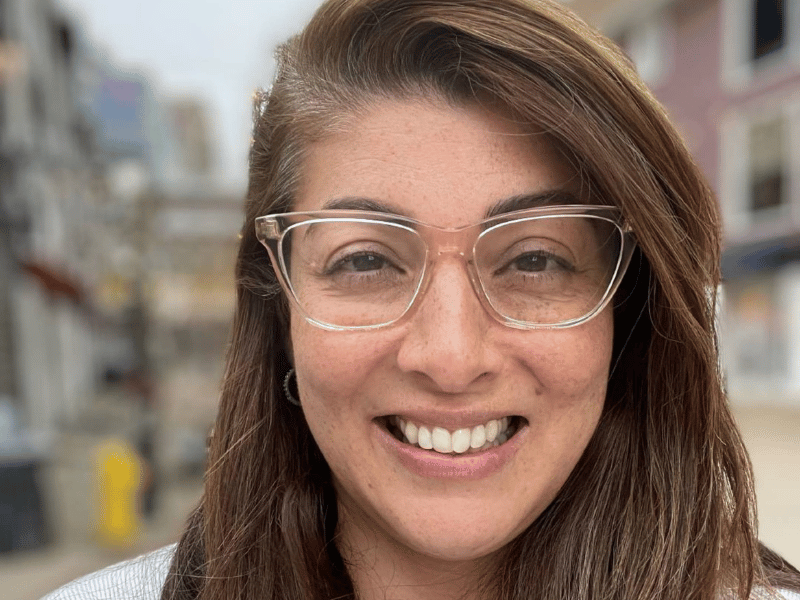
Anu Singh (external link) is an award-winning investigative journalist and director with fifteen years experience in writing and directing for CBC News & Television. On TV and YouTube her episodes for the top-rated current affairs program Marketplace, have reached millions of viewers in Canada and globally. She is the recipient of two national RTNDA awards and is a Canadian Screen Award nominee.
Her stories on school violence, forced labour, and food safety have led to significant policy changes at various levels of government. Singh often pursues social justice stories from under-represented communities, and is currently directing documentaries in that spirit.
How did you get your start in journalism?
Fifteen years ago, my TMU investigative journalism instructor offered me a summer internship in her documentary unit at the CBC. I jumped at the chance, and through a lot of hard work just never left the building.
What's an interesting fact about yourself?
I was once arrested in Lusaka, Zambia. Want to hear more? Just ask. It's also where I discovered my desire to become a journalist.
What's one thing you're looking forward to in your new role?
I’m looking forward to hearing students' fresh perspectives on world events and related coverage by Canadian media. Together, let’s be critical thinkers.
Is there anything that you learned over the course of your career that you're hoping to impart to the young journalists you'll be meeting this year?
To push yourself to uncover something new, to stand out in the newsroom, and to offer audiences something more worthy of their time.
What's a moment in your career you're proud of?
You never truly know what will happen once you publish a story, but as an investigative journalist there remains a quiet hope that your work will bring about some positive change. Over my career, investigations into school violence, forced labour, and baby food have led to concrete policy changes and those have been my proudest moments.
Katie Jensen
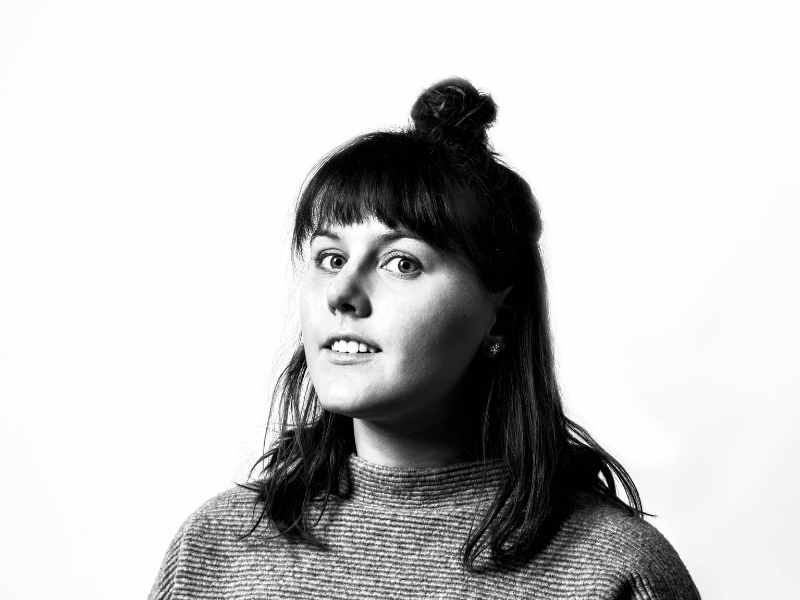
Katie Jensen (external link) is a podcast producer who specializes in arts & culture, news & current events, and science audio storytelling. She runs Vocal Fry Studios (external link) , a podcast production company in Toronto and she has made podcasts for CBC Podcasts (external link) , Maple Leaf Sports & Entertainment (external link) , The Globe and Mail (external link) , Canadaland (external link) and many others.
How did you get your start in journalism?
I have a degree in biology with a minor in music from McMaster University. I couldn’t decide whether to pursue a career in the arts or one in science. I was deeply drawn to audio production, and decided to dabble in creating a podcast version of my weekly community radio broadcast.
After graduation, I worked in tech for three years to pay off student debt, but kept producing my show from my childhood bedroom. Every morning, I would listen to CBC’s The Current on the hour-long train commute from the suburbs. At lunch, I would steal copies of The Globe and Mail from the company lunchroom. During afternoon downtime, I’d browse Canadian news websites on my second computer monitor. At home, I’d catch the late news broadcast on CTV News.
Changing careers felt like a massive leap of faith—especially in my mid-twenties, as my friends were finishing grad school and starting medical school residencies. At the time, most media outlets weren’t accepting interns who didn’t come from accredited universities and colleges. So, I did a one-year radio broadcasting postgraduate at Humber College in order to apply for internships. I ended up getting an unpaid internship at Canadaland, which transitioned into a full-time job.
What's a moment in your career you're proud of?
Attending Poynter’s Leadership Academy for Women in Media.
What's an interesting fact about yourself?
Three facts: First, I go thrifting a couple of times a week, and have a large number of vintage balaclavas. I love to find old objects tucked into donated books—streetcar transfers, business cards for occult shops, handwritten muffin recipes, ski trip packing lists. I love to make music, and really enjoy collecting vintage toy keyboards and plugging them into weird effects pedals.
What's one thing you're looking forward to in your new role?
Making space for creative experimentation, fun, and playfulness during upskilling.
Is there anything that you learned over the course of your career that you're hoping to impart to the young journalists you'll be meeting this year?
Not every path is linear. You probably won’t end up where you planned, but it doesn’t necessarily mean you’ve made a wrong turn. Taking three left turns gets the same results as making one right turn in the first place.
Liam Maloney
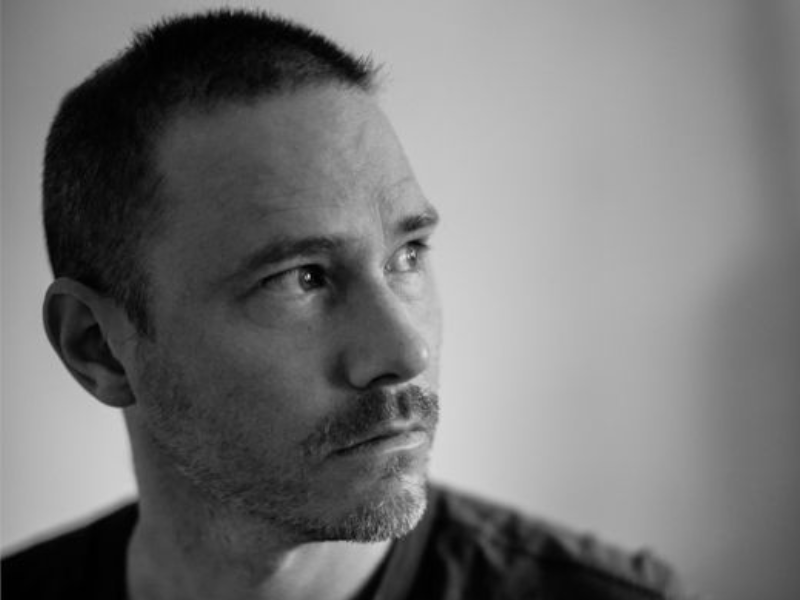
Liam Maloney (external link) is a documentary photographer based in Toronto. His work has been published in TIME, The Guardian, Foreign Policy, Mother Jones, Le Monde, The Globe and Mail and many others. Known for his innovative approach to storytelling, his installations and photographs have been widely exhibited, from the Nobel Peace Center to the MoMA. His work examines the intersection of technology and intimacy in contemporary conflict zones and explores new ways to tell some of the world’s oldest stories.
How did you get your start in journalism?
I got my start at Hour Magazine, a now-defunct alt-weekly in Montreal. The news editor there at the time took a chance on me - I was very lucky - and over a couple of years, I shot a very wide variety of assignments that helped me hone my skills. From there I found regular assignment work with The Gazette in Montreal, then Maclean's Magazine. I'm eternally grateful to those editors who took a chance on me and to all the more experienced photographers who went out of their way to look at my work and show me some tough love!
What's a moment in your career you're proud of?
Seeing one of my projects about the plight of Syrian refugees exhibited at the Nobel Peace Center in Oslo was a big deal for me - but I would rather think of the many times that the responsibility of being a journalist crystalized for me - when people entrusted me with their stories and showed me incredible hospitality, often under very trying circumstances. The camera can be a passport into other worlds, and when everything falls into place and you make a picture that matters - that is deeply satisfying.
What's an interesting fact about yourself?
Before journalism, I spent a decade playing bass in a series of punk rock bands. Playing (and listening) to music remains a hugely important part of my life.
What's one thing you're looking forward to in your new role?
I'm excited to watch my students surprise themselves as they explore visual journalism and find their own voices. There are always a few students who want to pursue photojournalism as a career path, and their enthusiasm is infectious - but there are also those who begin the semester without any knowledge or interest in the subject, and then end up producing exceptional work.
Is there anything that you learned over the course of your career that you're hoping to impart to the young journalists you'll be meeting this year?
You need to understand the rules in order to break them. Creative approaches to complex and nuanced stories can help sidestep some of the unhelpful tropes of representation that persist in visual journalism, and offer readers new pathways to understand the world around them. Think differently!