New instructors and updates from Journalism at The Creative School
Journalism at The Creative Schoolis welcoming three new instructors for the fall 2024 semester.
Aarti Pole

Aarti Pole is an award winning journalist who hosts CBC News Network with Aarti Pole weekday mornings, covering live and breaking stories from across the country and around the world. Pole first joined CBC News Network in 2014. Prior to that, she was the Washington correspondent for Global National. As one of the first female Indo-Canadian television correspondents based out of the U.S. capital, she covered the 2016 U.S. presidential race, international news and politics.
She will be an instructor for JRN 103.
How did you get your start in journalism?
After getting my BA at UBC and then doing the Journalism program at TMU (then Ryerson) - I applied to jobs across the country, in cities and towns I had never even heard of. I got a job in the community of Terrace, BC. It's a city in Northwestern BC that's about 1,200 km south of Whitehorse. I still remember the day I flew out to this city where I knew no one, I was so nervous, but also excited to finally have a journalism job. I was hired as a video journalist and weekend anchor. I shot and edited all of my own stories, filed a radio version and an online version of the piece. Then for the weekend program, I would line up the program and host the show. It was the first time my work was aired publicly, and my first opportunity to do live television. Working in a small city gave me an opportunity to gain experience in all of those roles and really helped me continue to move forward in the industry.
What's a moment in your career you're proud of?
This is a tough question! I can’t think of a single moment. I’ve been proud of a lot of the stories and coverage I’ve had the privilege of being a part of.
What's an interesting fact about yourself?
I have done classical Indian dancing and Indian folk dancing for the past 20+ years…and I think, if I wasn’t in journalism, I may have pursued that as a career!
What's one thing you're looking forward to in your new role?
Learning from the students! I am excited to hear about how these bright young minds are consuming news and what they think of the industry and where it’s heading next. I’m also looking forward to having the chance to dissect the news with a fresh lens as a teacher rather than a host.
Is there anything that you learned over the course of your career that you're hoping to impart to the young journalists you'll be meeting this year?
Just to always be open. Be open to story ideas, new ways of telling a story, be open to jobs or roles you hadn’t considered, to learning from everyone in every industry. The beauty of journalism is that you get to learn something new every single day, as long as you’re open to it.
Stuart Duncan
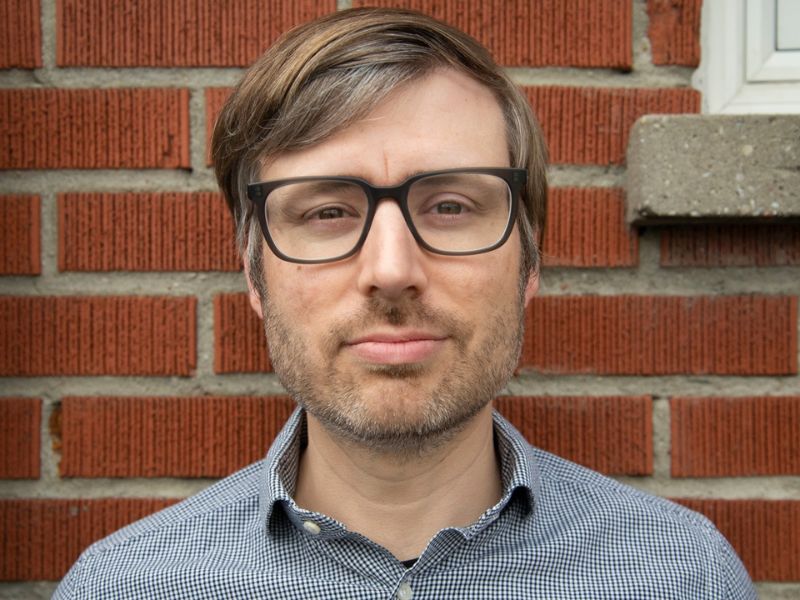
Stuart Duncan is a digital journalism researcher, developer and content creator based in Toronto. Professionally he has worked in media and journalism for almost two decades, most of that with the CBC where he worked as a producer on CBC News’ national social media team, and as an interactive producer for acclaimed documentary news program The Fifth Estate. He is currently pursuing a PhD at TMU. His research leverages computational social science tools to explore the social impact of digital platforms and technologies.
Duncan will be a contract lecturer for JRN 842.
How did you get your start in journalism?
In my final year of my undergraduate degree (2001) I had volunteered at the campus radio station and one of the campus newspapers, and that was my first foray into creating journalism content. I was also pretty active in independent media and media activism movements around Ontario, and helped a bit with an Ontario-based Indymedia (https://en.wikipedia.org/wiki/indymedia) group. I did my undergrad degree in Computer Science, and I was prepared to start a programming consulting job after graduation, but the dot-com bubble burst (this was in the summer of 2001), and the position I was supposed to start was cancelled.
For an almost two-year period, it was really challenging to find work in the computer science field. So in the fall of 2001, I decided to do a news internship at Now Magazine in Toronto. After that position, I eventually would find myself working as a staff member for a few years at the radio station I had volunteered at as a student. I also did a lot of freelance writing for Echo Weekly, the now defunct alt-weekly in the Kitchener-Waterloo area during this time, writing mostly music, news and community event-related articles. So generally, I got my start in journalism because the dot-com bubble burst, and I was able to slowly start working in different roles at different media organisations, and those positions gave me the experience to be hired at the CBC in 2007.
What’s a moment in your career you’re proud of?
It’s hard to pick a single moment. The last five years of my time at the CBC I was working in the national news room as a social media producer, and it was an exciting area to work in when breaking national or international news was occurring. I was also quite instrumental in setting up a YouTube channel for The Fifth Estate. At that time at the CBC, putting full episodic content that had traditionally only aired on broadcast television on YouTube was relatively unheard of. Those efforts significantly increased the online audiences for the important journalism work The Fifth Estate was creating.
What’s an interesting fact about yourself?
I used to compete in semi-competitive cyclocross cycling racing across Ontario about a decade ago. Not that I was particularly good, but it was fun.
What’s one thing you’re looking forward to in your new role?
I am most looking forward to meeting students new to the field of journalism, and learning how they are using novel techniques to create captivating journalism content. I worked in an established mainstream news organisation for quite a long time, and it will be exciting to see fresh approaches to creating news content.
Is there anything that you learned over the course of your career that you’re hoping to impart to the young journalists you’ll be meeting this year?
I think one of the biggest things I would impart is that there are many paths to working in journalism. Although job opportunities may be bleak at traditional news organisations, I believe we are in an incredibly exciting time where journalists can build their own platforms and produce unique journalism content. Some of the most exciting editorial content I see comes from these smaller grassroots news organisations, and I believe TMU students are well prepared to create powerful forms of new media.
Marisa Coulton
Marisa Coulton is a Toronto-based business reporter for the Star. She was previously a Quebec correspondent for the Financial Post and columnist-researcher at CBC Montreal. Her work has also appeared in The Logic, Maclean’s, the Economist, Foreign Policy and the Toronto Star.
Coulton will be an instructor for JRN 103 and JRN 105.
How did you get your start in journalism?
I started out as an intern at CBC Montreal. I chased sources for Daybreak, a current affairs radio show. I also wrote articles for the digital desk.
What's a moment in your career you're proud of?
I once interviewed French billionaire Emmanuel Besnier, heir to the Lactalis cheese empire, and Mark Taylor, CEO of Lactalis Canada, at the same time, in both English and French. (Besnier only spoke French, Taylor only spoke English.) It was a great experience.
What's an interesting fact about yourself?
I studied the piano for 11 years and still play today. It’s a great stress-release.
What's one thing you're looking forward to in your new role?
I am so excited to chat with students about their dreams and help them in any way I can to achieve those dreams!
Is there anything that you learned over the course of your career that you're hoping to impart to the young journalists you'll be meeting this year?
I’d like them to understand just how fascinating this career can be. I once had the opportunity to interview three astronauts in under a week. There is never a dull moment when you’re a journalist. This job also comes with great responsibility — you are shaping the public discourse with your stories.
School leadership changes
As the new semester begins, there are also a few leadership changes within the faculty.
Associate Prof. Adrian Ma is on sabbatical leave this year. As a result, Prof. Gavin Adamson will be undergraduate program director for the 2024-2025 academic year.
Adamson has experience across many Canadian publications. He has worked as a general assignment reporter and later specialised in business-related news. He also has several documentary credits. This fall, Adamson will be teaching JRN 270: Producing the News.
In this new role, he will work closely with other members of the leadership team to support students and staff at the School of Journalism.
Marsha Barber continues as graduate program director and Sonya Fatah remains associate chair.
Gary Gould makes a move
Dr. Gary Gould has taken on a full-time position with The Creative School’s Operations & Technology Innovation (OTI) team.
Gary remains a contract lecturer at Journalism at The Creative School and in his new role, will still be working in the RCC. In this new role, he will be providing technical help to faculties across The Creative School, not just journalism.
“It’s an exciting opportunity, in the sense that it’s new… The goal is to make the student experience better,” he said.
Gould has been with the School of Journalism since 1988. He said the choice to take on the new role was “incredibly tough” but that it’s a great opportunity to engage with more students – which, at the end of the day, is what he is most passionate about.