Mr. Associated Press: Q & A with J-School Professor Emeritus Gene Allen
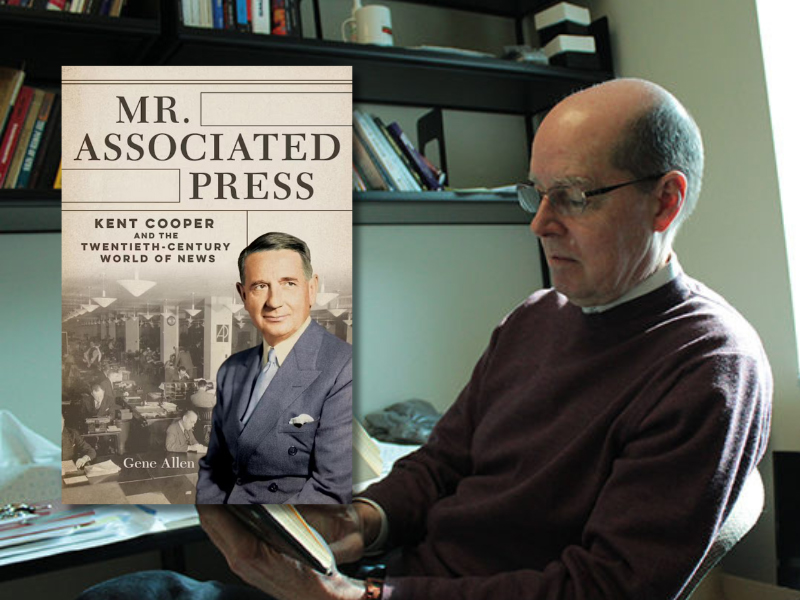
Journalism at The Creative School professor emeritus Gene Allen is an established author who has an extensive background in journalism and popularization of history in film and television.
Allen’s newest book, Mr. Associated Press, is a biography of American journalist Kent Cooper.
Cooper brought success and prominence to The Associated Press during his time as an executive director in the early 19th century.
What was the process for documenting and writing Mr. Associated Press like?
I was not working on it full time, so it took awhile. I had a first look at the Associated Press archived material at least ten years ago. So almost everything in the book is based on original documents from that time. I spent three summers working there and part of one sabbatical. I spent a month or so working at the Reuters archives in London, because the Associated Press has a lot to do with Reuters.
Then I spent a week or so in the U.S. National Archives in Washington, D.C. I went to the Chicago Tribune Archives, the New York Times archives and I got grad students to go to some archival collections that I couldn't go to myself. There was a lot of material to get through. But I am an archival researcher, so I love to do it.
While looking at these documents you’re trying to figure out a mystery and put it all together. What's actually going on? What was the sequence of events? And why did these things matter? I have to figure out the story as I go along with my research. It's like trying to do a jigsaw puzzle except you don't know what it is supposed to look like and you don't know how many pieces are missing. It is a fun kind of detective work.
How did you decide what was important enough to keep and what to pass on?
I cast my net pretty wide at first because you don’t know where to start and what is really important to keep. I also read a lot of secondary literature about journalism history to try to figure out what issues were controversial or worth discussing. I'm very interested in competition in journalism, and how that drives the nature of journalistic content or internal politics. So anything about competition with United Press or the first International News Service was interesting to keep. It was also important to keep anything Cooper was involved with directly.
What are you hoping that readers will take from your book?
This is the first book of this kind that I believe will be good for a general audience, not just scholars. This book explains how the international news system developed in the first half of the twentieth century. It is also based on a lot of new material that other people have not had a chance to look at. America alongside Canada and other international institutions all relied on the Associate Press for news in the forties and fifties. I explain how and why Cooper played such a big role in the Associated Press and the kind of influence he had in journalism.
Also, there are all kinds of secondary interesting elements, radio, technical developments, propaganda and dealing with conflicting governments. I wrote the book in a way that I thought scholars would recognize as legitimate and based on good scholarship. But also that you know the mythical, intelligent, general reader would find accessible and interesting. That's what I hope.