‘In an era in which print is dying, it is flourishing in our little corner of the world’: The Lake Report earns national recognition by embracing community-focused journalism
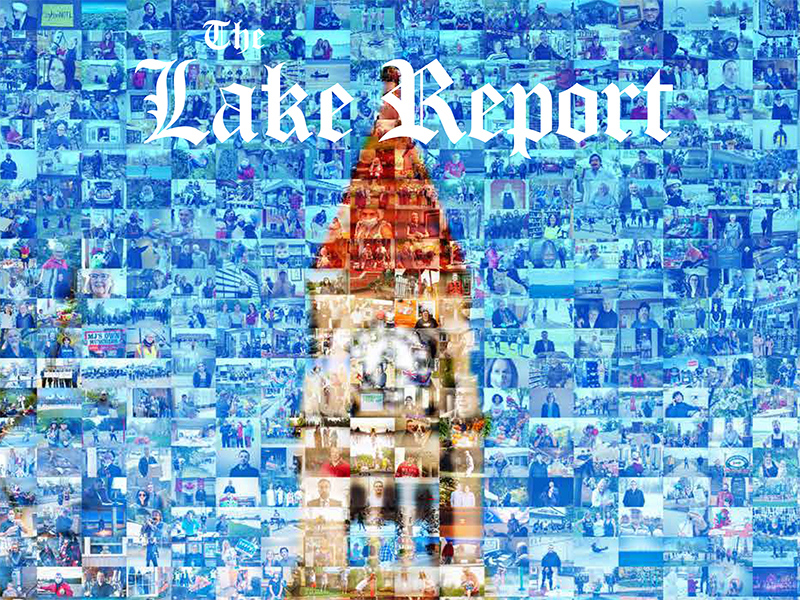
In just the last three months, The Lake Report (external link) has been sweeping up editorial awards.
Last month, the weekly newspaper and website based in Niagara-on-the-Lake received 17 journalism and advertising excellence award nominations (external link) from the Ontario Community Newspapers Association.
Last November, the team was thrilled to hear they had won 30 national awards (external link) for 2020 and 2021 from the Canadian Community Newspaper Association.
And a year ago, the paper began its streak by winning 14 provincial awards for work published in 2021 – in all cases, more honours than any other publication.
The publication’s managing editor, former School of Journalism instructor Kevin MacLean, said this winning streak seems unheard of, especially for an independent publication produced by a handful of full-time staff plus several community contributors.
“I've been a working journalist since 1977, so I've been through the awards process many times before. Back in the day, if your publication received three or four awards, we considered it a lot and recognition for a job well done. Getting 14 was over the top,” he says.
The newspaper was launched in 2018 by Niagara-on-the-Lake native (Richard) Harley Davidson after Torstar and Postmedia closed dozens of papers, including one in Niagara.
“Every town needs a print news source for residents — one that isn't mixed with regional content, owned by big corporations, or muddied down with hefty fees,” Harley says.
Daily news stories focused on the Niagara region are published online first at niagaranow.com (external link) and later in print depending on their news value.
The newspaper has a circulation of 10,000 and the paper version is in much demand, MacLean says.
“People are continually telling us that, while they appreciate seeing stories online and it makes it easy to share them electronically, what they really want to see is the version on the printed page. And this comes from people across all age groups. It is not just the older generation,” he says.
“I can't explain it, other than people in this community have a real attachment to the tactile version of the news.”
“Interestingly, in an era in which print is dying, it is flourishing in our little corner of the world,” MacLean said.
Journalism students are getting first-hand experience, learning how important local news is to the community.
Third-year student Stephanie Beattie and Julia Sacco, in her fourth year, have both done work for The Lake Report (external link) . They previously were students MacLean’s first-year class.
“As a student, you get some exposure, practice, and the opportunity to write about things other than the stuff you get to cover when you’re going to J-School,” MacLean said.
Sacco, who is from the region, (PDF file) worked (external link) for the paper in the summer of 2020.
“It was eye-opening to see how interesting and how much history and community there was behind the smallest seeming stories,” Sacco recalled.
While pandemic restrictions that summer meant she could not do in-person interviews, she felt it was still nice to talk to people through Zoom and phone calls for stories.
“It was kind of a glimmer of hope to see how everybody was still connecting.”
Sacco also now does regular weekend reporting shifts for The Lake Report and completed her fourth-year internship there this winter.
When Beattie worked (external link) in the summer of 2021 from her home in Mississauga, she had to immerse herself in the Niagara community when it came to pitching and looking for story ideas.
“When you’re reporting in a community that’s not your own, you’re always hesitant of what to say, and it becomes just a matter of setting boundaries and not letting it affect your writing,” Beattie said.
The experience gave her more confidence heading into her second year.
“I was less afraid to make cold calls. I remember one time in second year, I was finishing up a story, and I needed to get sources quickly. I called over 20 people in like 15 minutes, and I was okay with it. I was leaving messages, talking to whoever I could to get information, and that's something that just comes with experience. It's not scary anymore.”