Getting it right
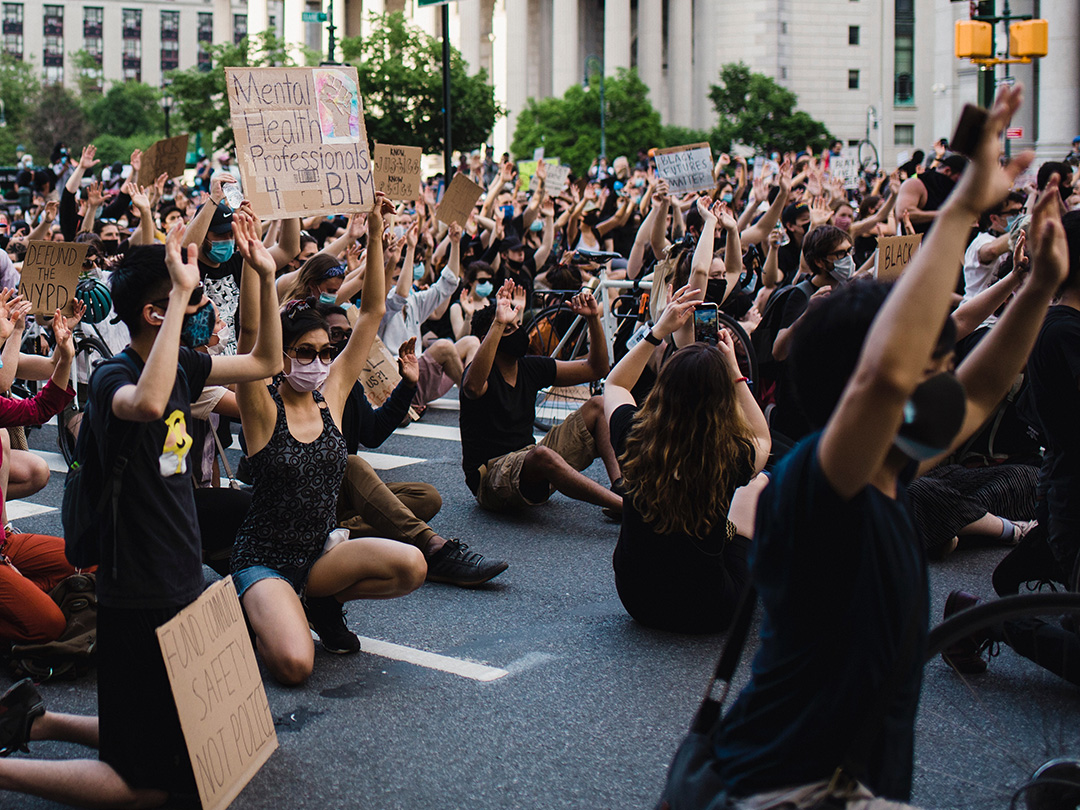
This past year, the killing of George Floyd and the ensuing trial of Derek Chauvin have presented newsrooms and individual journalists with a real opportunity to examine how we report on stories like it. That includes the decisions we make about what items to run, what kind of language to use within those stories, what images to show, and crucially, whose voices to include.
One of the key takeaways from watching coverage of the incident and the trial, is whose voices we choose to elevate in times like these. Aside from the proliferation of right-wing misinformation and conspiracy theories (external link) about the incident, news media also helped spread the voices of commentators (external link) , critics and bad faith personalities who worked hard over the last several months to cast doubt on the case. Some Black journalists also reported (external link) facing pushback — often under the pretext of “bias (external link) ” — when trying to cover the story.
The question of whose side (or opinion) of the story we allow to be continually upheld is important because it shapes the version of the narrative that gets taken up by the public. In the case of George Floyd, a look at the police statement on the day he died shows just how much gets left out, when we simply accept “official” statements as objective facts. The initial May 2020 police report from Minnesota Police stated that after Floyd allegedly resisted arrest, officers simply “got the suspect into handcuffs and noted he appeared to be suffering medical distress.” There was no mention of Chauvin kneeling on Floyd’s neck, the pleas of bystanders, or even Floyd’s own cries for help.
After seeing the video evidence and knowing what we know now about what actually happened, it’s virtually impossible to reconcile the two accounts. But, so often, the police’s version of events is what gets passed on to our audiences as truth. This should not be the case. Our job is to report the full scope of these stories, not just regurgitate the official account.
And the work that we do as journalists doesn’t just determine what information people have about a particular story; it also shapes how the public comes to understand and form opinions about critical issues like racism and police brutality. In a study on media bias in the coverage of Floyd’s death, PR firm Signal AI laid out (external link) the stark contrasts between liberal and conservative media outlets.
The group looked at the roughly 1,880,500 news items between May 25 and June 8 of 2020 that featured “George Floyd” by name, and according to their findings, the more “politically conservative” news outlets were notably more likely to use language about “looting” and “rioting” and less likely to mention racism and police brutality. They also noted that “broadcast outlets were particularly divided across political lines,” and that “Fox News spoke more about Antifa than about police brutality, in segments on George Floyd.”
In an interview with NPR’s All Things Considered, media correspondent David Folkenflik also noted this difference. “Fox News, Sinclair, conservative outlets stressed the idea that Antifa was stoking these protests as opposed to a broad-ranging sense of injustice. They said incidents and accusations against police were overblown. And there was all this kind of spin, information, misinformation, all of which tended to affect how people understood what took place.”
Aside from shaping the public consciousness around these issues, news reporting can also play an extremely consequential role in the outcome of a widely-covered case like this. So much so in fact, that lawyers on both sides of the Chauvin trial thought it was important to check (external link) what kind of media diet the prospective jury had been exposed to. Both parties agreed that the media's role was crucial to how the trial itself might play out, and maybe even the jury’s ability to come to a fair decision.
Finally, covering these stories can be extremely difficult, particularly for our Black colleagues. Black journalists have spoken for years about the mental and emotional toll (external link) of not only seeing these tragedies unfold, but also having to report on them, often daily. And so it’s important to note that while what we do is vital, rest, proper self-care and mental health support are also necessary in helping us sustainably uphold our responsibility to our audiences.