The Evolution of Teaching at the RSJ
Every year journalism changes as our fast-paced world continues to advance in the fields of communication, technology and media.
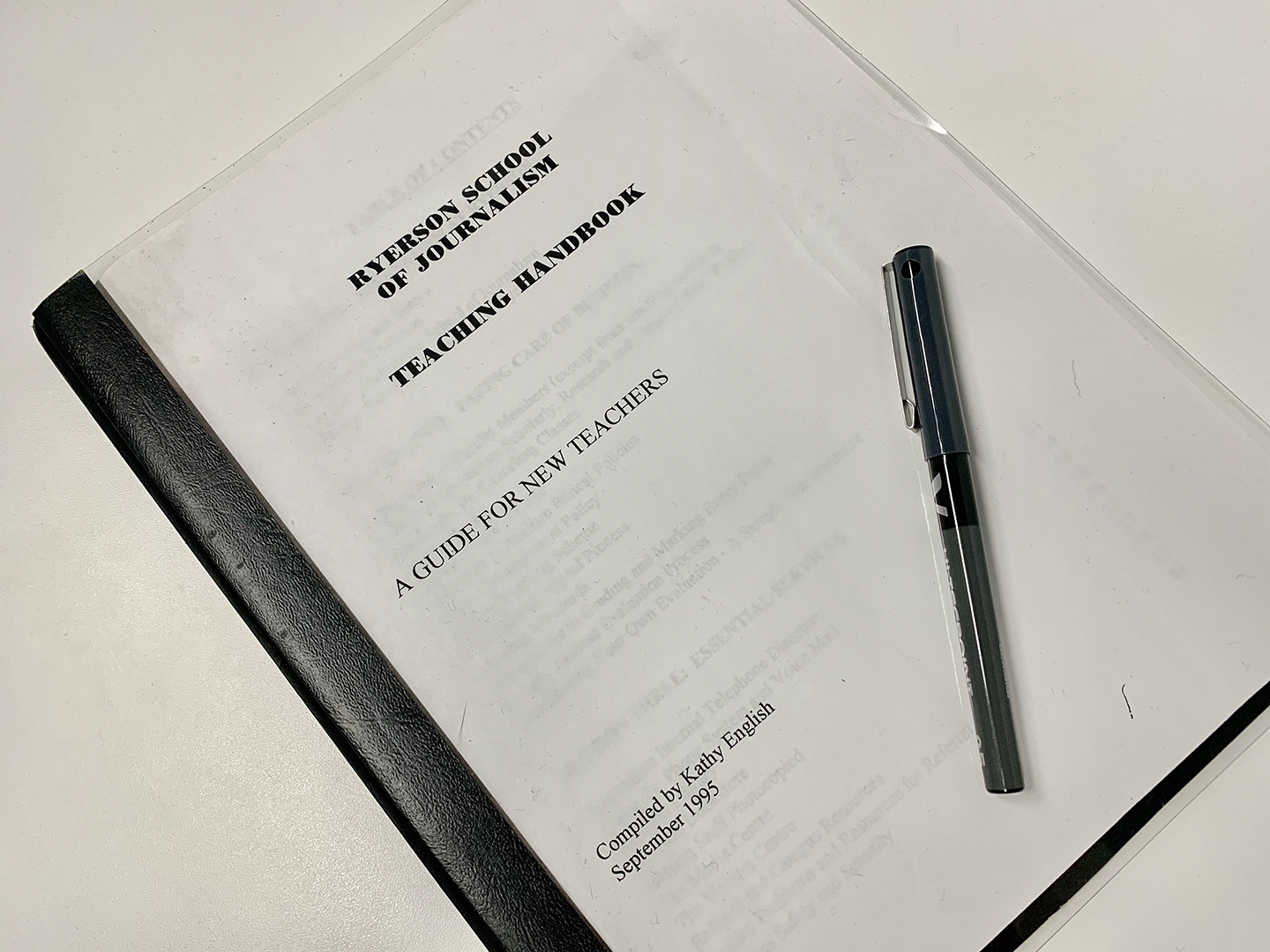
Kathy English, who in the late ‘80s and ‘90s spent 10 years as a faculty member, assembled a handbook in 1995 for colleagues teaching at the Ryerson School of Journalism. Fast forward to 2019, when English, who has been public editor at the Toronto Star for over 12 years, returns as a part-time instructor, teaching the second year Critical Issues in Journalism course.
Now we are asking our expert on how teaching - and the RSJ- have evolved over the years.
Then vs Now
What was it like to teach in the 90s?
The main thing was that there was no internet! Around 1994, Ryerson provided us with training on using connected computers and we were amazed that the knowledge of the world was right there for us - suddenly we could link to libraries and connect with academics worldwide. So, teaching before there was Google or even email, we had to do everything manually. We had courses on how to do deep research and find information that we can now do in a click to the Google God. That's the biggest difference; what it was like to teach without today’s resources and technology at our fingertips.
Why did you create the handbook?
We had instructors coming from all over the journalism industry. There was so much basic knowledge that people needed to know. It was also a faculty issue on how do we share essential information with one another. I did a journalism teaching fellowship at Indiana University after my first year of teaching. It was a peak experience that opened my eyes and helped me understand that there were many elements about teaching that we needed to share, so that we could learn from one another, It was a sense of we needed a way to share information on both the practicalities and philosophy of teaching.
What challenges did you have when putting it together?
I remember coming here as a new teacher and being handed a class list and keys to a classroom—that's it. I had never taught before. There were fewteaching resources, no mentoring, no sharing of how do you do important and challenging things like grading. I asked myself where do I even start with learning about teaching and that further informed my thinking as to why a teaching manual was necessary.
What were your main goals of the handbook?
My goals were to break down what you needed to know to survive and thrive as a teacher at Ryerson. Teaching will always be a challenge so here was a guide that may help you overcome some of those challenges and spark conversations among faculty.
Today
Why come back to teach at Ryerson?
I always loved teaching and was delighted to be given this opportunity to return to Ryerson 20 years after I departed from faculty. I am finding it’s the same old magic when you see that you are connecting with students and they are thinking about what they are learning. I feel like I'm better at my public editor job with the opportunity to teach because I think more deeply about the critical issues I grapple with in the newsroom and in the classroom. I am delighted to be back at Ryerson at this time. The faculty now feels so much more collegial, kind and supportive of one another and of the students than it did in the 1990s. Everyone has been so helpful to me in my return after two decades away, available to answer most questions I might have.
It seems a lot has changed in how faculty now interact with students. Back when I started here, the school was all about teaching that aimed to be as tough on students as the industry often is to its journalists. There wasn't an understanding that yes, we are training you as a journalist, but you are still a student, with student cares and worries. I think we thought then that the students will always put their reporting first before anything else. Now the school is rightly questioning whether it can really work that way. Journalism will never be a ‘hold your hand job’. However, we need to understand we are dealing with students who also face personal challenges and are balancing many priorities, including financial concerns and commuting. I like how Ryerson has changed that and that's the biggest change other than that internet thing.
What are some of the new teaching techniques in today’s classroom?
I feel like today’s focus is much less the need to prepare you for those big industry reporting and editing jobs, largely because the industry itself is in a state of flux and we need to prepare students for a future we can’t even predict. We need to encourage curiosity and persistence and passion for why journalism matters. All of that starts here in the classroom and never ends in the newsroom. You have to keep going with your mission of shaping students into journalists who can work to make a difference today and into the unknown future.
What is the biggest teaching challenge you face?
Right now it’s the big classroom with more than 130 students This is not my ideal teaching environment. I hate when I teach students whose names I do not know and it is hard to get to know everyone is a large lecture class. I have 130 students this term and I encourage them to introduce themselves. Personal interaction is key to adapt in the classroom and with your students. Of course, technology today is another big factor. Figuring out (the course management system) D2L, how to make my Powerpoint and videos work seamlessly has been a challenge sometimes. I'm embarrassed to say this - I can imagine students giving me the same eyerolls my kids give me when I ask for help with the SmartTV - but sometimes I do struggle with all the technology we can now bring into a classroom. I am learning though!
Tips and Tricks
I was so nervous when I was going to teach my first class. Someone told me to just be yourself—your best self. The students see if you are authentic or not and know if you want to be there. Organizing yourself is also tremendously important. I was juggling work and a young family last time round and when I felt unorganized, I felt less effective. Take the time and break down what you need to do and get it done. This will give students confidence when they know their professor is organized and established and is leading what I always refer to as the course journey. Never underestimate the work of teaching. The faculty is here, and ready to help, so ask questions on what you would like to know.