My Journey to Hong Kong through Ryerson’s HK360 course
“Bo Lo Bow! Bo Lo Bow!” she yelled. A woman carrying a tray full of fresh pineapple buns strolled out from the back kitchen. I raised my hand, and in broken Chinese, ordered one bun. All around me, a mixture of seniors and children were served either coffee or hot milk tea, staples in Hong Kong style restaurants.
My bun was warm, the smell of hot pastry and baked butter filled the air as I took a bite. It was sweet, chewy and the top crumbly part of the bun added an extra sugary, and butter-like texture. Steam rolled off the bottom of the bun as I ate in haste, thinking that this was probably the best pineapple bun I had ever had, incomparable to the ones I’ve had in Chinese Canadian bakeries.
The International Journalism course intensive offered at Ryerson University, taught by Professor Adrian Ma, requires students to travel to Hong Kong to experience what it’s like to tell stories internationally. We were tasked with shooting virtual reality videos around the idea of “Disappearing Hong Kong,” examining the evolution of the country’s economy, politics, and social development through aspects such as its fishing villages, wet markets, Chinese opera, kung fu schools. These pieces of Hong Kong culture involve traditional practices passed down through generations of locals, and we were encouraged to explore how they survived through time and history.
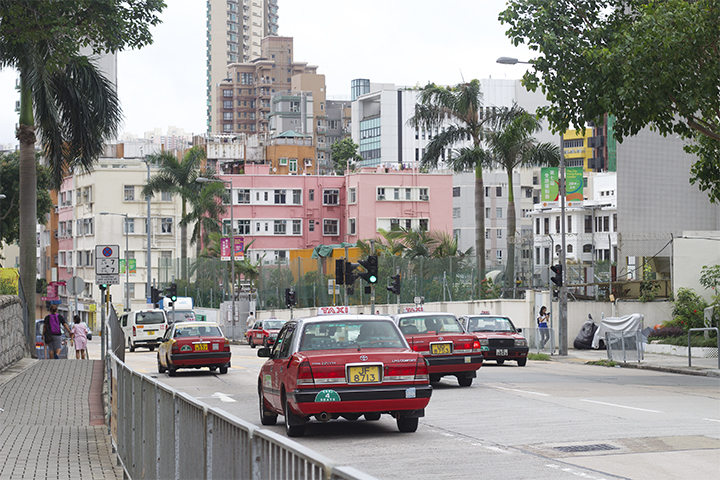
When I arrived I saw markets where shop owners made a living from selling incense to burn at Buddhist temples and small shops filled with popular Hong Kong clothing and accessories. I also noticed that nestled on the main floors of apartment buildings were shops and restaurants operated by locals in the area; places like Hong Kong style cafes serving European-inspired dishes like spaghetti and baked pork carbonara.
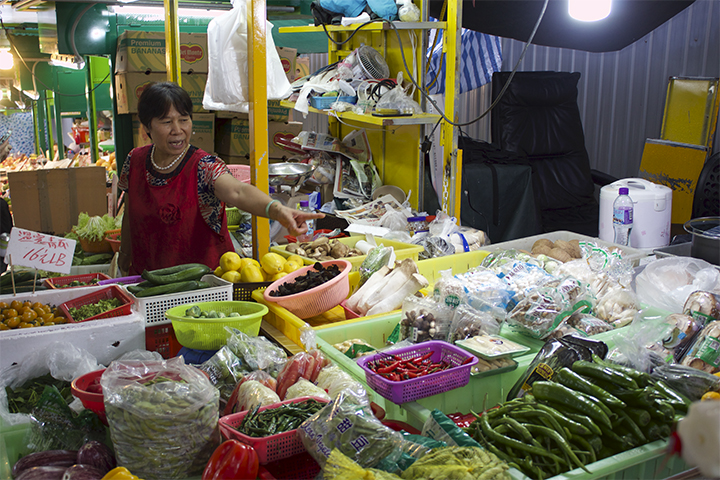
Using the virtual reality cameras provided by the EDC at Ryerson, we captured sound, space, and an experience in a 360 degree lense where viewers felt like they were physically present in the surroundings they saw. While my team explored wet markets in Hong Kong, we recorded sounds of vendors announcing daily prices for vegetables, the chopping of raw meat from butchers preparing the cuts of the day, and conversation in eating spaces where locals would congregate to eat fresh dim sum.
Through speaking with many of the local vendors and food bloggers, we learned that the younger generation of Hong Kongers were going to big chain supermarkets rather than local produce markets. Food stall businesses are passed down through generations and have been run by seniors well into their 60s who had no retirement plans.
As a third-year journalism student, I jumped at the opportunity to be a part of this program. I knew that with my platform as a reporter, I had the privilege of exploring the culture, the people, and the life of Hong Kongers in a way that not many people get to experience. I felt the need to ask questions, to understand the issues that plague the communities in these cramped cities, and to reflect on relationships within families and among friends.
But as a Chinese Canadian, being able to explore Cantonese culture really resonated with me. I grew up Markham, Ont., a place that is heavily populated by immigrants from various parts of Asia. Cantonese supermarkets are scattered across the city, with food court plazas serving dishes of char siu (barbeque park), roasted duck, and variations of thick rice noodles in soup. At the crack of dawn, seniors flock to local parks to perform Tai Chi, wearing matching outfits and holding fluorescent fans. During the day, high school students would hoard popular bubble tea (sweet milk tea with chewy tapioca balls) shops. And at night, Chinese restaurants stay open until midnight to attract a young crowd looking for cheap congee, or quick beef noodle soup to satisfy their late-night cravings. On occasion, family friends would invite my parents out to dim sum near our house, and always offer to pay for the meal—never accepting no for an answer.
In a way, Markham gave me a taste of my heritage; a glimpse into a culture but never witnessing where it all came from. Like seeing a product stamped with “made in China” in a dollar store, but not knowing how it was made, who made it, and how it came to be. This trip gave me the opportunity to earn a course credit, use multimedia as an international journalist, and explore a culture I’ve always been curious about delving into.
Our professor, Adrian Ma, supported my team throughout our journey in Hong Kong. He encouraged us to explore the city to our heart’s content, to open our eyes beyond what we know and have learned and put ourselves out there during the ten days we were international journalists. His enthusiasm and commitment as a multimedia journalist inspired me to look beyond my capabilities and see the potential of our stories. And he helped us embrace this foreign land across the ocean and capture authentic Hong Kong in all its grace.
I am beyond grateful to have had Adrian as an amazing mentor throughout this journey, for meeting amazing people who I would not have been able to meet without this opportunity, and for the hospitality shown to me by Hong Kong.