Sustainable Agriculture Technology Adoption - Barriers and Enablers: The Role of Skills
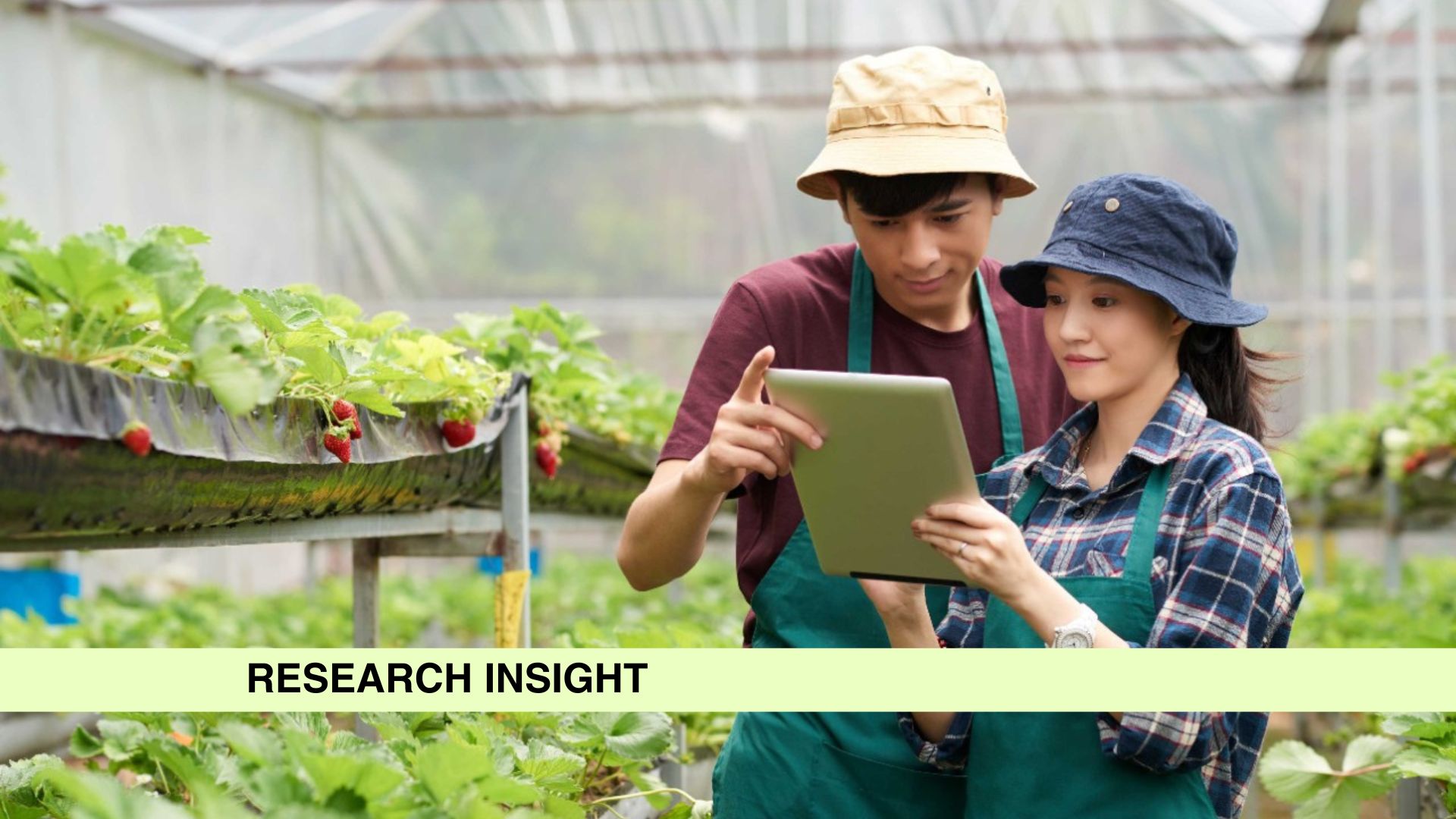
Agriculture technologies, or agtech, is essential to maintaining Canadian agriculture and agrifood sector market competitiveness and supporting domestic and global food requirements. Canadian agriculture represents about 7% of Canada’s GDP at about $150 billion in direct production, with technology poised to realize an additional $11 billion in gains. With the current global trade wars more attention is being focused on agriculture both to ensure Canada’s self-sufficiency and security and to expand into global markets.
Farmers are Canada’s first entrepreneurs, leading technology adoption with, for example, the introduction of the heavy wheeled plow in the Middle Ages, enclosure systems in the renaissance, irrigation systems in the early industrial revolution, and genomics advances through the twentieth century. The first steam-powered combine harvesters arrived in North America in the 1880s, and tractors were widely introduced in the early 1900s, pre-dating personal car use. Massive changes in automation of autonomous vehicles, where large farms now lead in deploying internet of things technologies and artificial intelligence.
Canada is a global leader in agtech with a 2021 market value between $870 to $954 million . Emerging technologies like controlled environment systems, data aggregation platforms, sensors, robotics and autonomous farming, and cellular agriculture are driving tremendous sector growth. Adopting these technologies improves efficiency, reduces costs, and supports diverse sector opportunities. Technology can reduce operation inputs (through smart fertilizer and watering), costs and labour, following automation of processes. Agribusinesses are also diversifying, opening farm retail, seizing e-commerce opportunities, and using modular and scalable food production equipment. These changes demand technology-proficient workers with advanced technological skills and education, while addressing family farmer retirement issues where many operations have no obvious heirs with children leaving and not returning.
The agriculture sector is mature: 35% of the workforce is 55 years or older, and 40% of operators are set to retire by 2033. There are also problems in attracting new labour, with labour shortages near 123,000 workers, costing about $3.5 billion (as of 2022). Employers are worried, with 67% of employers reporting challenges in attracting new domestic labour, and reduced foreign labour supply following changes to the temporary foreign worker program. While agriculture needs to meet short-term labour shortages, economic continuity requires a long-term horizon that promotes Canadian agriculture sector competitiveness through skilled labour opportunities in professions spanning biotechnology, food science, engineering, and data analytics. There is limited sector visibility, and the perception of farming as a low-skilled, low-tech, labour-intensive, low income, rural and white male-centered profession persists. Running modern agribusinesses requires less a background in agriculture, but rather, relies on skills in operations management, reading and interpreting data, and those who have interest and expertise manage technologically complex operations.
Technology has the capacity to support market continuity and competitiveness, but a concerted skills training effort is needed to improve slow adoption by the sector. Skills and wraparound support are needed to support agtech adoption in the many small and medium sized enterprise (SMEs) and diverse-owned agribusiness by Indigenous Peoples, Women, Racialized Peoples as well as Immigrants and newcomers. In the following section we discuss a variety of the determinants to agtech adoption and the role of skills to meet sector demands.
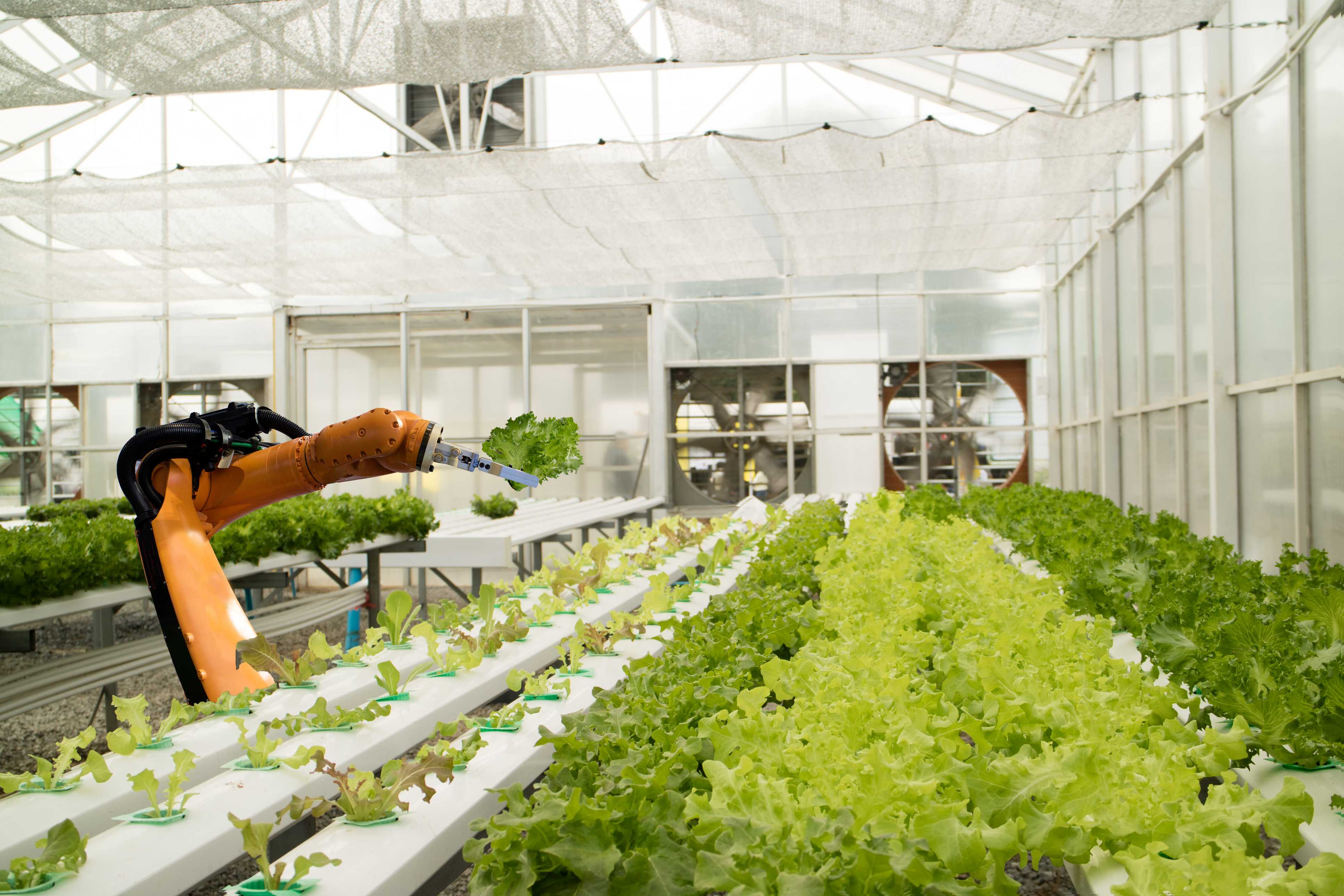
First, costs for procurement, training, and maintenance of agtech assets are deterring adoption. On farm expenses are increasing for Canadian producers, limiting many small and diverse-operated enterprises from investing in agtech. SMEs are also contending with reduced export opportunities from tariffs, reducing agtech viability. Education costs also limit which agribusinesses can understand, use, and innovate using agtech. Flexible financing opportunities, visibility to funding opportunities, and support for applications are important to allow businesses to acquire technologies for their enterprise. Further, lower education costs and diversified technical skills training opportunities through microcredentials, specialized certificates, and work-integrated learning can offer cheaper, hybrid engagement more conducive to the economic realities of diverse learners.
Second, technology is becoming increasingly complex, stratifying adoption by size and capacity, making SMEs slower to adopt compared to large producers. Technology literacy has generally increased among farmers, however 81% of large operations (>5,000 acres) use digital agriculture tools, compared to 36% of smaller farms (=<2,000 acres). Emerging agtech driving global competitiveness—such as AI systems, autonomous vehicles, advanced crop, biochemical, and environmental sensors—are data intensive, with 95% of agtech producing data in raw formats, requiring technical skills to collate and interpret. Advanced knowledge in systems integration, electrical engineering, and data science is needed to support agtech integration.
Third, despite a thriving ecosystem of small agtech startups making scalable technologies, they are often not visible to small and diverse agribusiness. A concerted knowledge-mobilization plan is needed to encourage technology adoption through demonstration and tradeshows, allowing growers to see agtech applied in practical and accessible means. Further, showcasing diverse entrepreneurial success will promote equity-deserving groups to participate in the sector.
Fourth, adopting agtech requires both technical and soft skills. A review of training programs shows post-secondary education is lagging innovation; however, microcredential, certificates, and work-integrated learning can provide opportunities to deliver curriculum that paces with the evolving agtech landscape. Further, informal education through food sustainability programs, community gardens, and food banks can support upskilling participants from foundational knowledge—how to grow a plant from seed to harvest—towards technical skills, where communities use agtech learned incorporated in community cultivation. In addition to technical training, enterprises need support to evaluate agtech compatibility and perceived benefits of new innovations. Some technologies are more intuitive, but many new technologies require farmers to have the tools to assess clear economic returns through skills for economic forecasting, risk assessment, and decision-making.
Instead of technology leveling the playing field, agtech is creating a noticeable digital divide as larger operations have capacity, capital and skills to support adopting technology. Although SMEs and diverse agribusiness recognize the value of technology, they lack the skills, support and capital to attain, and mobilize technologies to their contexts. Taken together, financing for agtech, reduced educational costs, improving the timeliness and diversity of educational offerings, and utilizing various knowledge-mobilization opportunities have the potential to continue advancing Canada’s competitiveness in agriculture.
Funder
The Future Skills Centre – Centre des Compétences futures is funded by the
Government of Canada’s Future Skills Program.
The opinions and interpretations in this publication are those of the authors
and do not necessarily reflect those of the Government of Canada.
References
Agriculture and Agri-food Canada. (2025, August 14). Overview of Canada's agriculture and agri-food sector. https://agriculture.canada.ca/en/sector/overview (external link)
Canadian Agricultural Human Resource Council. (2023). Sowing seeds of change: Agriculture labour market information forecast to 2030. (PDF file) https://cahrc-ccrha.ca/sites/default/files/2023-11/Executive%20report%20Final%20 ENG%20%20(1).pdf
Cukier, W., Serre, B.M. (2025). Agriculture technology adoption: Current adoption and barriers. Diversity Institute. (PDF file) https://www.torontomu.ca/content/dam/diversity/reports/agriculture-technology-adoption/agriculture-tech-adoption_report-en.pdf
Cukier, W., Zemla, A. (2025, June). Food sustainability in the North: Skills, challenges, and opportunities in community greenhouse projects. Diversity Institute. (PDF file) https://www.torontomu.ca/content/dam/diversity/reports/food-sustainability-in-the-north/Food%20Sustainability%20in%20the%20North.pdf
Cukier, W., Serre, B.M., Chavoushi, Z.H. (2025, August). Supporting rural agriculture entrepreneurship: Reframing the discourse. Diversity Institute. (PDF file) https://www.torontomu.ca/content/dam/diversity/reports/rural-entrepreneurship-report/supporting-rural-agriculture-entrepreneurship.pdf
Fiocco, D., Ganesan, V., de la Serrana Lozano, M.G., Sharifi, H. (2023, February 7). Agtech: breaking down the farmer adoption dilemma. McKinsey & Company. https://www.mckinsey.com/industries/agriculture/our-insights/agtech-breaking-down-the-farmer-adoption-dilemma (external link)
Fulton, M., Pigeon, M., & Oemichen, B. (2022, October 6). A new way to farm: Agtech and the future of farm work. Future Skills Centre. https://fsc-ccf.ca/blog-agtech/ (external link)
Huneke, M., Vinodrai, T., Hall, H. M (2024, August). Crunching the numbers: A snapshot of Canada’s agricultural technology landscape. University of Waterloo Disrupting Technologies and Economic Development. (PDF file) https://uwaterloo.ca/disruptive-technologies-economic-development/sites/default/files/uploads/documents/ag-crunchbase-report-august-2024-final.pdf (external link)
Hurt, R. D. (2024). Mechanization in Agriculture. The Oxford Handbook of Agricultural History, 161-176.
Liebert, J., Benner, R., Bezner Kerr, R., Björkman, T., De Master, K. T., Gennet, S., ... & Ryan, M. R. (2022). Farm size affects the use of agroecological practices on organic farms in the United States. Nature Plants, 8(8), 897-905. https://doi.org/10.1038/s41477-022-01191-1 (external link)
NorthBridge Consultants (2023, March). Agricultural technology at a glance. https://northbridgeconsultants.com/2023/03/08/agricultural-technology-at-a-glance/ (external link)
Phillips, P. W. B. (2023, November). Can Canada help feed the world while reducing emissions? Assessing challenges and barriers to digital opportunities in agriculture. Institute for Research on Public Policy. (PDF file) https://irpp.org/wp-content/uploads/2023/11/Can-Canada-Help-Feed-the-World-While-Reducing-Emissions.pdf (external link)
Royal Bank of Canada. (2023, April 6). Farmers wanted: The labour renewal Canada needs to build the next green revolution. RBC, BCG Centre for Canada’s Future & Arrell Food Institute. https://www.rbc.com/en/thoughtleadership/climate-action-institute/agriculture-reports/farmers-wanted-the-labour-renewal-canada-needs-to-buildthe-next-green-revolution (external link)
Senate of Canada. (2019, July). Made in Canada: growing in Canada’s value-added food sector. https://sencanada.ca/en/info-page/parl-42-1/agfo-made-in-canada/ (external link)
Tobin, S. (2025, March). Development of a National Agriculture and Agri-Food Workforce Strategy. Future Skills Centre. https://fsc-ccf.ca/projects/agri-food-workforce/ (external link)
Weersink, A., von Massow, M., Bannon, N., Ifft, J., Maples, J., McEwan, K., McKendree, M. G. S., Nicholson, C., Novakovic, A., Rangarajan, A., Richards, T., Rickard, B., Rude, J., Schipanski, M., Schnitkey, G., Schulz, L., Schuurman, D., Schwartzkopf-Genswein, K., Stephenson, M., ... Wood, K. (2021). COVID-19 and the agri-food system in the United States and Canada. Agricultural Systems, 188, Article 103039. https://doi.org/10.1016/j.agsy.2020.103039 (external link)
Yeo, M. L., & Keske, C. M. (2024, October 2). From profitability to trust: factors shaping digital agriculture adoption. Frontiers in Sustainable Food Systems, 8. https://doi.org/10.3389/fsufs.2024.1456991 (external link, opens in new window)