Advancing Equity on the World Stage at the UN Decade Forum on People of African Descent
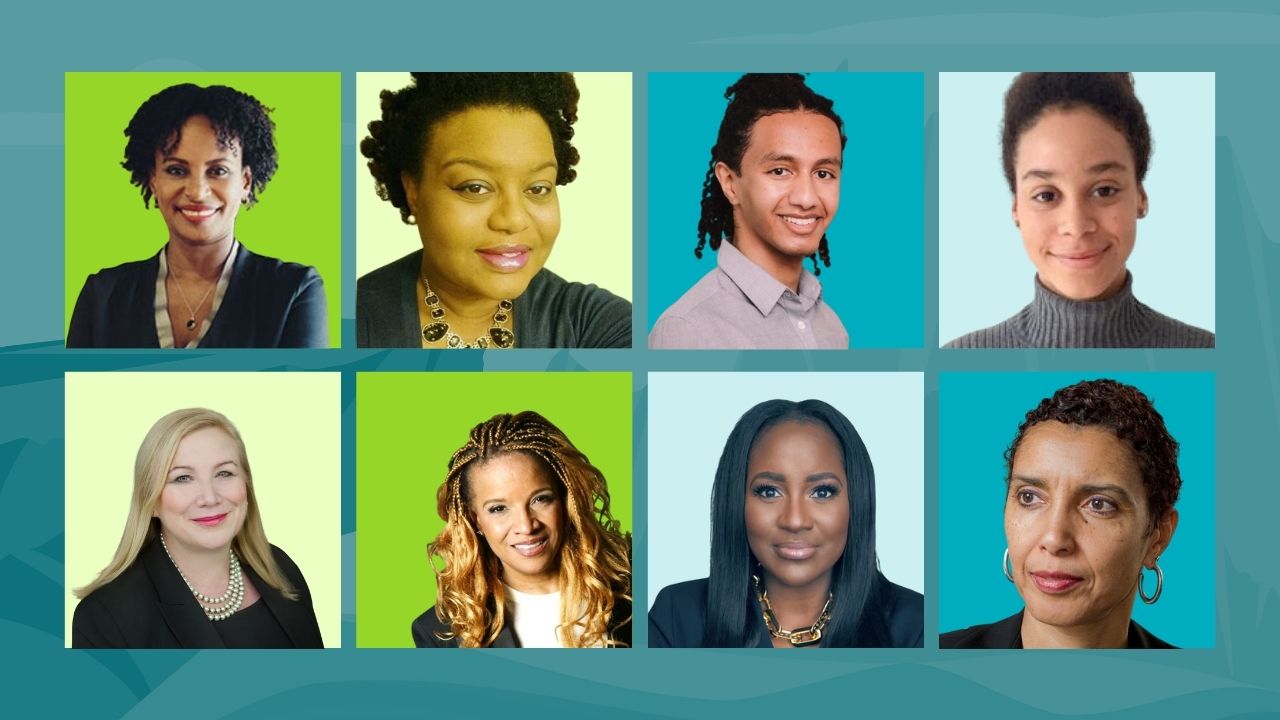
The Diversity Institute hosted two side events during the United Nations Permanent Forum on People of African Descent which featured eight expert speakers.
Across the globe, conversations around racial justice are gaining renewed urgency amid the growing backlash against equity, diversity and inclusion (EDI) efforts. In this climate, the United Nations (UN) convened the fourth session of its Permanent Forum on People of African Descent, a platform created to amplify the voices, rights and experiences of African-descended communities worldwide. The multi-day event served as a critical forum for confronting systemic racism on a global scale.
As part of the UN’s forum, the Diversity Institute (DI) hosted two virtual side events that drew hundreds of participants from around the world. The first event tackled the intensifying global pushback against equity, diversity and inclusion, exploring the roots of this resistance, its impact on organizational priorities and the potential of a human rights framework to sustain anti-racism efforts. The second event highlighted findings from the recent State of Black Economics Report (SOBER), prepared by DI in collaboration with a number of organizations and supported by the Future Skills Centre (external link) (FSC), using data to shed light on the systemic barriers faced by Black communities in Canada. Participants discussed how organizations can leverage data to inform action, break down barriers and maintain momentum in the face of mounting opposition to EDI and anti-Black racism initiatives.
A call to refocus in a time of backlash
Dr. Jodi-Ann Francis, a Regulated Canadian Immigration Consultant, moderated the first session and opened by highlighting the importance of staying the course in the face of intensifying pushback on EDI efforts. She said the event aimed to unpack the roots of this resistance and explore how human rights frameworks might offer a path forward. “It is essential to stay the course and rely on frameworks that help us advance inclusion and anti-racism.”
Then Tamara Thermitus, a visiting scholar at the McGill Centre for Human Rights and Legal Pluralism, provided a historical context for the current backlash, linking it to long-standing opposition to affirmative action in the U.S. and heightened racial tension following Barack Obama’s presidency. While EDI initiatives gained momentum globally following the murder of George Floyd, Thermitus noted that social change often sees resistance. “When we're changing power structures in society, usually there's some backlash,” she said.
Equity, diversity and inclusion in academia
Dr. Rhonda McEwen, President and Vice-Chancellor of Victoria University in the University of Toronto, spoke about the precarious state of EDI in academia, particularly in the U.S., where university presidents have resigned under political pressure. “You can see this backlash play out in a very particular and strenuous way within the academy,” she said, adding that Canadian institutions face growing pressures too. Dr. Wendy Cukier, Founder and Academic Director of DI, said that research excellence is not possible without a sex and gender and diversity lens. She added that good science must include representative samples of the population whether in health care to understand COVID-19 infection rates and immunization strategies or in designing products and services. She noted examples of systems that did not work for women or racialized peoples and ways in which AI can embed harmful bias. Disaggregated data, Cukier said, showed that Black business owners were twice as hard hit by COVID-19 and the majority believed they would not qualify for (PDF file) government support (external link) , adding that “98% could not take on additional debt.”
Thermitus highlighted Section 15 of Canada’s Charter of Rights and Freedoms, which guarantees equal protection under the law and permits affirmative action programs. McEwen stressed that inclusion is a choice, and without embedding EDI in institutional frameworks and accountability systems, efforts will falter. All panellists agreed that EDI efforts must be grounded in human rights principles but also can leverage “the business case” in order to build support among more than “the usual suspects” which is critical at a time when we face intense backlash.
Data-driven action for Black economic empowerment
The second session was moderated by Nancy Mitchell, Director of Consulting at the Diversity Institute. She opened by highlighting the diversity within the Black population in Canada. We are not homogenous, she said. She highlighted that disaggregated data is critical to understanding the challenges, designing effective interventions, tracking progress and impact. The event brought together researchers and leaders to discuss gains and gaps in progress for the Black community on education, employment, advancement and entrepreneurship drawing on the SOBER report.
Jemal Demeke, a researcher at the Wellesley Institute, underscored the life-saving potential of data. Reflecting on the COVID-19 pandemic, he explained how the lack of race-based data initially masked its disproportionate impact on Black communities. “It’s not just the nature of the data that improves equity—it’s the intention and how it’sused,” he said. Once individual-level data collection began, targeted equity responses helped reduce disparities in COVID-19 case ratios between Black and white populations.
Mitchell highlighted SOBER data that revealed the Black population in Canada is young, growing and highly diverse—linguistically, culturally and religiously. Though education gaps have narrowed, employment disparities persist. In January 2025, unemployment among Black Canadians aged 25 to 54 years stood at 11%, nearly double the national average of under 6%. While the education gap has narrowed, Black university graduates are twice as likely to be employed in jobs requiring only a high school diploma or less, demonstrating the embeddedness of anti-Black racism (external link) .
Mitchell emphasized the importance of representation in education: “Providing Black students with a Black teacher can bring a 13% increase in participation in post-secondary education while decreasing the probability of not finishing high school by 29%.” Disaggregated data from a large study by DI with the Environics Institute and supported by FSC also showed that 47% of Black respondents experienced race or ethnicity-based workplace discrimination, which Mitchell said includes overt and covert instances, like microaggressions.
Entrepreneurship was another key focus. Cassandra Dorrington, President and CEO of the Canadian Aboriginal and Minority Supplier Council, noted that Black-owned businesses remain under-represented and undervalued. “Black men business owners earn on average $56,100—compared to $65,600 for other racialized groups and $99,400 for white men,” she said. Access to financing was cited as the top barrier (external link) by 79% of surveyed Black women entrepreneurs.
Nadine Spencer, CEO of BrandEQ Group, called the report “a mirror to our mandate.” Sharing stories and those from her community, she emphasized the urgency of systemic change. “We’re not just here to describe disparities—we are here to dismantle them,” she said.
The event concluded with a collective call to action: data must drive policy and practice. “This report doesn’t just highlight barriers—it charts a path forward,” Spencer said. Panellists urged governments and organizations to act with urgency, embed equity in every stage of decision-making and measure outcomes transparently. “If we only support entrepreneurs at the end of the journey,” Spencer said, “we lose the brilliance that never gets a chance to grow.”