Tutoring in the Time of COVID

Education is the foundation of social mobility and economic opportunity in Canada. But the education system has not served all children and youth equitably, and this has contributed to employment and wage gaps. These gaps have only widened in the shadow of the COVID-19 pandemic.
On November 23rd, we hosted researchers, educators, practitioners, and policymakers to examine the potential for tutoring to address these gaps as part of the Tutoring in the Time of COVID workshop.
Carl James, Jean Augustine Chair in Education, Community and Diaspora in the Faculty of Education at York University, opened the workshop with insights from his research.

“Access to postsecondary education, and even graduation from high school, is not equitably distributed across all social or racial groups,” James explained. Black and Indigenous students, and other equity-deserving groups, face significant barriers and are most often left behind.
This is particularly concerning because research published in 2017 by Statistics Canada found that due to the increase in high-skill occupation, 75% of all new jobs require a postsecondary education.
“It is important to give special attention to racialized, low-income people, for whom the system of education is consistently failing,” James said.
Equity in education requires that opportunities and services offered to particular communities are responsive to their particular needs and are designed with an understanding of the barriers that mediate access to education.
James asserts that we need to reimagine schooling and education to better serve all students. And tutoring can be a useful tool in this reimagining by better responding to the needs of particular communities, providing culturally relevant educational responsibilities, and helping to build a student’s sense of self.
Hear more from Carl James (external link, opens in new window)
Accelerating learning and addressing educational inequities: How tutoring can help us learn our way out of the pandemic in Toronto
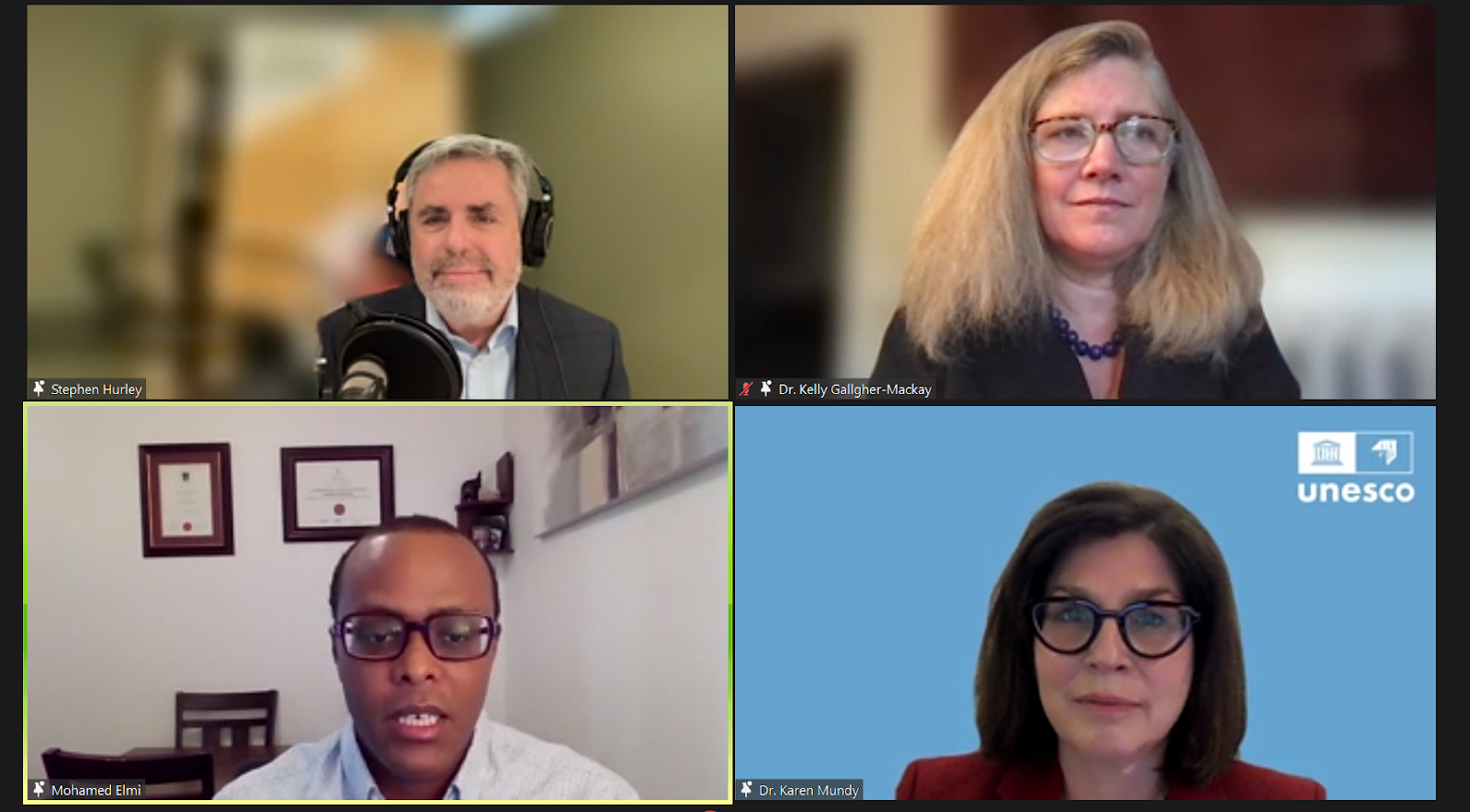
Moderated by Stephen Hurley, Founder and Chief Catalyst at voicEd Radio Canada, the first panel discussion highlighted existing tutoring programs and key data on the potential of tutoring to better support students.
“Education is a strong predictor of social mobility in Canada,” explained Mohamed Elmi, Director of Research at the Diversity Institute. As the first wave of the COVID-19 pandemic swept the country, it became abundantly clear that the rapid transition to online learning drastically impacted some communities more than others. Tutoring can be a powerful tool to level the playing field, Elmi said.
The Study Buddy (opens in new window) program was launched at the Diversity Institute in May 2020—in partnership with Ontario Tech University (external link, opens in new window) , the Jean Augustine Centre (external link, opens in new window) , and the Lifelong Leadership Institute (external link, opens in new window) —to support parents and students specifically from racialized and newcomer communities while also providing important learning opportunities for teacher candidates who were no longer able to gain experience in the classroom.
To date, Study Buddy has connected more than 180 tutors from five universities to more than 280 families and 430 students and provided over 5,000 hours of free, one-on-one tutoring support.
Kelly Gallagher-Mackay, Assistant Professor & Program Coordinator, Law and Society, Wilfrid Laurier University, explained that there is good evidence that a significant number of students have been left behind as a result of the pandemic. These students are not going to recover without help.
Gallagher-Mackay’s research finds that the evidence to support tutoring as a supplemental form of teaching and learning is strong for learners of all ages. Yet when looked at next to other comparable countries, Canada’s investments in educational recovery is inadequate.
“Canada’s spending on educational recovery is off by an order of magnitude. We aren’t doing enough for these kids,” Gallagher-Mackay argues.
Karen Mundy, Director, UNESCO International Institute for Educational Planning, added that there is significant evidence showing the positive impact of tutoring on the tutors themselves.
Mundy and Gallagher-Mackay worked together to map the tutoring landscape in Toronto, finding great diversity in the provision of tutoring in the city. Mundy explained that there is a real opportunity to form a network among tutoring programs to work together, make common investments in training tutors, and advocate for tutoring as a high-impact intervention.
“We have to find a way to offer these supports as the online education model continues and is adopted more widely. We have to find ways in which we don’t leave anyone behind,” Elmi said.
Hear more from our panelists (external link, opens in new window)
About the Project

This workshop is part of a larger project in partnership with Wilfrid Laurier University (external link, opens in new window) , the Ontario Institute for Studies in Education (OISE) (external link, opens in new window) at the University of Toronto and the Diversity Institute with funding from the Government of Canada’s Future Skills Centre (external link, opens in new window) that aims to improve learning equity. It includes a suite of reports, an ecosystem mapping of community-based tutoring and academic support programs in Toronto, and a universal evaluation toolkit to support enhanced research.