CCSBE 2021: Driving Economic and Social Recovery
This fall, Diversity Institute leaders and researchers joined Canadian and international experts at the Canadian Council for Small Business and Entrepreneurship (external link, opens in new window) (CCSBE) 2021 conference to share new research insights and learnings from programming driving inclusive innovation and entrepreneurship in the wake of the COVID-19 pandemic.
Building an Inclusive Entrepreneurial Ecosystem
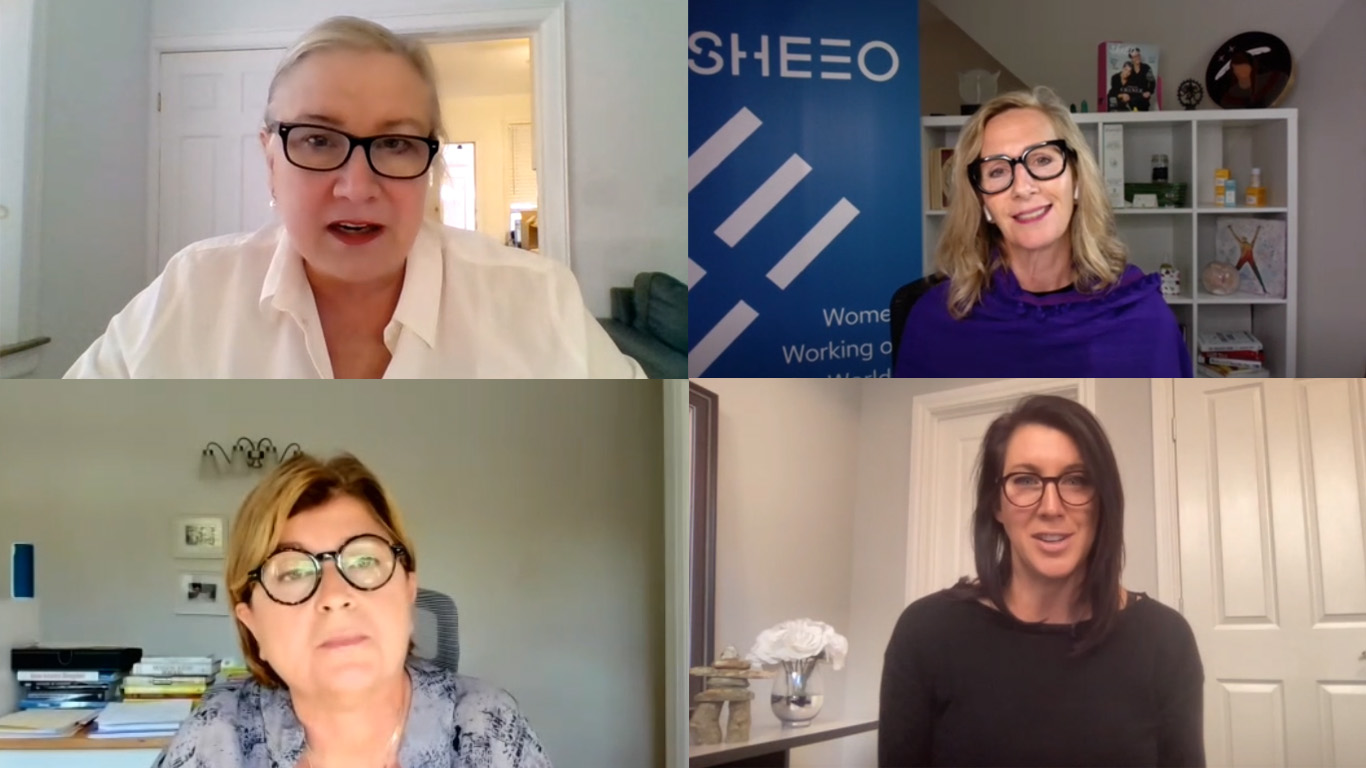
Wendy Cukier (opens in new window) , Founder and Academic Director of the Diversity Institute (DI), led a rich discussion regarding the barriers facing diverse women entrepreneurs in the entrepreneurial ecosystem—and what can be done to address them.
Cukier began by explaining that the Women Entrepreneurship Knowledge Hub (external link, opens in new window) (WEKH), housed at the DI, is “digging into the systemic barriers facing women entrepreneurs and some of the ways in which bias has been embedded in the very structure and systems that are intended to support entrepreneurs—but support some entrepreneurs more than others.”
Vickie Saunders (external link, opens in new window) , Founder of SheEO (external link, opens in new window) , defined these barriers, ranging from lack of access to capital to persistent stereotypes devaluing the work of women entrepreneurs, as “entangled.” There is no silver bullet to ease these pains, Saunders explained, and they are all interconnected.
BMO Chair in Diversity and Governance at the Université de Montréal Tania Saba (opens in new window) suggested that a holistic, systems approach is needed to address them. When we look at barriers, Saba said, we need to look at how barriers are embedded in all the steps of the entrepreneurial course and at all levels of our social fabric.
“Our [societal] definition of what a successful business looks like is one of the notions that we need to challenge,” added Shannon Pestun (opens in new window) , Senior Adviser, Business and Finance at WEKH. Women entrepreneurs tend to have newer, smaller businesses that often get overlooked by traditional financing systems in favour of enterprises with high-growth potential that also carry significant risk. Such a barrier also impacts program design, and which resources are accessible to women entrepreneurs.
Cukier asked panelists to suggest some potentially transformative actions the government could take to build an inclusive entrepreneurial ecosystem. For Saunders, using the Business Development Bank of Canada (BDC) to consider how to get more capital to those pushed to the margins can be very effective. She suggested that testing different lending rates for BIPOC entrepreneurs could be one powerful lever for change.
Preparing Racialized Youths for Post-Pandemic Entrepreneurship or Employment in Canada
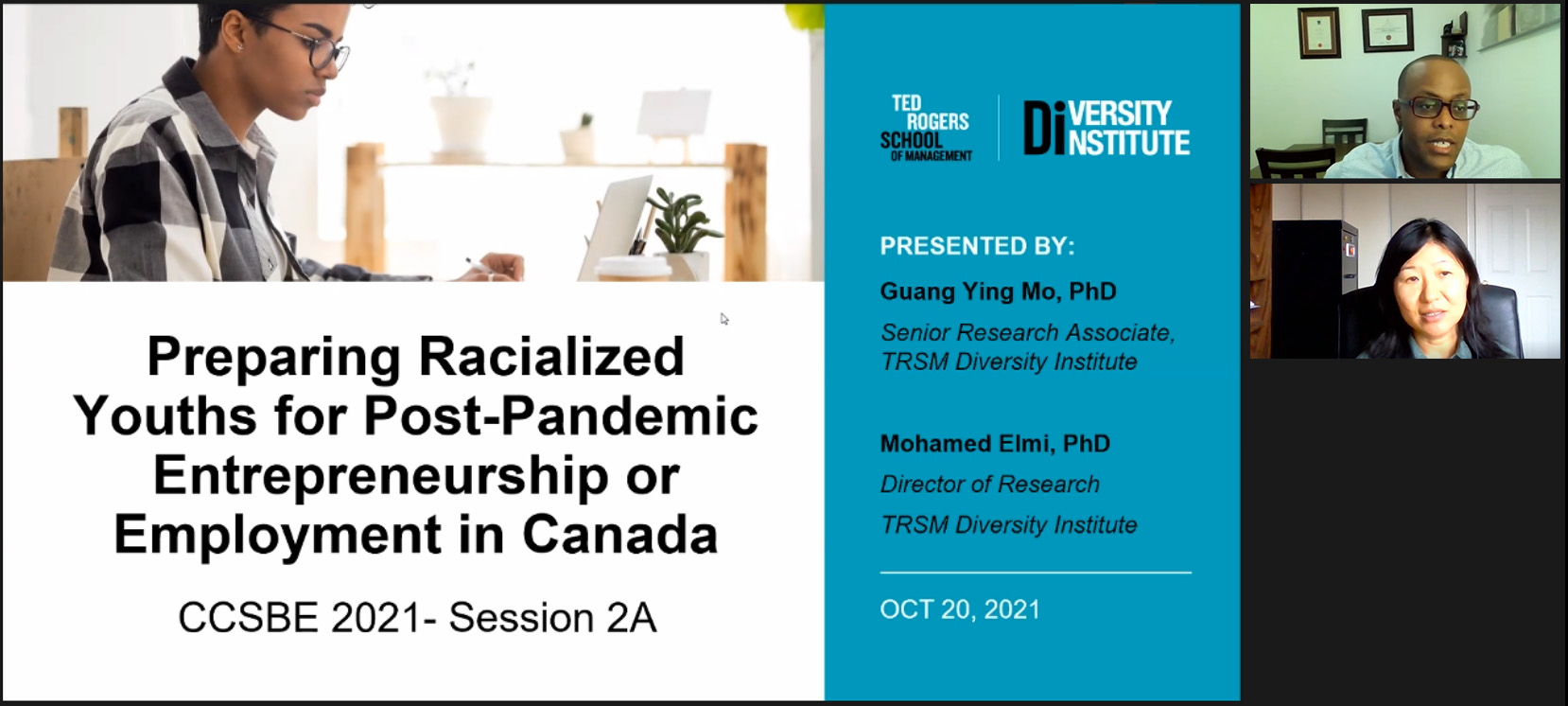
Diversity Institute’s Director of Research Mohamed Elmi (opens in new window) and Senior Research Associate Guang Ying Mo (opens in new window) shared insights from their work to better understand the challenges facing racialized youth in education, and how those challenges impact the employment outcomes and entrepreneurial pursuits of racialized people.
For instance, one study found 94% of Black youth in Canada have reported a desire to complete an undergraduate degree or higher, yet only 60% felt this was an achievable goal. Compared to their peers, fewer Black students also reported feeling like school was a safe and welcoming place.
The COVID-19 pandemic has exacerbated existing barriers to education for racialized youth and introduced others as learning was pushed online.
The Study Buddy (opens in new window) program emerged in May of 2020 to help parents and students struggling to adapt to online learning. A collaboration between the Diversity Institute (opens in new window) , Ontario Tech University (external link, opens in new window) , the Jean Augustine Centre (external link, opens in new window) , and the Lifelong Leadership Institute (external link, opens in new window) , the program has provided over 4,800 hours of free, one-on-one tutoring support, connecting nearly 200 teacher candidates from five universities with more than 400 students from nearly 300 families.
Supplier Diversity and Canadian Women-Owned SMEs
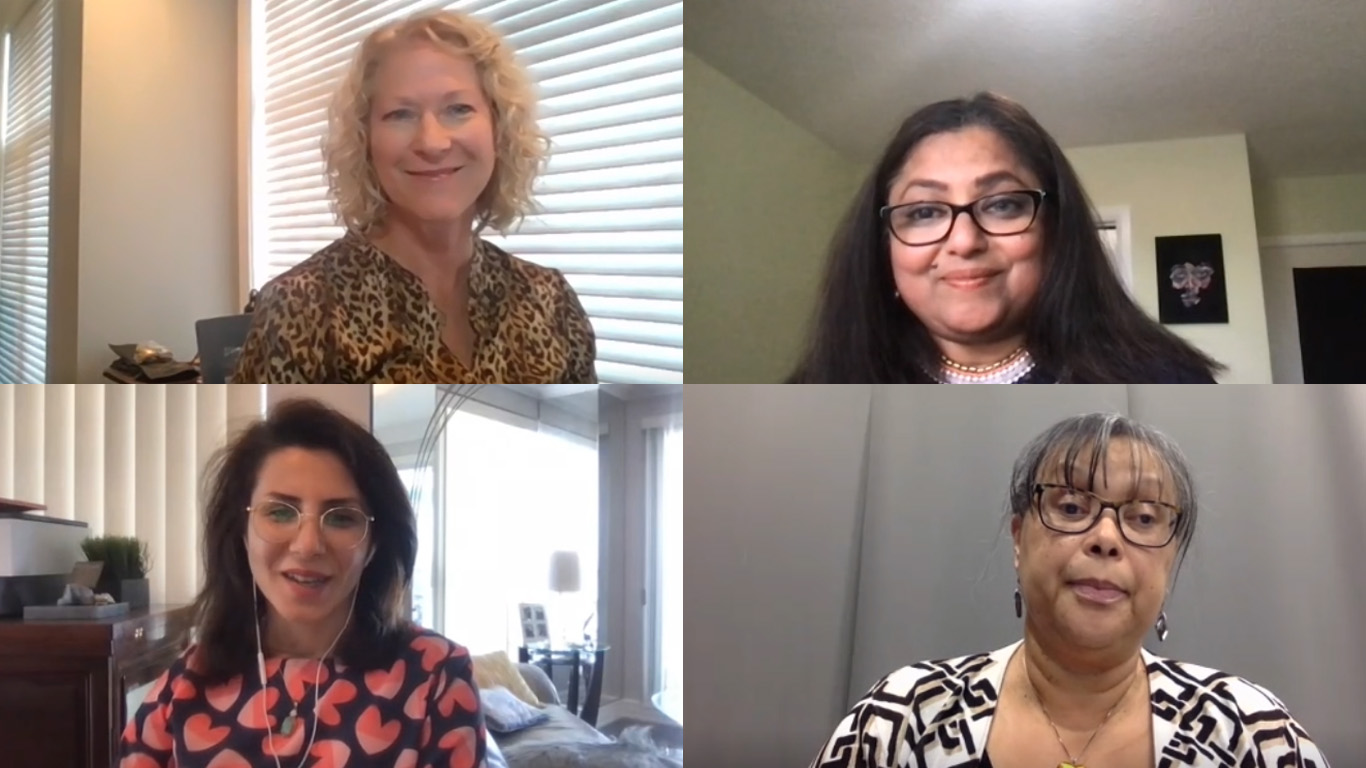
Postdoctoral Research Fellow at the Diversity Institute Zohreh Hassannezhad (opens in new window) outlined the benefits corporations and governments can unlock through supplier diversity, including improved quality of the supply chain and lower operational costs. Yet less than 40% of large corporations have formal supplier diversity programs, and SMEs owned by women make up less than five percent of all suppliers to the Canadian government.
Christina Rodrigues, Director of Member Services, at the Canadian Aboriginal and Minority Supplier Council (external link, opens in new window) (CAMSC), expanded on the role supply councils play in connecting diverse business owners with corporate buyers—and momentum is building. This year alone, Rodrigues has seen a 65% increase in corporate members signing on to work with certified suppliers through CAMSC.
Cynthia Dorrington (external link, opens in new window) , President at Vale & Associates Human Resource Management and Consulting Inc (external link, opens in new window) , explained that certification is the first step for women-owned SMEs looking to access procurement opportunities. While becoming a certified supplier does require some work on the part of a business-owner, “The advantages of certification far outweigh the process of certification itself,” Dorrington said.
Canadian Immigrant Entrepreneurs
The challenges facing immigrants and newcomers in the Canadian labour market and entrepreneurship ecosystem have been well-documented: Many struggle with unemployment, find their credentials unrecognized or devalued, or are trapped in low-wage, precarious jobs that do not utilize their full skill set.
Magdalena Sabat (opens in new window) , Senior Research Associate at the Diversity Institute, outlined the Workforce Innovation and Inclusion Project (external link, opens in new window) (WIIP), which aimed to identify proven methods for addressing economic and social challenges for newcomers in Canada. The project engaged more than 100 partners, tested 12 pilot programs, and mapped 747 programs across the country to help determine who is doing what, where, to support newcomers in the labour market.
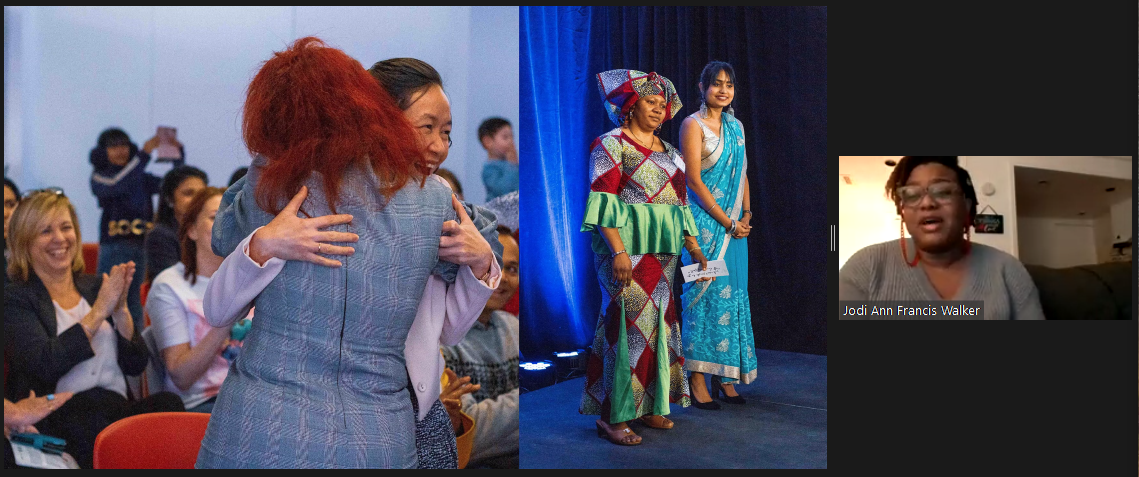
Senior Research Associate for the Diversity Institute, Jodi-Ann Francis-Walker (opens in new window) , who worked closely with WIIP ecosystem partners on-the-ground, spoke specifically about the The Nova Scotia Start-Up Challenge (external link, opens in new window) . Key to the success of the Challenge—which offered mentorship, coaching, and entrepreneurship training to newcomers in Halifax—were wraparound supports like childcare, allowing more women to participate in the program, Francis-Walker explained.
Program Administrator Manal Khader (opens in new window) echoed this sentiment, and noted that the Newcomer Entrepreneurship Hub (external link, opens in new window) (NEH) and Women’s Entrepreneurship Hub (external link, opens in new window) (WE-Hub) begin each cohort by interviewing participants to determine which supports they need to succeed. Offered by DI alongside the Scadding Court Community Centre (external link, opens in new window) , NEH and WE-Hub underline the value in collaborative models between academia and service providers to support newcomers and entrepreneurs, Khader explained.
Black Women Entrepreneurship
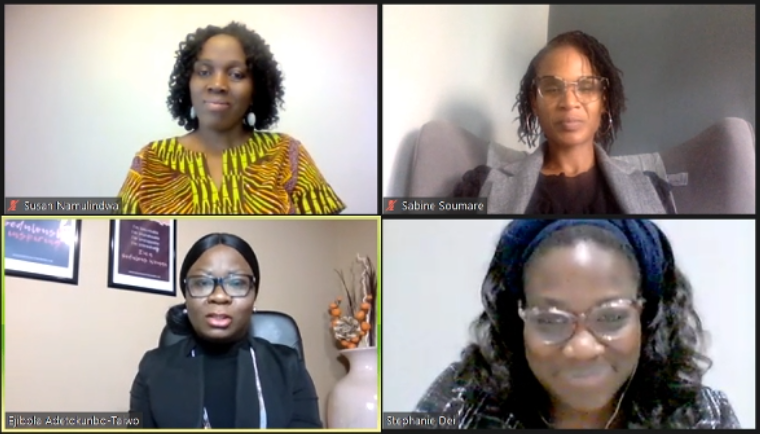
While the COVID-19 pandemic has been devastating for many women entrepreneurs, Black women entrepreneurs have been disproportionately affected.
Sabine Soumare (opens in new window) , Director of Marketing and Communications at DI, pointed to Rise Up: A Survey of 700 Black Women Entrepreneurs (external link, opens in new window) and The State of Women’s Entrepreneurship: A Focus on Black Women Entrepreneurs (external link, opens in new window) as two valuable pieces of research that expand on these impacts and the experiences of Black women in business. One telling finding showed that only 22% of Black women entrepreneurs used government loans, grants and subsidies to fund their business efforts.
“Data drives policy,” noted Susan Namulindwa (external link, opens in new window) , Executive Director of the Africa Trade Desk (external link, opens in new window) . Panelists emphasized that it is critical that data on Black women entrepreneurs continue to be recorded and highlighted so that the challenges facing women entrepreneurs can be adequately addressed.
“Research further confirms that there are challenges, there are gaps, there are barriers that Black women entrepreneurs need to overcome,” explained Ejibola Adetokunbo-Taiwo (external link, opens in new window) , Founder of de Sedulous Women Leaders (external link, opens in new window) . Adetokunbo-Taiwo stressed that the stories of Black women entrepreneurs also need to be spotlighted, to inspire others and show what is possible.
“It is so important to share our stories and showcase diverse women entrepreneurs,” explained Stephanie Dei, Director of Research Partnerships at DI. Dei invited participants to visit WEKH’s See It. Be It. Database (external link, opens in new window) to find the stories of more than 1,000, diverse, award-winning women entrepreneurs working across the country and across sectors.
Connect with DI
Sign-up (external link, opens in new window) for our newsletter and follow us on Twitter (external link, opens in new window) and LinkedIn (external link, opens in new window) for all the latest news from the Diversity Institute and to be among the first to know about future opportunities to hear about DI research.