INNOVATION
Issue 44: Winter 2026
Harnessing AI to transform fetal MRI: Inside the Fetal Assessment Suite
Idea to Innovation
Harnessing AI to transform fetal MRI: Inside the Fetal Assessment Suite
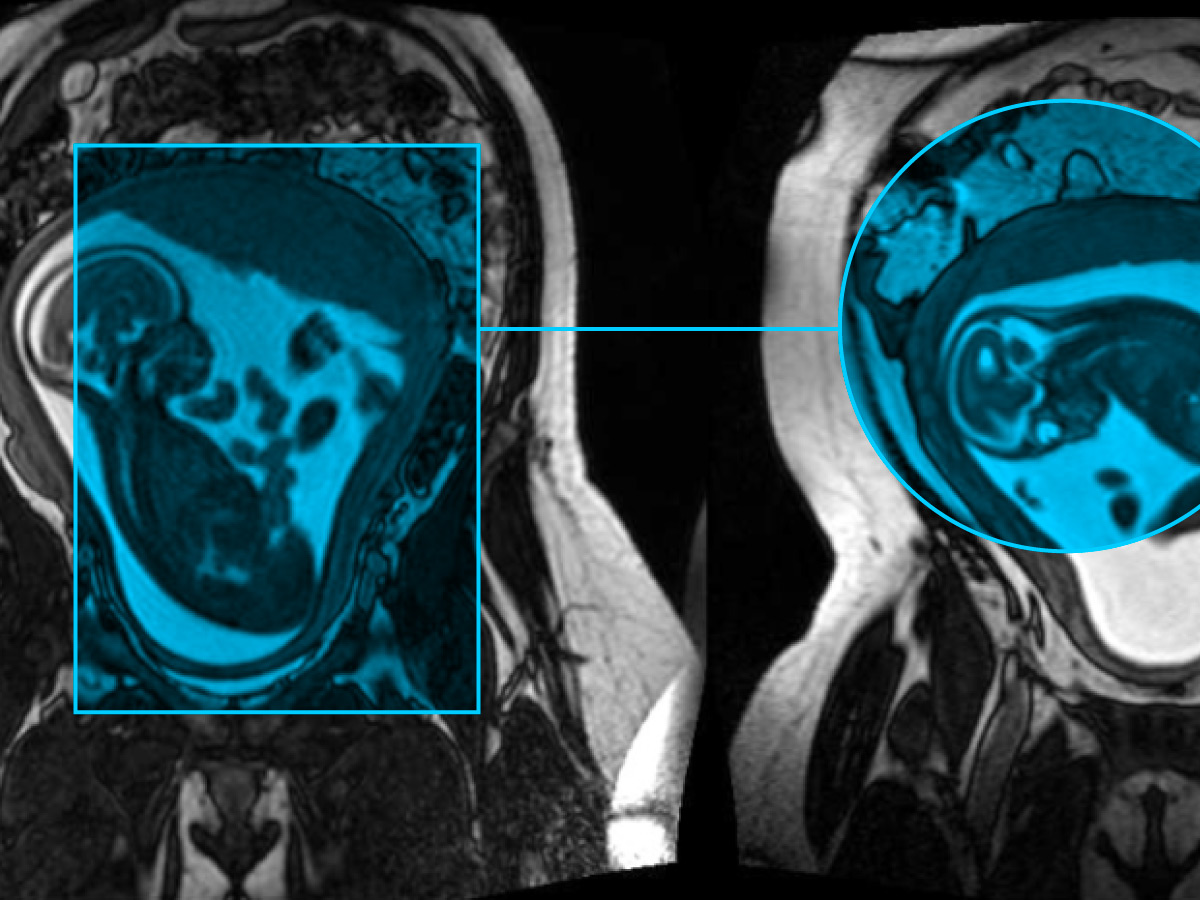
During pregnancy, detailed imaging of the fetus helps clinicians understand how it is developing and plan the best possible care. When an ultrasound can’t provide the information a clinician needs, fetal magnetic resonance imaging (fetal MRI) is often used. These radiation-free scans provide a clearer picture of a developing baby and are an essential tool for diagnosing complex conditions before birth.
But advances in imaging technology and a growing demand for fetal MRIs mean clinicians must now interpret far more data in less time, increasing pressure on already stretched imaging services. As Dafna Sussman, principal investigator at the Maternal-Fetal Imaging Lab and professor of electrical, computer, and biomedical engineering at Toronto Metropolitan University (TMU), explained, “It takes us less time to image, but we’re getting a whole lot more information.”
For example, a 10-minute fetal MRI that once produced three 2D images can now generate multiple high-resolution 3D scans, each containing more than 100 slices (2D images). These thin, cross-sectional layers show the fetal brain, spine, placenta and other soft tissues. Reviewing these images manually is extremely time-consuming.
This surge in data has created reporting backlogs and radiologist fatigue, making subtle abnormalities harder to detect quickly and underscoring the need for tools that speed analysis without sacrificing accuracy.
From data overload to life-saving insights
To shorten fetal MRI interpretation times, improve diagnostic accuracy and reduce reporting wait times, professor Sussman led research to develop the Fetal Assessment Suite (FetAS). FetAS is a secure, easy-to-use, web-based platform that uses machine learning to automatically process fetal MRI scans and help identify potential abnormalities. It works by combining dozens of lab-developed algorithms that enhance image quality, correct image distortions, outline fetal organs and track growth and development. It also flags areas that may be abnormal, allowing clinicians to focus their attention where it matters most.
“Instead of manually going through 120 slices,” professor Sussman said, “the algorithm directs the radiologist to regions of interest within individual slices that matter.” This innovation reduces manual workload and lowers the risk of missed findings.
Expanding access and improving care
While most hospitals have an MRI machine, many lack specialists trained to interpret fetal images accurately. As a result, images or even patients must be transferred to other, often remote institutions that have the necessary radiological expertise, adding cost, stress and delays to care. In the most serious cases, these delays can have life-threatening consequences.
FetAS is designed to reduce reliance on highly specialized fetal radiologists by providing automated, high-quality analysis regardless of a hospital’s location or available expertise. This means that clinicians in community hospitals gain access to the same analytical support available at major academic centres.
“We are trying to make sure the same quality of care is available to everyone, irrespective of where they live,” said professor Sussman.
Turning innovation into clinical practice
Professor Sussman’s research team has curated Canada’s largest fetal MRI dataset, consisting of 20 years of fetal MRIs from five major Canadian hospitals. They are using this data to expand FetAS so that it works with images from different sites and MRI scanner types. The team is also using the data to develop standard growth charts for the fetus, amniotic fluid and placenta, providing clinicians with reference points to more easily spot potential abnormalities affecting the lungs, kidneys and placenta.
All tools within FetAS have been clinically validated with the support of expert fetal radiologists at the Hospital for Sick Children in Toronto. As a scalable, comprehensive platform, FetAS could enable clinicians to make life-saving decisions more quickly and with greater confidence. Its standardization of fetal MRI data processing is designed to support collaboration and data sharing across institutions and future research.
By advancing our understanding of fetal development and disease, the platform has the potential to reshape maternal–fetal diagnostics and clinical research in Canada and globally.
“We have the tools, the expertise and the knowledge,” professor Sussman said. “The goal is to make that expertise available to everyone equally.”
Learn more about the Maternal-Fetal Imaging Lab, where access to the FetAS platform is currently available upon request.
Read the research paper, “Fetal Assessment Suite (FetAS): A Web-Based Platform for Automatic Fetal MRI Analysis using AI,” (external link) in Scientific Reports to learn more.
We have the tools, the expertise and the knowledge. The goal is to make that expertise available to everyone equally.

The research discussed in this article was funded in part by the Canadian Institutes of Health Research (CIHR).