INNOVATION
Issue 42: Summer 2025
Unlocking the mysteries of midlife brain health: A new approach to Alzheimer’s risk and resilience
Meet the Expert
Unlocking the mysteries of midlife brain health: A new approach to Alzheimer’s risk and resilience
Alzheimer’s disease is a devastating, currently incurable brain disorder that disproportionately affects women – nearly two-thirds of Canadians aged 65 and older living with dementia are female, according to a 2023 report from Public Health Canada. Recent models of Alzheimer’s show that the disease can begin silently decades before symptoms appear, often in midlife. What if we could detect and even prevent Alzheimer’s before it starts?
To explore this possibility, neuroscientist Natasha Rajah launched the Brain Health at Midlife and Menopause (BHAMM) Study in 2017. Supported by a broad network of collaborators, BHAMM is one of the first large-scale studies to investigate how biological sex, menopause and social factors interact to shape brain aging.
“This research will help us identify both resilience factors that support brain health and memory function and early risk factors for Alzheimer’s and other dementias,” said professor Rajah, a Tier 1 Canada Research Chair in Sex, Gender and Diversity in Brain Health, Memory and Aging at Toronto Metropolitan University (TMU) and lead of its Brain Health Equity in Aging and Memory Lab.
A new model for understanding risk
A central goal of BHAMM is to develop more accurate, sex-specific models of brain aging to improve early detection of dementia risk. The study collects detailed personal data from participants, such as reproductive history, lifestyle and family background, which is analyzed using AI to predict who may benefit from early intervention.
“My research highlights the importance of having deep and broad data on the psychological, sociological and biological histories of an individual to improve the precision and efficacy of neurocognitive models of aging and dementia risk,” professor Rajah explained.
Recent findings from her lab already show this approach’s potential. As a TMU PhD candidate working in professor Rajah’s lab, Julia Kearley found that post-menopausal women with higher cardiovascular risk tend to have poorer brain health and memory, reinforcing the links between heart and brain health. Other lab data further suggests these women have elevated Alzheimer’s-related blood biomarkers, pointing to more serious brain changes and wider memory decline.
“It is important that policymakers know that the brain does not work in isolation,” said professor Rajah. “Brain health is dependent on the health of other bodily systems, including heart health.”
Seeing the brain in greater detail
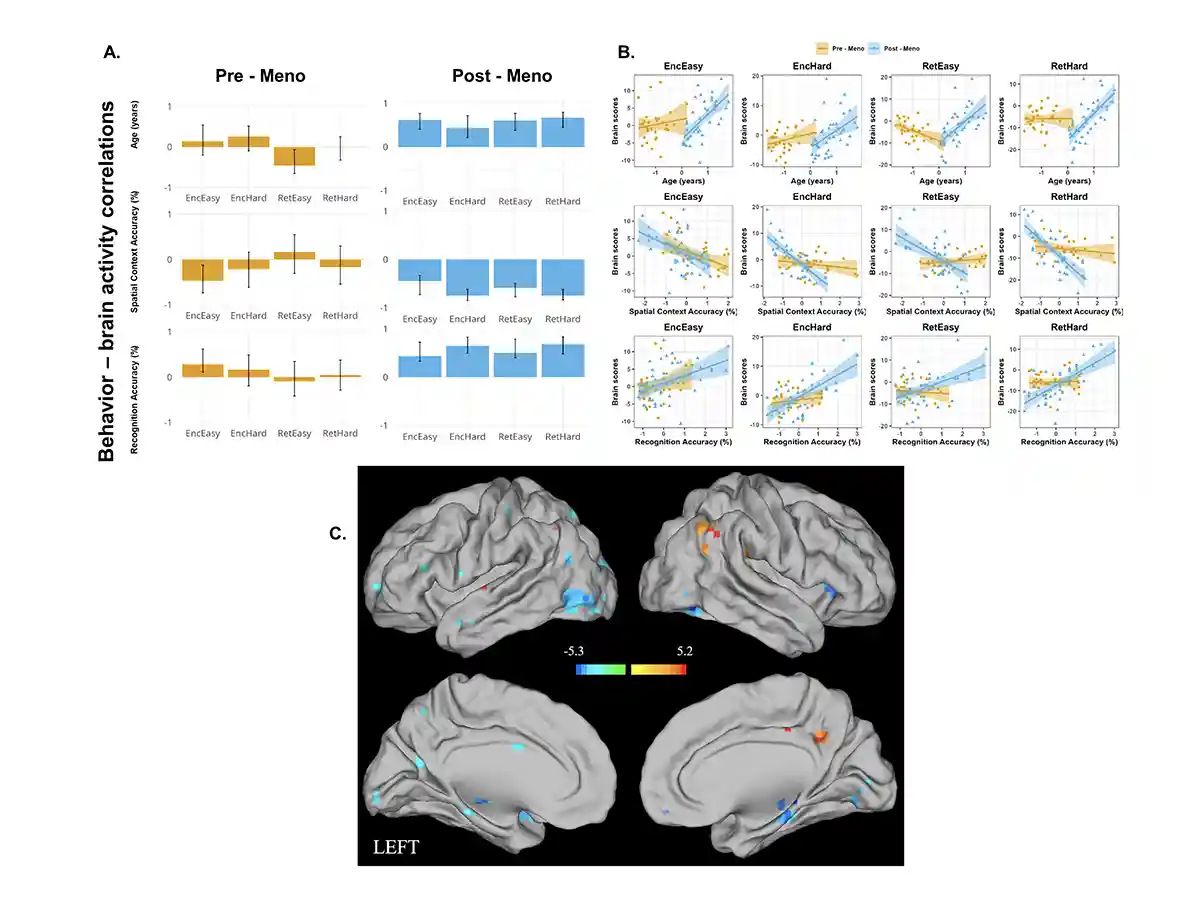
To detect subtle cognitive changes in the brain often missed by standard Magnetic Resonance Imaging (MRI) tools, the team developed a novel functional MRI (fMRI). While patients perform a spatial context memory task, the fMRI targets areas like the hippocampus, which are among the first areas affected by Alzheimer’s. “We have shown that task-fMRI allows us to identify memory-specific alterations in brain health that directly correlate with memory performance.”
Equity and inclusion in brain health research
BHAMM also stands out for challenging the assumption that majority groups represent the default standard in brain health research. “Inclusive, community-engaged research is not optional, it’s urgent,” noted professor Rajah. “Without it, the communities needing the help will not receive it.”
This research gap is especially critical, as a 2022 Alzheimer’s Society of Canada report predicts that Asian Canadians will face the steepest rise in dementia cases by 2050, yet they remain underrepresented in research. BHAMM aims to change that by building both general and community-specific risk models.
Looking ahead to a more personalized approach
Moving forward, professor Rajah and her team aim to follow participants over time to track how memory and brain function evolve with age and pinpoint the best moments for support or treatment. By moving beyond one-size-fits-all models, this research is reshaping how scientists, clinicians and policymakers approach Alzheimer’s risk, paving the way for more personalized and equitable strategies to prevent the disease before it begins.
Read professor Rajah’s paper, “Association between CAIDE risk score and episodic memory in middle-aged females: The impact of spontaneous menopause,” (external link) in Hormones and Behaviour.
Learn more about the Brain Health Equity in Aging and Memory Lab. (external link)
This research will help us identify both resilience factors that support brain health and memory function and early risk factors for Alzheimer’s and other dementias.

The research described in this article is supported by the CIHR Sex and Gender Science Chair and the Canada Research Chairs Program, a Government of Canada Tri-Agency initiative of the Social Sciences and Humanities Research Council (SSHRC), the Natural Sciences and Engineering Research Council of Canada (NSERC) and the Canadian Institutes of Health Research (CIHR).