Architecture 2021
From exploring the untapped possibilities of electronic waste to making space and time for slowness, our Master of Architecture (MArch) students are envisioning a more dynamic future with designs that advance ideas of sustainability, emerging technology and global communities.
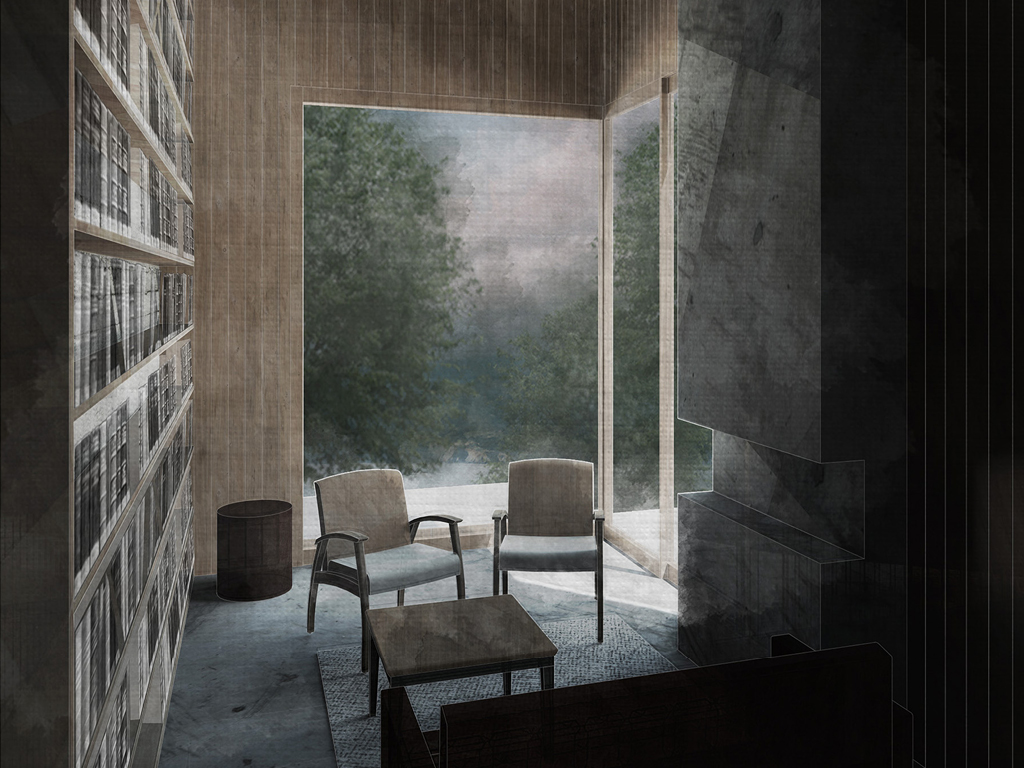
On Slowness and Inhabiting Time
By: Sahel Tahvildari
As a result of today’s accelerated culture, the omnipresence of speed has taken over everyday life. The influence of flexibility and efficiency within contemporary architecture parallels the need for speed. The relationship between speed, time, and presence, guides the mindful body through a layered procession, which unfolds in the creation of an architecture of slowness.
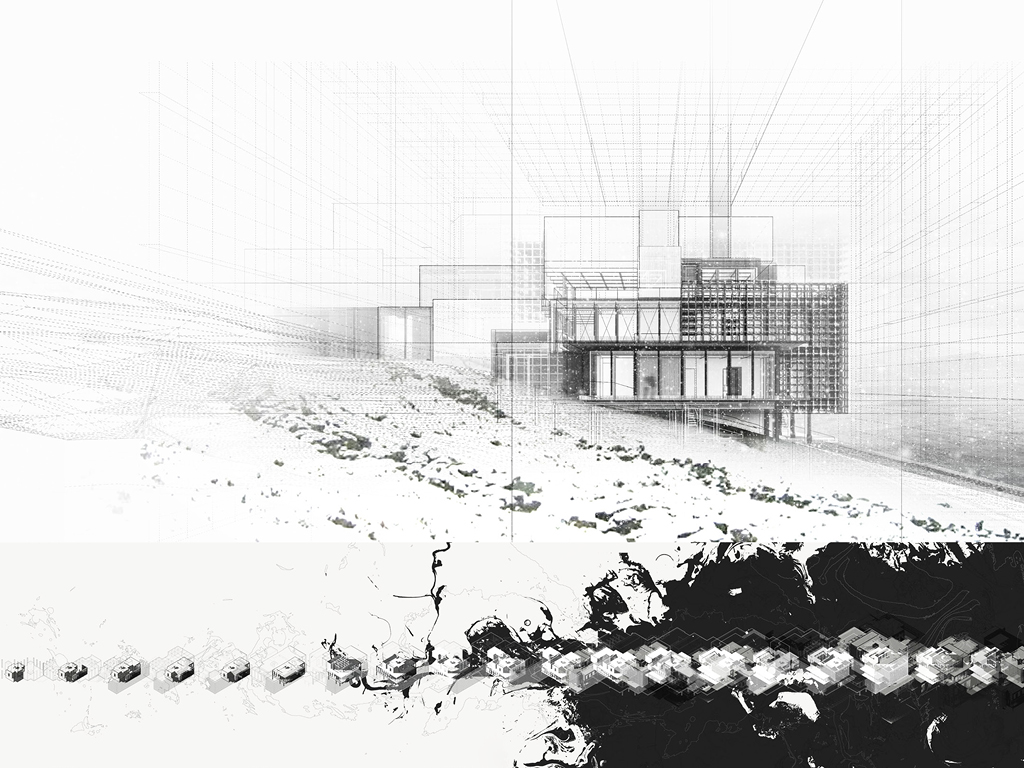
The Temporal Nature of Architecture
By: Michael Stofko
The desire for permanence that has been fundamental to architecture ignores the actuality of the physical world. The flow of time, linked to the process of articulation, is notably absent, resulting in an architecture that is misconstrued as static, passive, and deterministic. Material formation, symbiotically linked to cultural transience, depicts an architecture with no absolute state, rather, it is constantly becoming.
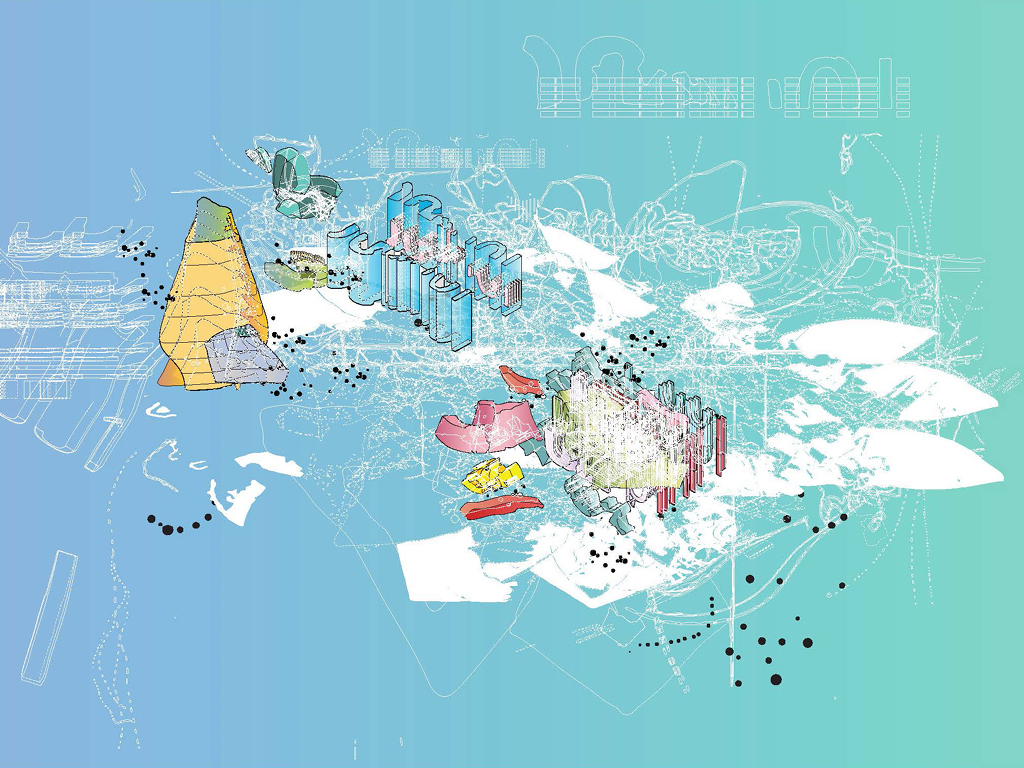
A House of Three Birds
By: Sajith Sabanadesan
Drawing in contemporary architectural design tends to be relegated to a technique for the direct transposition of ideas from concept, to documentation, to construction. This systematic approach focuses the intensity of analysis on the construction of the building, making the drawing subservient to the desired outcome. This design research oscillates between the act and product of drawing to develop a series of experimental plots where one is not told how to participate, but is instead, inventing ways to participate.
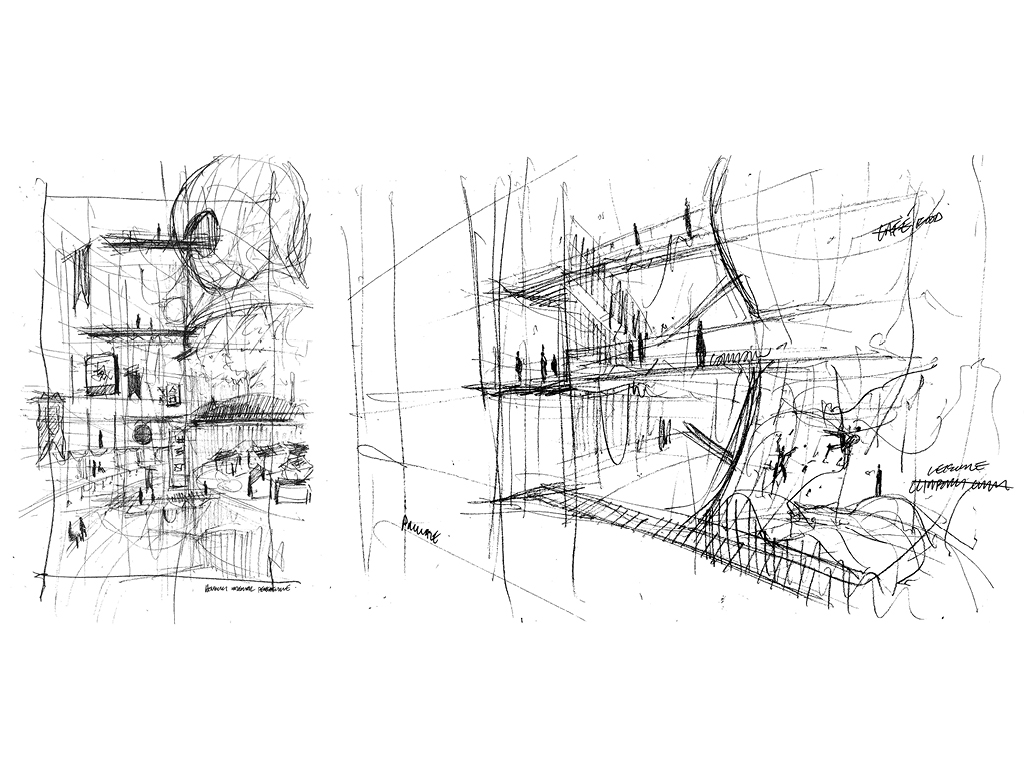
Architecture for a Post-Work World
By: Hussain Patwary
47% to 80% of today’s jobs can be automated in the next twenty years. Most people continue to work in low skill, low wage, manual and service jobs. A dystopic condition will emerge in which governments are dissolved and the working class is exterminated. This thesis attempts, via the use of critical architecture, to challenge the hegemonic order of capitalism and align the future toward a post-work condition.
To Evince Atmospheres
By: Pritish Pathak
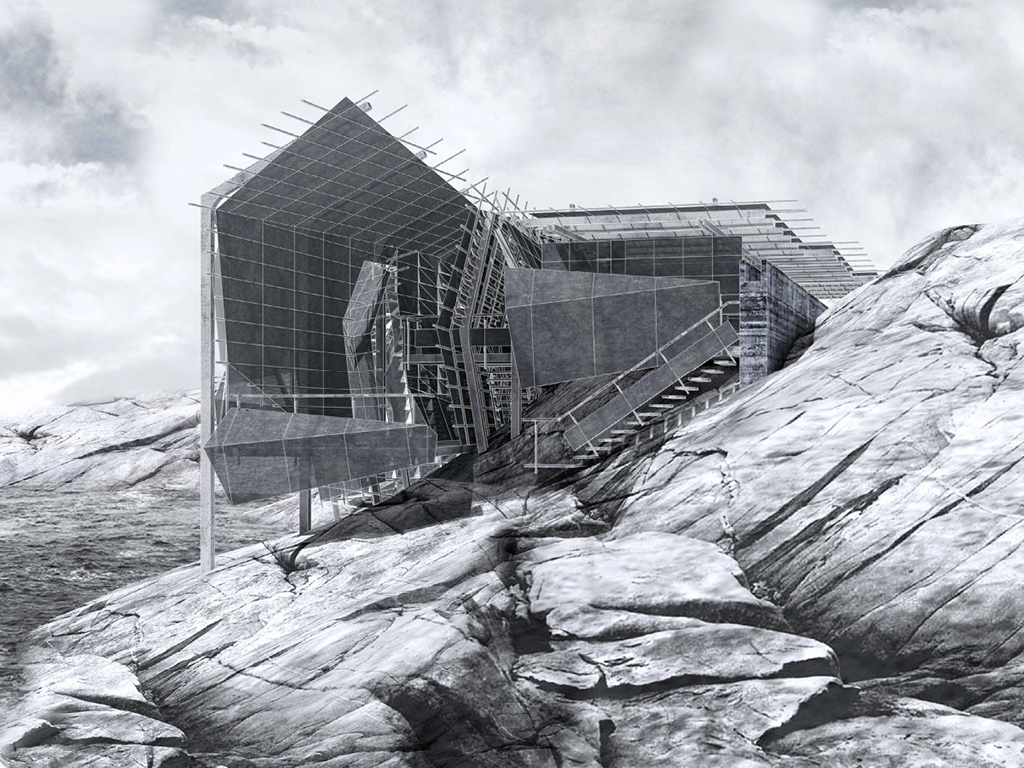
Though architecture is rooted in the physicality of built form, it transcends into the realms of the intangible, ephemeral and perceptive. In architecture, these immaterial characteristics imbued within a place are more accurately described as its “atmosphere.” This thesis proposes that the spatial atmosphere of architecture should be defined by its engagement with these contextual variables, rather than through the fabrication of an artificial atmosphere, by redefining the boundary as a gradient threshold.
Electronic Waste and the Production of Space
By: Ron Noble
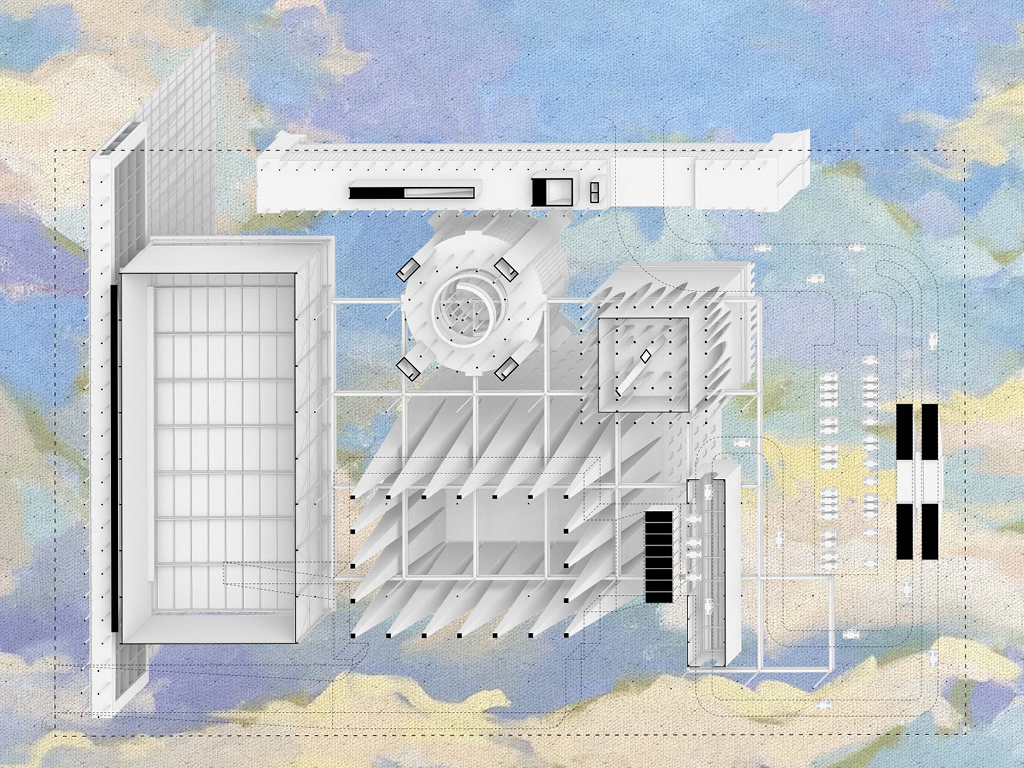
The future of waste is electronics. The conditions of planned obsolescence combined with our throw-away culture of capitalistic consumption has created the largest and fastest growing waste stream responsible for spatially transforming environments. Within this space of speculation, this thesis will explore the untapped architectural possibilities associated with the management of electronic waste and the production of space.
Building Community in Pavão-Pavãozinho: Architecture as a Process of Urban Upgrading in Informal Settlements
By: Krystyna Ng
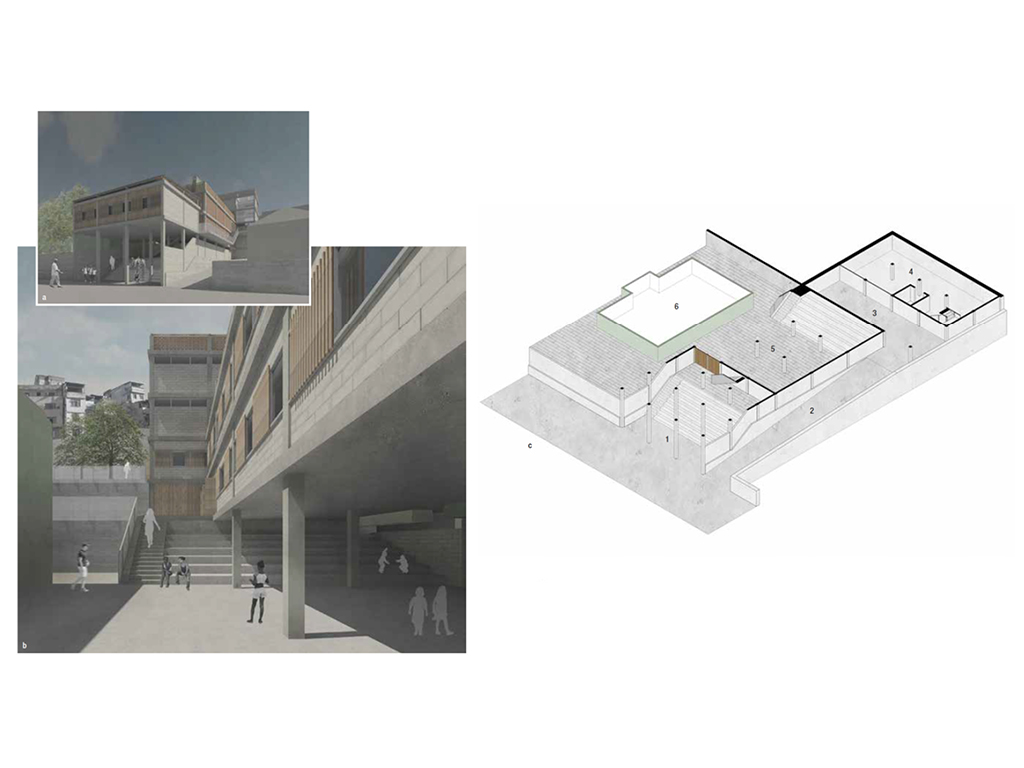
Self-built structures in Rio de Janeiro, Brazil, are the primary housing reaction to the city’s increasing population, densification, and lack of affordable housing. Through an understanding of existing favela archetypes, the design explores how architecture can both integrate and support existing self- building processes.
Fragments: A Poetic Approach to Place-Making
By: Ekaterina Lishak
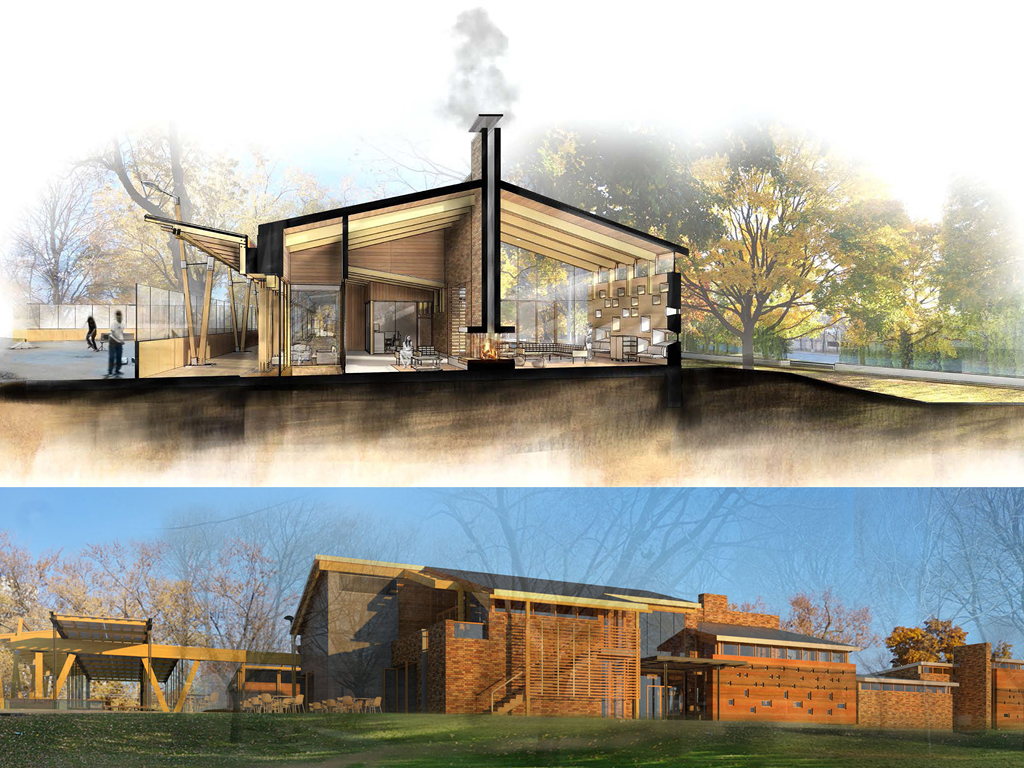
The notion of regional particularity and sensitivity to place remains in constant struggle with the persistent autonomous approach evident in most of contemporary architecture, which, under the pressures of globalization, has paved the path toward commodification and the creation of universal non-places. Meanwhile, the decline of craftsmanship within architecture and the perpetual emphasis on visual images and iconic forms continues to undermine human connection to the built environment. This thesis will explore such a tectonic approach by inscribing architectural fragments into space in an attempt to evoke memories and associations that appeal to human consciousness, encourage people to relate to places and orient themselves in the world.
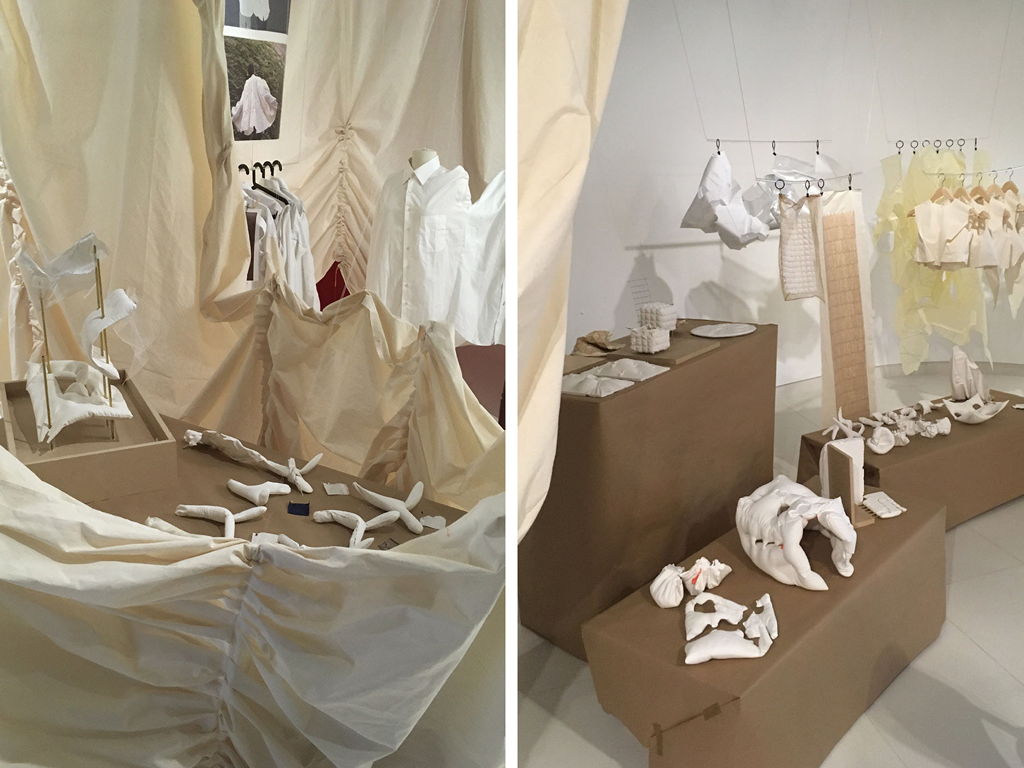
Body Meets Space. Space Becomes Dress.
By: Sarah Lipsit
Forming. Shifting. Shaping. The envelope of one’s physiological body extends outwards in multiple shells, layer by layer. The versions of this envelope exist in the interstitial moment between clothing and architecture. The study of garments lends architecture recognition of various visible and invisible forces that create space and envelope.
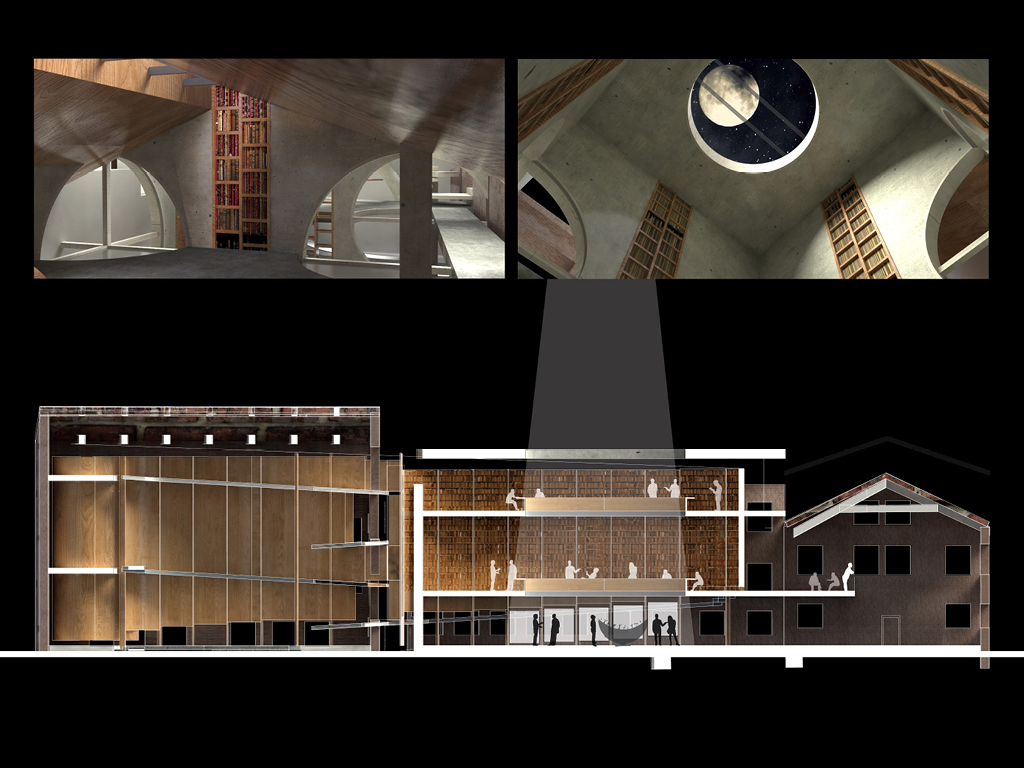
A Library of the Mind
By: Dami Lee
In order to adapt to the explosion of technology and information in the post-modern world, our culture has organized knowledge into distinct categories, and has privileged the “known” as the ideal truth. While this reductionist approach allows us to efficiently examine a specific topic, it has also led to a fragmented and oversimplified understanding of an otherwise enigmatic world. The thesis explores the themes of slow reading, serendipity, and mystery, through the design of the Research Library that brings together Umberto Eco’s collection.
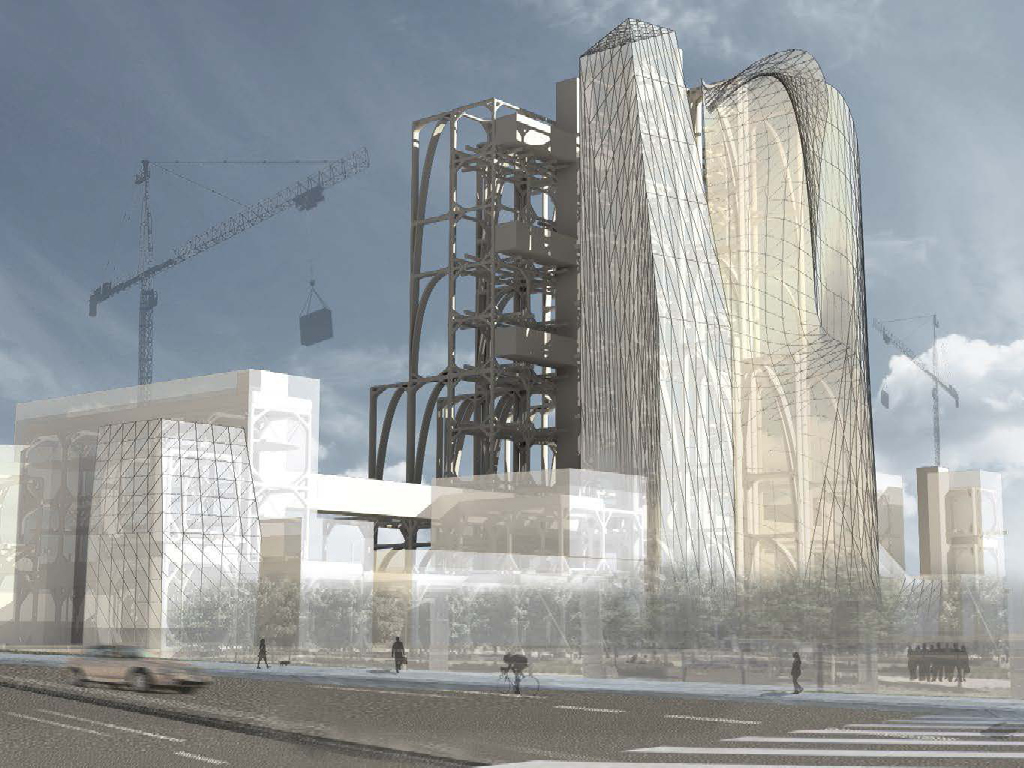
Synthetic Futurism: Exploring the Possibilities of Limitless Architectural Growth
By: Hovag Kara-Yacoubian
Buildings do not have to burst out of the ground with a predetermined identity. They have an inherent need to grow, change and reinvent themselves to reflect the changes among the people and context. In the ever-changing condition of the context, the design of a building must be conscious of and attuned to the growing needs of society. By manufacturing the base and set of core components, a radically diverse system can grow beyond the limits of the originating elements, helping to add malleability to the many comprising identities.
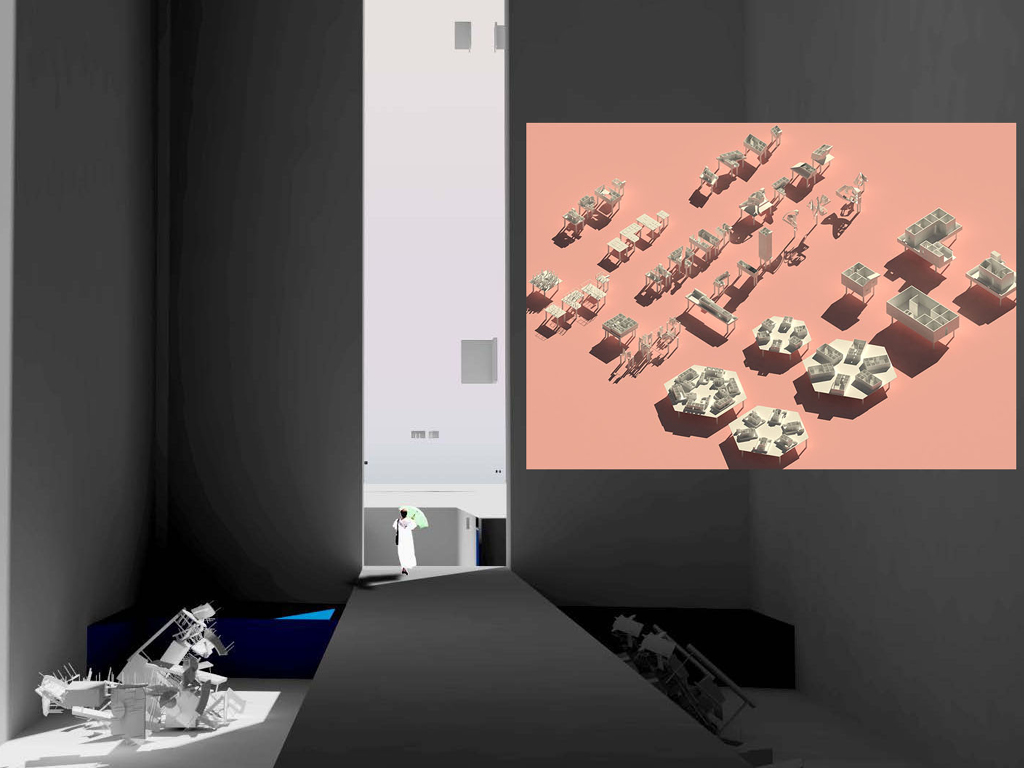
Hybritopia: Seeking an Architecture of Reconciliation
By: Catalina Ardila-Bernal
As contemporary colonization is slowly reaching a rupture point between the corporation and minorities, governments and locals, urban and rural, developed and developing, architecture can mitigate the impacts as an agent of reconciliation. A space designated for the revitalization of land degradation, not in the sense of making land fertile again, but from the standpoint of a new foundation of cultures, communities and traditions, and more importantly, a setting for celebrating rural human existence, from life to death and infinity.