Taking Stock: Voices of Women in Architecture Across Canada
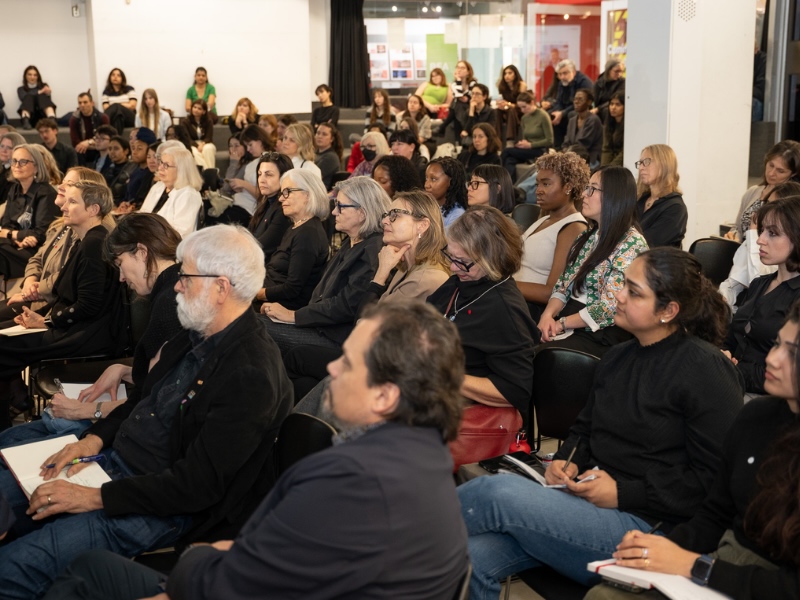
On March 6 and 7, 2026, coinciding with International Women's Day, more than 200 members of the public, scholars, practitioners, and researchers from across Canada gathered at the Department of Architectural Science at Toronto Metropolitan University (TMU DAS) over two days for Taking Stock: Voices of Women in Architecture Across Canada. The national SSHRC-funded symposium examined the opportunities and inequities that shape women's experiences in architecture and explored how disability, economic access, Indigeneity, and race continue to shape women’s access to, retention within, and advancement across the profession.
The educational pipeline for women in Canada is well established. According to Colleges and Universities Canada, women have accounted for approximately 60% of higher education graduates since 1993. In architecture, they represent 62.9% of students enrolled in Canadian programs, as reported in the Canadian Architectural Certification Board’s (CACB) 2025 Annual Report. The 2023 Canadian Architect Benchmark Report also points to increased representation in licensure and early-career practice. Yet women remain underrepresented in leadership positions.
According to the 2021 Census, women now make up 37.9% of licensed architects nationally, yet the symposium argued that this measure of representation alone cannot capture the lived experiences and systemic barriers women continue to face. Organized around the shared question, "How do we move beyond counting women in architecture?" participants explored what lies beyond the numbers.
TMU DAS Assistant Professor Jennifer Esposito led the project alongside a cross-institutional team of co-investigators, including Professor and Stevenson Chair Dr. Annmarie Adams (McGill University), Assistant Professor Anne-Marie Armstrong (University of Toronto), Associate Professor and Chair Maya Mahgoub-Desai (OCAD University), and Associate Professor Dr. Shelagh McCartney (TMU).
Collaborators on the project included Ramona Adlakha (KPMB), Amina Lalor (Laurentian University), and architectural writer Rhys Phillips, along with a team of Graduate Research Assistants: Heba Al‑Fayez (TMU), Rachel Klysen (OCAD University), Sammi Ku (UofT), and Elaine Nahli (TMU). The initial research of undergraduate Research Assistants Saskia Scarce (TMU) and Nina Zabojnikova (TMU) informed the foundation of the project. The symposium was funded through a Social Sciences and Humanities Research Council (SSHRC) Connections Grant, along with additional support from five institutions and nine community partners.
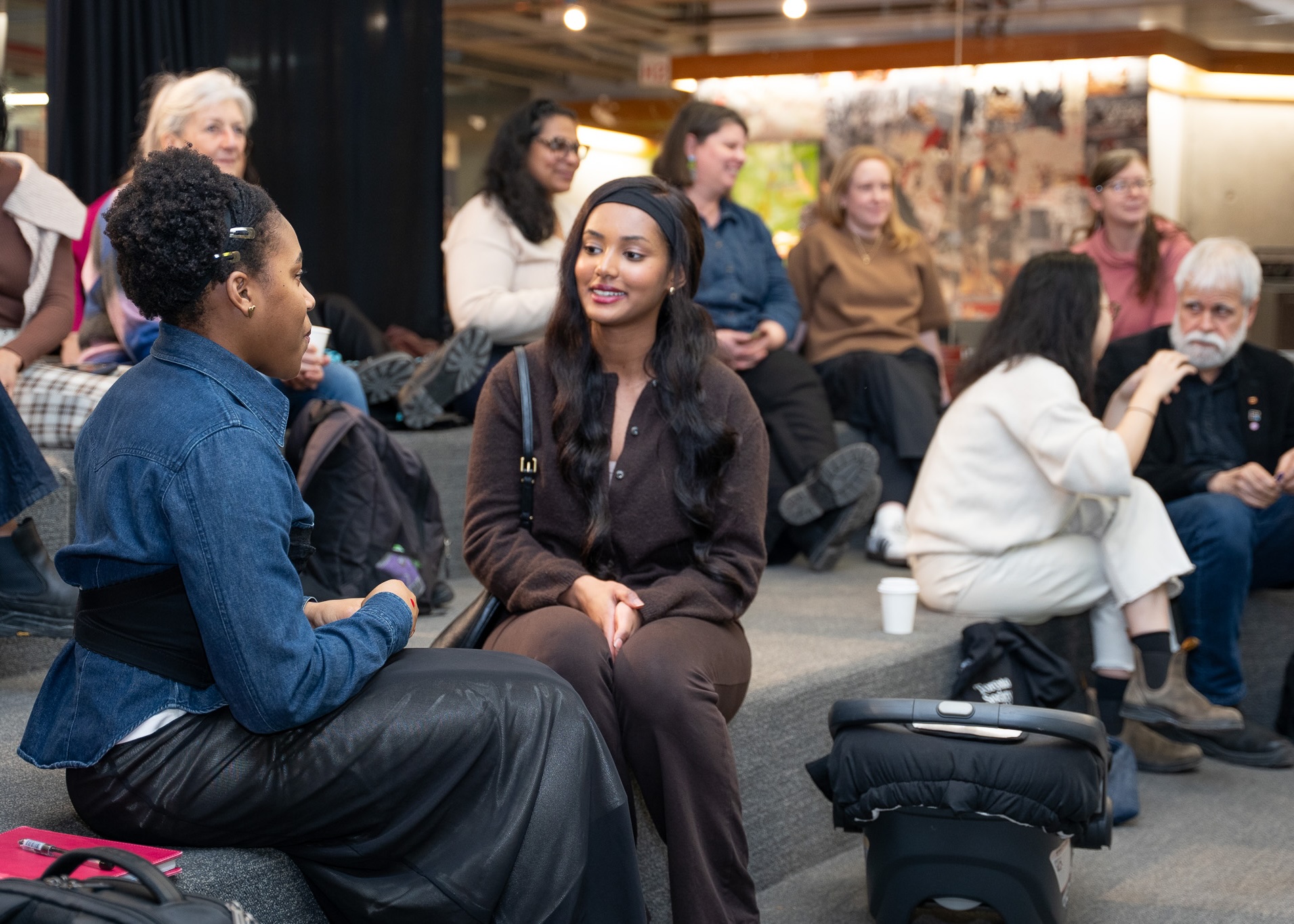
As a graduate Research Assistant, I had the opportunity to directly shape the direction of one session and collaborate with the many contributors and fellow research assistants who delivered the event. It was rewarding to be part of candid conversations about women’s lived experiences before, during, and after the symposium. Throughout the weekend, participants exchanged reading material, discussed emerging research, and continued conversations well beyond the formal sessions. There was a clear sense that people had come together not only to reflect on shared challenges, but to advance ongoing projects, build collaborations, and commit to practical steps to improve the experience of women in the profession.
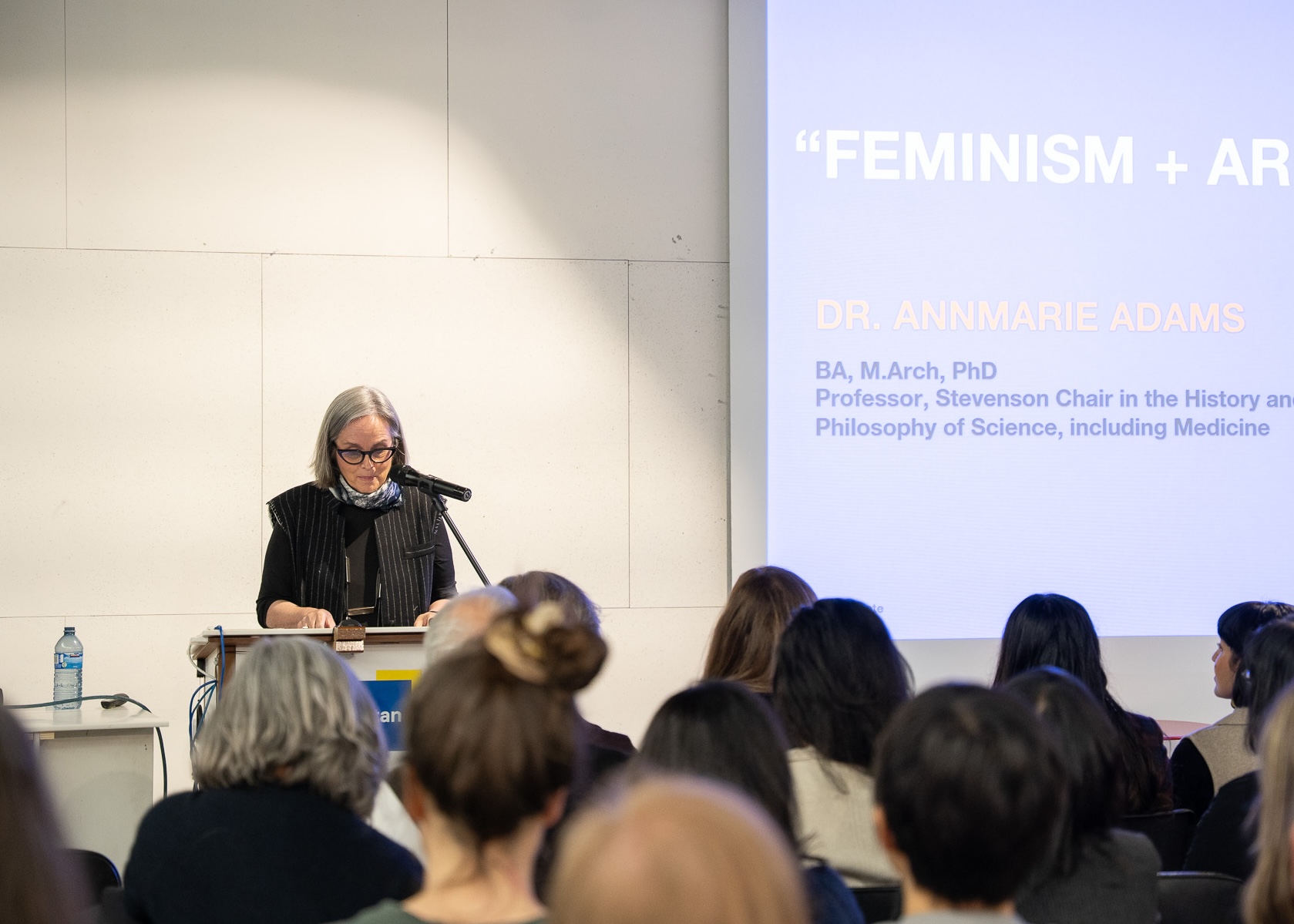
“Taking Stock” of women’s role in architecture requires examining both the contributions of those who have shaped the profession and the responsibility today’s leaders hold in advancing equity across academia and practice. Each day of the event was anchored by a keynote address from two institutional and professional leaders. Dr. Annmarie Adams (McGill), co-author with Dr. Peta Tancred of Designing Women, the book that served as the launch point for the symposium, began the first day by tracing the history of women architects in Canada and their contributions during periods of concentrated economic, political, and religious change. Dr. Adams asked, “Can our students even name a woman architect?” On day two, KPMB Architects co-founder Marianne McKenna reflected on 40 years in the profession and her view that “the reality of practicing today is that it takes an ecosystem of individuals and experts to make architecture,” requiring leaders to ask, “how do we move from power-over leadership to power-to?”
Photographer: Alexandra Berceanu
Across five sessions, speakers drew on both professional expertise and lived experiences before joining moderated discussions shaped by questions from the research team and the audience. Emphasizing dialogue and reflection, the event created space for participants to engage collectively in the discussions and offered dedicated opportunities for networking, mentorship, and community building.
Photographer: Alexandra Berceanu
Conversations throughout the symposium examined the challenges women face in achieving and maintaining leadership positions, as well as the additional work required to enact meaningful change in those roles. In Session One: Women in Academia, discussions with Dr. Tania Gutiérrez-Monroy (University of British Columbia), Dr. Lisa Landrum (TMU), and Dr. Despina Stratigakos (The State University of New York) highlighted the gap between the growing body of feminist architectural scholarship and the comparatively limited pedagogical frameworks addressing women’s histories within architectural education. The session framed academia as a place that reproduces long-standing hierarchies but also has the potential to be a site of transformation
Undergraduate Research Assistant, Nina Zabojnikova said, "The symposium highlighted the challenges faced by women, people of colour, and individuals with disabilities in the architecture profession, issues that are often overlooked in architectural education. As a student, this experience broadened my perspective and reinforced the importance of continuing these conversations in both school and practice."
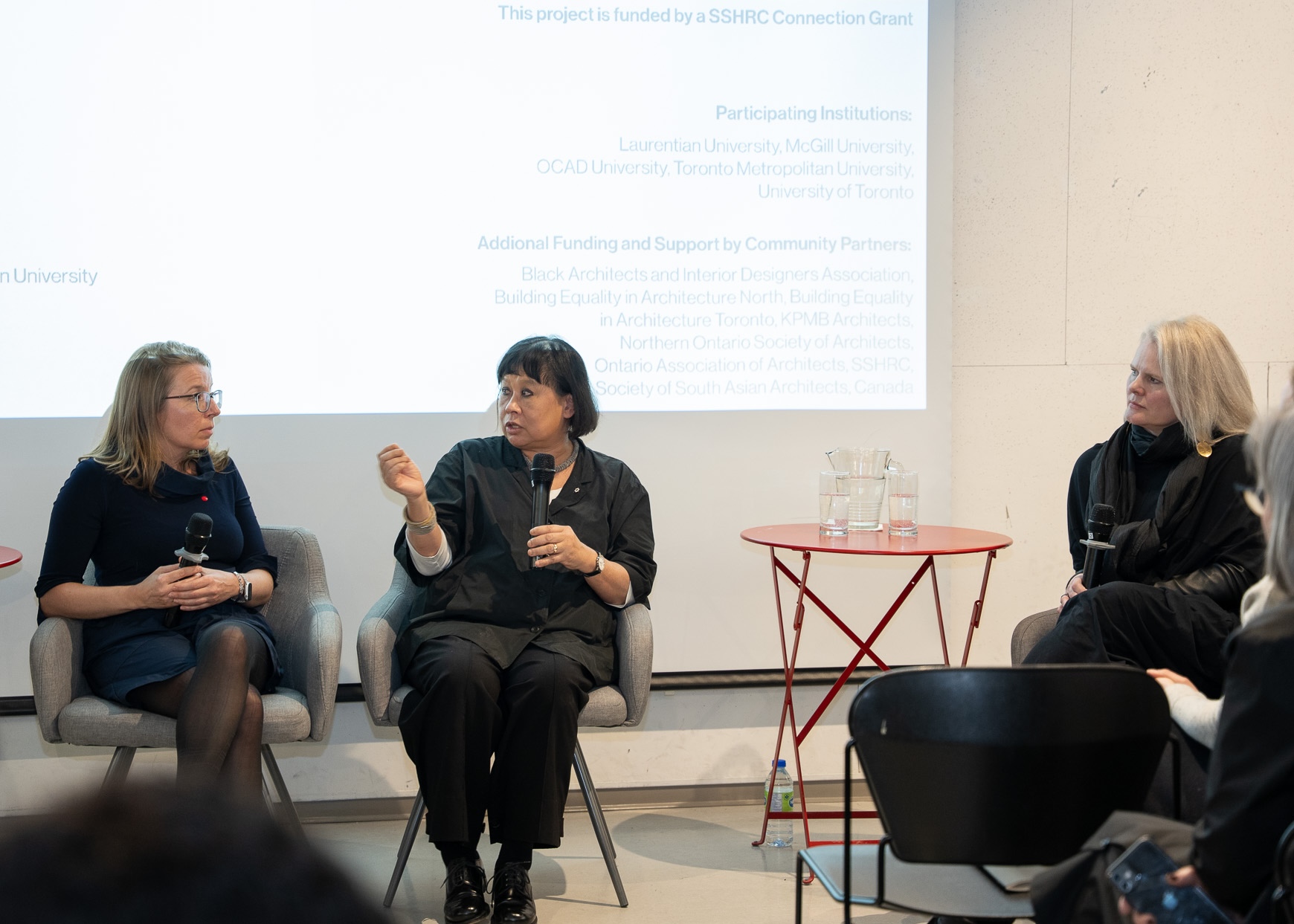
Similar conversations emerged in the professional practice discussions in Session Four: Women in Practice. The panel, which included Roxanne Gauthier (EVOQ Architecture) and Brigitte Shim (Shim-Sutliffe Architects), emphasized the importance of workplace culture and transparency about leadership pathways to create environments where diverse personalities and leadership approaches can thrive. While challenges often come from outside the firm, whether it be construction sites or male-dominated clients, the solutions may lie within education, policy, or more architecturally trained women applying their skills in interdisciplinary ways. Brigitte Shim reflected that the “ability to build a kind of cultural condition, a studio culture, is maybe the most important design project that we all do…if it's good for women, it's also great for men, and it just makes a better place to live, work, and to be able to do the best work you can do.”
Reflecting on the differences she observed when moving from academia to the profession, Second Year Master of Architecture student (TMU) Carolina Ramirez Tenorio said, “Personally, I felt that my university, especially my undergraduate experience, was a bubble, where I didn’t experience gender discrimination, maybe because we were slightly more women than men in the student body. However, I noticeably felt the shift going into the professional environment; the boys club unfortunately exists. I think it would have been instrumental if this was talked about during undergrad, either by being talked about by women professors or if a similar women in architecture seminar was offered. Usually these topics get brushed over, and we overly focus on the positives, without talking about the realities and how we as professional women can overcome these obstacles. It was refreshing that these topics were addressed in Taking Stock and is as relevant as ever for the younger generations.”
Photographer: Alexandra Berceanu
Beyond professional advancement, speakers examined how architecture itself can reinforce or challenge broader systems of exclusion. Session Two, “Intersectional Barriers, the Politics of Space, and Rethinking 'the Body' in Design,” pushed the discussion beyond gender, exploring architecture’s social impact at multiple scales with Farida Abu-Bakare (WXY), Annie Boivin (UC Berkeley), and Lori Brown (Syracuse University). Central to these ideas was Boivin's concept of “Radical Imagination,” which is anchored in authentic beliefs, needs, desires, ways of knowing, ways of being…in opposition to a form of resistance against forms of oppression.” In practice, disability culture can serve as an essential source of knowledge rather than a condition to design around.
Undergraduate Research Assistant Saskia Scarce reflected on Boivin’s words, “Now that I am at the end of my undergraduate career, I have been reflecting on what type of designer I would like to become. The concept of “Radical Imagination” as an approach to everyday design really resonated. Through this session, I was able to gain insight on the impact of design through Boivin’s example of opening a door, which helped me to truly understand the importance of designing with empathy.”
"What lay at the heart of the Session Two panel was the many ways that women and gender-diverse people make what is often invisible to the broader public visible. Whether discussing caregiving responsibilities, disability, the gender wage gap, or other systemic barriers, the speakers offered honest reflections on the often unseen work they have undertaken throughout their careers to bring these issues into view," said Rachel Klysen, Graduate Research Assistant (OCAD University) on the project.
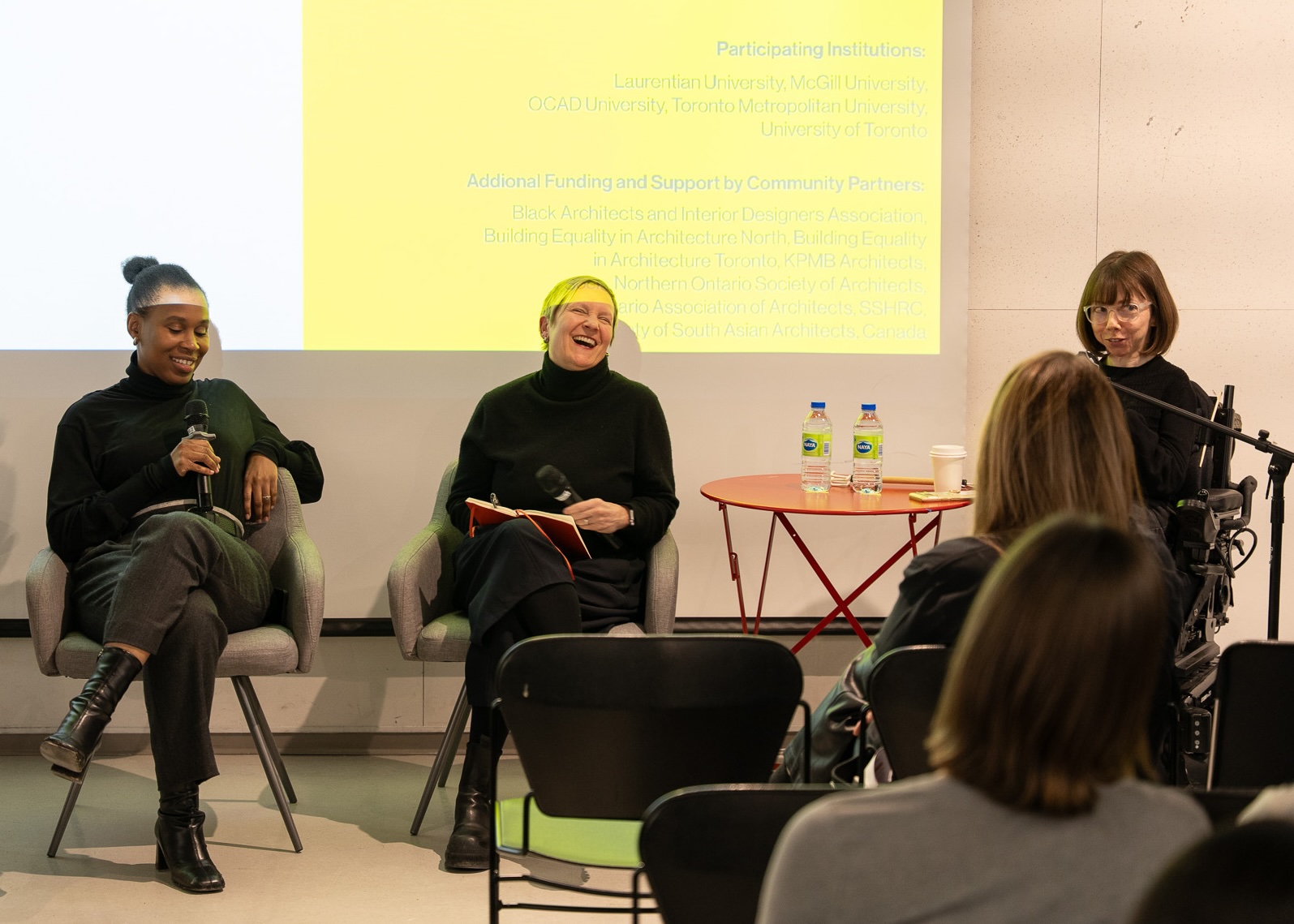
Photographer: Alexandra Berceanu
The intersectional conversation was further expanded through discussions on Indigenous women in architecture, where speakers challenged conventional understandings of practice by centering community responsibility, advocacy, and care. Drawing on decades of professional experience, speakers, including Harriet Burdett-Moulton (Retired Architect), Tiffany Shaw (Reimagine Architects), and KaaSheGaaBaaWeak | Eladia Smoke (Smoke Architecture), reflected on the role Indigenous women play in shaping the built environment while also navigating intergenerational trauma and their unique responsibility to honour their ancestors and relationship to the land. The panel conversation turned to the ways that Indigenous feminism is interlinked with resisting oppressive settler-colonial structures on the land. Tiffany Shaw spoke on her land-based educational art that resists limiting land-ownership structures. She says, “We think we have a boundary in many of our practices and disciplines, and on projects, but I think the real question is, how can we share this message and inspire others to do greater work, and then share the load rather than carry it all on our own?”
As a student, it is easy to adopt a narrow definition of what success in architecture looks like after graduation. Within the academic environment, there is often a clear separation between school and personal life, leaving little opportunity to imagine how an architectural career can be integrated into life beyond the studio. The symposium offered a valuable opportunity to hear about the many ways women have defined success on their own terms and advocated for a healthier balance that encourages ambition and celebrates the many women who mentor, inspire, and lead within their workplaces, families, and communities.
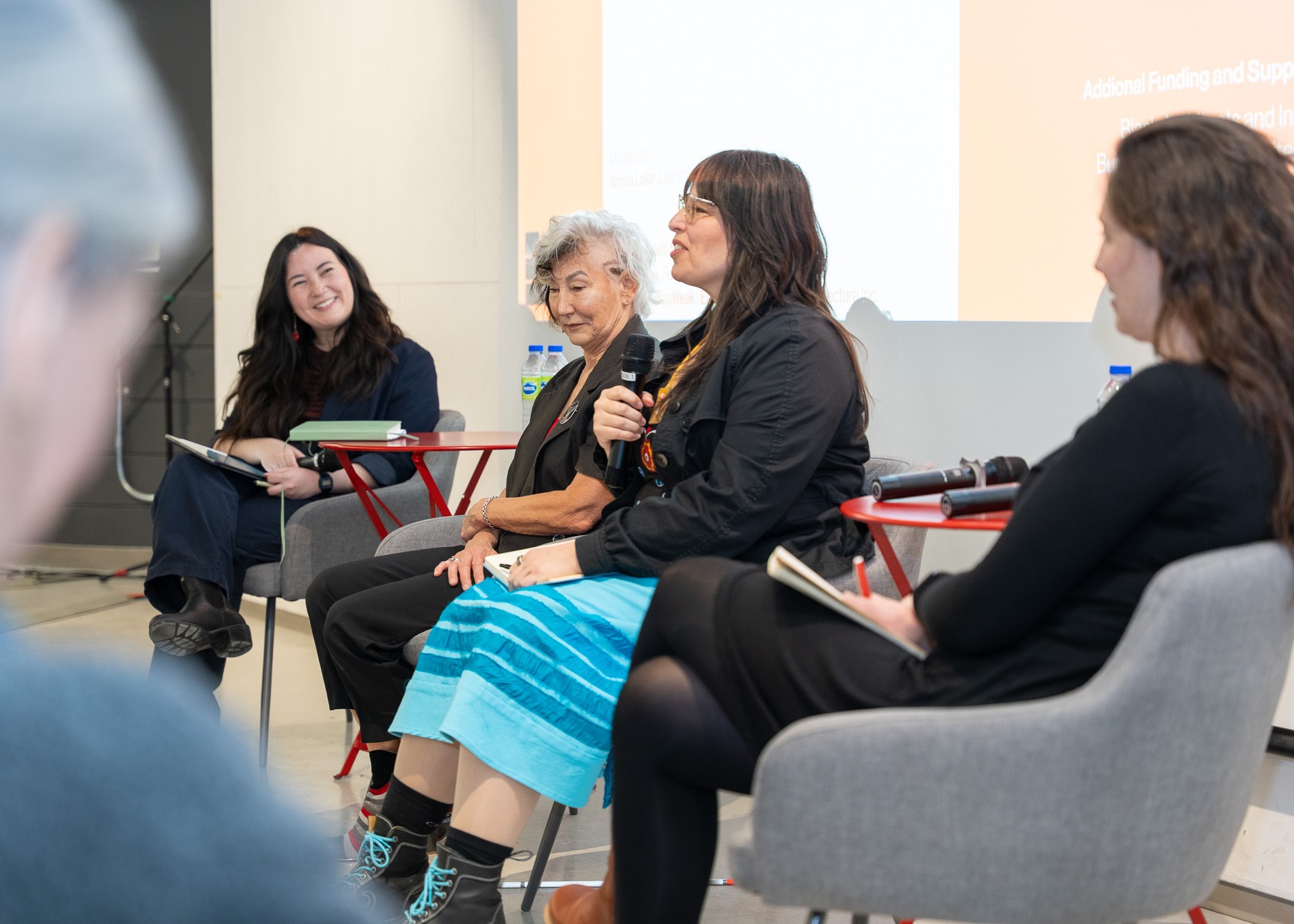
Photographer: Alexandra Berceanu
The symposium concluded by turning reflection into action. Bringing keynote speakers, panellists, and collaborators back together, the final session focused on how these conversations might translate into concrete changes across education, practice, and institutional policy. Through the research efforts of each panel team and the insights of the panellists, the symposium made it clear that understanding the position of women in architecture is no longer about counting. The greater challenge lies in creating a profession where women are supported not only to enter architecture but to remain, lead, and reshape the future. Eladia Smoke said, “I think this has been a bit of a failed experiment, this whole patriarchy, and I think we just have to stop inhabiting that reality and make our own again.”
Graduate Research Assistant Elaine Nahli (TMU) shared, “As a recent graduate beginning my career in architecture, I trace some of my motivation back to my role in the Taking Stock Symposium. I had the opportunity to engage with an array of professionals with unique backgrounds across the field, and their perspectives inspired me to keep pushing forward in my own pursuit. I believe the language we choose shapes us; toward assertiveness and certainty, or toward insecurity. Women, like all genders, are more than capable of certainty, and Taking Stock felt like a genuinely refreshing moment of dialogue around reclaiming that certainty within architecture, both in practice and in academia.”
According to Professor Esposito, “The symposium brought together the voices of students, researchers, and practitioners from across Canada, creating space for conversations that often remain on the margins of architectural discourse despite being central to the future of the profession. Our ambition was not only to foster necessary dialogue, but also to build lasting connections and catalyze collaboration and action.”
The Taking Stock team will continue their research into the challenges and opportunities facing women in architecture and the ways reflective practices can reveal under-examined aspects of diverse lived experiences. Moreover, work is ongoing to analyze and disseminate the symposium's findings to broader audiences.
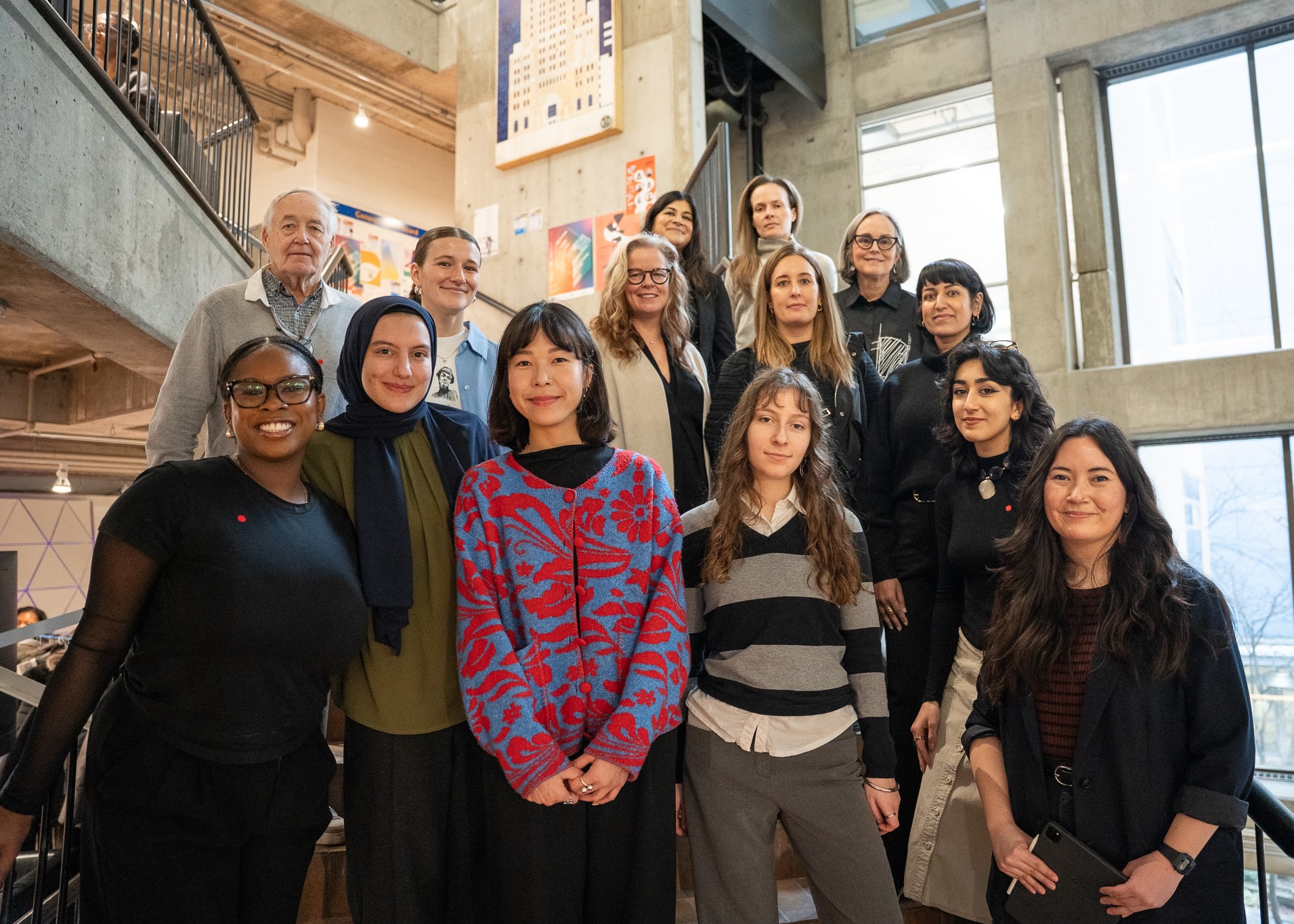
The symposium team at the Department of Architectural Science at Toronto Metropolitan University (L-R: Saskia Scarce, Heba Al-Fayez, Sammi Ku, Nina Zabojnikova, Elaine Nahli, Amina Lalor, Rhys Phillips, Rachel Klysen, Dr. Shelagh McCartney, Jennifer Esposito, Maya Mahgoub-Desai, Ramona Adlakha, Anne-Marie Armstrong and Dr. Annmarie Adams).
Photographer: Alexandra Berceanu
Full Team Credit:
Symposium Emcee:
Ramona Adlakha
Session One:
Women in Academia
Lead: Anne-Marie Armstrong with Dr. Annmarie Adams
Graduate Research Assistant: Sammi Ku
Moderator: Anne-Marie Armstrong
Speakers: Dr. Tania Gutiérrez-Monroy, Dr. Lisa Landrum, Dr. Despina Stratigakos
Session Two:
Intersectional Barriers, the Politics of Space, and Rethinking "the Body" in Design
Lead: Maya Mahgoub-Desai with Ramona Adlakha
Graduate Research Assistant: Rachel Klysen
Moderator: Maya Mahgoub-Desai
Speakers: Farida Abu-Bakare, Annie Boivin, Lori Brown
Session Three:
Indigenous Women in Architecture
Lead: Amina Lalor with Dr. Shelagh McCartney
Graduate Research Assistant: Elaine Nahli
Moderator: Amina Lalor
Speakers: Harriet Burdett-Moulton, Tiffany Shaw, KaaSheGaaBaaWeak | Eladia Smoke
Session Four:
Women in Practice
Lead: Jennifer Esposito with Rhys Phillips
Graduate Research Assistant: Heba Al-Fayez
Moderator: Jennifer Esposito
Speakers: Roxanne Gauthier, Johanna Hurme, Brigitte Shim
Session Five:
Taking Stock | Insight to Action
Lead: Dr. Shelagh McCartney with Jennifer Esposito
Moderator: Dr. Shelagh McCartney
Speakers: Dr. Annmarie Adams, Marianne McKenna, Rhys Phillips, KaaSheGaaBaaWeak | Eladia Smoke
Undergraduate Research Assistants:
Saskia Scarce
Nina Zabojnikova