Onkwe’shón:’a (“All the Peoples”) Indigenous Placemaking at DAS
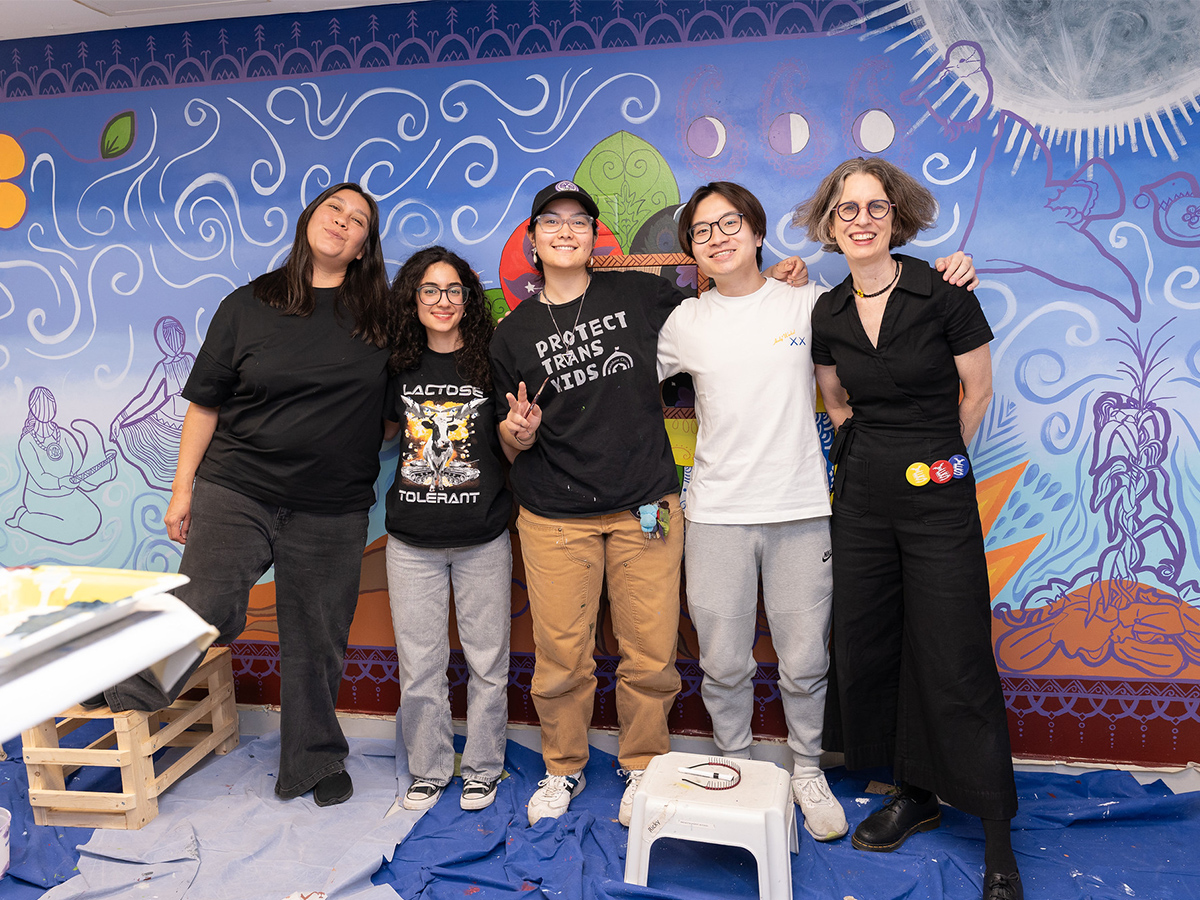
Lead Artist: Giselle Del Vallé
Curation and Contributing Artist: Ange Loft
Student Leaders: Christine Ho, Jeff Man, Isabella Pretotto, Diba Rahbar
Student Volunteers: Masrur Ananya, Arvin Ashouri Senejani, Hannah Lampadio, Mahiya Majeed, Arpita Pal, Mahek Patel, Sheena Ye
Faculty Support: Lisa Landrum, and members of TMU’s Indigenous Space Sub-Working Group (ISSWG)
Co-creating community through art and storytelling
This mural began as a collaborative process rooted in TMU’s Indigenous Design Guidelines and the function of the DAS kitchenette: a space where students gather to rest, connect, and work. Recognizing its role as a place of everyday exchange and relaxation, lead artist Giselle Del Vallé and contributing artist Ange Loft invited DAS students to contribute their own stories and knowledge to the wall’s imagery. Through this shared placemaking, the mural became a place of reflection, shaped by many hands and perspectives.
As the design evolved, connections between cultures naturally emerged. Similar patterns and symbolism appeared across volunteers’ stories and thus weaving these ideas together became central to the piece. The mural particularly acknowledges that the space exists on the traditional territories of the Haudenosaunee and Anishinaabe peoples, grounding the mural in an awareness of land and history.
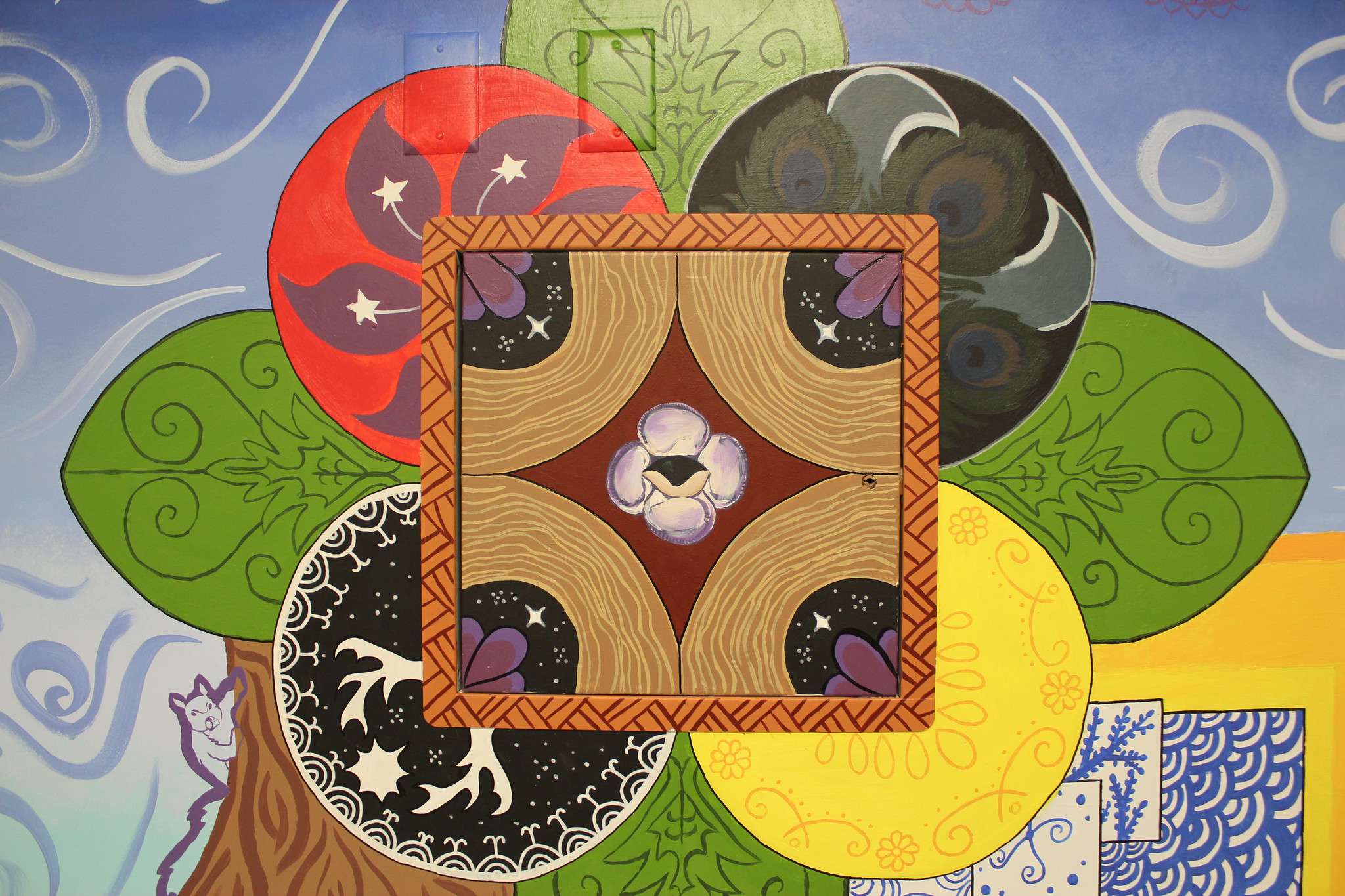
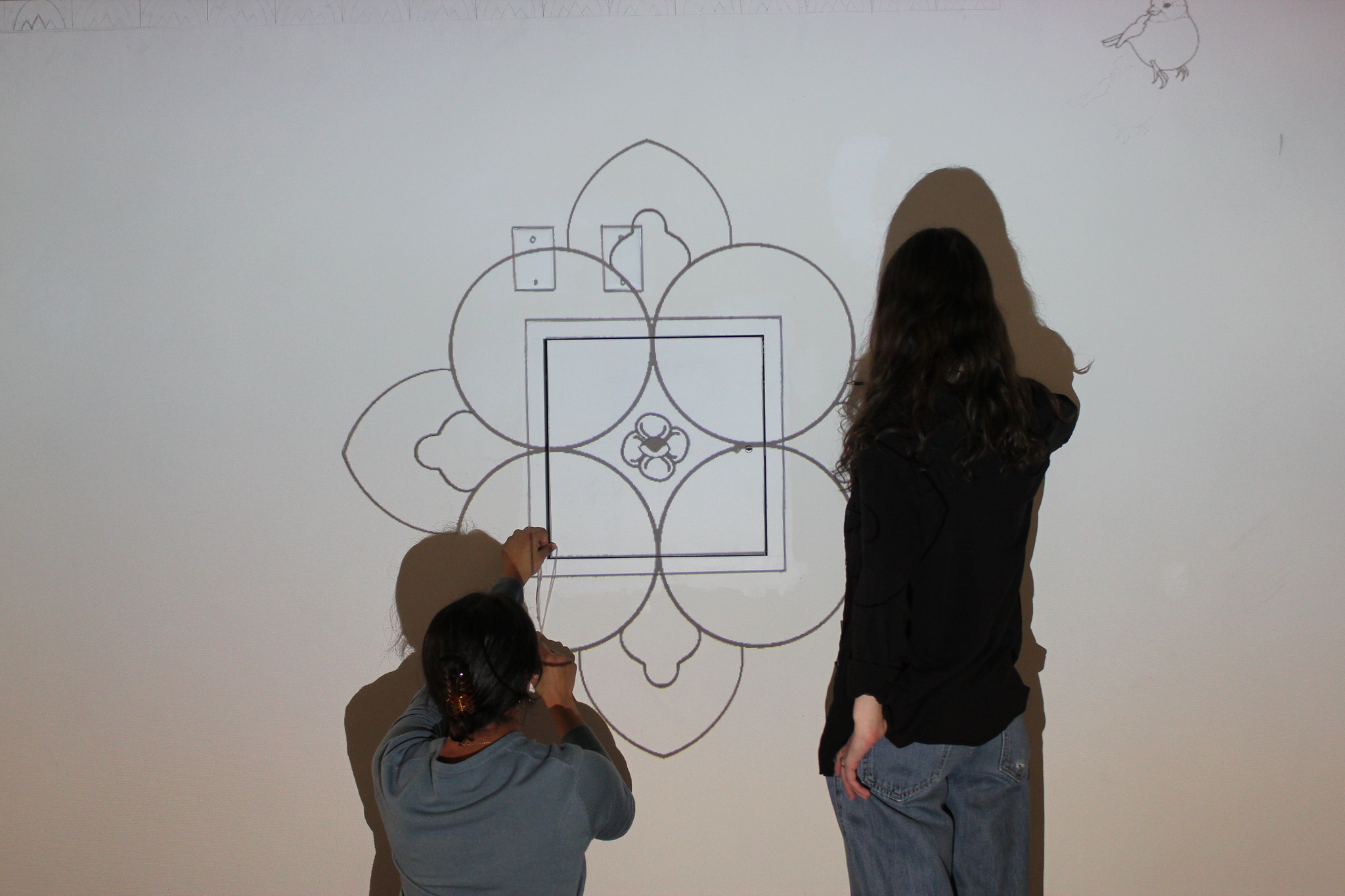
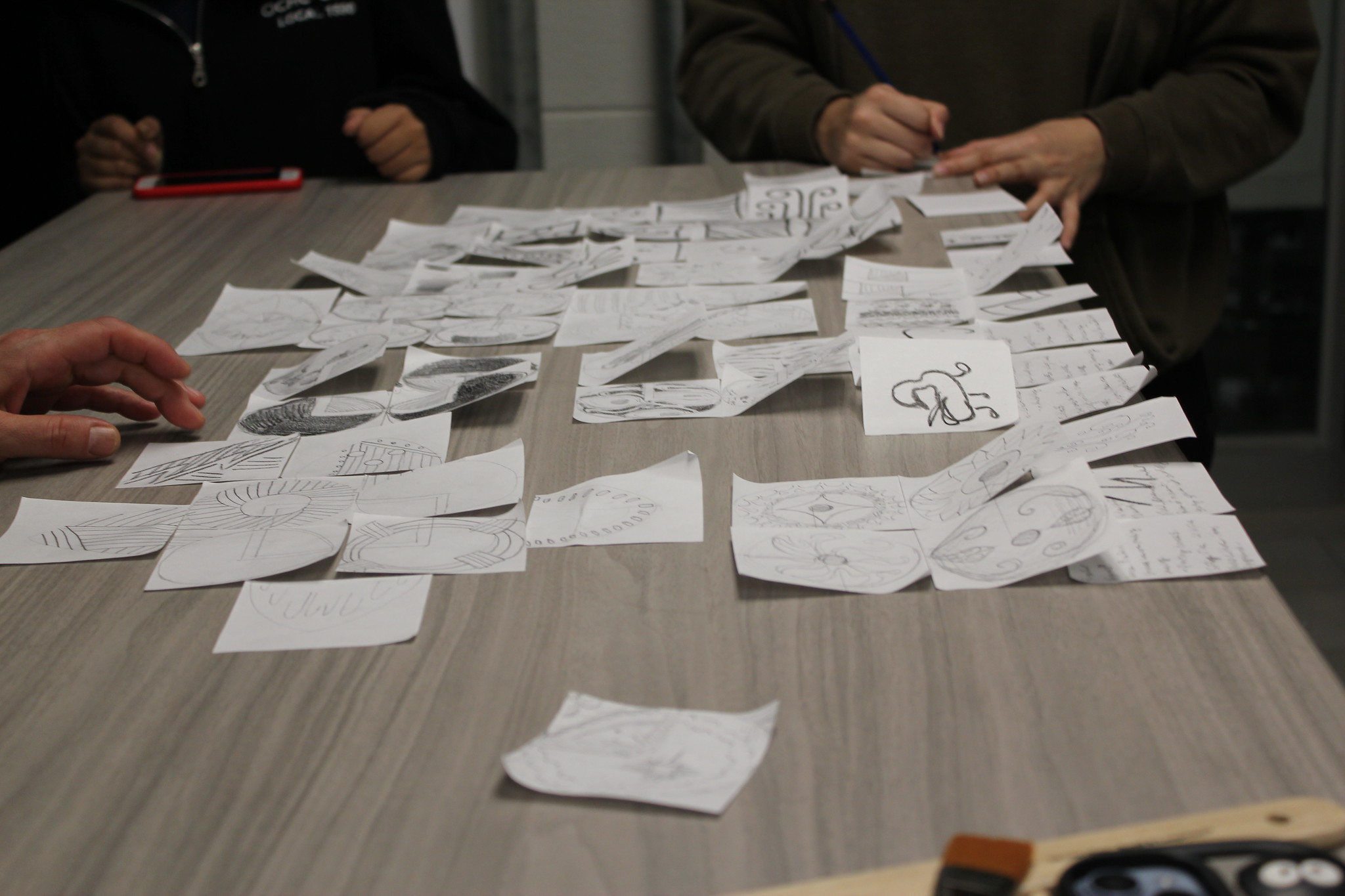
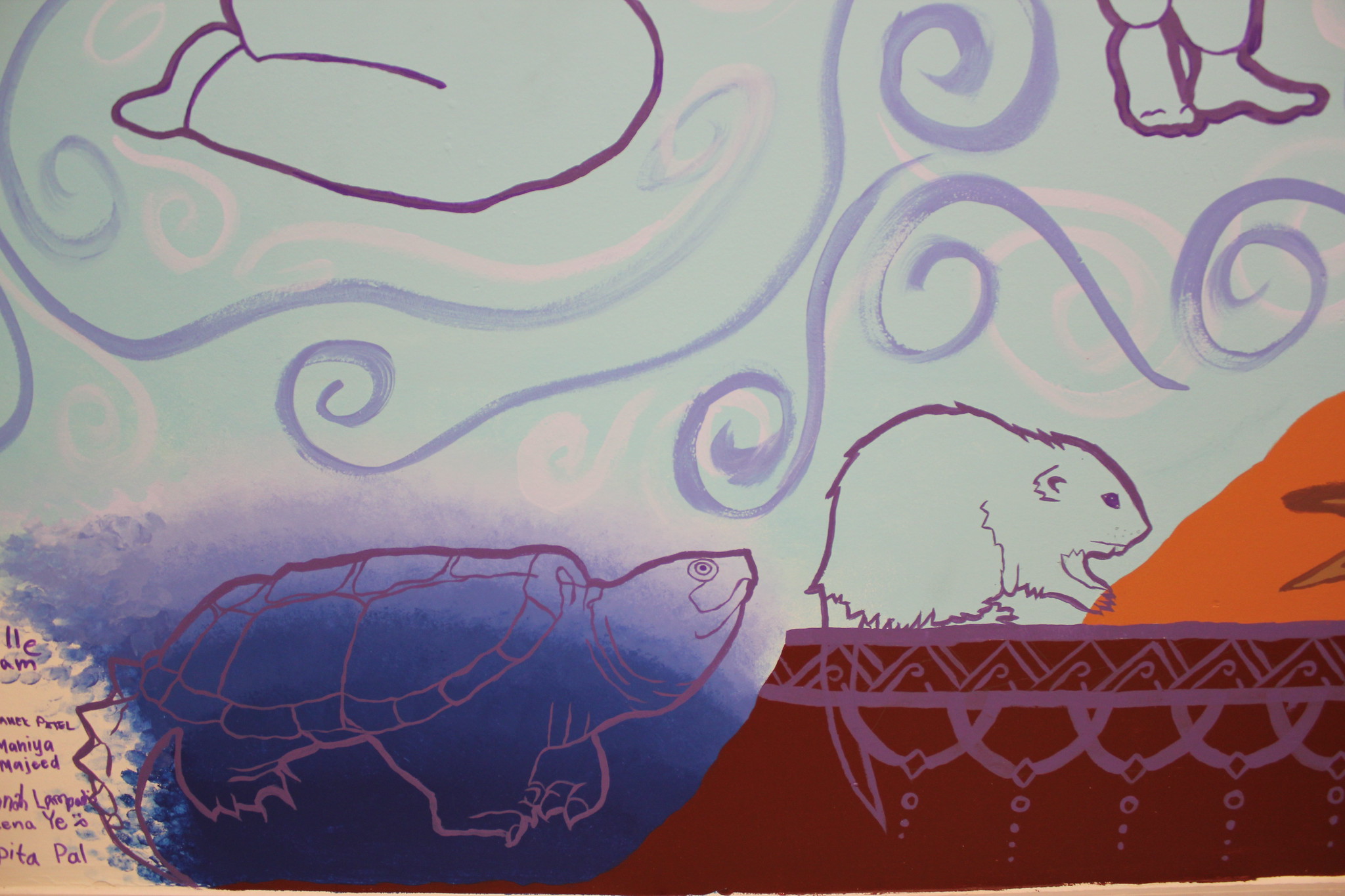
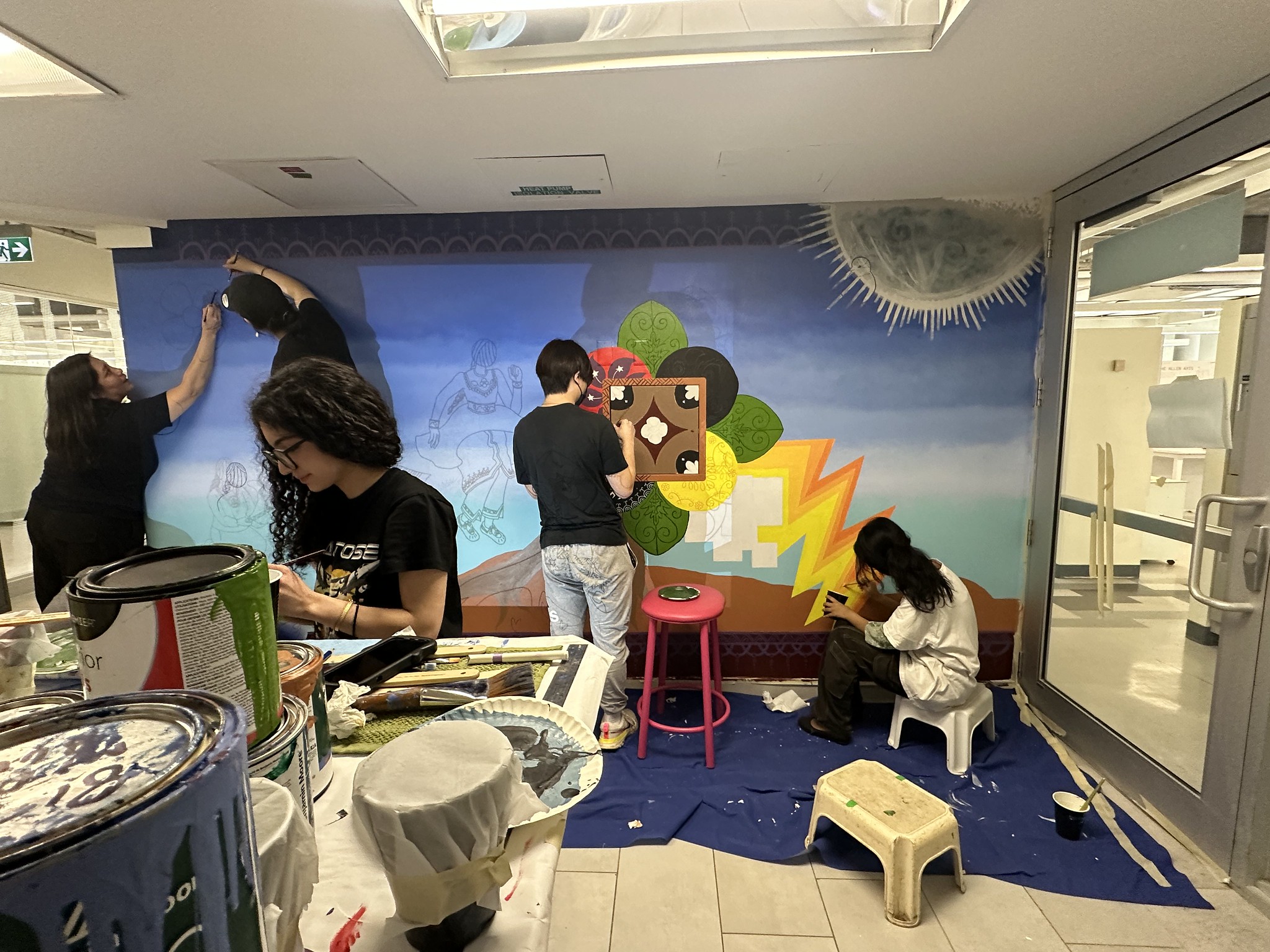
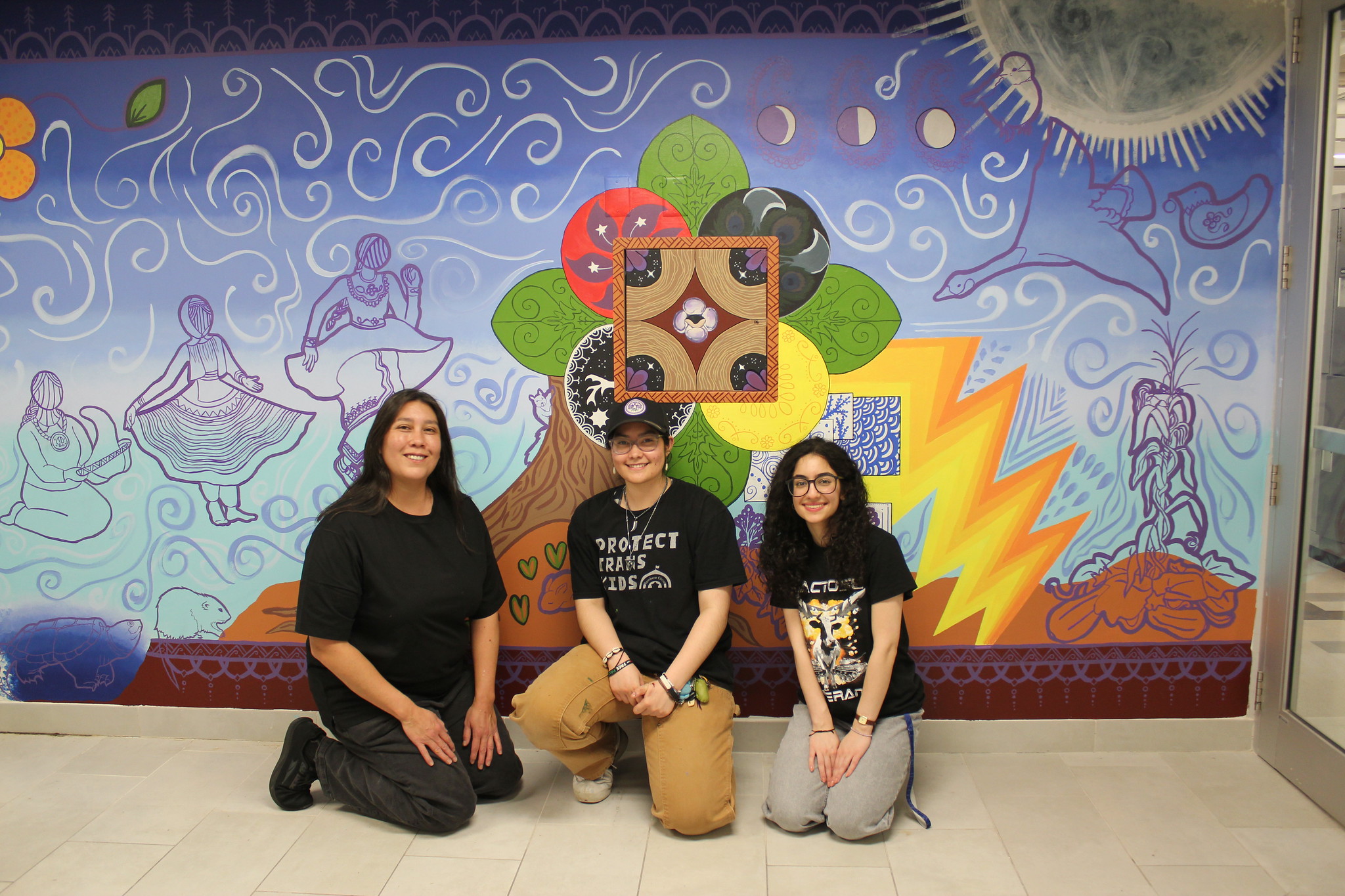
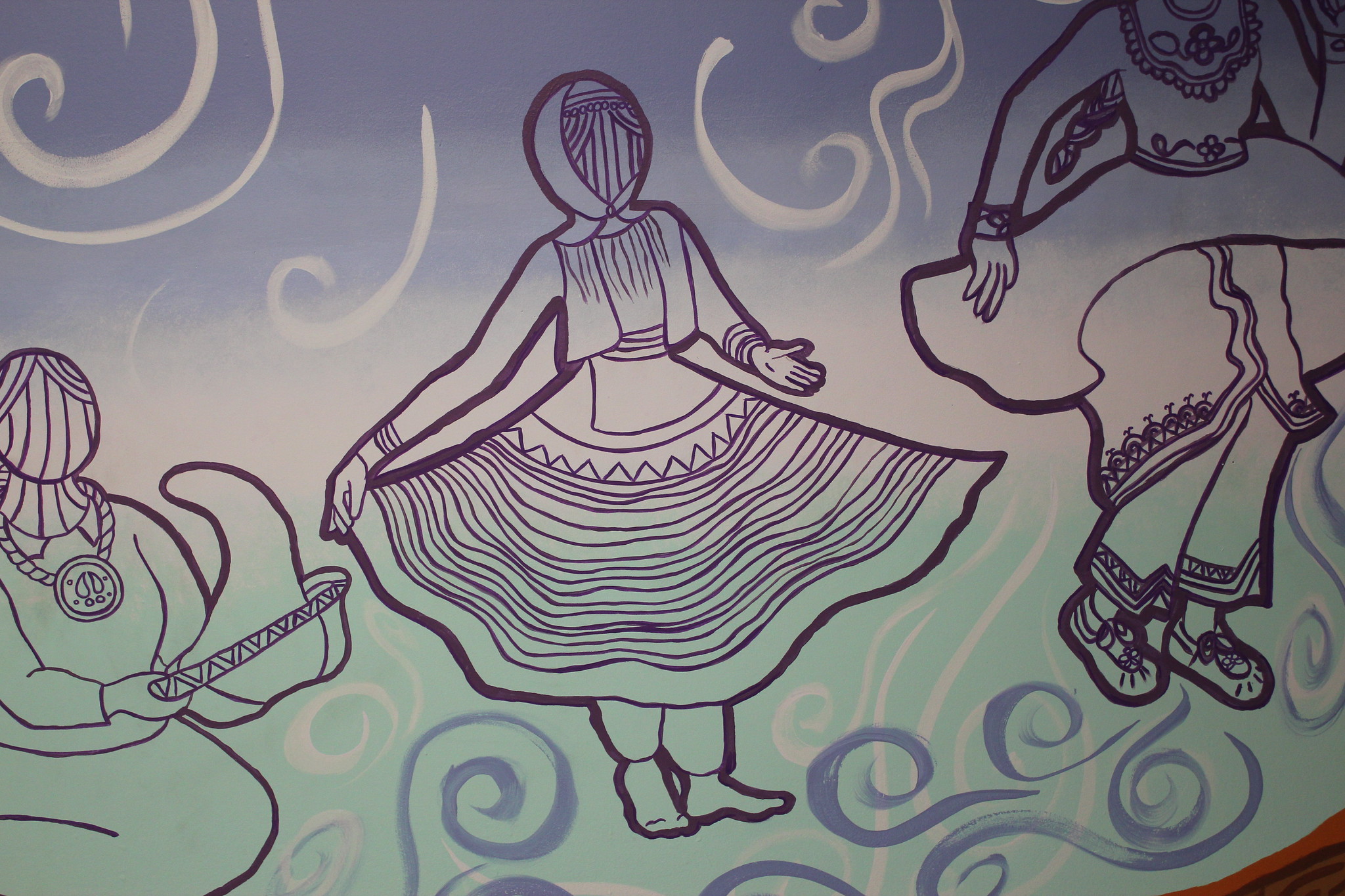
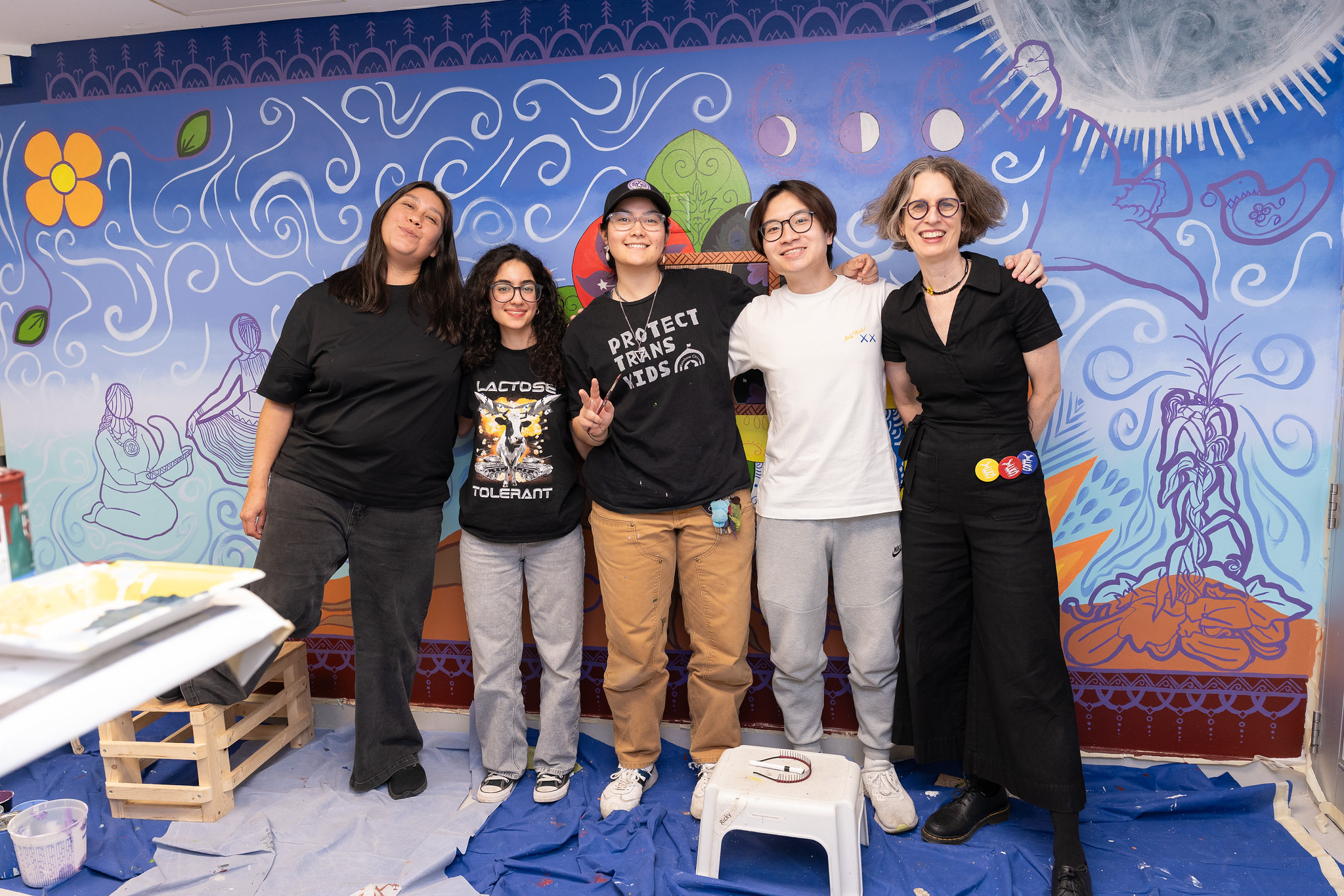
Image credits: Alexandra Berceanu and Diba Ribhar
Rooted in tradition: plants, animals, and ancestral knowledge
The centrepiece is a flowering tree, its form inspired by the Tree of Peace, usually a white pine seen on the Six Nations Flag, symbolising refuge. Its roots extend toward the ground, emphasising the rich history of the land, creating habitat for the animals in the piece, and embody the connection to the traditional territory. Surrounding the basket, in the centre of the tree, are four circles painted in Dinkenga colours paying homage to the medicine wheel. The patterns within each circle represent students’ cultural identity. Within the basket, tree rings, skydomes, and quahog shells honour cycles of life and Haudenosaunee cultural practices. The peach pit, located in the centre of the basket, pays homage to traditional games held in mid-winter with other social ceremonies. Leaves and leaf patterns reach outwards from the basket, representing the traditional Sankofa patterns present all over Toronto. Tiles extend from below the basket, echoing traditional Southern Italian patterns inspired by shared stories throughout the ideation process.
With the thunderbolt, the centerpiece is connected to the tobacco plant, representing the Thunder Beings. Other imagery tells interconnected stories: one combination of the Sisters (corn, squash, and beans) represents synergetic relationships. Birds, including a goose, flies beneath the moon, representing one iteration of the Creation Story. A sparrow, a regular guest of the architecture building, references the Sankofa bird, symbolising the idea of looking back and moving forward to speak to storytelling and growth. To the far right is a Whimsy Bird, representing Haudenosaunee beadwork.
Human figures – a rice winnower, a Persian dancer, and a smoke dancer – reflect both diversity and similarity in cultural movements and regalia. The flower applique, also present in the smoke dancers’ regalia and the Whimsy Bird, depicts the unity and connectedness amongst cultures and the natural world. Below them is a snapping turtle, referencing the Creation Story and how Turtle Island was created on that turtle's back. In front of the turtle is the muskrat, who in the Story gave its life to swim down and get mud, to build the world atop the turtle’s shell. Plants, animals, and patterns from various cultures converge at the trunk of the tree to reinforce a sense of unity.
Ultimately, the mural is about relationships between people, cultures, and the natural world. It invites those who enter the space to connect, reflect, and recognize the value of both individuality and belonging.
“It’s very inspiring to see architecture students opening hearts and minds to Indigenous ways of knowing. ‘All the Peoples’ beautifully embodies in its imagery and enacts through its making critical teachings for everyone: that meaningful placemaking begins by building relations with all living beings.” - Lisa Landrum, DAS Chair
The mural is an important complement to the adjacent arc.soc student lounge, which was created in the summer of 2025 with generous contributions of furniture by Steelcase and Keilhaurer.