How DAS Students Are Using Game Engines to Design Space, Not Just Draw It
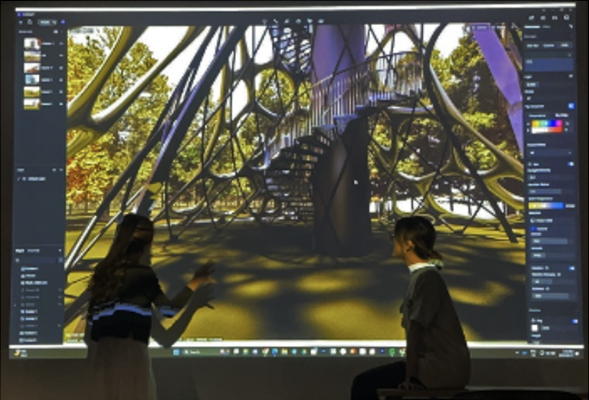
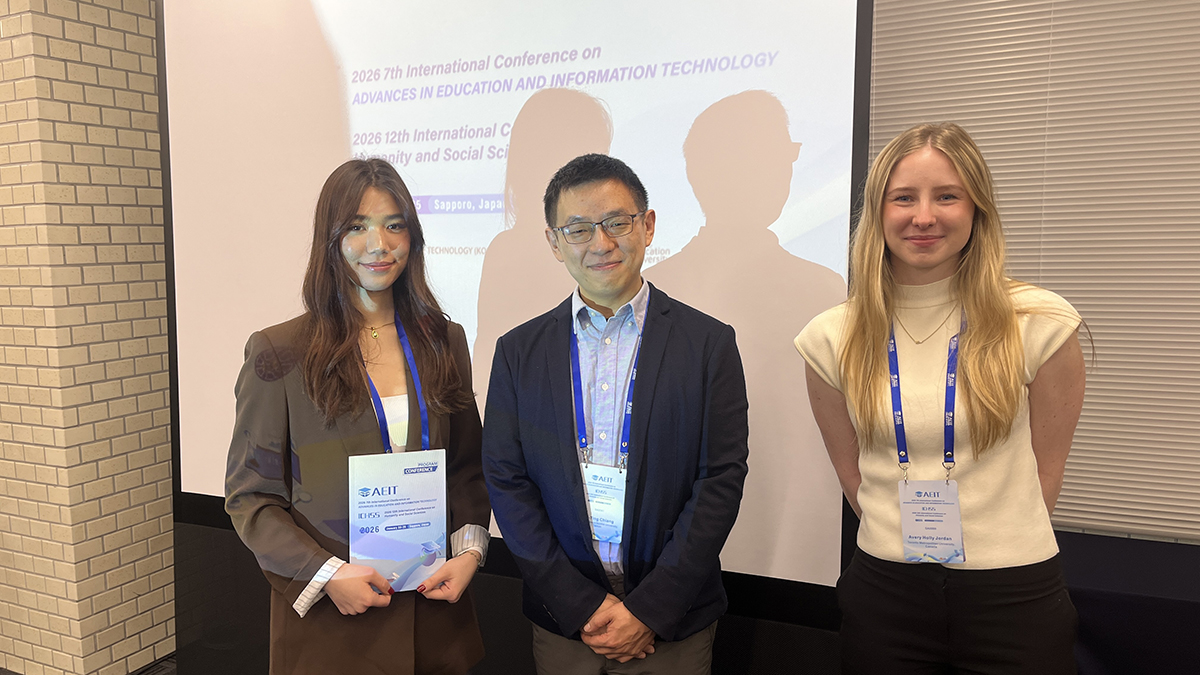
What if you could walk through your design before it's even built, feeling the scale of a corridor or the shift in light in real-time? For three Department of Architectural Science undergraduate students—Jade Yu Tung Wong, Avery Jordan, and Sana Galloway—this isn't just a hypothetical, but the focus of their recent research. The team presented their findings at an international conference in Sapporo, Japan, exploring how gaming engines are changing architectural education and practice. We sat down with them to discuss their journey from a summer research project to presenting on a global stage, and how these digital tools are reshaping the way they approach design.
Jade Yu Tung Wong: We first heard about the 7th Intl. Conf. on Advances in Education and Information Technology (external link) from professor Vince Hui when we were discussing game design and how it could impact the future architectural industry. What started as curiosity quickly developed into a deeper investigation into how these tools can reshape the way we design.
Avery Jordan: Sana and I were developing a potential exhibition with Vince last summer which would have looked into the use of gaming engines by different architectural firms to replicate old buildings and historical sites. We were exploring how these tools can fill the gaps in our knowledge of how the architecture would have been experienced. It became a really interesting crossover between digital technology and architectural history.
Jade Yu Tung Wong: Building on that, we began to see game engines not just as visualization tools, but as a different way of thinking about space. It's not just about the visual style of the buildings, but how to experiment on movement interaction and the feedback we receive through game engines.
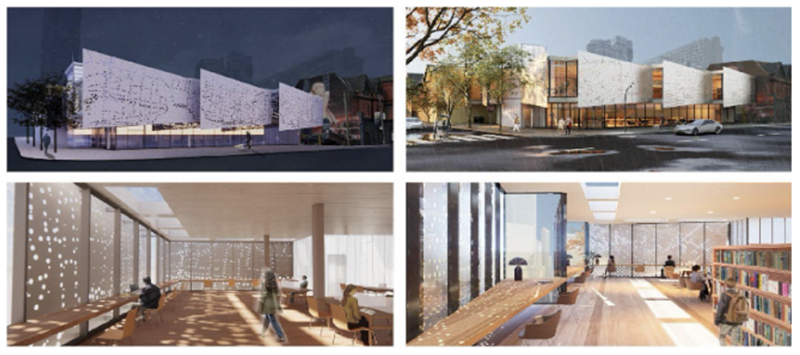
Sana Galloway: We were already introduced to rendering tools that simulate real-life conditions. However, this study really deepened my understanding of their impact. While traditional 2D drawings are an essential design tool, combining them with real-life simulation allows us to better understand how a space actually feels at a human scale, something that is difficult to fully capture through 2D drawings alone.
Jade Yu Tung Wong: In school we are trained to design through plans, sections, and static representations. These tools are essential, but they don’t fully capture spatial experience. So we're trying to introduce a new viewpoint - using real-time simulation to test and evaluate space as it is being designed.
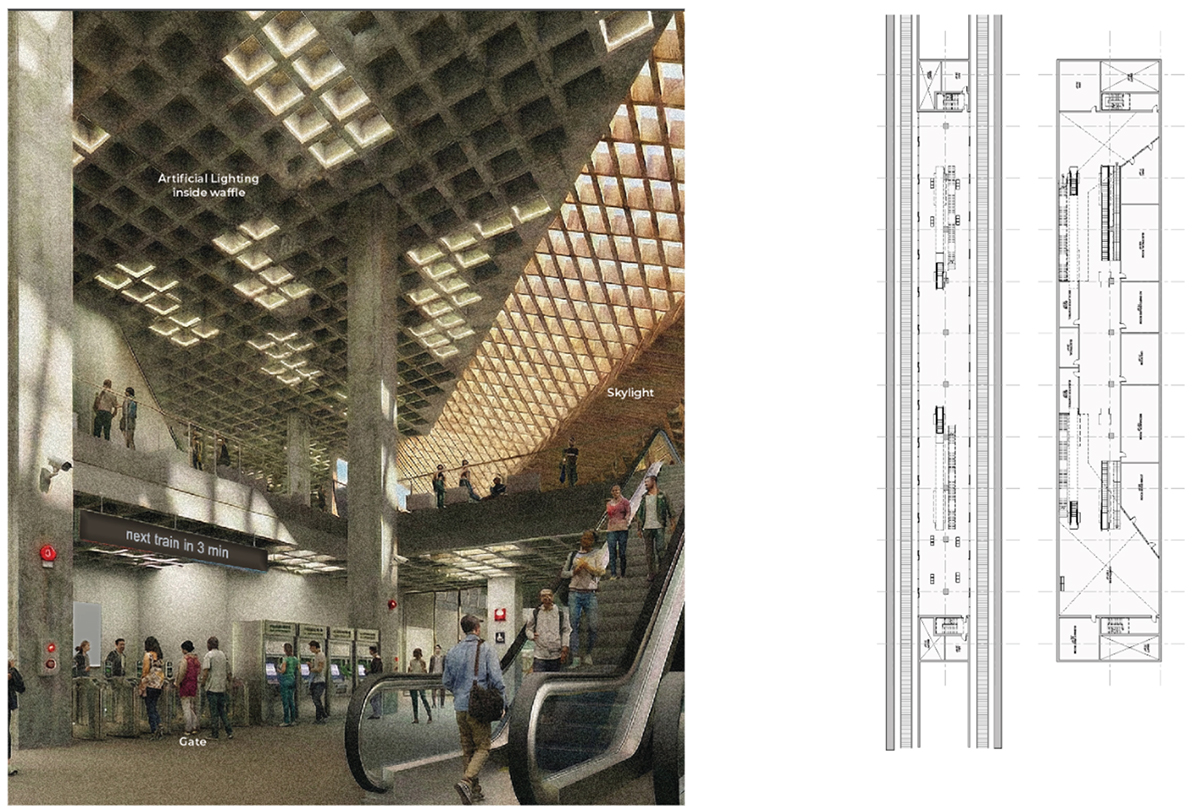
Jade Yu Tung Wong: For example, in a 3D model, you're able to walk through the space immediately. You'll be able to see maybe the light changes or the sound changes. You see the result instantly. With traditional tools, you see how a building looks, but in a real time simulation, you see all the different sensory aspects of a building and how it behaves over time. So, you're not just imagining scale, but you’re experiencing it by walking through it at eye level. For example, maybe in plan a corridor looks fine, but when you put it in a real time simulation, you might realize that the corridor is too long or too dark.
Sana Galloway: It’s also useful in terms of accessibility as well. Through plans or sections alone, we can’t fully understand what it’s like to move through a building as a wheelchair user. However, with these simulations, we were able to explore that experience more directly. For example, elements such as ramps, ceiling heights, and door handle placements all affect the spatial experience for the users.
I think that’s especially important for future architects to consider.
Avery Jordan: I think in education and architecture in particular, we show our colleagues our projects and have them give us feedback along with the studio coordinator. I know for me, real-time rendering software enables me to take feedback from a crit and use those engines to test changes, and that's what really makes me invest in this project. Feedback becomes much easier to incorporate, and to decide what changes are worthwhile and valuable to the overall design.
Jade Yu Tung Wong: From my own experience, using tools like Twinmotion and Unreal Engine began as a way to produce renderings. But over time, it became part of my design process. When I started walking through my own projects, I noticed issues I would not have caught in orthographic drawings—especially in circulation and spatial transitions. It allowed me to make more informed design decisions earlier in the process.
Sana Galloway: Before this project, I primarily used a rendering software that didn’t fully replicate a real-life walk-through experience. This project was valuable because it introduced me to tools that simulate real-world conditions more accurately. Now that Avery and I are studio partners, we’re able to make design decisions based on these simulations.
Avery Jordan: And the impact of participating in this conference - being able to go to Japan is something that I don't think I would have been able to do for a good 10 years! So it was a really great experience for us to explore new places, as well as for Sana to share her favorite parts of her home country. We also met presenters working on all sorts of cool things, like automotive simulation and how things are put together virtually as a teaching tool. It wasn't all directly related to architecture, but I think that that could be translated to some sort of construction processes and things like that in the future. So that was really cool to think about.
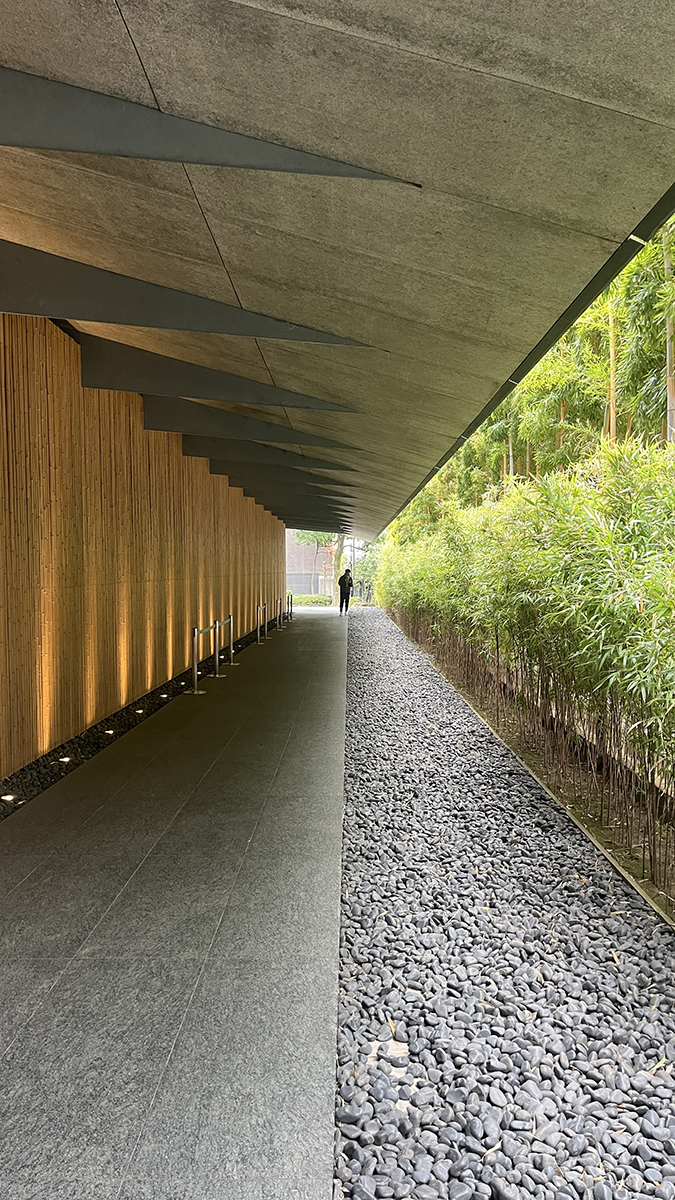
Avery Jordan: The three of us are going into co-op. So, part of what we were looking into was how firms are using these gaming engines. We found that there is an increasing demand for rapid iteration, especially from clients. It's a good experience for us in terms of what we should expect going into the firms and how to collaborate without producing a final render. In the paper, we used an image of a studio project from my second year that I adapted after using the gaming engines to figure out what feedback I wanted to incorporate from my final crit.
Jade Yu Tung Wong: During an interview with a co-op firm, I was asked what my views are on gaming engines in architecture in the future - they were really open to experimenting and also using AI in the process to assist their workflow.
Sana Galloway: During the interview, they emphasized that their design process integrates real-life simulation alongside traditional drawings. I’m really looking forward to deepening our understanding of this approach and how it can shape more informed, human-centered design decisions.
Jade Yu Tung Wong: Ultimately, real-time simulation does not replace traditional architectural tools. But it challenges them. It shifts the design process from representation toward experience, allowing us to test, evaluate, and refine space in a more immediate and human-centered way.