Coming to Light: DAS Students on Queer Representation in Design
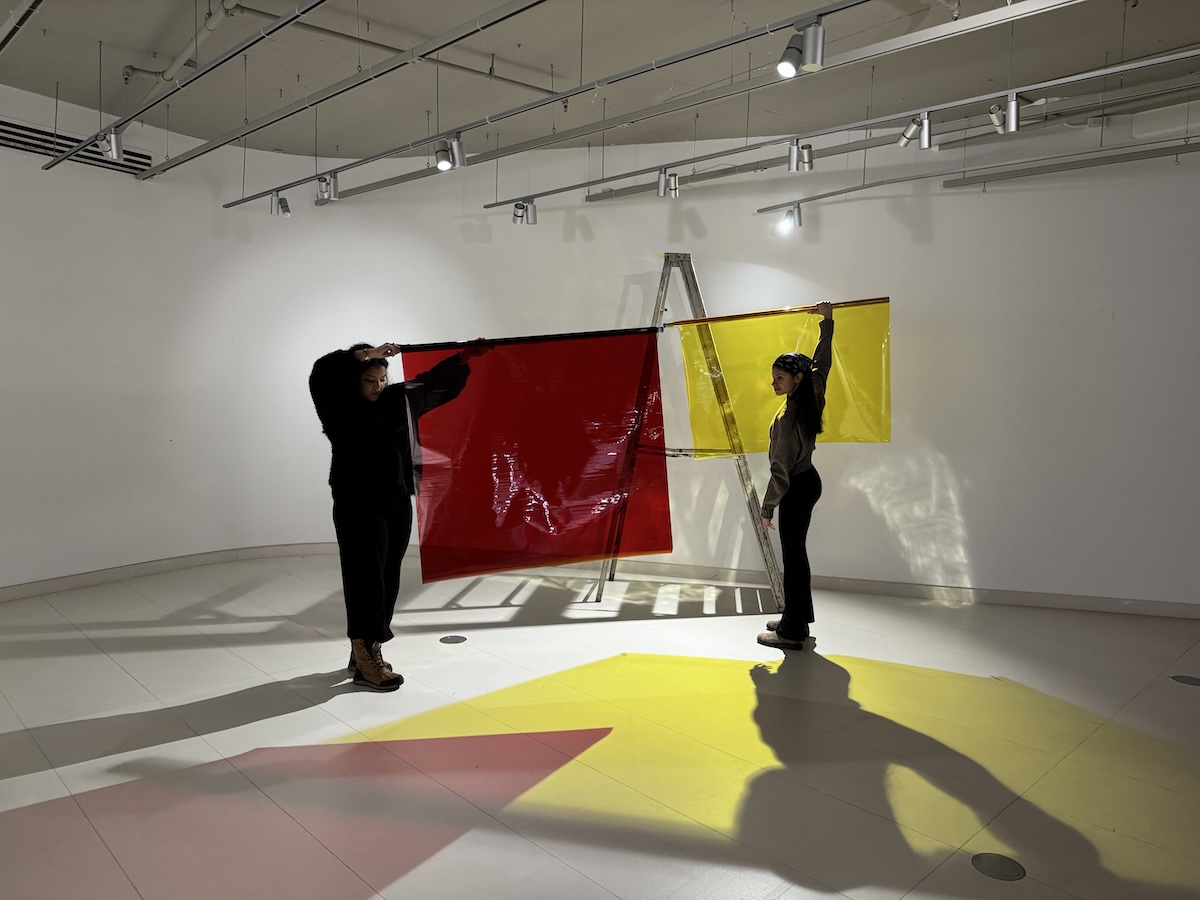
What happens when students set out to uncover the hidden history of queer architecture in Toronto? In our latest feature, we sit down with Aashir Imran, Avery La-Rose, and Gisele Ortega-Joseph—the curatorial minds behind the Coming to Light exhibition at DAS. They share what it was like to bring this vital project to life, from uncovering the coded language of hidden queer spaces to building a gallery that finally allows their peers to see themselves reflected in the built environment. Dive in to hear their powerful conversation on resilience, representation, and why the future of architecture depends on listening to the community.
What inspired the theme of this exhibition?
Aashir Imran: Being a part of the EDIJ committee for ACU, I was inspired by last year’s exhibition - it gave me the idea to think about how we can create a better environment for everyone. I haven't necessarily seen anything regarding queer representation in architecture. I feel like that's important because we have so many queer architects in Toronto. The city has had a lot of time to grow with the queer community, and I feel like it was about time to share the perspective. Showing people what they may not have had the ability to see before. The intention is to spread awareness by showing things we aren't typically exposed to in the architectural context.
Avery La-Rose: When Aashir invited me to work on the exhibition with him, I thought it was a really cool idea - like Aashir said, you don't ever really see a lot of things in architecture school about openly queer architects. I thought doing an overall exhibition on queer architecture and architects would be a really eye-opening experience, especially for our peers to have the ability to see themselves reflected in the exhibition. There’s a big problem in today’s AEC industry surrounding the idea that young designers are a very diverse group, but we’re not seeing ourselves actually reflected in the professional industry. Queer people of colour and women are especially underrepresented in the context of education and the industry, and our goal for the exhibition was the ensure that all voices were heard.
Was there anything new or surprising that you learned during your research or interview process for the show?
Aashir Imran: It was definitely challenging because historically, people weren’t as public about their identities or spaces due to safety. Nowadays, it’s much easier - for example, all of the queer spaces on Church Street. I feel like, it's just one of those things that have been on the sidelines for a long time that it's kind of just been growing in its own little corner. Diving into it more and more information on these queer spaces was eye-opening, because even as a queer person living in Toronto, I walk by some of these places all the time, but I never would have known anything about them if I hadn't done the research. It's the idea that queer spaces have always been here; you just need to open your eyes to different perspectives to see and understand how they exist.
Gisele Ortega-Joseph: One of the most surprising things I learned during the research process was the coded language used within the queer community and the ways queer life existed in the city while remaining hidden. It really showed a true level of resilience and creativity in how people found ways to connect and support each other despite social restrictions. I was also surprised by the history of St. John’s Ward. The area had been largely abandoned due to urban development pressures, but members of the queer community began using these overlooked spaces, bringing life back and creating places of belonging. This history shows how marginalized communities can reclaim and transform spaces in the city. As designers, it reminds us of the importance of rethinking overlooked and resilient spaces and how they can be used to support communities and bring new life to the city.
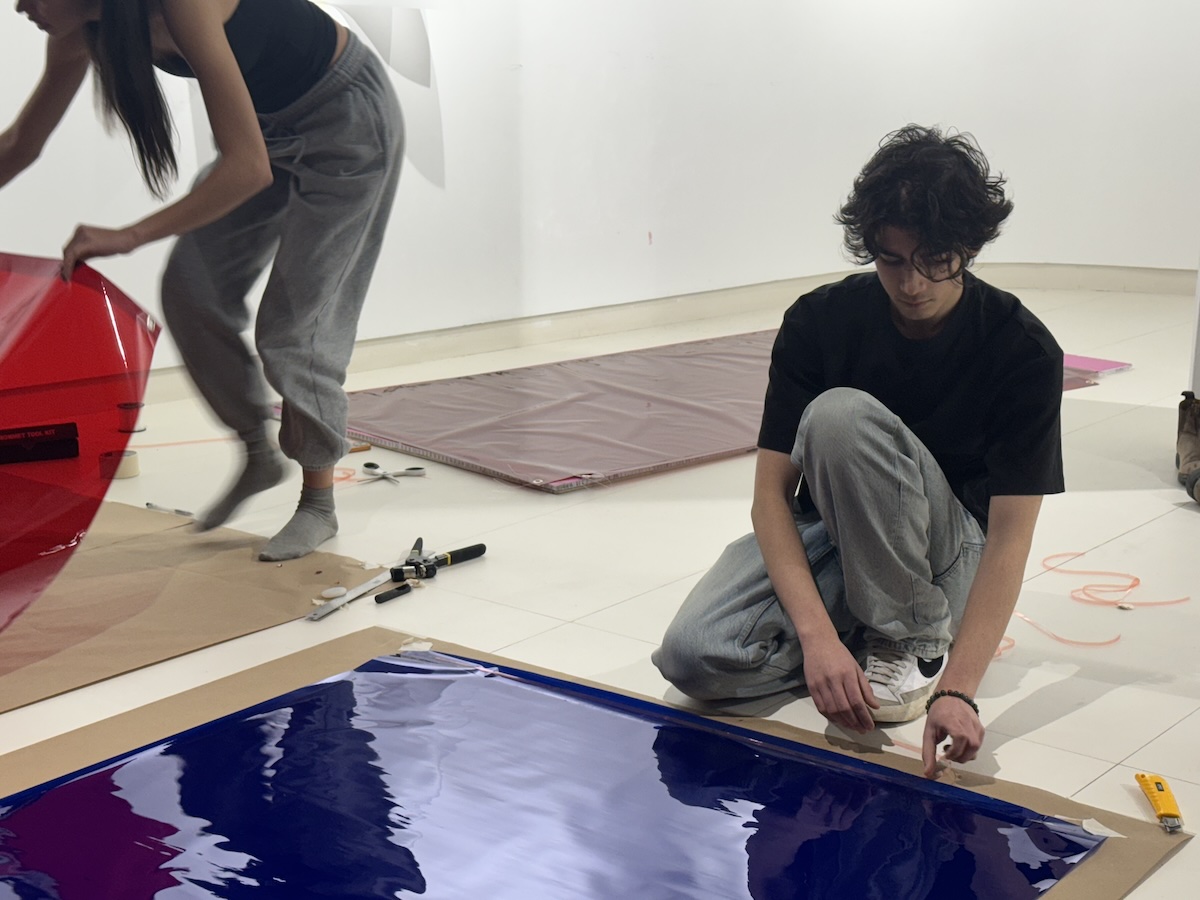
What was it like putting the exhibition together, and how has that enriched your experience here at DAS as a student?
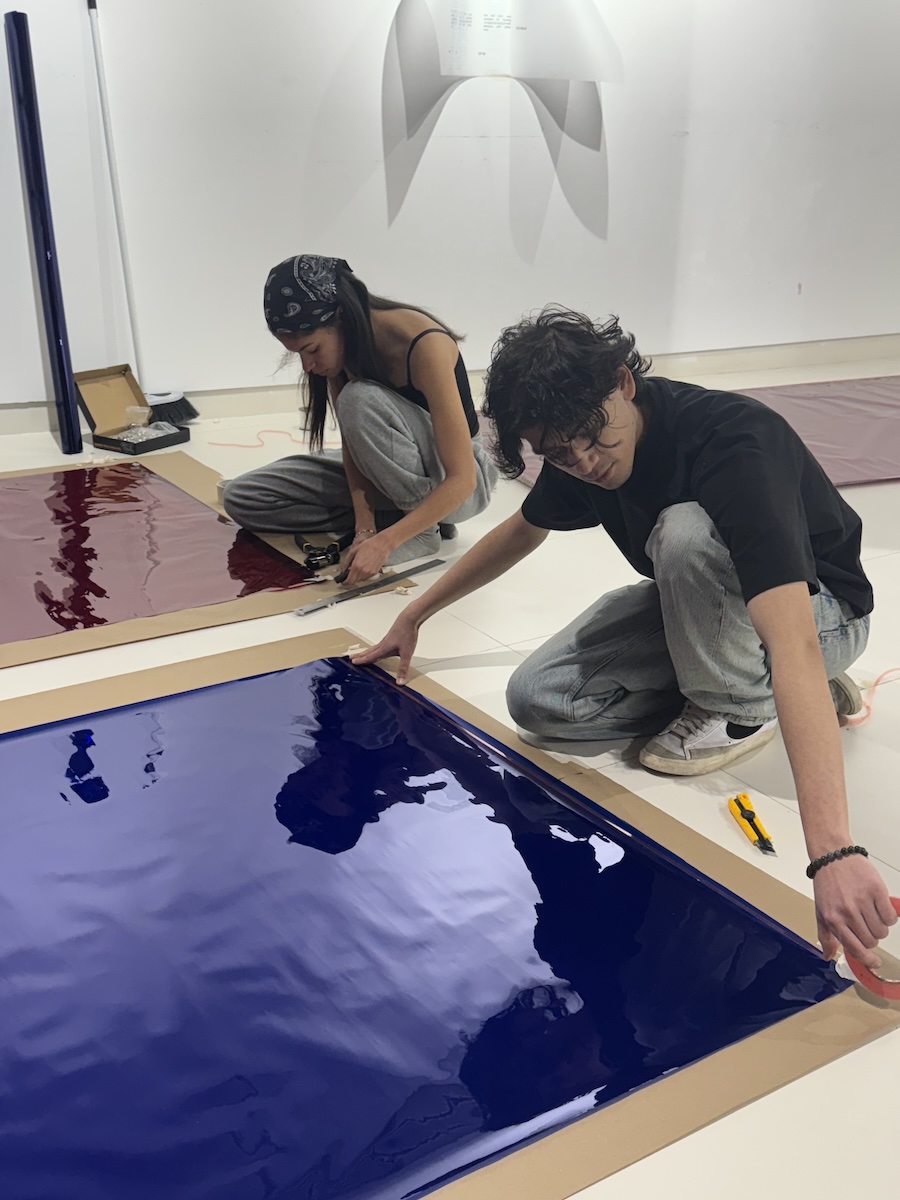
Avery La-Rose: Working in the gallery space was great. In the studio context, you put ideas to paper but rarely get to build them. And so, the gallery felt like a really big studio project where you ideate and sketch, but then you actually get the chance to build it and source your materials. It was a really fun and different experience that I feel like you wouldn't normally get from anything else. I learned a lot about how stuff is manufactured which I didn't know about before and how a project actually comes together when it’s built with your own hands.
Aashir Imran: It's one thing to draw a building, but it's another thing to actually see it being put together. And I feel in this sense, we had an idea for the gallery space. We had the idea of what we wanted to do, but we actually got to see it get put together and be a part of every step of the process. It was very enriching to see our vision come to light. Our gallery is a very adaptable space because there's so much you can do with it. I feel like it gives you a unique sense of creative freedom.
Gisele Ortega-Joseph: Putting the exhibition together was really fun. It gave us a lot of insight into what it actually takes to bring something tangible to life. Not just something hypothetical, but something physical that people can experience. It was interesting to work through the logistics we were learning in school, like creating a schedule, managing a budget, procuring materials, and coordinating construction. Seeing our vision finally come to life was really rewarding and made the whole experience feel much more real as a DAS alum.
What was it like to connect with queer faculty members for this project?
Aashir Imran: I feel like it's important to hear the perspectives of queer people firsthand. They were very open to sharing their perspectives and what they think, because a lot of it, of course, is misunderstood, misrepresented, and also just unseen in general.
Avery La-Rose: Talking to Colin, Tegan, and Scott was really eye opening! Getting to speak to people in the same industry facing the same problems that we're facing is a big part of why we made this exhibition. Talking to people from different generations of design allows us to appreciate that they probably faced more adversity than we would ever face today, but we still discovered that these problems do still exist. These conversations are part of how we can solve these issues; it was eye-opening to see how far things have come, but also how much we still have to work on.
Aashir Imran: I feel like we got a good group of people to give us a better and more diverse idea of how we interpret spaces through the queer lens.
Gisele Ortega-Joseph: The interviews with Colin and Teagan were amazing. They were so informative and really gave us a look at different queer perspectives and the different struggles they had to face. I believe it was really important to have all these interviews, as they helped us develop a more three-dimensional understanding of how queer experiences have changed over time by hearing directly from people who lived them. I say more three-dimensional, because there are still so many different queer experiences out there.
What was the community response to the exhibition like?
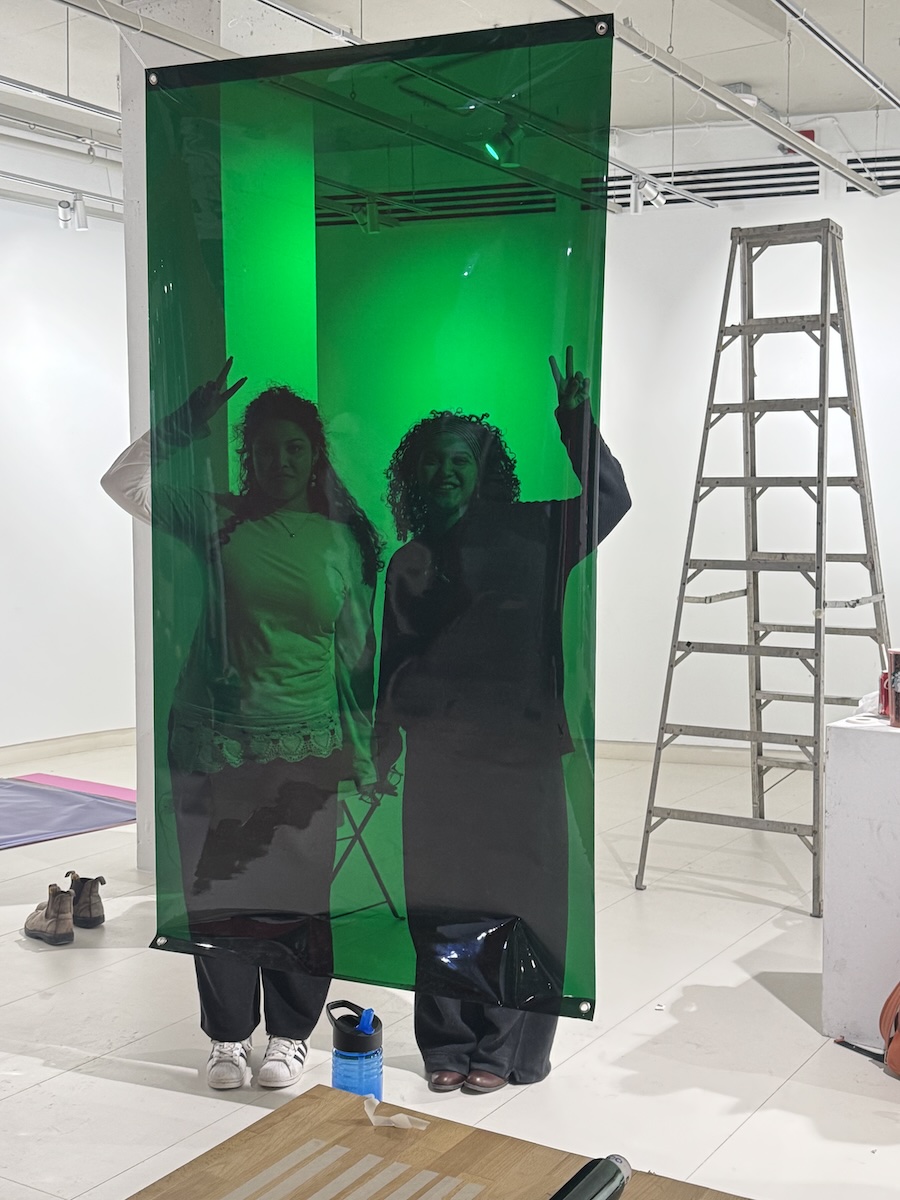
Avery La-Rose: It was really cool that we had students show up from different faculties and departments as a result of us putting up posters in different buildings across campus! One moment that made me really happy was during the opening that a group of interior design students showed up because they saw the posters advertising the event and were looking to take pictures to use for their assignment. I think a big hope of ours for the exhibition was that despite the gallery showcasing architecture and architects, the overall theme is queer design by queer people, and I found it great that other designers were showing up to show their support!
Aashir Imran: Something I heard repeatedly from people is that this isn’t something you see often, so it really added to the excitement and people showing up by word of mouth. I remember this one young architect working in a firm came up to us and said that this is such an incredible representation piece. That you don't see this very often. We also partnered with the TSA for Pride in the summer - they recently made a database of queer spaces (both open and closed), which we showcased as well. This is only now just being documented, but it reinforces the idea that bringing forward this representation isn't simply a want. It's a necessity to understand queer spaces.
What do you see as the future of queer spaces in Toronto and in the field of architecture in general?
Avery La-Rose: One of the principal things would be that industry partners and the city should take these communities into consideration. Listen to that community that you're giving to and that you're providing spaces for. Especially now, I feel like the reason that a lot of people don't feel represented in their communities or in their cities is because they're not being listened to. When you don't have anyone in that industry who can say "I understand what you're talking about, I've been there, I know what you mean." I feel like you're not going to ever really see change. Having people with these experiences in positions of power that can give back to the community is important, because at the end of the day being an architect is a very powerful line of work. You are the very person that’s determining the space that others are experiencing in their daily lives, and this should mean that architects should be willing to listen to the community that they are providing their services to.
Aashir Imran: Toronto is a very diverse place, but sometimes we forget to see things through the lens of other people. That's kind of what this exhibit was also about, showing the broader community what it means to be a queer person in the city today. Now is the time to learn from those perspectives in order to make spaces more adaptable, more inclusive, and more inhabitable.
Gisele Ortega-Joseph:I think the future of queer spaces in Toronto will continue to be really creative and adaptive. Queer communities have always been good at taking overlooked or underused spaces and turning them into places of belonging and expression, and I think that will keep shaping the city. At the same time, queer space will continue to be somewhat abstract; where queer people gather, a space becomes queer, because space is really defined by how and by whom it’s used. More broadly, I hope architecture continues moving toward greater inclusivity. As architects, we can learn from queer history and work with marginalized communities to design spaces that truly respond to their needs.
How has this experience influenced you as a designer, an architect, or a city-builder?
Aashir Imran: A big part of it was seeing spaces being adapted for queer people over time. Most of the time, we don't see spaces as inherently designed for queer people and that's of course not a necessity, but it is something that needs to be taken into consideration. Spaces should be designed to be adaptable to everybody and everything. For example, Buddies in Bad Times Theater used to be an old mechanic shop. I feel like space should be made to be adaptable in that sense.
Avery La-Rose: A principal theme that emerged from interviewing members of the community was that it's about the people who make up and use the space. Going forward, it reminds me how important it is to talk to the people who will be actually using the spaces we design. We always talk about the client and how to work with the client, but the client is also the community. It's the people that are going to use this building. I believe that through personal reflection of our privileges and disadvantages in life, we can find personal connection and willingness to design for those that do not have the privilege to design their own space, community, city, etc… The gallery has definitely taught me to be a much more sociable designer!
Aashir Imran: Like Avery is saying, understanding every perspective before going forward is so important. As an architect, as a designer, even minor changes can make a big impact.
Gisele Ortega-Joseph: I think this experience gave me really valuable hands-on insight into what it takes to bring a project to life and everything that goes into that process. It also pushed me to think differently as a designer and be more open to thinking outside the box when designing a space. The historical research part of the project especially highlighted how people inhabit spaces and how meaning is created through use. It made me realize how important it is to design adaptable and flexible spaces, keeping in mind the many different ways people might use them over time. As designers, we’re really designing for future generations, so it’s important to allow the people who use a space to shape it and give it meaning. I think that approach helps create architecture that can support evolving communities.