TMU takes a leading role in advancing research security
As research becomes increasingly global, research security – the policies and practices that protect research, data and intellectual property from theft, foreign interference and misuse – has become more important than ever. It helps safeguard innovation and supports international collaboration.
Bringing research leaders together
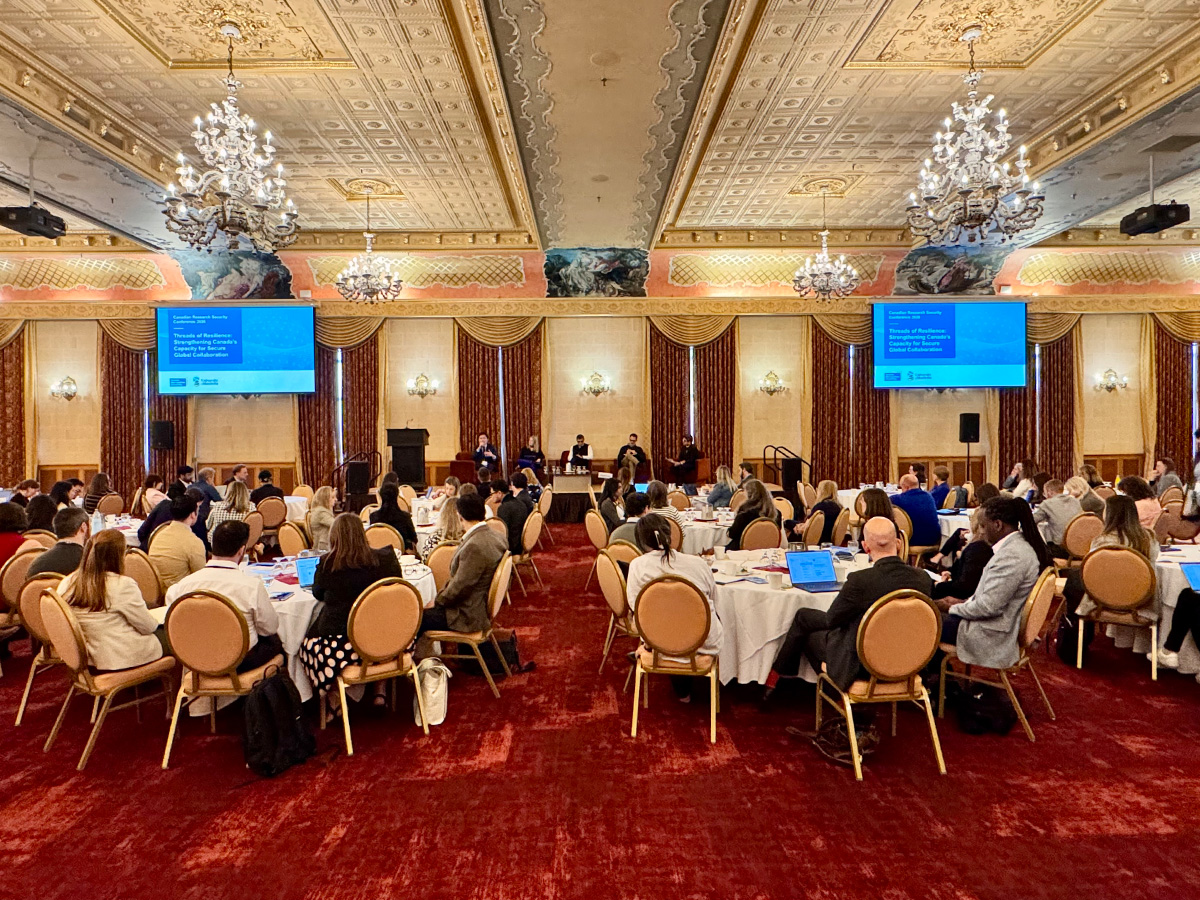
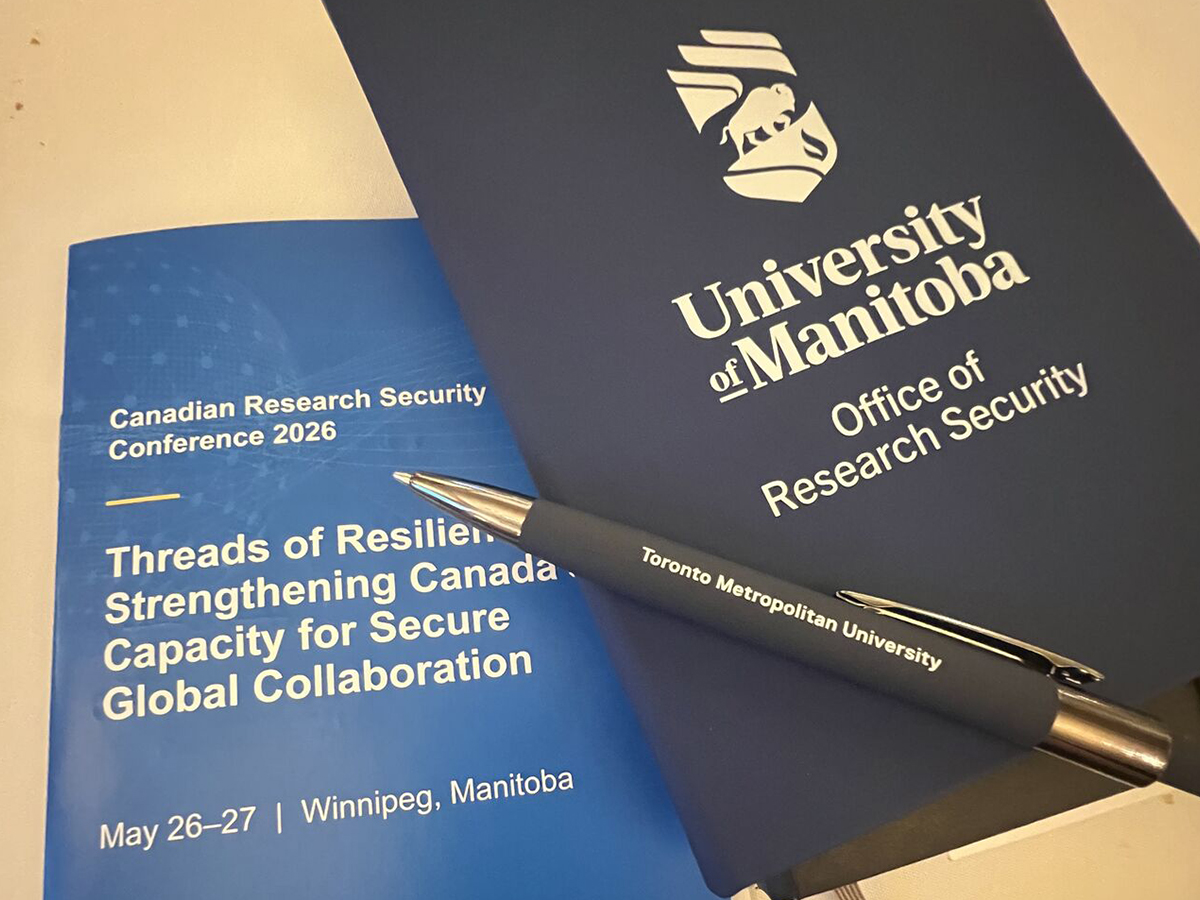
As part of TMU’s commitment to strengthening and shaping research security in Canada, Toronto Metropolitan University (TMU) co-hosted the 2026 Canadian Research Security Conference (CRSC) with the University of Manitoba in May. Leaders from academia, government, industry and international organizations attended, and more than 200 participants came together to share knowledge, build skills and strengthen partnerships.
The conference reflected Canada’s growing international leadership in advancing trusted research and strengthening research security through global collaboration. Throughout the event, a message that resonated was that research security is a shared responsibility in today’s interconnected research environment.
“This conference showed what is possible when leaders from academia, government and industry come together around a shared commitment to research security,” said Steven N. Liss, TMU’s vice-president, research and innovation. “Through collaboration and dialogue, Canadian academic institutions can help shape international conversations on research security while safeguarding research, strengthening trusted partnerships and delivering the innovations needed to solve tomorrow’s challenges.”
Research security enables stronger partnerships
Guided by the theme "Threads of Resilience,” conference discussions explored challenges, including foreign interference, transnational repression, and generative AI, while bringing to the forefront Arctic security, Indigenous leadership and the need to balance security with open collaboration. These discussions highlighted how Canada’s expertise helps researchers work together across borders with confidence. By identifying and managing risks effectively, institutions like TMU can build trust while protecting research and intellectual property.
“The leadership and expertise of the Canadian research security community are advantages that enhance our ability to collaborate and innovate,” said An Chi Lee, director, research security at TMU. “International partners can look to Canada for trusted collaboration.”
Building capacity across the sector at home and abroad
Leadership in research security comes from expertise, collaboration and a commitment to strengthening Canada’s entire research community. A key goal of the conference was to build research security skills among practitioners, especially at smaller and mid-sized institutions.
A first-in-Canada due diligence training program led by the University of Calgary was offered as part of this year’s event. Practitioners received training in open-source intelligence, risk assessment and analysis. To make future training more accessible, there are plans to expand the program nationally through Team Canada, a national grassroots community of practice.
The first group of UK delegates attended this year’s conference as part of the new UK–Canada International Collaboration and Conference Exchange, which the conference organizers helped establish with the UK’s Higher Education Research Security Association. In addition, this global initiative saw a Canadian delegation participate in a strategic dialogue hosted by the Canadian High Commission at Canada House in London, UK.
In addition to significant funding support from The University of Manitoba, the conference was supported through a Connection grant from Canada’s Social Sciences and Humanities Research Council (SSHRC) and through Global Affairs Canada’s In Aid of Academic Relations program. Universities Canada, Research Manitoba and the University of Calgary also provided funding and in-kind support.
Learn more about TMU’s research security expertise and how it supports trusted collaboration.