Influx of World Cup visitors gives TMU professor unique opportunity for wastewater monitoring research
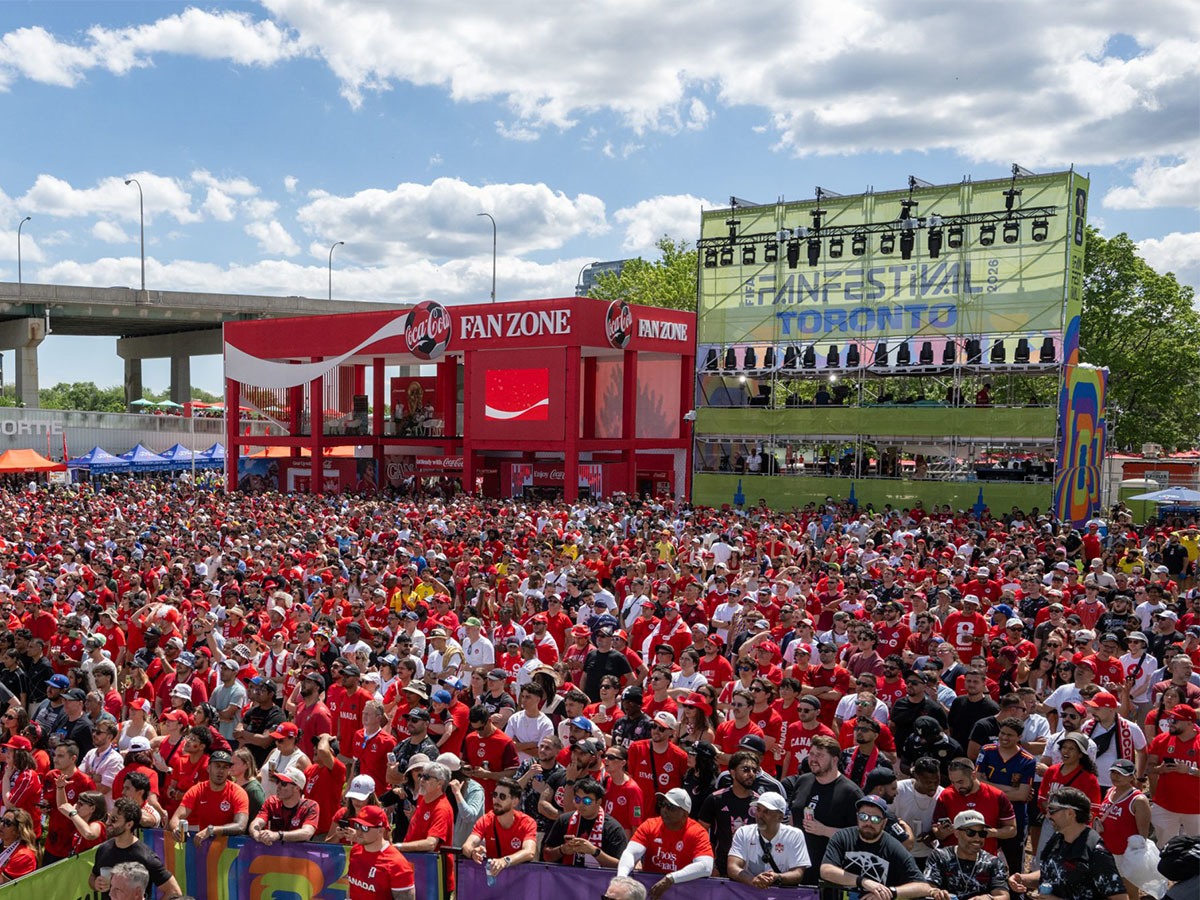
FIFA World Cup 2026TM has kicked off, and organizers expect soccer’s biggest spectacle to bring as many as 300,000 people to Toronto. From fans and players to coaches, trainers, referees and reporters, visitors from countless countries are descending on Canada’s biggest city for this massive, global event.
For Toronto Metropolitan University (TMU) professor Claire Oswald, the influx of people represents a unique research opportunity.
Professor Oswald, from TMU’s Department of Geography and Environmental Studies, is part of a team carrying out targeted wastewater monitoring around Toronto Stadium, the FIFA Fan FestivalTM site and athlete training sites. Toronto Public Health (TPH) is funding the work with support from the City of Toronto.
Baseline testing started before the World Cup began. Oswald and her colleagues from TPH and the University of Toronto will continue to monitor different sites several times each week for the duration of the tournament, and beyond.
“The City of Toronto classifies FIFA World Cup 2026TM as a mass gathering, and it's not often that we have events of this scale happening,” professor Oswald said. “To be able to test out our methods, both our sampling methods and our laboratory methods, during an event like this, it's a new use case for wastewater surveillance that we haven't had the opportunity to look at in Canada before. To the best of our knowledge, this is the first time anyone has tried wastewater surveillance at the venue-scale in Canada, capturing a stadium or a training facility. That’s what was attractive to me.”
Building on research relationships forged during the pandemic
The project, a collaboration between TMU, TPH and the University of Toronto, reunites several partners from Ontario’s Wastewater Surveillance Initiative that began in the summer of 2020, the early days of the COVID-19 pandemic.
Professor Oswald was involved in that project, part of a multidisciplinary team of Urban Water TMU researchers co-led by professor Kimberley Gilbride from the Faculty of Science.
“We were also doing a lot of facility-scale sampling in long-term care homes, homeless shelters, acute care facilities, and also in neighbourhoods,” professor Oswald said. “It was a very strong provincial network of researchers. There were 13 university labs involved and we stayed connected with all of them. Last winter, TPH reached out to get a sense of whether wastewater surveillance for FIFA would be a possibility, and things evolved from there.”
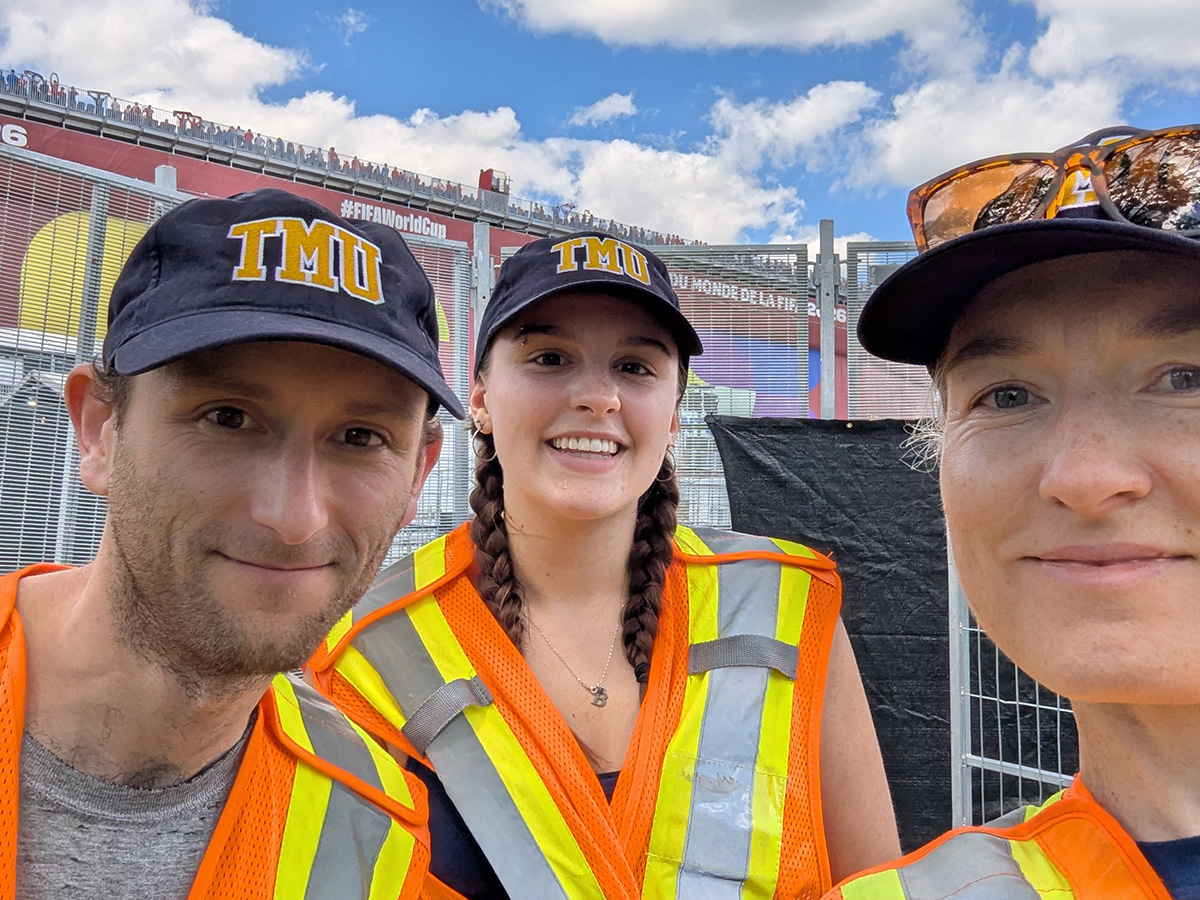
Photo credit: Claire Oswald
Professor Claire Oswald (right) with team members Simon Dorenbaum (Masters student in Environmental Applied Science and Management) and Brooklyn St. Arnault (Undergraduate student in Geographic Analysis).
How wastewater testing can identify viruses before they spread
With large crowds from across the globe together in close proximity at games and viewing parties, the World Cup may increase the risk of spreading infectious disease.
Monitoring wastewater for the genetic material found in viruses including norovirus, mpox, measles and influenza can help identify a problem even before people experience symptoms and start reporting cases.
“Whenever you have people travelling from different places, there's always the potential for disease to spread,” professor Oswald said. “This is just one of a number of complementary tools that public health will use to maintain situational awareness during the World Cup.”
In addition to contributing to valuable public health protections, professor Oswald is curious to learn whether targeted monitoring can provide more effective, actionable insights than large-scale efforts.
“We're really interested in looking at how venue-scale sampling compares to more traditional sampling at a wastewater treatment plant. In Toronto, those plants are capturing hundreds of thousands of people. Is there a benefit to sampling right at the venue? The answer could inform future mass gatherings like the FIFA World Cup 2026TM, or smaller events like festivals. It helps us understand how to implement wastewater surveillance, and at what spatial scale. From a research perspective, that's one of the main questions we're interested in.”