TMU prepares next-generation talent for real-world impact with $3.3M in NSERC CREATE funding
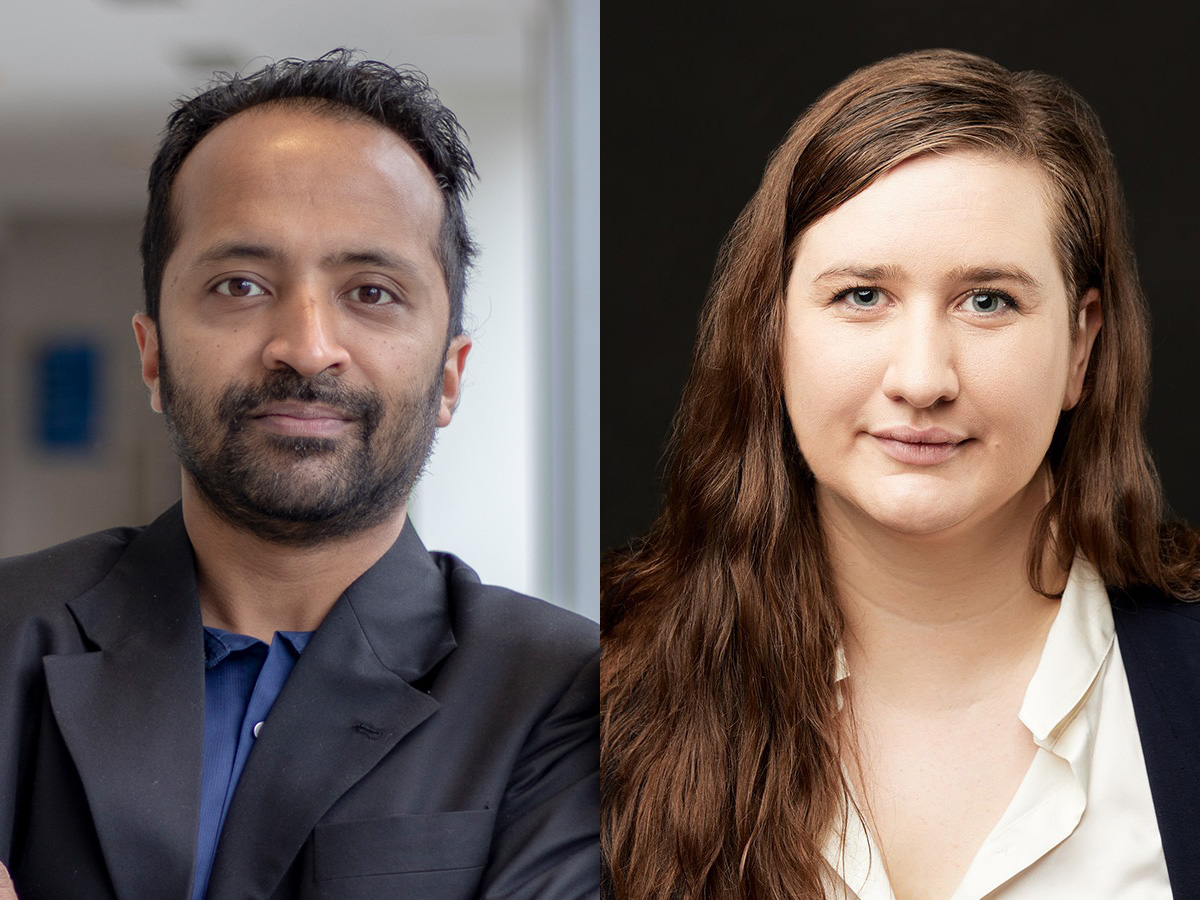
As announced by the Government of Canada, two Toronto Metropolitan University (TMU) professors have been awarded Collaborative Research and Training Experience (CREATE) grants from the Natural Sciences and Engineering Research Council of Canada (NSERC).
Professors Naimul Khan and Helen Stopps from TMU’s Faculty of Engineering and Architectural Science (FEAS) will lead next-generation training programs to reshape how interdisciplinary research is taught in Canada and address gaps in conventional science and engineering training.
The $3.3 million in funding will support two six-year initiatives that prepare researchers to advance personalized precision health care and build climate-resilient, equitable communities.
“Congratulations to professors Khan and Stopps for securing this highly competitive funding,” said Steven N. Liss, TMU’s vice-president, research and innovation. “These initiatives bring together expertise from multiple fields and sectors to train researchers who can tackle complex challenges, from advancing precision medicine to building more resilient and inclusive communities.”
AI-Driven Quantum Sensing and Genomics for Precision Therapeutics (QuantOmics)
Led by professor Khan, the QuantOmics initiative aims to move health care beyond a “one-size-fits-all” approach toward personalized treatments, including mRNA vaccines and targeted cell therapies tailored to an individual’s genetic makeup. Through specialized courses, research projects, industry internships and international collaborations, the program is designed to train more than 90 graduate students in science and health fields to combine quantum sensing, genomics and artificial intelligence.
The QuantOmics initiative is also primed to strengthen interdisciplinary education in Canada by providing a national training model that can be adopted by other institutions, helping to modernize graduate education and support Canada’s leadership in biomedical and quantum technologies. The program brings together collaborators from TMU, including Faculty of Science professor Stefania Impellizzeri and FEAS professor Virgilio Valente, as well as partners from the University of Toronto, McGill University, Queen’s University, Université Laval, the University of Saskatchewan and eight organizations.
Two-Eyed Seeing for IMPACT (Inclusive, Multidisciplinary Practices for Advancing Community Transformations)
Architectural science professor Stopps will lead the Two-Eyed Seeing for IMPACT initiative in response to rising energy demands, climate change and housing challenges – felt most acutely in Indigenous communities. Combining technical expertise and Indigenous knowledge through community partnerships, this program aims to equip more than 70 students and 38 community researchers with the skills to co-develop climate-resilient and socially equitable housing, health and infrastructure solutions across Canada.
Delivered by six universities in partnership with 15 Indigenous nations and organizations, the Two-Eyed Seeing for IMPACT initiative will offer hands-on learning through interdisciplinary coursework, community internships, land-based learning and mentorship across engineering, architecture, health and the social sciences. TMU architectural science professor Russell Richman will collaborate on the project.
The NSERC CREATE program supports the training of highly qualified students and postdoctoral fellows from Canada and abroad by developing innovative training initiatives.
Learn more about the QuantOmics training program and partners. (external link)
Learn more about the Two-Eyed Seeing for IMPACT program and partners. (external link)
Read the 2026 NSERC CREATE funding results. (external link)
Learn more about the NSERC CREATE program. (external link)
Related links: