How a new TMU-innovated wireless monitor is revolutionizing the 'golden minute' for newborns
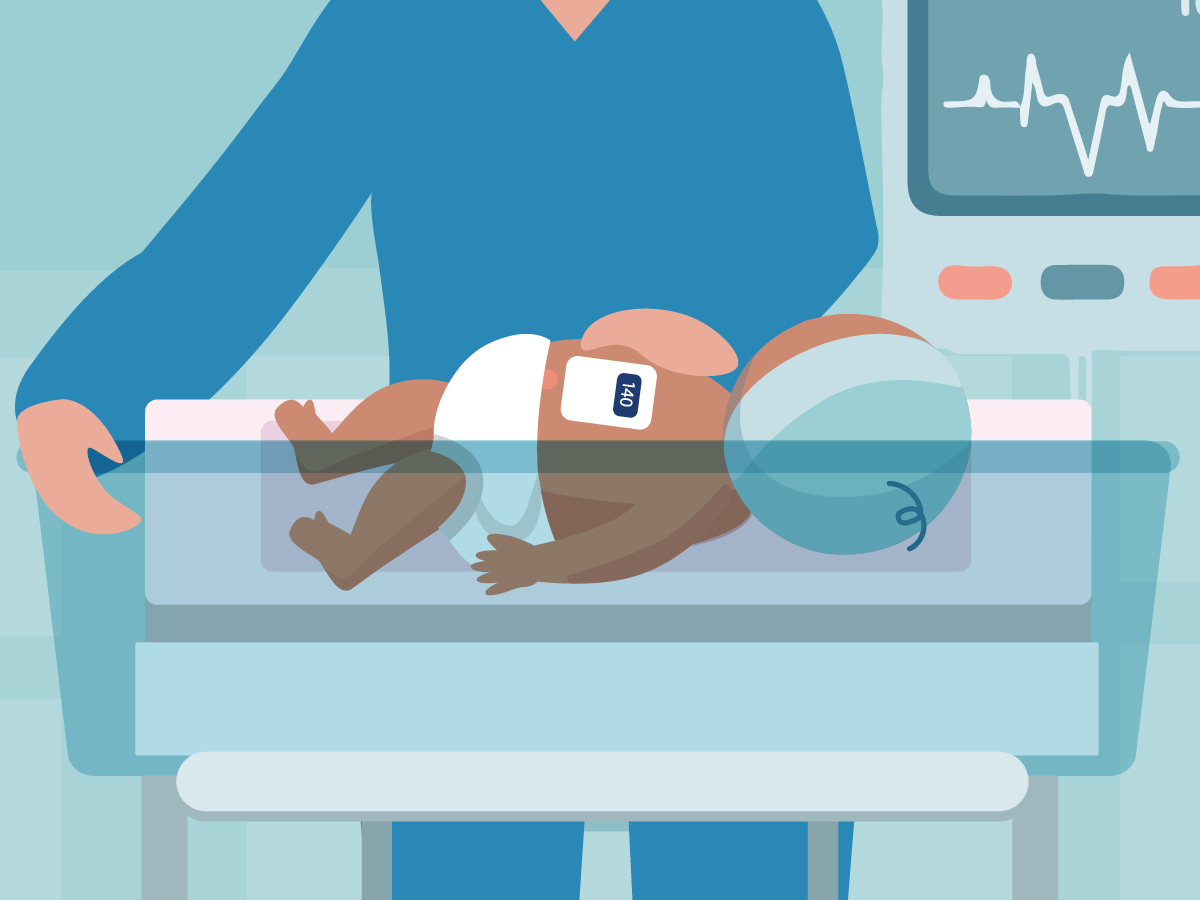
When a “code pink” is called at a hospital, a pediatric team is alerted that a newborn is in distress. In those first critical moments, known as the “golden minute,” clinicians must act fast to determine the cause. The most important information guiding what they’ll do next is the baby’s heart rate.
But measuring tiny heartbeats quickly and accurately has long been a challenge. Traditional devices such as stethoscopes rely on human interpretation, while standard electrocardiogram (ECG) monitors can take too long to provide reliable readings. In emergency situations, these extra seconds can mean the difference between life and death.
For Sridhar Krishnan, dean of the Faculty of Engineering and Architectural Science and a professor of electrical, computer and biomedical engineering at Toronto Metropolitan University (TMU), creating a solution became an eight-year research venture rooted in real clinical need.
“As engineers, we solve problems, but only when the problem is clearly defined,” he said. “In this case, clinicians brought us a critical gap in care, and we worked together to build a solution.”
Introducing iHRD: A non-invasive, rapid infant heart rate monitor
That solution is called the infant Heart Rate Detector (iHRD). This small, wireless device can accurately and easily measure a newborn’s heart rate in under 10 seconds, compared with up to a minute for an ECG. These are extra seconds that clinicians can’t afford to waste.
“For neonatal resuscitation, speed and reliability are everything,” said professor Krishnan. “What happens in that first minute can shape outcomes for the rest of a child’s life. If we can provide accurate information faster, clinicians can act with greater confidence.”
The project began when pediatrician Dr. Niraj Mistry of St. Michael’s Hospital, Unity Health Toronto, identified the challenge through his frontline experience. He partnered with professor Krishnan, whose work includes several types of wearable technologies in the form of non-invasive sensors, and neonatal specialist Dr. Doug Campbell to develop a clinician-informed solution.
Working with TMU PhD candidate Abdelrahman Abdou, the team developed a portable device roughly half the size of a hockey puck. Unlike conventional systems, iHRD uses dry-electrode, single-lead ECG technology, eliminating the need for gels, wires or complex setup.
The device also offers direct onboard signal processing and AI, meaning it doesn’t rely on cloud computing or external systems. This advantage allows the entire care team to see an accurate heart rate almost instantly.
“In a typical scenario, one clinician listens and communicates the heart rate to others,” said professor Krishnan. “With iHRD, everyone can see the same information in real time, reducing delays and potential errors.”
The team tested the device in a clinical study involving 50 newborns at Scarborough Health Network. Their findings showed the device could deliver heart rate readings within 10 seconds with over 90 percent accuracy in optimal conditions. This research represents a significant step forward in neonatal care, particularly during the period when early intervention can have a lifelong impact.
Beyond the emergency room: Ongoing monitoring support
Beyond emergency care, this technology could enable the ongoing monitoring of premature infants or be adapted for use outside hospital settings. This ongoing support offers a simple, non-invasive way to track infant heart and respiratory health.
The device has already gained recognition through research awards and pitch competitions, and the team has filed for patents. Now, they will focus on moving from a research prototype to a fully approved clinical product.
“We’ve demonstrated that the technology works,” professor Krishnan explained. “The next step is rigorous testing, regulatory approval and industry partnerships to bring it into widespread use.”
This project exemplifies the power of multidisciplinary collaboration and highlights the impact that can result from aligning research with real-world needs.
“When you start with a well-defined problem, meaningful innovation follows,” professor Krishnan said. “And in this case, it has the potential to save lives in the very first moments of life.”
To learn more, read “A portable dry-electrode ECG device for rapid and accurate neonatal heart rate monitoring during resuscitation” (external link, opens in new window) in the journal Scientific Reports.