From mussels to melamine: Turning kitchen sponges into powerful microplastic filters
For decades, we have relied on plastics for everything from packaging to clothing. Their durability and low cost have made them indispensable in modern life. But once discarded, sunlight, water and everyday wear break larger plastic items into microscopic fragments that slip easily through our environment, and even into our bodies.
Microplastics (smaller than five millimetres) and nanoplastics (smaller than one micron, which is much thinner than a human hair) have been found in Arctic ice, bottled water, seafood, soils, crops and even in animal brain tissue. They are now recognized as a pervasive global pollutant, posing risks to human and environmental health by interacting with biological systems in harmful ways.
Yet while awareness of the problem has grown, practical, affordable ways to remove these particles from water are scarce.
That gap motivated chemical engineering professor Nariman Yousefi and his research group to look for a new solution. The Yousefi Lab for Self-assembled Nanomaterials at Toronto Metropolitan University (TMU) had already been working to identify these plastic fragments in the environment when a key question emerged: In addition to counting these particles, could they also design a filter that removed them from water efficiently and inexpensively?
Borrowing from nature to build accessible filtration
Many advanced filtration technologies exist on paper or in controlled research settings. But, as professor Yousefi explained, they’re often expensive, complex and difficult to commercialize. For him, a solution must be accessible, scalable and sustainable. “Water is a human right, and we should make sure that everybody, everywhere in the world, has access to safe and clean water,” he said. “We don’t want to have something fancy that you buy as a luxury item.”
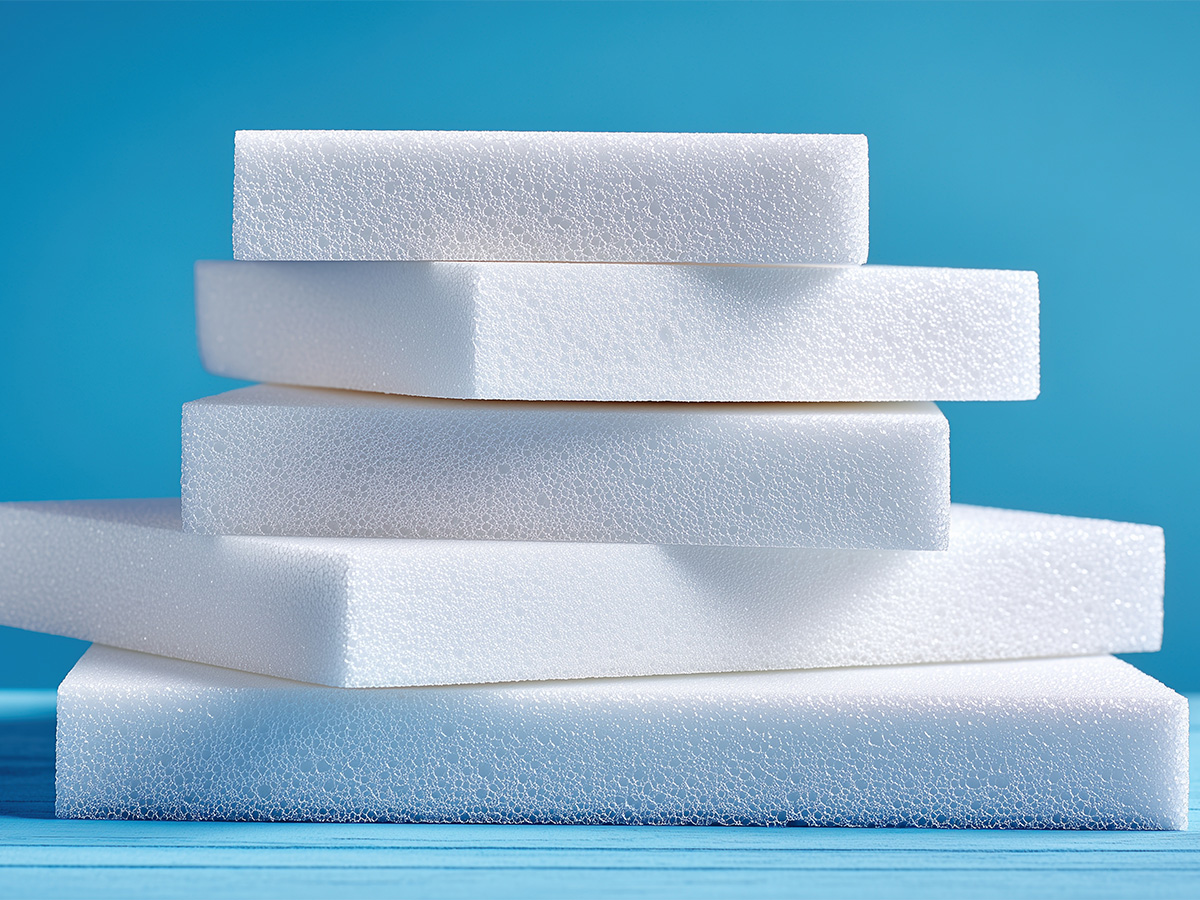
With that goal in mind, the group asked themselves: What if the solution to filtering micro- and nanoplastic pollution started with something as ordinary as a kitchen sponge? Melamine sponges are inexpensive, widely available and already used in homes around the world. If their surfaces could be modified to capture tiny plastic particles, they might form the basis of a practical, scalable water filter.
The researchers then turned to nature for inspiration. “When we started to engineer it, we got some inspiration from how nature removes plastics and particles and asked whether we could replicate that in the lab environment,” said professor Yousefi. Mussels cling tightly to rocks and ship hulls using a powerful natural adhesive. PhD candidate Hadi Rezvani had come across research showing that microscopic plastic pollution tends to stick to this glue. That insight led the team to study its chemistry and focus on polydopamine – a versatile polymer that mimics mussel adhesive proteins.
Working with graduate students Mihir Kapadia and Yalda Majooni, they carefully tuned the coating process to create a thin, uniform layer that lines the sponge’s porous structure. The result is a filter material that attracts and captures plastic particles while still allowing water to flow freely through.
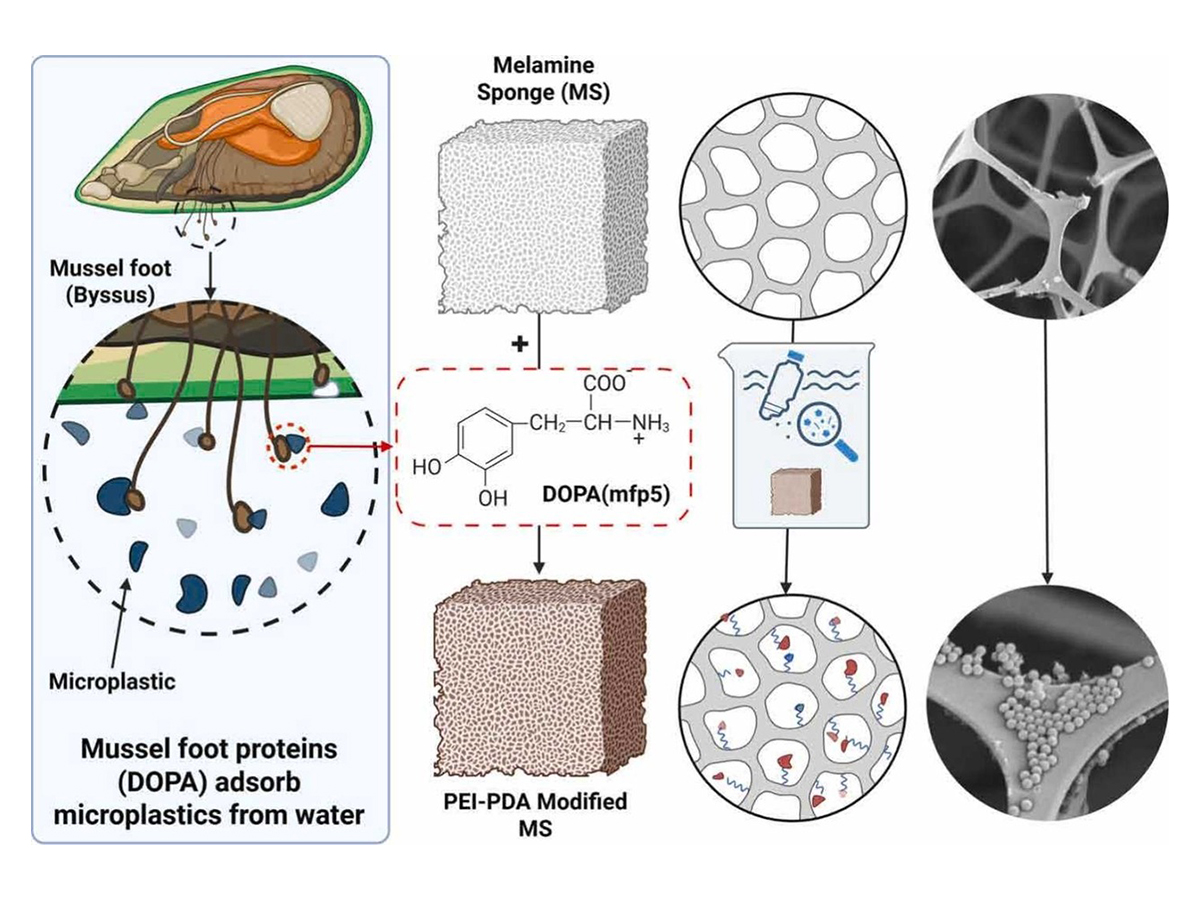
A melamine sponge is enhanced with a synthetic version of mussel’s foot protein (DOPA), and shows high performance in removing micro and nanoplastics from water.
Designed for real-world use
In lab tests using plastics released from real food containers, these specially coated sponges achieved high removal efficiencies, capturing up to 94 per cent of certain particles, with performance affected by particle type and water conditions. The sponges also proved resilient, remaining effective across multiple uses without shedding additional pollution into the water.
This low-energy solution operates under gentle, gravity-driven flow, making it particularly suited to common counter-top or under-the-sink filtration systems. It could also work in portable units that can be shipped easily to remote or underserved regions.
“We wanted something to be accessible to everybody,” professor Yousefi explained. “Something that you can, for example, bring to the Global South, to northern communities and many, many distant communities in the world facing emerging pollution challenges.”
Looking ahead
Professor Yousefi is now focused on key questions that will determine whether this promising lab discovery can become a real-world solution. His lab is testing durability and real-world performance to understand how the sponge behaves in water containing minerals, organic matter and other compounds that can interfere with filtration.
They are also working to determine whether the same sponge system can remove other contaminants beyond microplastics, including pharmaceuticals, endocrine-disrupting chemicals and persistent “forever chemicals” like PFAS. At the same time, the researchers continue to refine the material by exploring whether alternative polymers or sponge substrates could further improve performance while keeping the chemistry safe, “green” and practical for large-scale use.
If commercially successful, this affordable solution would add a flexible, sustainable new tool to help communities access clean, safe water around the world.
To learn more, read “Mussel-inspired modification of polymeric sponges for selective removal of microplastics and nanoplastics from water,” in the Journal of Environmental Chemical Engineering.
Visit the Yousefi Lab for Self-assembled Nanomaterials at TMU (external link) to learn more about professor Yousefi’s research.