Downtown Toronto at a crossroads: Challenges and opportunities for renewal
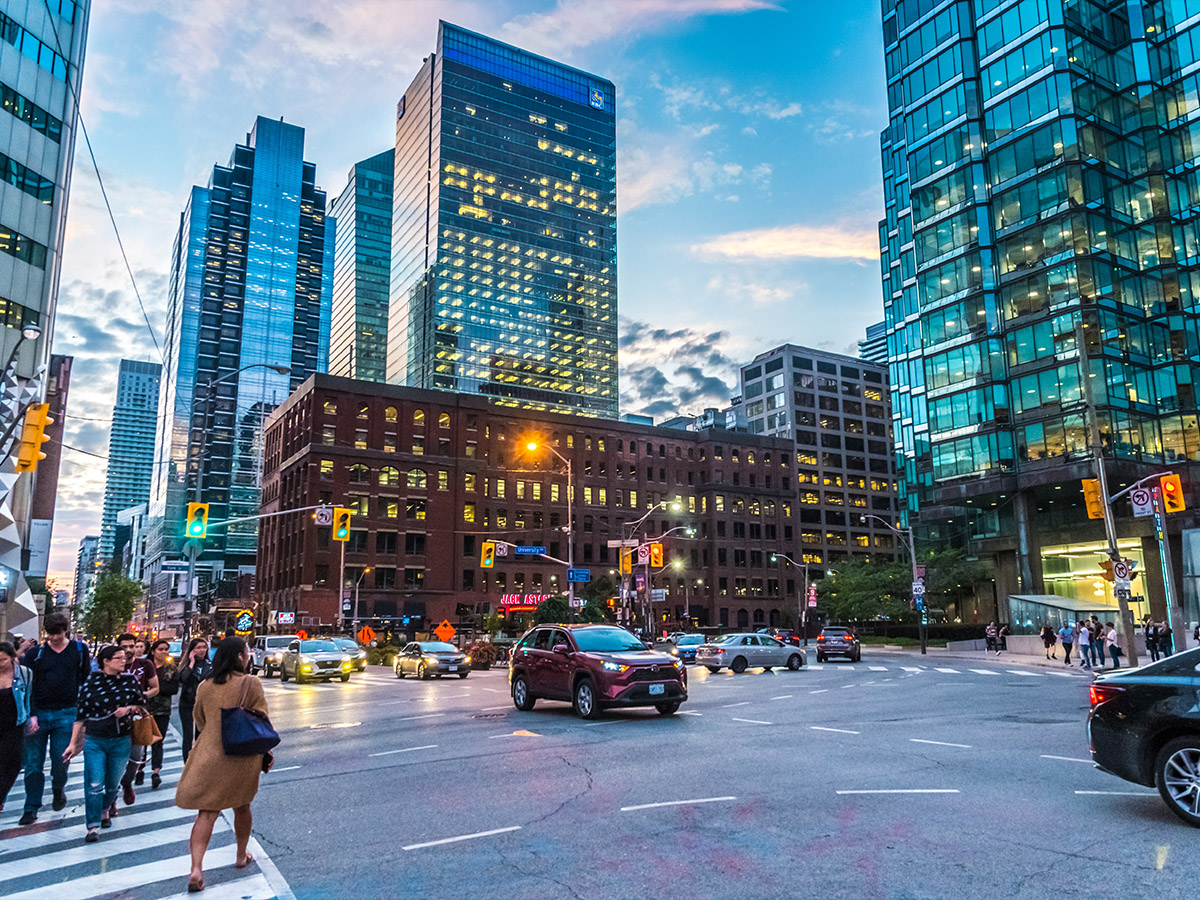
Downtowns are the heartbeat of great cities. They bring together people, businesses and ideas in ways that power economic growth, create opportunity and define civic identity. Downtown Toronto, the country’s business, cultural and entertainment hub, is central to Canada’s economy and global stature, generating immense economic and social activity and various tax revenues for all levels of government.
But despite the outsized role it plays in Canada, downtown Toronto, like many urban cores worldwide, is struggling to regain its footing after restrictions related to COVID-19. As of April 2025, downtown Toronto’s foot traffic remained roughly 43 per cent lower than in January 2020, according to data from Environics Analytics. Despite return-to-office mandates and eased pandemic restrictions, downtown activity continues to lag.
Barriers to revitalization
A new report from Toronto Metropolitan University (TMU) and York University’s Schulich School of Business highlights both the downtown area’s national importance and the challenges holding it back from a full recovery. The “Downtown Toronto: Economic Importance, Challenges and Actions to Revitalize” report documents the impact of the pandemic on the city, identifies ongoing barriers and sets out a path forward.
“Toronto has a lot of strengths, but it’s got some problems, and that’s what we set out to document,” said Frank Clayton, a senior research fellow at TMU’s Centre for Urban Research and Land Development. He co-authored the report with Jim Clayton, director in Real Estate and Infrastructure at York University.
Their findings reveal a downtown still impacted by heavy traffic congestion, hybrid work patterns (although these are changing), high office and residential vacancy rates, unaffordable housing, safety concerns on public transit and unkempt public spaces. On the positive side, visitor and entertainment-related metrics have nearly or fully recovered, with hotel occupancy, Scotiabank Arena attendance and Toronto Islands ferry ridership on the rise.
A roadmap for renewal through collaboration and investment
The report proposes seven strategic policy considerations to guide recovery. Restoring vibrancy, the authors argue, means making downtown more accessible, safer and welcoming for workers, residents and visitors alike. Recommendations include improving transit safety and reliability, promoting GO Transit use, enhancing access to green spaces such as the Toronto Islands, and ensuring the city plays a stronger role in maintaining a clean, welcoming environment.
“To revitalize downtown, you need policies that bring visitors in and improve its image,” said Jim Clayton.
Crucially, the researchers call for greater funding for the city, noting that only 10% of downtown tax revenue flows to the municipal government, with the remainder split between provincial and federal coffers. They also recommend giving the Downtown BIA Alliance the responsibility and financial support to represent Toronto’s core. This alliance unites six of the city’s largest districts to promote economic growth collaboratively.
Revitalizing Toronto’s downtown will require bold, coordinated action across all levels of government and the BIAs. With the right investments and policies, the city has a real opportunity to be a vibrant, economically viable urban core.
The Downtown Toronto BIA Alliance supported and helped sponsor the research discussed in this article.