Vaccinations at TMU
Flu vaccines are still available for TMU community members at the TMU Medical Centre while supplies last. To receive your shot, please schedule an appointment directly through the Medical Centre.
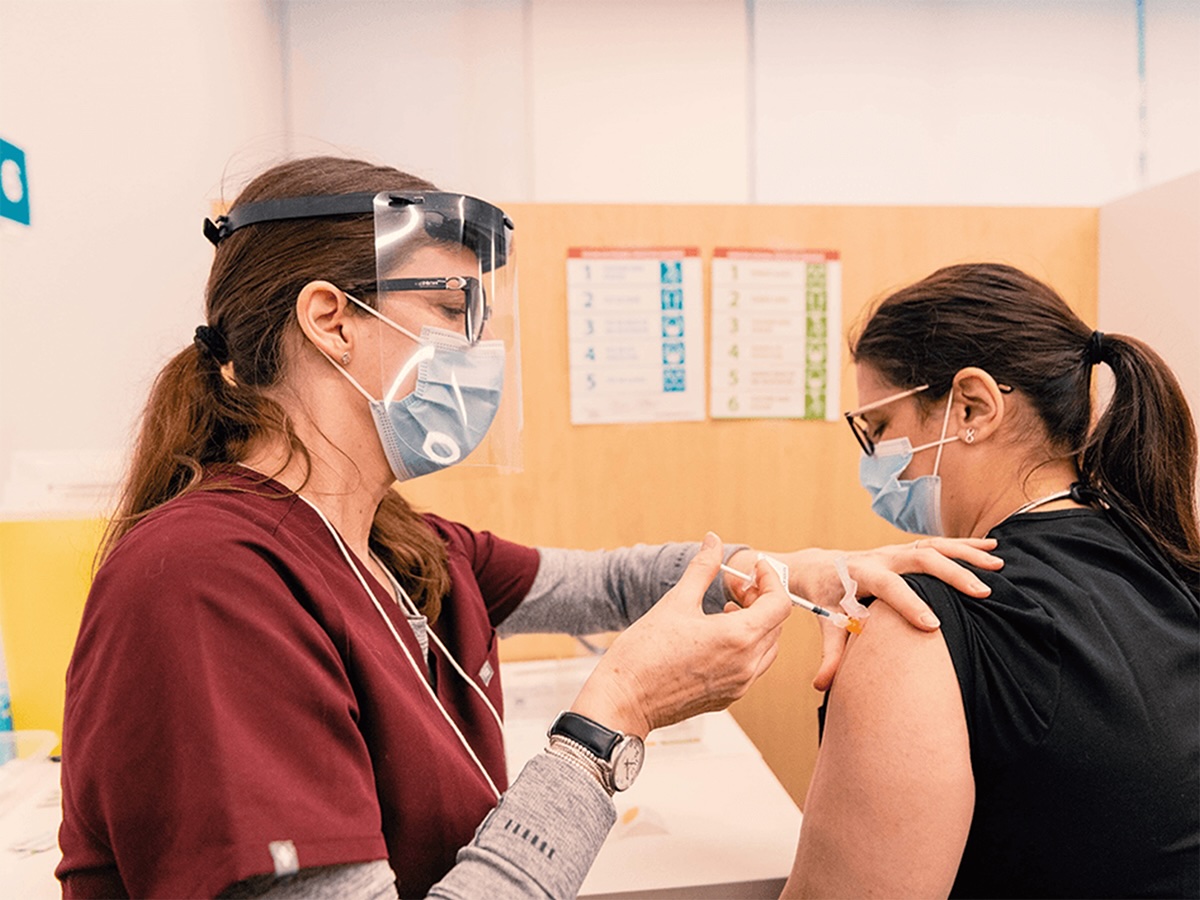
Pop-up FLU Vaccine Clinics at TMU
Flu Vaccine Clinics Update
Our Pop-up Flu Vaccine Clinics have now wrapped up for the season — thank you to everyone who participated! If you haven’t had a chance to get your flu shot yet, TMU community members can still receive the flu vaccine at the TMU Medical Centre while supplies last. Please book your appointment directly with the Medical Centre.
Please note, all of our pop dates are subject to vaccine availability, and may change.
Upcoming Dates
Registration opens on October 22, 2025. Please click the Google calendar link (external link) to pre-book your appointment.

Pitman Hall Residence
PIT 200
11:30 a.m. to 1:30 p.m.
FLU vaccine

Ted Rogers School of Management
TRS 2-002 Boardroom
11:30 a.m. to 1:00 p.m.
FLU vaccine

Sheldon & Tracy Levy Student Learning Centre (SLC) Amphitheatre
11:00 a.m. to 1:30 p.m.
FLU Vaccine and COVID Booster
*If it’s a cold day, the clinic will move to SLC 6th Floor
After November 6th, 2025 if you can’t make any of these times, you can receive a flu vaccine through our Medical Centre. While TMU pop-up vaccination clinics are offering drop-in slots appointments, the Medical Centre will only offer flu shots by appointment, and availability may vary depending on vaccine supplies.
The clinics will offer a standard dose of flu vaccine. More information on this year’s vaccines here (external link) . If you are age 65 and above, we have a very small amount of high dose vaccines for 65+ individuals. Please let your vaccinator know if you need a 65+ vaccine so we can give you the appropriate flu vaccine for your age category.
- Ontario Health Card; if from out of province, the health card from your province of residence, UHIP card (if you don't have a health card, please bring photo ID or your passport).
- Wear clothes that allow for easy access to the upper arm (removable sweater, t-shirt under sweatshirt).
To accommodate as many TMU community members, we kindly ask that you remember to cancel your booking 24 hours prior, if you are not able to make it, so as to open up slots for others who may wish to get their vaccine.
During the fall and winter seasons, respiratory illnesses (such as flu and COVID-19) are expected to spread in our community as the weather gets colder and people spend more time indoors.
Staying up to date with our vaccinations is one of the most effective ways to protect our families, communities and ourselves against getting very sick. It is a key step in the layer of protection (external link) we can all implement to prevent the spread of respiratory viruses.
Adults can get the flu vaccine at the same time, before, or after a COVID-19 vaccine.
We are recommended to take a flu shot each year in early fall as soon as they are available.
- The flu vaccine is safe, effective and the best way to protect yourself against getting very sick from the flu.
- Each year there is a new vaccine to try to match the strains that are expected to spread. The vaccine can provide protection even when the match to the strain of flu circulating is not exact. Flu vaccines are about 50 per cent effective in preventing the flu in healthy adults. The vaccine also reduces the risk of getting very sick from complications of an infection by 50 per cent.
- How much protection the vaccine gives depends on a person’s age and immune system. It takes two weeks for your body to develop an immune response from the vaccine.
- The flu vaccine may also provide protection against some other diseases including invasive Group A Streptococcal Disease (iGAS).
- Studies have shown the flu vaccine lowers the risk of heart attack or stroke, especially in those with heart disease.
- The flu vaccine is one of the ways in which we can protect our loved ones and ourselves as we move into spending more time indoors.
- More info on the flu vaccine can be found here (external link) and here (external link) .
Get your flu shot on campus at either one of the pop-up vaccine clinics, or by appointment at the Medical Centre after November 6th.
Alternatively, you can also call your local pharmacist or health care provider to make an appointment for a free flu shot.
- For details on eligibility and recommendations based on age, risk, and previous vaccination and infection statuses, please visit the City of Toronto’s COVID-19 Vaccines page (external link) .
- Every person, including those without OHIP cards, may get vaccinated at any clinic or pharmacy clinic offering COVID-19 vaccines.
- The COVID-19 booster may be available in very limited quantities at the TMU Medical Centre.
- The COVID-19 vaccine is safe to get at the same time as most other vaccines, including the flu shot.
- Vaccination is one way to stop the spread of respiratory viruses. Here are some other ways (external link) to reduce the spread of respiratory viruses this flu season.
Places that offer COVID-19 vaccine near campus:
Shoppers Drug Mart (external link, opens in new window)
(0.28 km away) from TMU
279 Yonge Street
Toronto, ON M5B 1N8
416-591-1733
Jarvis St. Apothecary (external link)
(0.36 km away) from TMU
275 Jarvis St
Toronto, ON M5B 2P1
416-792-1959
Rexall (external link, opens in new window)
(0.42 km away) from TMU
777 Bay Street, Unit C216
Toronto, ON M5G 2C8
416-977-5824
Loblaws (external link, opens in new window)
(0.47 km away) from TMU
60 Carlton Street
Toronto, ON M5B 1L1
416-593-1542
You can also book a vaccine at a clinic near you here (external link, opens in new window) . Alternatively, you can search if a pharmacy near you offers COVID-19 vaccination via this link (external link, opens in new window) .
You can find out more about approved COVID-19 vaccines on the Government of Canada's website (external link, opens in new window) .
Learn more about COVID-19 vaccination at the Ontario COVID-19 Vaccination (external link, opens in new window) or Toronto Public Health COVID-19 (external link, opens in new window) webpages.
Vaccinated outside of Canada?
If you were vaccinated with one or more non-Health Canada approved vaccine(s) outside of Canada, you are recommended to get a dose of the updated COVID-19 vaccine if it has been six months since your last COVID-19 vaccine or infection. Keep your vaccine record updated via this link (external link, opens in new window) .
Implement layers of protection.
- Stay up-to-date with your vaccinations.
- Check the Flu Vaccine Information and COVID-19 Vaccine Information sections above for more information.
- Consider wearing a high quality, well-fitting mask in crowded indoor public settings with poor ventilation, especially if you or people around you are at higher risk (such as seniors, those with a weak immune system, or young children).
- Stay home if you are sick or have symptoms of illness, even if they are mild.
- Want to stay home but have something due? Speak with your professor about your condition.
- Wash and sanitize your hands often.
- Cover your cough or sneeze with your elbow or a tissue.
- Keep a physical distance when possible, especially indoors.
- Socialize outdoors when possible.
Click here (external link) for more details.
How can I tell if I have the flu or COVID-19?
It is difficult to tell what the cause of respiratory symptoms is without testing. No matter what the cause of your illness is, most people should self-isolate and manage symptoms with simple things like rest, lots of fluids, and over-the-counter medications.
Can I receive the flu vaccine if I have an egg allergy?
Yes, egg allergy is not a contraindication (external link, opens in new window) for influenza vaccination, and you may be vaccinated against influenza using the full dose of any age appropriate product.
I heard there could be side effects from getting flu vaccination. Is it true?
It’s much safer to get the flu vaccine than to get the flu. Common side effects include soreness and swelling in the injection site, headache, slight fever, muscle aches, etc., that may last a few days. In rare cases, allergic reactions can occur but they can be treated and are usually temporary. For more information about the rare events associated with the flu vaccine (external link, opens in new window) .
I have already completed my COVID-19 primary series (two initial doses). Why do I need to get a booster?
The booster targets new strains of the virus and increases protection that may have decreased since your last vaccine or COVID-19 infection.
I had COVID-19 and recovered. Do I still need the vaccine?
Yes. We don't know how long natural immunity from COVID-19 lasts, so it is best to get vaccinated even if you've had COVID-19 before. The suggested interval between COVID-19 infection and vaccine dose is six months after symptom onset, or positive test if asymptomatic.
I heard there could be side effects from getting COVID-19 vaccination. Is it true?
As of September 2023, only around six people out of every 10,000 people vaccinated have reported one or more adverse events. The large majority of these cases are considered non serious, including soreness at the site of injection and slight fever. In rare cases (around one report per 100,000 doses administered), serious adverse events may occur, including severe allergic reactions. That is why it is important to wait for a period of time at the place where you receive your vaccination in case of an allergic reaction.
Myocarditis and pericarditis are types of inflammation in different parts of the heart, and can occur rarely in teens and young adults after getting a COVID-19 vaccine. Most cases are mild, are treated with medication and rest, and get better in a few days. For other information on rare but potential side effects, please refer to the COVID-19 Vaccine Safety page (external link) on the Government of Canada’s website.
Can the COVID-19 vaccine impact fertility or menstrual irregularities?
There is no evidence the vaccines impact fertility, sperm production, menstrual irregularities, puberty, or normal growth and development. Some people may have a temporary change in their menstrual cycle and menstruation experience as the body develops immune response in the first few weeks after vaccination. The World Health Organization recommends not delaying vaccination if menstruating.
